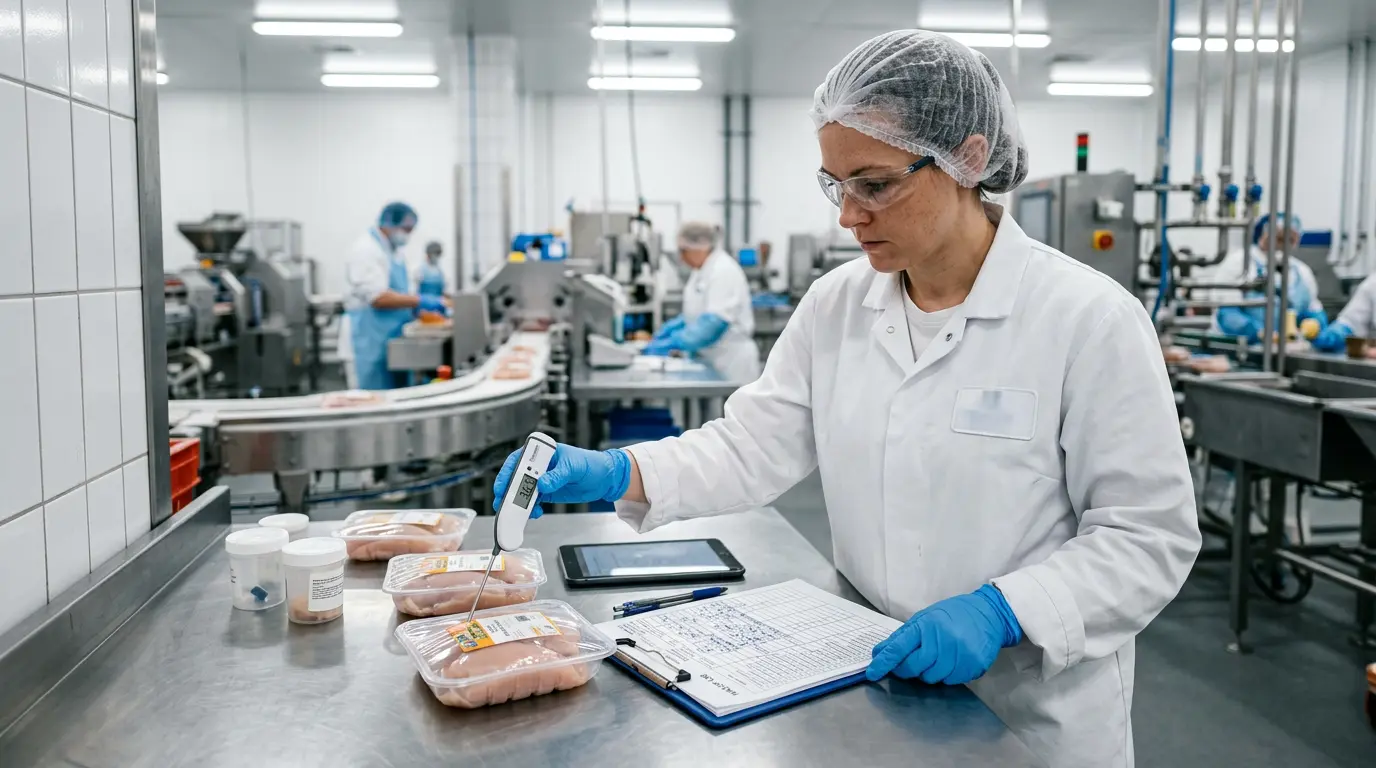
Regulatory and Engineering Foundation of Industrial Food Hygiene in 2026
Industrial hygiene in the food industry has evolved far beyond visual housekeeping into an exact engineering discipline combining fluid dynamics, metallurgy, cleanroom aerodynamics, and industrial microbiology. Every HACCP Hazard Control Plan and ISO 22000 management system rests upon foundational Prerequisite Programs (PRPs). If a plant's sanitary layout permits cross-traffic between raw materials and pasteurized products, if process piping contains stagnant dead legs, or if negative HVAC pressure pulls unfiltered corridor air into the slicing room, no volume of paper checklists will prevent secondary pathogen contamination.
Modern industrial sanitation is governed by a strict hierarchy of international and national standards:
- Technical Specification
ISO/TS 22002-1(and the harmonizedISO 22002-100prerequisite architecture): defines engineering requirements for building construction, hygienic zoning, plant utilities (potable water, culinary steam, compressed air), hygienic equipment design, cleaning and disinfection, and personnel hygiene. - GFSI-Benchmarked Certification Schemes: FSSC 22000 Version 6 (specifically Additional Requirement
2.5.7on Environmental Monitoring and2.5.9on Equipment Management), BRCGS Food Safety Issue 9 (Section 4 Site Standards and Section 8 High-Risk, High-Care, and Ambient High-Care Production Risk Zones), and IFS Food Version 8. - Codex Alimentarius (CXC 1-1969 General Principles of Food Hygiene): the global baseline for food hygiene and hazard control.
- Ukrainian Statutory Requirements: Ministry of Agrarian Policy Order No. 590, enforced during statutory audits by the State Service of Ukraine on Food Safety and Consumer Protection.
This engineering guide breaks down the mechanics of designing and verifying an uncompromising industrial sanitation system: from calculating positive air pressure cascades and EHEDG surface roughness limits to validating CIP/COP turbulent flow, executing rapid ATP bioluminescence checks, and managing an Environmental Monitoring Program (EMP) across Zones 1 to 4.
Hygienic Plant Zoning, Positive Air Pressure Differentials (5-15 Pa), and HEPA Filtration
The primary vector for re-contaminating processed food with vegetative pathogens (Listeria monocytogenes, Salmonella spp., Cronobacter sakazakii, and enterohemorrhagic E. coli) is the intersection of raw material flows with post-lethality finished products. To physically eliminate pathogen transfer via footwear soles, pallet-jack wheels, operator garments, or airborne aerosols, manufacturing facilities are engineered around strict hygienic zoning and unidirectional linear flow (Forward Flow).
Production Zone Classification: High Risk, High Care, Ambient High Care, and Low Risk
Under BRCGS Issue 9, IFS Food v8, and FSSC 22000 V6 engineering criteria, production areas are segregated into four distinct hygienic zones based on product vulnerability and intended consumption:
- High Risk Zone: a physically segregated, enclosed room where products enter immediately after a lethal thermal treatment (baking, cooking in a pass-through oven, pasteurization, or retorting) achieving at least a $6\text{-log}$ reduction of Listeria monocytogenes. Products handled in this zone are Ready-to-Eat (
RTE), stored under refrigeration, support the growth of L. monocytogenes, and are consumed without further cooking by the end user (for example, slicing and vacuum-packing cooked deli meats, frankfurters, hot-smoked salmon, soft cheeses, and chilled ready meals). A solid physical barrier separates Low Risk preprocessing from theHigh Riskhall: product crosses the boundary solely through double-door pass-through ovens, continuous cooking tunnels, or closed pasteurization pipelines. - High Care Zone: a segregated zone for chilled
RTEproducts that have undergone a microbial reduction step (typically a $1\text{-log}$ to $2\text{-log}$ reduction, such as chlorinated or ozonated washing of leafy greens, fresh herbs, peeled root vegetables, or fresh-cut fruit) rather than full thermal sterilization. All open assembly and primary packaging operations insideHigh Careare isolated from raw material intake areas to minimize pathogen ingress. - Ambient High Care Zone: a specialized zone for low-moisture foods ($a_w < 0.85$) stored at ambient temperature that undergo a validated thermal kill step during processing (roasting cocoa beans, nuts, or sesame seeds; pasteurizing milk prior to spray-drying). Typical products include powdered infant formula, chocolate, cocoa butter, peanut butter, tahini, halva, and dairy powders. The target pathogen in
Ambient High Careis Salmonella spp., which cannot multiply in dry matrices but survives for years inside lipid or protein films and causes human infection at doses below 10 cells. The cardinal engineering rule inAmbient High Careis strict water restriction: routine cleaning relies on controlled dry sanitation (HEPA-filtered industrial vacuum systems, mechanical scrapers, and rapid-evaporating $70%-80%$ alcohol wipes), because introducing free water immediately triggers exponential Salmonella multiplication inside floor cracks and equipment crevices. - Low Risk / Basic Hygiene Zone and Non-Product Zones: raw material intake bays, soil washing, raw meat boning and grinding prior to cooking, processing of products that require full cooking by the consumer, and secondary/tertiary packaging areas where hermetically sealed primary packs are boxed and palletized.
Aerodynamic Barriers, Pressure Cascades, and H13/H14 HEPA Air Handling
Physical walls and doors between production zones fail to prevent airborne contamination if the Heating, Ventilation, and Air Conditioning (HVAC) system operates under negative pressure in clean rooms. Whenever an access door opens, air flows from the higher-pressure room toward the lower-pressure room. Consequently, High Risk and High Care halls must be engineered with a positive static air pressure cascade:
- differential air pressure between the
High Riskzone and adjacent Low Risk rooms or corridors must be maintained at $+5\ \text{Pa}$ to $+15\ \text{Pa}$ (with an engineering design target of $+10\ \text{Pa}$ to $+12\ \text{Pa}$), generating an outward airflow velocity of $\ge 0.2-0.5\ \text{m/s}$ through any doorway opening; - differential pressure gauges (
Magnehelicmanometers or digital pressure transmitters integrated into SCADA) are mounted at zone boundaries with visual and audible alarms triggered if overpressure drops below $+5\ \text{Pa}$; - air change rates inside
High Riskrooms are engineered at 15 to 30 Air Changes per Hour (ACH), depending on thermal load and moisture generation; - supply air passes through a multi-stage filtration bank compliant with
EN 1822andISO 16890: coarse pre-filters (G4) $\rightarrow$ fine pocket filters (F7/F9) $\rightarrow$ terminalHEPA H13orH14filters (capturing $\ge 99.95%$ and $\ge 99.995%$ of $0.3\ \mu\text{m}$ particles, respectively) forHigh Risk, orEPA E11/E12filters forHigh Care; - Dew Point and Condensation Control: cooling coils and permeable fabric air socks are engineered to maintain air humidity below the dew point of ceiling panels and overhead chilled pipes, preventing condensation droplets from forming above open product conveyors and transmitting Listeria monocytogenes.
EHEDG Hygienic Equipment Design: Surface Roughness Ra <= 0.8 um and Eliminating Dead Legs
No chemical detergent can sanitize a machine built with unhygienic mechanical crevices. Standards including ISO/TS 22002-1, FSSC 22000 Version 6 (Additional Requirement 2.5.9 on Equipment Management), and the guidelines of the European Hygienic Engineering & Design Group (EHEDG, alongside 3-A Sanitary Standards) mandate strict engineering specifications for all food-contact equipment:
- Metallurgy and Surface Roughness ($R_a \le 0.8\ \mu\text{m}$): all direct food-contact surfaces must be fabricated from austenitic stainless steel
AISI 316L(mandatory for brines, chloride-rich sauces, organic acids, and hot caustic-acidCIPregimes) orAISI 304. Cold-rolled, mechanically polished, or electropolished product-contact steel must achieve a surface roughness average of $R_a \le 0.8\ \mu\text{m}$ (and $R_a \le 0.4\ \mu\text{m}$ for aseptic dairy and beverage fillers). When surface roughness exceeds $0.8\ \mu\text{m}$, microscopic peaks and valleys exceed the dimensions of vegetative bacteria ($1-2\ \mu\text{m}$), shielding cells from shear forces during washing. - Internal Radii and Orbital TIG Welding: all internal corners of hoppers, tanks, and chutes must have smooth radiused transitions of $R \ge 3-6\ \text{mm}$, avoiding sharp $90^\circ$ angles. Pipe butt welds must be executed via automated orbital
TIGwelding with internal argon gas purging to produce a smooth, crevice-free internal weld bead free of pinholes, undercuts, or heat tint, maintaining weld roughness at $R_a \le 0.8\ \mu\text{m}$. - Eliminating Dead Legs (
L/D < 1.5) and Self-Draining Slopes: process pipelines must not contain stagnant T-branches (instrument ports, pressure gauge tees, or blinded bypasses) where the branch length $L$ relative to internal pipe diameter $D$ exceeds $L/D > 1.5$ (EHEDGbest practice specifies $L/D < 1.0$). In branches deeper than $1.5\ D$,CIPturbulent flow cannot penetrate the pocket, leaving trapped food residue to putrefy and seed pathogens back into the main product stream. All horizontal piping runs must be installed with a continuous gravity pitch of $\ge 1%-2%$ toward low-point drain valves so lines drain completely dry. - Hygienic Seals, Fasteners, and Open-Frame Conveyors: exposed screw threads, unsealed hex bolts, and metal-to-metal sandwich joints are prohibited in product zones. Hygienic pipe couplings (
DIN 11864,ISO 2853, or hygienicTri-Clampfittings) must use flush, co-planar elastomer gaskets (EPDM,FKM/Viton,PTFE, or silicone) certified underEC 1935/2004andFDA 21 CFR 177. Gaskets should be blue or metal-detectable for rapid visual and electronic foreign-body control. Conveyor frames are constructed from solid rod or round tubular profiles (or square tubing rotated $45^\circ$ into a diamond profile with zero horizontal flat ledges), equipped with tool-free quick-release belt lifters for full access during foam sanitation.
CIP and COP Engineering and Validation: Sinner's Circle and Biofilm Destruction
Closed processing systems (storage silos, plate and tubular pasteurizers, homogenizers, process piping, and rotary fillers) are sanitized via automated Clean-in-Place (CIP) skids, while removable machine parts, slicer blades, filler nozzles, molds, and open conveyors undergo Clean-out-of-Place (COP) immersion washing or low-pressure foam Open Plant Cleaning (OPC).
The Four Sinner's Circle Parameters and Turbulent Flow Velocity (v >= 1.5 m/s)
Validating any CIP or COP cycle relies on balancing the four interdependent thermodynamic and chemical variables of Sinner's Circle: Mechanical Action, Chemical Concentration, Temperature, and Contact Time. If one parameter is constrained (for example, lower temperature limits on membrane filtration skids), the remaining three parameters must be increased proportionally.
During engineering validation of a CIP system, four technical parameters must be measured and documented:
- Hydrodynamic Mechanical Action and Reynolds Number: to shear protein and fat soils off pipe walls, the cleaning solution must achieve fully developed turbulent flow (Reynolds number $Re > 25,000 - 30,000$). The mandatory engineering threshold across every pipe segment in the circuit is a linear flow velocity of $v \ge 1.5\ \text{m/s}$ (optimally $1.5 - 2.1\ \text{m/s}$). A frequent engineering error during plant expansions is splicing a larger-diameter pipe segment (e.g., stepping up from
DN 50toDN 80) into an existing line without upgrading theCIPsupply pump. Increasing pipe diameter from $50\ \text{mm}$ to $80\ \text{mm}$ increases cross-sectional area by $2.56\times$, dropping flow velocity from $1.8\ \text{m/s}$ down to $0.7\ \text{m/s}$ and collapsing turbulence into laminar flow where soil remains attached to the wall. Inside vessels and silos, mechanical action is validated via rotary spray balls or orbital jet heads operating at $1.5-3.5\ \text{bar}$, verified during commissioning via a Riboflavin UV fluorescence coverage test to confirm zero shadow zones behind agitator shafts or manways. - Thermal Profile (Measured on the
CIP ReturnLine):- pre-rinse with potable water: $35-45\ ^\circ\text{C}$ (warm enough to melt milkfat or animal lipids, but below the $\approx 55-60\ ^\circ\text{C}$ thermal denaturation threshold of whey and meat proteins so proteins do not bake onto the stainless steel);
- caustic wash (
NaOHphase): $65-85\ ^\circ\text{C}$ (peptizing proteins and saponifying fats); - acid wash (
HNO3 / H3PO4phase): $55-65\ ^\circ\text{C}$ (dissolving inorganic mineral scale, milkstone, and water hardness deposits); - thermal hot-water disinfection: $\ge 85-90\ ^\circ\text{C}$ measured on the return line for at least 15-20 minutes (or ambient chemical disinfection at $15-25\ ^\circ\text{C}$).
- Chemical Concentration and Conductivity Interlocks:
- caustic sodium hydroxide ($\text{NaOH}$ formulated with sequestrants and surfactants): $1.5% - 2.5%$ (up to $3.0%$ for evaporators and UHT plants);
- nitric ($\text{HNO}_3$) or phosphoric ($\text{H}_3\text{PO}_4$) acid solution: $0.8% - 1.5%$;
- terminal disinfectant: peracetic acid (
PAAat $150-300\ \text{ppm}$), chlorine dioxide, or hydrogen peroxide blends. In automatedCIPPLC logic, the contact timer for each phase must only begin counting down once the return-line conductivity sensor (mS/cm) and return-line RTD temperature sensor simultaneously reach their validated minimum critical limits. Once per shift or daily, laboratory technicians verify inline conductivity sensors via manual acid-base titration and confirm complete potable water rinse-out via $pH$ measurement and phenolphthalein indicator drops.
Bacterial Biofilm Formation (EPS Matrix) and Chemical-Enzymatic Eradication Protocols
When a facility experiences sporadic spikes in microbial counts or recurring pathogen positives despite visually clean equipment, the underlying root cause in over $90%$ of cases is an established bacterial biofilm. Pathogens and spoilage organisms including Listeria monocytogenes, Pseudomonas fluorescens, Salmonella spp., Bacillus cereus, and Cronobacter adhere to micro-scratches or aged elastomers and within 6 to 12 hours secrete a protective Extracellular Polymeric Substance (EPS) matrix composed of polysaccharides, proteins, lipids, and extracellular DNA.
Bacteria embedded inside a mature EPS biofilm exhibit 100 to 1,000 times higher resistance to standard sanitizers than planktonic (free-swimming) cells: spraying quaternary ammonium compounds (QACs) or sodium hypochlorite over an intact biofilm merely neutralizes the outer surface layer while the core colony survives and sheds cells back into product hours into the production run. Engineering eradication requires:
- Enzymatic and Chelating-Alkaline Matrix Disruption: applying multi-enzyme detergents (proteases + lipases + polysaccharidases/cellulases) or high-alkaline oxidizing boosters formulated with
EDTAand gluconates that depolymerize theEPSshield and expose bacterial cells prior to biocide application; - Biocide Active-Ingredient Rotation: alternating oxidizing disinfectants (peracetic acid, hydrogen peroxide, chlorine dioxide) with membrane-active disinfectants (quaternary ammonium compounds, alkylamines, amphoteric surfactants) to prevent selection of sanitizer-tolerant house strains;
- Eliminating High-Pressure Water Hosing ($> 25-40\ \text{bar}$) During Production: high-pressure washers atomize stagnant water from floor drains into fine bacterial aerosols that remain suspended in air currents and settle onto Zone 1 food-contact conveyors up to 8-10 meters away. Open plant cleaning must use low-pressure, high-volume foam systems ($10-20\ \text{bar}$).
Sanitation Verification: Rapid ATP Bioluminescence Versus ISO/IEC 17025 Microbiological Swabbing
Visual inspection alone is insufficient under any GFSI standard. Industrial sanitation verification integrates three complementary analytical layers:
- Rapid ATP Bioluminescence Testing (
ATP Luminometry): a handheld luminometer quantifies Adenosine Triphosphate (ATP) present in both microbial cells and microscopic organic food residues (dairy proteins, meat juices, plant cellular debris) swabbed from a standardized $10 \times 10\ \text{cm}$ area using a luciferin-luciferase enzymatic reaction. Results are displayed within 10 to 15 seconds in Relative Light Units (RLU). The primary operational value ofATPtesting is real-time pre-operational line release: before production starts, sanitation supervisors test high-risk points and compare readings against validated thresholds (for example, on stainless steel afterCIP:Pass$< 100\ \text{RLU}$,Caution$100-300\ \text{RLU}$,Fail$> 300\ \text{RLU}$, calibrated to the specificHygiena,3M/Neogen, orKikkomaninstrument). AnyFailreading triggers immediate re-cleaning before food touches the line. However, quality engineers must recognize thatATPluminometers cannot distinguish harmless food residue from viable pathogens and cannot detect low cell counts of Listeria or Salmonella in the absence of organic soil. - Rapid Allergen-Specific Protein Swabs (
ELISA& Lateral Flow Immunochromatographic Strips): executed after allergen changeover washes to verify that residues of milk, gluten, soy, peanut, tree nuts, sesame, egg, or mustard have been removed below the limit of quantification before running an allergen-free product. - Selective Microbiological Swabbing and Contact Plates (
RODAC/ Neutralizing Sponge Swabs inDey-EngleyorLetheenBroth): quantitative and qualitative culture or PCR testing for Total Plate Count (TPC), Enterobacteriaceae (the primary hygiene indicator of post-process contamination and sanitation efficacy), E. coli, yeasts and molds, and target pathogens underISO 18593. Because incubation requires 24 to 120 hours, microbiological swabbing validates long-term sanitation efficacy and trends. To ensure international audit recognition, microbiological testing must be performed by an ISO/IEC 17025 accredited laboratory (see our technical services for laboratories).
Environmental Monitoring Program (EMP Zones 1-4) for Listeria monocytogenes and Salmonella
Under FSSC 22000 Version 6 (Additional Requirement 2.5.7), BRCGS Issue 9 (Clause 4.11.8), and IFS Food v8, a risk-based Environmental Monitoring Program (EMP) is mandatory. The engineering purpose of an EMP is to hunt down harborage niches of target pathogens (Listeria spp. / Listeria monocytogenes in wet and refrigerated facilities; Salmonella spp. and Enterobacteriaceae in low-moisture, confectionery, oilseed, and milling plants) in the surrounding room before they migrate onto food-contact surfaces and contaminate finished batches.
The facility floor plan is mapped into four concentric hygienic zones (Zones 1-4) based on proximity to exposed product:
- Zone 1 (Direct Food-Contact Surfaces): conveyor belts, slicer blades, filler nozzles, multi-head weigher hoppers, mixer paddles, and packaging tables. Zone 1 swabs are collected either pre-operationally (verifying sanitation efficacy) or 3-4 hours into a production run (when equipment vibration and warming squeeze hidden bacteria out of hollow rollers and shaft seals). Detecting a pathogen (L. monocytogenes or Salmonella) on a Zone 1 surface during production automatically classifies the manufactured batch as potentially unsafe, triggering immediate product quarantine and recall evaluation.
- Zone 2 (Non-Food-Contact Surfaces Immediately Adjacent to Zone 1): exterior equipment frames, HMI operator touchscreens and pushbuttons, splash guards, overhead structural beams, and evaporator drip pans positioned directly above open product lines. Contamination in Zone 2 carries a high probability of transfer into Zone 1 via operator hands or water splash.
- Zone 3 (Remote Non-Food-Contact Surfaces Inside the Processing Room): floors, floor drains and grates, walls, door handles, pallet-jack and forklift wheels, washdown hoses, squeegees, and mobile bins. Floor drains in Zone 3 serve as an early-warning bio-indicator for the entire room: a Listeria spp. positive in a drain signals an active harborage niche somewhere upstream in the hall.
- Zone 4 (Areas Outside the Processing Room): employee locker rooms, cafeterias, access corridors, raw material and packaging warehouses, maintenance workshops, and loading docks.
Whenever a positive pathogen or indicator swab occurs in Zone 2 or Zone 3, the team executes a Seek and Destroy investigation protocol: conducting radiating Vector Swabbing around the positive site, disassembling suspect mechanical assemblies (hollow conveyor rollers, overlapping metal plates, cracked floor joints), performing enzymatic biofilm destruction and thermal/chemical shock sanitization, and placing the site on intensified verification sampling (3 consecutive negative swabs daily or weekly) until eradication is confirmed.
Personnel Hygiene Locks, Color-Coded Sanitation Tools, and Shop-Floor Discipline
Production personnel represent a major vector for microbiological and physical contamination (Staphylococcus aureus in nasal passages and skin cuts, enteric pathogens, and soil carried on footwear). To engineer out human error, entry into production zones is controlled through an automated Personnel Hygiene Lock (Sanitary Pass-Through):
- Black/White Locker Room Segregation: operators store street clothing and outdoor shoes in the "black" locker zone, cross a clean bench barrier or shower module, and don clean captive workwear free of external pockets above the waist and free of sewn buttons (using concealed press-studs or zippers), full hairnets and beard snoods covering all hair and ears, and zone-dedicated Captive Footwear.
- Interlocked Handwashing and Boot-Sanitizing Sequence:
- automated rotary sole and boot-shaft brushes dosing disinfectant solution;
- hands-free sensor or knee-operated washbasins supplying tempered water ($38-42\ ^\circ\text{C}$), bactericidal liquid soap, and single-use paper towels in enclosed dispensers (high-velocity jet air dryers are excluded from High Risk zones because they aerosolize bacteria);
- a dual-hand alcohol disinfection chamber ($70%-80%$ isopropanol or ethanol) mechanically interlocked with a tripod turnstile: the turnstile lock releases only after optical sensors confirm both hands were inserted simultaneously and received a full $3-5\ \text{mL}$ biocide dose. Identical interlocked turnstiles guard all restroom exits.
- Strict Color Coding: all sanitation tools (brushes, squeegees, buckets, shovels, scrapers) and internal tote bins are color-coded by hygienic zone and surface type (for example: Blue for Zone 1 direct food-contact surfaces; Green for Zone 2 equipment frames and walls; Yellow for Zone 3 floors; Red for floor drains, restrooms, and waste bins; White or Purple for dedicated allergen handling). Tools are stored off the floor on matching color-coded Shadow Boards to dry rapidly and prevent cross-use.
- Medical Screening and Metal-Detectable Dressings: daily supervisor checks of operators' hands for skin infections or cuts (any abrasion must be covered with a waterproof, bright-blue metal-detectable bandage containing an aluminum strip verified on the plant's metal detector, covered by a nitrile glove), alongside a zero-tolerance ban on wristwatches, wedding rings, earrings, visible piercings, false fingernails, and nail polish.
Sanitation Engineering KPIs and Daily Pre-Operational Verification Checklist
To govern industrial hygiene through objective data during system implementation and third-party surveillance audits, QA managers track quantitative Key Performance Indicators (KPIs):
- Pre-Operational First-Time Pass Rate (
FTPR): percentage of visual inspections and pre-startATPswabs meeting thePassthreshold ($< 100\ \text{RLU}$) on the first check without re-washing (target: $\ge 96%-98%$); - Automated
CIPCycle Compliance: percentage ofCIPruns completing with zero alarms on return temperature, conductivity, or flow velocity (target: $\ge 99%$); - Environmental Monitoring (
EMP) Hygiene Index: percentage of negative pathogen swabs across Zones 1-4 and monthly trend reduction of Enterobacteriaceae counts; - On-Time Closure of Hygienic Maintenance
CAPAs: turnaround time for replacing worn gaskets, frayed conveyor belts, or damaged floor drains.
The daily pre-operational shift checklist executed by the shift supervisor and QA inspector covers 7 mandatory verifications:
- Review of previous shift
CIPtrend charts (return temperature, $\text{NaOH}/\text{HNO}_3$ conductivity, and final rinse $pH$ neutrality). - Visual inspection and 15-second
ATPbioluminescence swabbing across designated Zone 1 control points (slicers, fillers, hoppers, packaging jaws). - Verification of positive air pressure differentials ($+5\ \text{Pa}$ to $+15\ \text{Pa}$) on room manometers between
High Risk / High Careand adjacent corridors, plus visual check for ceiling condensation. - Inspection of personnel hygiene locks: liquid soap levels, paper towel stock, turnstile alcohol sanitizer dosing, and boot-washer brush operation.
- Audit of color-coded tools on
Shadow Boardsand physical integrity check of sifter meshes, inline filters, and machine guards. - Line personnel hygiene check (absence of jewelry, clean captive uniforms, blue metal-detectable bandages, and intact gloves).
- Titration or test-strip verification of sanitizer concentration (ppm) in
COPimmersion tanks and footbaths.
To schedule an independent technical evaluation of your plant's hygienic zoning, CIP validation, and EMP architecture prior to certification, book a diagnostic audit or reach out to our engineering team via our contact page.
Critical engineering hazard: using high-pressure water hoses (> 25-40 bar) to wash floors and floor drains while an adjacent processing line is running or after Zone 1 conveyors have already been sanitized. High-pressure jets atomize drain water into fine aerosols carrying Listeria monocytogenes that hang in the air for hours and settle onto exposed food-contact surfaces.
Preparing your manufacturing plant for FSSC 22000 V6, BRCGS Issue 9, or IFS Food v8 certification? Our engineers provide full certification audit support: from mapping High Risk / High Care zones and designing your EMP Zones 1-4 swabbing grid to validating CIP/COP regimes.
| EMP Zone | Definition and Typical Sampling Surfaces | Target Microorganisms and Indicators | Sampling Frequency and Deviation Response Protocol |
|---|---|---|---|
| Zone 1 | Direct food-contact surfaces: slicer blades, conveyor belts, filler nozzles, weigher hoppers, mixing paddles, packaging tables | Total Plate Count (TPC), Enterobacteriaceae, specific allergens (ELISA), ATP (RLU); pathogens (L. monocytogenes / Salmonella) per risk assessment | Every shift (ATP/allergens), weekly/monthly (microbiology). Pathogen positive triggers immediate batch quarantine (Clause 8.9.4) and full disassembly sanitization |
| Zone 2 | Non-food-contact surfaces immediately adjacent to Zone 1: equipment frames, HMI panels, splash guards, overhead beams and evaporator units above lines | Listeria spp. (wet/chilled plants), Salmonella spp. (dry plants), Enterobacteriaceae | Weekly or biweekly. Positive result triggers Seek & Destroy vector swabbing, mechanical teardown, biofilm removal, and Zone 1 verification |
| Zone 3 | Remote non-food-contact surfaces inside the production room: floors, floor drains, walls, pallet-jack wheels, washdown hoses, squeegees | Listeria spp., Salmonella spp., hygiene indicator flora | Weekly or biweekly. Positive result triggers drain biofilm eradication, epoxy floor repair, and review of traffic/tote routing |
| Zone 4 | Areas outside the processing room: locker rooms, cafeterias, corridors, raw material warehouses, maintenance workshops, loading docks | Listeria spp., Salmonella spp. | Monthly or quarterly. Positive result triggers reinforced barrier controls at hygiene locks, boot washers, and wheel sanitizing mats |
| Controlled Engineering Parameter | Validation Target (Critical Engineering Range) | Real-Time Operational Monitoring Method | Periodic Verification and Validation Method |
|---|---|---|---|
| CIP Pipeline Hydrodynamics | Linear flow velocity v >= 1.5 m/s (Reynolds number Re > 25,000 - 30,000); pipe slope >= 1-2%; dead legs L/D < 1.5 | Inline electromagnetic or Coriolis flowmeter (m3/h) on CIP supply and return lines logged in SCADA | Hydraulic pipe-sizing calculation during IQ/OQ commissioning; ultrasonic flow check; Riboflavin UV spray-coverage test in tanks |
| Caustic Wash Phase (Alkaline Pass) | NaOH concentration 1.5% - 2.5%; return line temperature 65-85 °C; circulation contact time 15-30 min | Continuous inline conductivity transmitter (mS/cm) and Pt100 RTD temperature probe on the CIP return line | Daily manual acid-base titration of working solution; metrological calibration of conductivity and temperature sensors |
| Acid Wash Phase (Descaling Pass) | HNO3 or H3PO4 concentration 0.8% - 1.5%; return temperature 55-65 °C; circulation contact time 10-20 min | Automated conductivity, temperature, and timer interlocks in the CIP PLC controller | Laboratory acid titration; visual inspection of heat-exchanger plates and tanks for mineral scale buildup |
| Final Potable Water Rinse | Potable water quality; return conductivity and pH match incoming supply water; negative phenolphthalein test | Inline conductivity and pH sensor at the final rinse drain valve | Manual pH strip or phenolphthalein drop check confirming zero caustic/acid chemical carryover; potable water microbiology |
| Post-Sanitation Surface Cleanliness | AISI 316L roughness Ra <= 0.8 um; ATP luminometry within Pass RLU limit; allergens < LOQ; pathogens: absent in 25 g / swab area | Pre-operational visual inspection + 15-second ATP bioluminescence swab (RLU) prior to line start | Swab testing for TPC, Enterobacteriaceae, Listeria, and Salmonella in an ISO/IEC 17025 accredited lab; ELISA allergen swabs |
Manufacturing plants that combine return-line conductivity/temperature CIP interlocks with pre-operational ATP bioluminescence release and weekly EMP Zone 1-4 pathogen mapping reduce microbiological nonconformities and shelf-life complaints by more than fourfold.
Conclusion: Building a Fail-Safe Industrial Sanitation System
Industrial food hygiene in 2026 leaves zero margin for trading sanitation time against production volume. The requirements of Codex Alimentarius, Ukrainian food safety legislation, and GFSI schemes including FSSC 22000, BRCGS, and IFS converge on a single engineering principle: product safety is built into the physical segregation of zones, EHEDG-compliant equipment geometry, positive HVAC pressure cascades, and instrumentally validated CIP/COP regimes.
When sanitation programs are integrated into the plant's HACCP plan and verified through an Environmental Monitoring Program (EMP) backed by ISO/IEC 17025 accredited laboratory testing, the enterprise protects its brand against product recalls, stabilizes shelf life, and meets the strictest audit criteria of global retail chains and B2B buyers. To upgrade your facility's hygiene architecture or prepare for certification, contact our engineering team via our contact page.

Need a certification consultation?
Free ConsultationOn This Page
- Regulatory and Engineering Foundation of Industrial Food Hygiene in 2026
- Hygienic Plant Zoning, Positive Air Pressure Differentials (5-15 Pa), and HEPA Filtration
- EHEDG Hygienic Equipment Design: Surface Roughness Ra <= 0.8 um and Eliminating Dead Legs
- CIP and COP Engineering and Validation: Sinner's Circle and Biofilm Destruction
- Sanitation Verification: Rapid ATP Bioluminescence Versus ISO/IEC 17025 Microbiological Swabbing
- Environmental Monitoring Program (EMP Zones 1-4) for Listeria monocytogenes and Salmonella
- Personnel Hygiene Locks, Color-Coded Sanitation Tools, and Shop-Floor Discipline
- Conclusion: Building a Fail-Safe Industrial Sanitation System
Regulatory and Engineering Foundation of Industrial Food Hygiene in 2026
Industrial hygiene in the food industry has evolved far beyond visual housekeeping into an exact engineering discipline combining fluid dynamics, metallurgy, cleanroom aerodynamics, and industrial microbiology. Every HACCP Hazard Control Plan and ISO 22000 management system rests upon foundational Prerequisite Programs (PRPs). If a plant's sanitary layout permits cross-traffic between raw materials and pasteurized products, if process piping contains stagnant dead legs, or if negative HVAC pressure pulls unfiltered corridor air into the slicing room, no volume of paper checklists will prevent secondary pathogen contamination.
Modern industrial sanitation is governed by a strict hierarchy of international and national standards:
- Technical Specification
ISO/TS 22002-1(and the harmonizedISO 22002-100prerequisite architecture): defines engineering requirements for building construction, hygienic zoning, plant utilities (potable water, culinary steam, compressed air), hygienic equipment design, cleaning and disinfection, and personnel hygiene. - GFSI-Benchmarked Certification Schemes: FSSC 22000 Version 6 (specifically Additional Requirement
2.5.7on Environmental Monitoring and2.5.9on Equipment Management), BRCGS Food Safety Issue 9 (Section 4 Site Standards and Section 8 High-Risk, High-Care, and Ambient High-Care Production Risk Zones), and IFS Food Version 8. - Codex Alimentarius (CXC 1-1969 General Principles of Food Hygiene): the global baseline for food hygiene and hazard control.
- Ukrainian Statutory Requirements: Ministry of Agrarian Policy Order No. 590, enforced during statutory audits by the State Service of Ukraine on Food Safety and Consumer Protection.
This engineering guide breaks down the mechanics of designing and verifying an uncompromising industrial sanitation system: from calculating positive air pressure cascades and EHEDG surface roughness limits to validating CIP/COP turbulent flow, executing rapid ATP bioluminescence checks, and managing an Environmental Monitoring Program (EMP) across Zones 1 to 4.
Hygienic Plant Zoning, Positive Air Pressure Differentials (5-15 Pa), and HEPA Filtration
The primary vector for re-contaminating processed food with vegetative pathogens (Listeria monocytogenes, Salmonella spp., Cronobacter sakazakii, and enterohemorrhagic E. coli) is the intersection of raw material flows with post-lethality finished products. To physically eliminate pathogen transfer via footwear soles, pallet-jack wheels, operator garments, or airborne aerosols, manufacturing facilities are engineered around strict hygienic zoning and unidirectional linear flow (Forward Flow).
Production Zone Classification: High Risk, High Care, Ambient High Care, and Low Risk
Under BRCGS Issue 9, IFS Food v8, and FSSC 22000 V6 engineering criteria, production areas are segregated into four distinct hygienic zones based on product vulnerability and intended consumption:
- High Risk Zone: a physically segregated, enclosed room where products enter immediately after a lethal thermal treatment (baking, cooking in a pass-through oven, pasteurization, or retorting) achieving at least a $6\text{-log}$ reduction of Listeria monocytogenes. Products handled in this zone are Ready-to-Eat (
RTE), stored under refrigeration, support the growth of L. monocytogenes, and are consumed without further cooking by the end user (for example, slicing and vacuum-packing cooked deli meats, frankfurters, hot-smoked salmon, soft cheeses, and chilled ready meals). A solid physical barrier separates Low Risk preprocessing from theHigh Riskhall: product crosses the boundary solely through double-door pass-through ovens, continuous cooking tunnels, or closed pasteurization pipelines. - High Care Zone: a segregated zone for chilled
RTEproducts that have undergone a microbial reduction step (typically a $1\text{-log}$ to $2\text{-log}$ reduction, such as chlorinated or ozonated washing of leafy greens, fresh herbs, peeled root vegetables, or fresh-cut fruit) rather than full thermal sterilization. All open assembly and primary packaging operations insideHigh Careare isolated from raw material intake areas to minimize pathogen ingress. - Ambient High Care Zone: a specialized zone for low-moisture foods ($a_w < 0.85$) stored at ambient temperature that undergo a validated thermal kill step during processing (roasting cocoa beans, nuts, or sesame seeds; pasteurizing milk prior to spray-drying). Typical products include powdered infant formula, chocolate, cocoa butter, peanut butter, tahini, halva, and dairy powders. The target pathogen in
Ambient High Careis Salmonella spp., which cannot multiply in dry matrices but survives for years inside lipid or protein films and causes human infection at doses below 10 cells. The cardinal engineering rule inAmbient High Careis strict water restriction: routine cleaning relies on controlled dry sanitation (HEPA-filtered industrial vacuum systems, mechanical scrapers, and rapid-evaporating $70%-80%$ alcohol wipes), because introducing free water immediately triggers exponential Salmonella multiplication inside floor cracks and equipment crevices. - Low Risk / Basic Hygiene Zone and Non-Product Zones: raw material intake bays, soil washing, raw meat boning and grinding prior to cooking, processing of products that require full cooking by the consumer, and secondary/tertiary packaging areas where hermetically sealed primary packs are boxed and palletized.
Aerodynamic Barriers, Pressure Cascades, and H13/H14 HEPA Air Handling
Physical walls and doors between production zones fail to prevent airborne contamination if the Heating, Ventilation, and Air Conditioning (HVAC) system operates under negative pressure in clean rooms. Whenever an access door opens, air flows from the higher-pressure room toward the lower-pressure room. Consequently, High Risk and High Care halls must be engineered with a positive static air pressure cascade:
- differential air pressure between the
High Riskzone and adjacent Low Risk rooms or corridors must be maintained at $+5\ \text{Pa}$ to $+15\ \text{Pa}$ (with an engineering design target of $+10\ \text{Pa}$ to $+12\ \text{Pa}$), generating an outward airflow velocity of $\ge 0.2-0.5\ \text{m/s}$ through any doorway opening; - differential pressure gauges (
Magnehelicmanometers or digital pressure transmitters integrated into SCADA) are mounted at zone boundaries with visual and audible alarms triggered if overpressure drops below $+5\ \text{Pa}$; - air change rates inside
High Riskrooms are engineered at 15 to 30 Air Changes per Hour (ACH), depending on thermal load and moisture generation; - supply air passes through a multi-stage filtration bank compliant with
EN 1822andISO 16890: coarse pre-filters (G4) $\rightarrow$ fine pocket filters (F7/F9) $\rightarrow$ terminalHEPA H13orH14filters (capturing $\ge 99.95%$ and $\ge 99.995%$ of $0.3\ \mu\text{m}$ particles, respectively) forHigh Risk, orEPA E11/E12filters forHigh Care; - Dew Point and Condensation Control: cooling coils and permeable fabric air socks are engineered to maintain air humidity below the dew point of ceiling panels and overhead chilled pipes, preventing condensation droplets from forming above open product conveyors and transmitting Listeria monocytogenes.
EHEDG Hygienic Equipment Design: Surface Roughness Ra <= 0.8 um and Eliminating Dead Legs
No chemical detergent can sanitize a machine built with unhygienic mechanical crevices. Standards including ISO/TS 22002-1, FSSC 22000 Version 6 (Additional Requirement 2.5.9 on Equipment Management), and the guidelines of the European Hygienic Engineering & Design Group (EHEDG, alongside 3-A Sanitary Standards) mandate strict engineering specifications for all food-contact equipment:
- Metallurgy and Surface Roughness ($R_a \le 0.8\ \mu\text{m}$): all direct food-contact surfaces must be fabricated from austenitic stainless steel
AISI 316L(mandatory for brines, chloride-rich sauces, organic acids, and hot caustic-acidCIPregimes) orAISI 304. Cold-rolled, mechanically polished, or electropolished product-contact steel must achieve a surface roughness average of $R_a \le 0.8\ \mu\text{m}$ (and $R_a \le 0.4\ \mu\text{m}$ for aseptic dairy and beverage fillers). When surface roughness exceeds $0.8\ \mu\text{m}$, microscopic peaks and valleys exceed the dimensions of vegetative bacteria ($1-2\ \mu\text{m}$), shielding cells from shear forces during washing. - Internal Radii and Orbital TIG Welding: all internal corners of hoppers, tanks, and chutes must have smooth radiused transitions of $R \ge 3-6\ \text{mm}$, avoiding sharp $90^\circ$ angles. Pipe butt welds must be executed via automated orbital
TIGwelding with internal argon gas purging to produce a smooth, crevice-free internal weld bead free of pinholes, undercuts, or heat tint, maintaining weld roughness at $R_a \le 0.8\ \mu\text{m}$. - Eliminating Dead Legs (
L/D < 1.5) and Self-Draining Slopes: process pipelines must not contain stagnant T-branches (instrument ports, pressure gauge tees, or blinded bypasses) where the branch length $L$ relative to internal pipe diameter $D$ exceeds $L/D > 1.5$ (EHEDGbest practice specifies $L/D < 1.0$). In branches deeper than $1.5\ D$,CIPturbulent flow cannot penetrate the pocket, leaving trapped food residue to putrefy and seed pathogens back into the main product stream. All horizontal piping runs must be installed with a continuous gravity pitch of $\ge 1%-2%$ toward low-point drain valves so lines drain completely dry. - Hygienic Seals, Fasteners, and Open-Frame Conveyors: exposed screw threads, unsealed hex bolts, and metal-to-metal sandwich joints are prohibited in product zones. Hygienic pipe couplings (
DIN 11864,ISO 2853, or hygienicTri-Clampfittings) must use flush, co-planar elastomer gaskets (EPDM,FKM/Viton,PTFE, or silicone) certified underEC 1935/2004andFDA 21 CFR 177. Gaskets should be blue or metal-detectable for rapid visual and electronic foreign-body control. Conveyor frames are constructed from solid rod or round tubular profiles (or square tubing rotated $45^\circ$ into a diamond profile with zero horizontal flat ledges), equipped with tool-free quick-release belt lifters for full access during foam sanitation.
CIP and COP Engineering and Validation: Sinner's Circle and Biofilm Destruction
Closed processing systems (storage silos, plate and tubular pasteurizers, homogenizers, process piping, and rotary fillers) are sanitized via automated Clean-in-Place (CIP) skids, while removable machine parts, slicer blades, filler nozzles, molds, and open conveyors undergo Clean-out-of-Place (COP) immersion washing or low-pressure foam Open Plant Cleaning (OPC).
The Four Sinner's Circle Parameters and Turbulent Flow Velocity (v >= 1.5 m/s)
Validating any CIP or COP cycle relies on balancing the four interdependent thermodynamic and chemical variables of Sinner's Circle: Mechanical Action, Chemical Concentration, Temperature, and Contact Time. If one parameter is constrained (for example, lower temperature limits on membrane filtration skids), the remaining three parameters must be increased proportionally.
During engineering validation of a CIP system, four technical parameters must be measured and documented:
- Hydrodynamic Mechanical Action and Reynolds Number: to shear protein and fat soils off pipe walls, the cleaning solution must achieve fully developed turbulent flow (Reynolds number $Re > 25,000 - 30,000$). The mandatory engineering threshold across every pipe segment in the circuit is a linear flow velocity of $v \ge 1.5\ \text{m/s}$ (optimally $1.5 - 2.1\ \text{m/s}$). A frequent engineering error during plant expansions is splicing a larger-diameter pipe segment (e.g., stepping up from
DN 50toDN 80) into an existing line without upgrading theCIPsupply pump. Increasing pipe diameter from $50\ \text{mm}$ to $80\ \text{mm}$ increases cross-sectional area by $2.56\times$, dropping flow velocity from $1.8\ \text{m/s}$ down to $0.7\ \text{m/s}$ and collapsing turbulence into laminar flow where soil remains attached to the wall. Inside vessels and silos, mechanical action is validated via rotary spray balls or orbital jet heads operating at $1.5-3.5\ \text{bar}$, verified during commissioning via a Riboflavin UV fluorescence coverage test to confirm zero shadow zones behind agitator shafts or manways. - Thermal Profile (Measured on the
CIP ReturnLine):- pre-rinse with potable water: $35-45\ ^\circ\text{C}$ (warm enough to melt milkfat or animal lipids, but below the $\approx 55-60\ ^\circ\text{C}$ thermal denaturation threshold of whey and meat proteins so proteins do not bake onto the stainless steel);
- caustic wash (
NaOHphase): $65-85\ ^\circ\text{C}$ (peptizing proteins and saponifying fats); - acid wash (
HNO3 / H3PO4phase): $55-65\ ^\circ\text{C}$ (dissolving inorganic mineral scale, milkstone, and water hardness deposits); - thermal hot-water disinfection: $\ge 85-90\ ^\circ\text{C}$ measured on the return line for at least 15-20 minutes (or ambient chemical disinfection at $15-25\ ^\circ\text{C}$).
- Chemical Concentration and Conductivity Interlocks:
- caustic sodium hydroxide ($\text{NaOH}$ formulated with sequestrants and surfactants): $1.5% - 2.5%$ (up to $3.0%$ for evaporators and UHT plants);
- nitric ($\text{HNO}_3$) or phosphoric ($\text{H}_3\text{PO}_4$) acid solution: $0.8% - 1.5%$;
- terminal disinfectant: peracetic acid (
PAAat $150-300\ \text{ppm}$), chlorine dioxide, or hydrogen peroxide blends. In automatedCIPPLC logic, the contact timer for each phase must only begin counting down once the return-line conductivity sensor (mS/cm) and return-line RTD temperature sensor simultaneously reach their validated minimum critical limits. Once per shift or daily, laboratory technicians verify inline conductivity sensors via manual acid-base titration and confirm complete potable water rinse-out via $pH$ measurement and phenolphthalein indicator drops.
Bacterial Biofilm Formation (EPS Matrix) and Chemical-Enzymatic Eradication Protocols
When a facility experiences sporadic spikes in microbial counts or recurring pathogen positives despite visually clean equipment, the underlying root cause in over $90%$ of cases is an established bacterial biofilm. Pathogens and spoilage organisms including Listeria monocytogenes, Pseudomonas fluorescens, Salmonella spp., Bacillus cereus, and Cronobacter adhere to micro-scratches or aged elastomers and within 6 to 12 hours secrete a protective Extracellular Polymeric Substance (EPS) matrix composed of polysaccharides, proteins, lipids, and extracellular DNA.
Bacteria embedded inside a mature EPS biofilm exhibit 100 to 1,000 times higher resistance to standard sanitizers than planktonic (free-swimming) cells: spraying quaternary ammonium compounds (QACs) or sodium hypochlorite over an intact biofilm merely neutralizes the outer surface layer while the core colony survives and sheds cells back into product hours into the production run. Engineering eradication requires:
- Enzymatic and Chelating-Alkaline Matrix Disruption: applying multi-enzyme detergents (proteases + lipases + polysaccharidases/cellulases) or high-alkaline oxidizing boosters formulated with
EDTAand gluconates that depolymerize theEPSshield and expose bacterial cells prior to biocide application; - Biocide Active-Ingredient Rotation: alternating oxidizing disinfectants (peracetic acid, hydrogen peroxide, chlorine dioxide) with membrane-active disinfectants (quaternary ammonium compounds, alkylamines, amphoteric surfactants) to prevent selection of sanitizer-tolerant house strains;
- Eliminating High-Pressure Water Hosing ($> 25-40\ \text{bar}$) During Production: high-pressure washers atomize stagnant water from floor drains into fine bacterial aerosols that remain suspended in air currents and settle onto Zone 1 food-contact conveyors up to 8-10 meters away. Open plant cleaning must use low-pressure, high-volume foam systems ($10-20\ \text{bar}$).
Sanitation Verification: Rapid ATP Bioluminescence Versus ISO/IEC 17025 Microbiological Swabbing
Visual inspection alone is insufficient under any GFSI standard. Industrial sanitation verification integrates three complementary analytical layers:
- Rapid ATP Bioluminescence Testing (
ATP Luminometry): a handheld luminometer quantifies Adenosine Triphosphate (ATP) present in both microbial cells and microscopic organic food residues (dairy proteins, meat juices, plant cellular debris) swabbed from a standardized $10 \times 10\ \text{cm}$ area using a luciferin-luciferase enzymatic reaction. Results are displayed within 10 to 15 seconds in Relative Light Units (RLU). The primary operational value ofATPtesting is real-time pre-operational line release: before production starts, sanitation supervisors test high-risk points and compare readings against validated thresholds (for example, on stainless steel afterCIP:Pass$< 100\ \text{RLU}$,Caution$100-300\ \text{RLU}$,Fail$> 300\ \text{RLU}$, calibrated to the specificHygiena,3M/Neogen, orKikkomaninstrument). AnyFailreading triggers immediate re-cleaning before food touches the line. However, quality engineers must recognize thatATPluminometers cannot distinguish harmless food residue from viable pathogens and cannot detect low cell counts of Listeria or Salmonella in the absence of organic soil. - Rapid Allergen-Specific Protein Swabs (
ELISA& Lateral Flow Immunochromatographic Strips): executed after allergen changeover washes to verify that residues of milk, gluten, soy, peanut, tree nuts, sesame, egg, or mustard have been removed below the limit of quantification before running an allergen-free product. - Selective Microbiological Swabbing and Contact Plates (
RODAC/ Neutralizing Sponge Swabs inDey-EngleyorLetheenBroth): quantitative and qualitative culture or PCR testing for Total Plate Count (TPC), Enterobacteriaceae (the primary hygiene indicator of post-process contamination and sanitation efficacy), E. coli, yeasts and molds, and target pathogens underISO 18593. Because incubation requires 24 to 120 hours, microbiological swabbing validates long-term sanitation efficacy and trends. To ensure international audit recognition, microbiological testing must be performed by an ISO/IEC 17025 accredited laboratory (see our technical services for laboratories).
Environmental Monitoring Program (EMP Zones 1-4) for Listeria monocytogenes and Salmonella
Under FSSC 22000 Version 6 (Additional Requirement 2.5.7), BRCGS Issue 9 (Clause 4.11.8), and IFS Food v8, a risk-based Environmental Monitoring Program (EMP) is mandatory. The engineering purpose of an EMP is to hunt down harborage niches of target pathogens (Listeria spp. / Listeria monocytogenes in wet and refrigerated facilities; Salmonella spp. and Enterobacteriaceae in low-moisture, confectionery, oilseed, and milling plants) in the surrounding room before they migrate onto food-contact surfaces and contaminate finished batches.
The facility floor plan is mapped into four concentric hygienic zones (Zones 1-4) based on proximity to exposed product:
- Zone 1 (Direct Food-Contact Surfaces): conveyor belts, slicer blades, filler nozzles, multi-head weigher hoppers, mixer paddles, and packaging tables. Zone 1 swabs are collected either pre-operationally (verifying sanitation efficacy) or 3-4 hours into a production run (when equipment vibration and warming squeeze hidden bacteria out of hollow rollers and shaft seals). Detecting a pathogen (L. monocytogenes or Salmonella) on a Zone 1 surface during production automatically classifies the manufactured batch as potentially unsafe, triggering immediate product quarantine and recall evaluation.
- Zone 2 (Non-Food-Contact Surfaces Immediately Adjacent to Zone 1): exterior equipment frames, HMI operator touchscreens and pushbuttons, splash guards, overhead structural beams, and evaporator drip pans positioned directly above open product lines. Contamination in Zone 2 carries a high probability of transfer into Zone 1 via operator hands or water splash.
- Zone 3 (Remote Non-Food-Contact Surfaces Inside the Processing Room): floors, floor drains and grates, walls, door handles, pallet-jack and forklift wheels, washdown hoses, squeegees, and mobile bins. Floor drains in Zone 3 serve as an early-warning bio-indicator for the entire room: a Listeria spp. positive in a drain signals an active harborage niche somewhere upstream in the hall.
- Zone 4 (Areas Outside the Processing Room): employee locker rooms, cafeterias, access corridors, raw material and packaging warehouses, maintenance workshops, and loading docks.
Whenever a positive pathogen or indicator swab occurs in Zone 2 or Zone 3, the team executes a Seek and Destroy investigation protocol: conducting radiating Vector Swabbing around the positive site, disassembling suspect mechanical assemblies (hollow conveyor rollers, overlapping metal plates, cracked floor joints), performing enzymatic biofilm destruction and thermal/chemical shock sanitization, and placing the site on intensified verification sampling (3 consecutive negative swabs daily or weekly) until eradication is confirmed.
Personnel Hygiene Locks, Color-Coded Sanitation Tools, and Shop-Floor Discipline
Production personnel represent a major vector for microbiological and physical contamination (Staphylococcus aureus in nasal passages and skin cuts, enteric pathogens, and soil carried on footwear). To engineer out human error, entry into production zones is controlled through an automated Personnel Hygiene Lock (Sanitary Pass-Through):
- Black/White Locker Room Segregation: operators store street clothing and outdoor shoes in the "black" locker zone, cross a clean bench barrier or shower module, and don clean captive workwear free of external pockets above the waist and free of sewn buttons (using concealed press-studs or zippers), full hairnets and beard snoods covering all hair and ears, and zone-dedicated Captive Footwear.
- Interlocked Handwashing and Boot-Sanitizing Sequence:
- automated rotary sole and boot-shaft brushes dosing disinfectant solution;
- hands-free sensor or knee-operated washbasins supplying tempered water ($38-42\ ^\circ\text{C}$), bactericidal liquid soap, and single-use paper towels in enclosed dispensers (high-velocity jet air dryers are excluded from High Risk zones because they aerosolize bacteria);
- a dual-hand alcohol disinfection chamber ($70%-80%$ isopropanol or ethanol) mechanically interlocked with a tripod turnstile: the turnstile lock releases only after optical sensors confirm both hands were inserted simultaneously and received a full $3-5\ \text{mL}$ biocide dose. Identical interlocked turnstiles guard all restroom exits.
- Strict Color Coding: all sanitation tools (brushes, squeegees, buckets, shovels, scrapers) and internal tote bins are color-coded by hygienic zone and surface type (for example: Blue for Zone 1 direct food-contact surfaces; Green for Zone 2 equipment frames and walls; Yellow for Zone 3 floors; Red for floor drains, restrooms, and waste bins; White or Purple for dedicated allergen handling). Tools are stored off the floor on matching color-coded Shadow Boards to dry rapidly and prevent cross-use.
- Medical Screening and Metal-Detectable Dressings: daily supervisor checks of operators' hands for skin infections or cuts (any abrasion must be covered with a waterproof, bright-blue metal-detectable bandage containing an aluminum strip verified on the plant's metal detector, covered by a nitrile glove), alongside a zero-tolerance ban on wristwatches, wedding rings, earrings, visible piercings, false fingernails, and nail polish.
Sanitation Engineering KPIs and Daily Pre-Operational Verification Checklist
To govern industrial hygiene through objective data during system implementation and third-party surveillance audits, QA managers track quantitative Key Performance Indicators (KPIs):
- Pre-Operational First-Time Pass Rate (
FTPR): percentage of visual inspections and pre-startATPswabs meeting thePassthreshold ($< 100\ \text{RLU}$) on the first check without re-washing (target: $\ge 96%-98%$); - Automated
CIPCycle Compliance: percentage ofCIPruns completing with zero alarms on return temperature, conductivity, or flow velocity (target: $\ge 99%$); - Environmental Monitoring (
EMP) Hygiene Index: percentage of negative pathogen swabs across Zones 1-4 and monthly trend reduction of Enterobacteriaceae counts; - On-Time Closure of Hygienic Maintenance
CAPAs: turnaround time for replacing worn gaskets, frayed conveyor belts, or damaged floor drains.
The daily pre-operational shift checklist executed by the shift supervisor and QA inspector covers 7 mandatory verifications:
- Review of previous shift
CIPtrend charts (return temperature, $\text{NaOH}/\text{HNO}_3$ conductivity, and final rinse $pH$ neutrality). - Visual inspection and 15-second
ATPbioluminescence swabbing across designated Zone 1 control points (slicers, fillers, hoppers, packaging jaws). - Verification of positive air pressure differentials ($+5\ \text{Pa}$ to $+15\ \text{Pa}$) on room manometers between
High Risk / High Careand adjacent corridors, plus visual check for ceiling condensation. - Inspection of personnel hygiene locks: liquid soap levels, paper towel stock, turnstile alcohol sanitizer dosing, and boot-washer brush operation.
- Audit of color-coded tools on
Shadow Boardsand physical integrity check of sifter meshes, inline filters, and machine guards. - Line personnel hygiene check (absence of jewelry, clean captive uniforms, blue metal-detectable bandages, and intact gloves).
- Titration or test-strip verification of sanitizer concentration (ppm) in
COPimmersion tanks and footbaths.
To schedule an independent technical evaluation of your plant's hygienic zoning, CIP validation, and EMP architecture prior to certification, book a diagnostic audit or reach out to our engineering team via our contact page.
Critical engineering hazard: using high-pressure water hoses (> 25-40 bar) to wash floors and floor drains while an adjacent processing line is running or after Zone 1 conveyors have already been sanitized. High-pressure jets atomize drain water into fine aerosols carrying Listeria monocytogenes that hang in the air for hours and settle onto exposed food-contact surfaces.
Preparing your manufacturing plant for FSSC 22000 V6, BRCGS Issue 9, or IFS Food v8 certification? Our engineers provide full certification audit support: from mapping High Risk / High Care zones and designing your EMP Zones 1-4 swabbing grid to validating CIP/COP regimes.
| EMP Zone | Definition and Typical Sampling Surfaces | Target Microorganisms and Indicators | Sampling Frequency and Deviation Response Protocol |
|---|---|---|---|
| Zone 1 | Direct food-contact surfaces: slicer blades, conveyor belts, filler nozzles, weigher hoppers, mixing paddles, packaging tables | Total Plate Count (TPC), Enterobacteriaceae, specific allergens (ELISA), ATP (RLU); pathogens (L. monocytogenes / Salmonella) per risk assessment | Every shift (ATP/allergens), weekly/monthly (microbiology). Pathogen positive triggers immediate batch quarantine (Clause 8.9.4) and full disassembly sanitization |
| Zone 2 | Non-food-contact surfaces immediately adjacent to Zone 1: equipment frames, HMI panels, splash guards, overhead beams and evaporator units above lines | Listeria spp. (wet/chilled plants), Salmonella spp. (dry plants), Enterobacteriaceae | Weekly or biweekly. Positive result triggers Seek & Destroy vector swabbing, mechanical teardown, biofilm removal, and Zone 1 verification |
| Zone 3 | Remote non-food-contact surfaces inside the production room: floors, floor drains, walls, pallet-jack wheels, washdown hoses, squeegees | Listeria spp., Salmonella spp., hygiene indicator flora | Weekly or biweekly. Positive result triggers drain biofilm eradication, epoxy floor repair, and review of traffic/tote routing |
| Zone 4 | Areas outside the processing room: locker rooms, cafeterias, corridors, raw material warehouses, maintenance workshops, loading docks | Listeria spp., Salmonella spp. | Monthly or quarterly. Positive result triggers reinforced barrier controls at hygiene locks, boot washers, and wheel sanitizing mats |
| Controlled Engineering Parameter | Validation Target (Critical Engineering Range) | Real-Time Operational Monitoring Method | Periodic Verification and Validation Method |
|---|---|---|---|
| CIP Pipeline Hydrodynamics | Linear flow velocity v >= 1.5 m/s (Reynolds number Re > 25,000 - 30,000); pipe slope >= 1-2%; dead legs L/D < 1.5 | Inline electromagnetic or Coriolis flowmeter (m3/h) on CIP supply and return lines logged in SCADA | Hydraulic pipe-sizing calculation during IQ/OQ commissioning; ultrasonic flow check; Riboflavin UV spray-coverage test in tanks |
| Caustic Wash Phase (Alkaline Pass) | NaOH concentration 1.5% - 2.5%; return line temperature 65-85 °C; circulation contact time 15-30 min | Continuous inline conductivity transmitter (mS/cm) and Pt100 RTD temperature probe on the CIP return line | Daily manual acid-base titration of working solution; metrological calibration of conductivity and temperature sensors |
| Acid Wash Phase (Descaling Pass) | HNO3 or H3PO4 concentration 0.8% - 1.5%; return temperature 55-65 °C; circulation contact time 10-20 min | Automated conductivity, temperature, and timer interlocks in the CIP PLC controller | Laboratory acid titration; visual inspection of heat-exchanger plates and tanks for mineral scale buildup |
| Final Potable Water Rinse | Potable water quality; return conductivity and pH match incoming supply water; negative phenolphthalein test | Inline conductivity and pH sensor at the final rinse drain valve | Manual pH strip or phenolphthalein drop check confirming zero caustic/acid chemical carryover; potable water microbiology |
| Post-Sanitation Surface Cleanliness | AISI 316L roughness Ra <= 0.8 um; ATP luminometry within Pass RLU limit; allergens < LOQ; pathogens: absent in 25 g / swab area | Pre-operational visual inspection + 15-second ATP bioluminescence swab (RLU) prior to line start | Swab testing for TPC, Enterobacteriaceae, Listeria, and Salmonella in an ISO/IEC 17025 accredited lab; ELISA allergen swabs |
Manufacturing plants that combine return-line conductivity/temperature CIP interlocks with pre-operational ATP bioluminescence release and weekly EMP Zone 1-4 pathogen mapping reduce microbiological nonconformities and shelf-life complaints by more than fourfold.
Conclusion: Building a Fail-Safe Industrial Sanitation System
Industrial food hygiene in 2026 leaves zero margin for trading sanitation time against production volume. The requirements of Codex Alimentarius, Ukrainian food safety legislation, and GFSI schemes including FSSC 22000, BRCGS, and IFS converge on a single engineering principle: product safety is built into the physical segregation of zones, EHEDG-compliant equipment geometry, positive HVAC pressure cascades, and instrumentally validated CIP/COP regimes.
When sanitation programs are integrated into the plant's HACCP plan and verified through an Environmental Monitoring Program (EMP) backed by ISO/IEC 17025 accredited laboratory testing, the enterprise protects its brand against product recalls, stabilizes shelf life, and meets the strictest audit criteria of global retail chains and B2B buyers. To upgrade your facility's hygiene architecture or prepare for certification, contact our engineering team via our contact page.