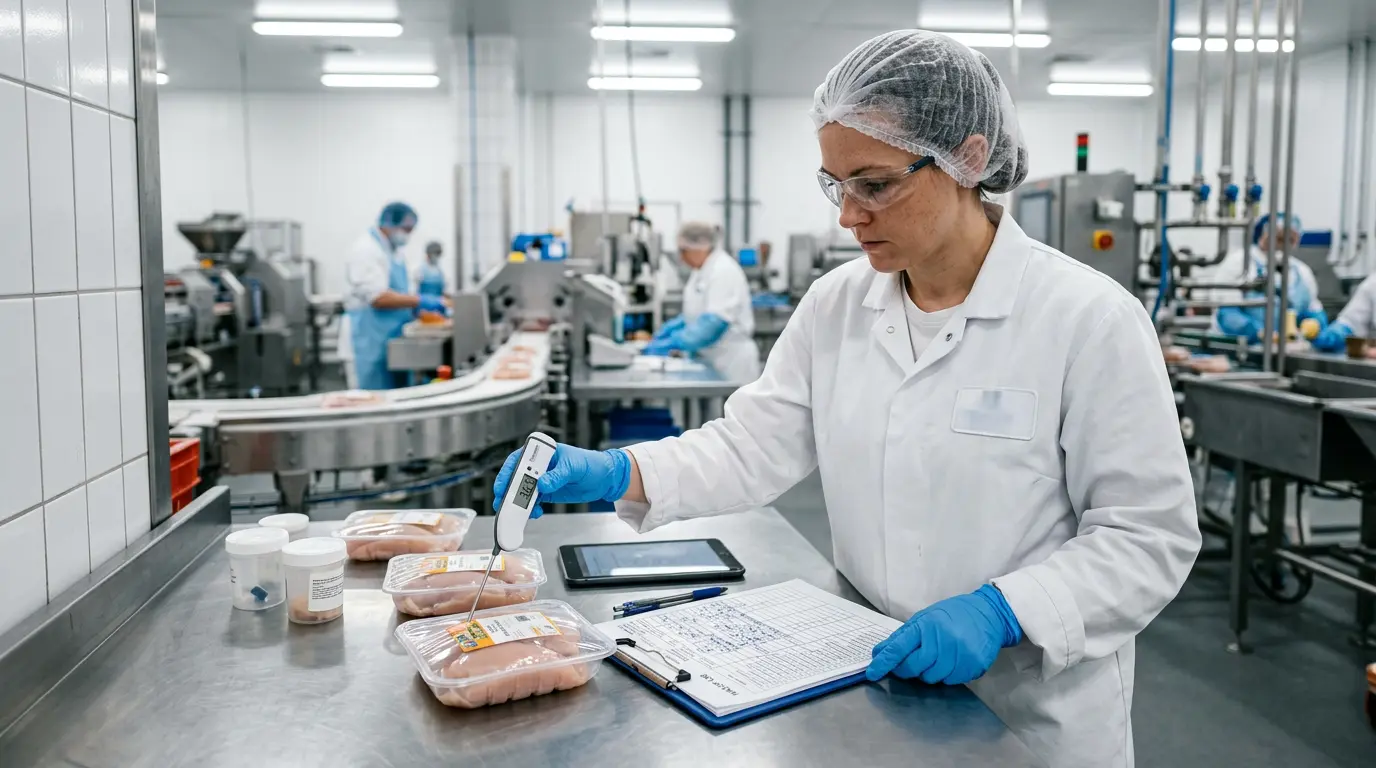

ISO 22000:2018 Standard and DSTU ISO 22000:2019: Complete Guide and Dual PDCA Loop Architecture
When a commercial director at a dairy plant, meat processing facility, oilseed crushing complex, or flexible packaging factory enters vendor negotiations with national retail chains or European food distributors, the buyer's quality assurance team asks one question first: do you hold an active, accredited ISO 22000 certificate? Plenty of food operators mistakenly assume that a binder of internal orders and a basic HACCP plan written for local regulatory inspections will satisfy multinational procurement teams. In practice, it won't. A standalone hazard analysis plan covers your processing line, yet it says nothing about strategic supplier qualification, instrument metrology, sensor calibration drift, or board-level business risk analysis. That's why the ISO 22000:2018 standard (DSTU ISO 22000:2019) operates as the global engineering baseline that merges shop-floor hazard control with a full corporate management system.
Why does isolated workshop control break down so often during real production runs? Picture a routine shift on a milk pasteurization line or a canned food retort sterilizer. Your lead technologist has calculated the exact thermal lethality values, but the purchasing department switches the supplier of twist-off cap plastisol gaskets to save 4% on procurement costs without validating plasticizer migration into fatty foods. Or consider another classic plant failure: the chief engineer extends the replacement interval on sterile compressed air filters used for blowing out PET bottles before filling. No temperature log on the shop floor will catch that contamination risk. ISO 22000:2018 closes that gap by embedding the food hygiene principles of the FAO/WHO Codex Alimentarius Commission directly into the ISO High Level Structure (HLS, Annex SL).
How the Dual PDCA (Plan-Do-Check-Act) Loop Works in ISO 22000:2018
What separates ISO 22000:2018 from the withdrawn 2005 edition and from general quality management under ISO 9001 is its synchronized Dual PDCA (Plan-Do-Check-Act) architecture. If your food safety team doesn't connect these two loops, your Food Safety Management System (FSMS / СУБХП) quickly degenerates into dead paperwork. When engineers at Ekontrol (Еконтроль) design an FSMS for a manufacturing plant, we build hard procedural and data links between both control circuits:
- The Organizational PDCA Loop (Clauses 4, 5, 6, 7 and Clauses 9, 10). This upper loop governs strategic management across the company. During the Plan phase, management defines internal and external environmental issues and interested party requirements (Clause 4), establishes executive leadership and accountability (Clause 5), evaluates business risks and sets measurable FSMS objectives (Clause 6), and allocates infrastructure, competence, and documented information resources (Clause 7). The Check phase runs through system performance monitoring, internal auditing, and executive management review (Clause 9), while the Act phase drives systemic corrective actions and continual updating of the FSMS (Clause 10).
- The Operational PDCA Loop (Clause 8 Operation). Nested directly inside the Do box of the organizational loop, this engineering circuit executes Codex Alimentarius principles on the production floor. It covers Prerequisite Programs or PRPs (Clause 8.2), forward and backward lot traceability (Clause 8.3), emergency preparedness and blackout protocols (Clause 8.4), hazard analysis and the OPRP/CCP hazard control plan (Clause 8.5), updating of preliminary information (Clause 8.6), metrological control of monitoring and measuring equipment (Clause 8.7), pre-operational validation and ongoing verification (Clause 8.8), and control of product and process nonconformities, corrections, and market withdrawals (Clause 8.9).
Honestly, during a Stage 2 certification audit, the lead auditor isn't impressed by colorful flowcharts on the wall; they test the live interface between these two loops. Suppose your inline X-ray detector on a flour packing line triggers three times in one quarter because a sifter mesh keeps fatiguing and shedding stainless steel wire (Clause 8.9). That operational failure must automatically feed into Management Review inputs (Clause 9.3), trigger capital allocation to replace the sifter screen frame (Clause 7.1.3), and update the plant's risk register (Clause 6.1). If those two loops don't talk to each other, you'll walk away with a systemic nonconformity.
Legal Equivalence of DSTU ISO 22000:2019 (IDT) and International ISO 22000:2018 in Ukraine
Quality directors operating in Ukraine frequently ask whether they should certify against international ISO 22000:2018 or national DSTU ISO 22000:2019 (ДСТУ ISO 22000:2019). From an engineering and normative standpoint, they're identical. Ukraine's National Standardization Body (SE "UkrNDNC") adopted DSTU ISO 22000:2019 as an identical translation with degree of correspondence IDT (Identical). Every clause from 1 to 10, every subclause requirement, every annex, and all 45 normative definitions match word for word.
Where does the distinction matter in day-to-day operations?
- For domestic public procurement tenders, municipal school or hospital catering contracts, defense food supply, and state regulatory inspections conducted by the State Service of Ukraine on Food Safety and Consumer Protection (SSUFSCP / Держпродспоживслужба) under Law of Ukraine No. 771/97-VR "On Basic Principles and Requirements for Food Safety and Quality", tender committees and state inspectors expect to see the national code
DSTU ISO 22000:2019in Ukrainian. - For cross-border export contracts, B2B ingredient supply to multinational food groups, and shipments to the European Union, the United Kingdom, the Middle East (MENA), or North America, foreign buyers require the international designation
ISO 22000:2018in English.
Here's the practical approach we use across client projects, including our ISO 22000 certification of TAS Agro grain elevators and seed plant: request dual-code certification during a single audit. Your accredited certification body audits the facility once and issues bilingual certificates referencing both ISO 22000:2018 and DSTU ISO 22000:2019 without doubling your audit man-days.
Watch Out for Obsolete ISO 22000:2005 References in Tender Specifications
Legacy procurement templates and older B2B supply contracts occasionally still cite ISO 22000:2005 or DSTU ISO 22000:2007. Those editions were officially withdrawn when the 2018 revision was published, and all certificates issued under the 2005 version expired permanently in June 2021. If a buyer's tender documentation mentions the 2005/2007 edition, submit a formal clarification request to update the specification to ISO 22000:2018 (DSTU ISO 22000:2019).
Food Safety Management System Requirements Across Clauses 4-7: Context, Leadership, Strategic Risks, and Support
Passing a third-party certification audit without Major Nonconformities requires mastering the food safety management system requirements across Clauses 4 to 10. Clauses 1 through 3 establish the scope, normative references, and 45 core definitions (separating concepts such as "significant food safety hazard", "acceptable level", "critical limit", and "action criterion"). Auditable requirements begin in Clause 4.
Clause 4. Context of the Organization and Defining the FSMS Scope
Clause 4.1 requires your organization to identify internal and external issues that affect its ability to deliver safe food consistently. Generic macroeconomic statements won't pass muster with a technical auditor. You need concrete operational and regulatory factors: grid power instability affecting cold-chain chambers, seasonal mycotoxin spikes (such as deoxynivalenol and zearalenone) in harvested grain, aging municipal water mains, shortages of trained microbiologists, updated EU maximum residue limits (MRLs) for pesticides or veterinary drugs, and cybersecurity vulnerabilities in SCADA-controlled pasteurization or dosing lines.
Under Clause 4.2, you map interested parties (regulatory inspectors from SSUFSCP, vulnerable consumer groups and allergy sufferers, retail chains, B2B industrial buyers, pest control contractors, packaging suppliers, and shareholders) alongside their binding statutory and contractual requirements. Clause 4.3 then mandates a precise FSMS Scope Statement: physical site addresses, production lines, product categories, and the corresponding food chain category under ISO 22003-1:2022. Fair warning: you can't cherry-pick your scope. The standard prohibits excluding any process, storage area, or subcontracted operation on the site if it can impact the safety of the finished product.
Clause 5. Leadership, Food Safety Policy, and Food Safety Team (FST) Authority
The 2018 revision eliminated the old "Management Representative" role so plant directors can't delegate food safety accountability entirely to a quality manager. Clause 5.1 requires top management to demonstrate active leadership: the CEO or Plant Director participates directly in Stage 1 and Stage 2 opening and closing meetings, defends capital budgets for hygienic zoning upgrades, and signs off on the Food Safety Policy (Clause 5.2).
Clause 5.3 mandates appointing a multidisciplinary Food Safety Team (FST) and a qualified FST Leader. If your FST roster only lists quality technologists, the auditor will flag a weakness right away. A real FST must include the chief engineer or maintenance manager (who understands heat-exchanger pressure differentials and food-grade NSF H1 lubricants), the production manager, the warehouse supervisor, the laboratory head, and procurement specialists. We break down practical methods for keeping this group active in our guide on how to boost food safety team engagement.
Clause 6. Planning: Strategic Business Risks (Clause 6.1) vs Operational Food Hazards (Clause 8.5)
Here's one of the most frequent traps during ISO 22000 implementation: confusing organizational business risks under Clause 6.1 with biological, chemical, or physical product hazards under Clause 8.5. If your Clause 6.1 risk register lists "glass fragments in jars" or "Salmonella survival in poultry meat", the auditor will raise a nonconformity. Why does that distinction matter?
- Clause 8.5 addresses direct food safety hazards inside the raw materials, process steps, and finished products through the HACCP/OPRP plan.
- Clause 6.1 addresses macro-level organizational risks and opportunities that could undermine the FSMS as a system: sudden bankruptcy of your sole approved supplier of starter cultures, high turnover among night-shift sanitation crews, customs delays holding up antibiotic rapid-test kits, or the strategic opportunity to launch an allergen-free production line in a segregated building.
Clause 6.2 requires measurable FSMS objectives linked to specific KPIs, baselines, deadlines, budgets, and owners. Vague slogans like "improve product safety" aren't auditable. A proper engineering objective reads like this: "Reduce unscheduled pasteurizer flow-diversion events caused by boiler steam pressure drops from 5 per year to 0 by October 30 by installing an automated pressure-regulating station (budget EUR 4,500, owner: Chief Power Engineer)." Clause 6.3 governs management of change (MoC): relocating a partition wall, introducing recycled-content packaging film, or changing CIP chemical suppliers must undergo documented hazard and risk review before implementation.
Clause 7. Support: Hygienic Infrastructure, Supplier Control (7.1.6), and Documented Information
Clause 7 builds the physical, human, and informational backbone of your FSMS:
- Resources, Infrastructure, and Work Environment (7.1.1-7.1.4): hygienic plant layout designed for linear forward flow (preventing cross-intersection between raw materials, waste, and ready-to-eat products), acid-resistant sloped floors draining into trapped gullies, and positive-pressure HVAC systems with HEPA filtration in high-care packaging rooms.
- Externally Developed FSMS Elements (7.1.5): if you use external engineering consultants or sector hygiene codes to build parts of your FSMS, you must prove those elements were specifically adapted to your facility's equipment and validated by your FST.
- Control of Externally Provided Processes, Products, and Services (7.1.6): a frequent source of Major findings. You must establish documented qualification, incoming inspection, and annual performance evaluation not only for raw materials and ingredients, but also for primary food-contact packaging, third-party cold storage and transport, workwear laundries, pest control contractors, calibration labs, and waste disposal firms. You also need an explicit Emergency Procurement protocol for urgent spot-market purchases.
- Competence and Awareness (7.2-7.3): attendance sheets from annual lectures aren't enough. Auditors check training effectiveness by interviewing line operators at their stations and asking what they do if metal detector test-piece rejection fails.
- External and Internal Communication (7.4): structured communication matrices with suppliers, customers, and statutory authorities (SSUFSCP), plus mandatory internal triggers requiring departments to notify the FST before introducing new recipes, equipment modifications, cleaning regimes, or regulatory updates.
- Documented Information (7.5): strict version control separating maintained documents (SOPs, specifications, policies) from retained records (batch pasteurization charts, sanitation logs, calibration certificates), with retention periods exceeding product shelf life by at least 6 to 12 months.
Operational Control in Clause 8 (8.1-8.5): ISO 22002 PRPs, Mass-Balance Traceability, and Codex Alimentarius Hazard Analysis
Clause 8 consumes over 60% of your on-site Stage 2 audit time. This is where the auditor leaves the conference room and inspects your receiving docks, processing lines, CIP stations, chemical cages, and boiler house.
Clause 8.2. Prerequisite Programs (PRPs) and the ISO 22002:2025 Series Architecture
Prerequisite Programs (PRPs) establish the baseline sanitary environment across the plant before you even begin calculating specific hazard control points. Clause 8.2.4 of ISO 22000:2018 lists 12 mandatory PRP domains: building construction and layout, workspace and employee facilities, utilities (air, water, steam, energy), waste and sewage disposal, equipment suitability and maintenance accessibility, supplier approval and incoming material handling, prevention of cross-contamination (microbiological, physical, and allergen), cleaning and sanitizing (SSOP), pest control, personnel hygiene, rework handling, product withdrawal procedures, and warehousing.
However, ISO 22000:2018 intentionally avoids prescribing detailed engineering metrics (such as micron ratings for culinary steam filters or lux levels above inspection conveyors). Those technical specifications come from the ISO/TS 22002 series and the modernized ISO 22002:2025 architecture:
- ISO 22002-100:2025 establishes the unified common PRP core across the food, feed, and packaging supply chain;
- sector-specific standards define specialized engineering rules for food manufacturing (ISO 22002-1:2025, replacing
ISO/TS 22002-1:2009), catering (ISO 22002-2:2025), farming (ISO/TS 22002-3), food packaging manufacturing (ISO 22002-4:2025), transport and storage (ISO 22002-5:2025), and animal feed production (ISO/TS 22002-6).
For a deep engineering breakdown of how the 2025 revision changed hygiene zoning, air quality, and sanitation validation, check our technical guide on the ISO 22002:2025 series PRP updates.
Clauses 8.3 and 8.4. Mass-Balance Traceability and Emergency Preparedness
Under Clause 8.3, your traceability system must track every lot "one step back and one step forward": from incoming raw materials, spices, processing aids, and primary food-contact packaging rolls through intermediate tanks and rework additions to every pallet shipped to each customer. During the certification audit, the auditor picks a finished product batch code at random and starts a stopwatch. Your team must produce a complete vertical traceability file including a Mass Balance reconciliation (accounting for raw material inputs, technological moisture loss, trim waste, lab samples, rework, and finished goods output within a 98-102% balance window) in under 4 hours.
Clause 8.4 requires documented and annually tested emergency preparedness protocols. In 2026, auditors pay particular attention to unannounced power blackouts (diesel generator switchover time, thermal hold curves inside cold stores with sealed doors, disposition rules for product trapped inside plate pasteurizers when pumps stop), municipal water contamination, ammonia or freon refrigerant leaks, and ERP ransomware outages requiring instant fallback to paper batch logs.
Clause 8.5. Hazard Analysis and Dynamic Separation of PRPs, OPRPs, and CCPs
Clause 8.5 translates the 12 steps and 7 principles of Codex Alimentarius into an engineering control plan. The workflow begins with preliminary steps (8.5.1): raw material and packaging specifications, finished product characteristics ($pH$, water activity $a_w$, preservative concentrations, Modified Atmosphere Packaging gas ratios, shelf-life storage temperatures), intended use (including foreseeable consumer misuse and vulnerable subpopulations), and detailed process flow diagrams physically verified on the shop floor.
Next, for every step on the flow diagram, the FST identifies reasonably expected food safety hazards across five categories:
- Biological hazards: vegetative bacterial pathogens (Salmonella spp., Listeria monocytogenes, enterohemorrhagic E. coli O157:H7, Campylobacter jejuni), spore-forming bacteria (Clostridium botulinum, Bacillus cereus), enteric viruses (Norovirus, Hepatitis A), and parasites.
- Chemical hazards: mycotoxins (aflatoxins B1/M1, ochratoxin A, DON, patulin), pesticide and veterinary drug residues (antibiotics), heavy metals (lead, cadmium, mercury, inorganic arsenic), dioxins and PCBs, acrylamide, CIP cleaning chemical residues (caustic soda, peracetic acid, quaternary ammonium compounds), non-food-grade lubricants, and packaging monomer migration.
- Physical hazards: sharp or hard foreign bodies capable of causing choking or dental/gastrointestinal injury (glass splinters, brittle hard plastic, ferrous/non-ferrous/stainless steel swarf from worn blades or sieves, stones, bone fragments).
- Allergens: statutory major allergens requiring strict segregation and label declaration (gluten-containing cereals, crustaceans, eggs, fish, peanuts, soybeans, milk/lactose, tree nuts, celery, mustard, sesame, sulfites above 10 mg/kg, lupin, molluscs).
- Radiological hazards: radionuclides ($^{137}\text{Cs}$, $^{90}\text{Sr}$) in wild forest berries, mushrooms, honey, or agricultural raw materials from monitored regions.
Each identified hazard is evaluated using a quantitative matrix of Likelihood of Occurrence ($P$) $\times$ Severity of Adverse Health Effects ($S$) assuming no specific control is applied. Any hazard exceeding the threshold score is designated a Significant Food Safety Hazard and subjected to control measure categorization (Clause 8.5.2.4) to divide operational defenses into two distinct tiers:
- Critical Control Point (CCP): a step where a control measure operates against measurable Critical Limits (such as HTST milk pasteurization at $76\ ^\circ\text{C}$ for at least 20 seconds with an automatic flow-diversion valve), and where continuous or high-frequency monitoring detects any loss of control in real time so the line stops or diverts before unsafe product escapes.
- Operational Prerequisite Program (OPRP): a specific control measure managing a significant hazard through an observable or measurable Action Criterion rather than a strict physical critical limit, where monitoring confirms that the control measure is working as intended (for example, start-of-shift and end-of-shift visual integrity checks of a 600-micron sifter screen, conductivity and titration verification of CIP caustic wash after an allergen run, or checking 10,000-Gauss neodymium magnetic traps).
| ISO 22000:2018 (DSTU ISO 22000:2019) Clause | Core Engineering Requirement | Mandatory Documented Information (Maintained & Retained) | Typical Certification Audit Nonconformity |
|---|---|---|---|
| Clause 4. Context of the Organization (4.1-4.4) | Analyze internal/external issues, interested party requirements, and define the FSMS scope under ISO 22003-1 categories | Context and interested parties matrices, documented FSMS Scope Statement listing sites, processes, and products | Attempting to exclude an on-site warehouse or packing line from the scope; copy-pasting generic economic context without food safety specifics |
| Clause 5. Leadership (5.1-5.3) | Executive commitment, Food Safety Policy, appointment of a multidisciplinary Food Safety Team (FST) and FST Leader | Signed Food Safety Policy, FST appointment order, organizational responsibility and authority matrix | Staffing the FST exclusively with quality specialists while omitting engineering/maintenance; lack of formal HACCP training records for the FST Leader |
| Clause 6. Planning (6.1-6.3) | Assess organizational business risks and opportunities, establish measurable FSMS objectives, manage system changes | Organizational Risk & Opportunity Register (6.1), FSMS Objectives action plan with KPIs, budgets, and owners (6.2) | Confusing Clause 6.1 business risks with Clause 8.5 product hazards; setting vague slogans instead of numeric targets |
| Clause 7. Support (7.1-7.5) | Hygienic infrastructure, supplier/contractor qualification (7.1.6), competence verification, communication, document control | Approved supplier list and evaluation criteria, training effectiveness records, contractor SLAs, document control SOP | Failing to evaluate primary packaging suppliers, hauliers, or pest control contractors; obsolete SOP versions posted at workstations |
| Clause 8. Operation & Hazard Control (8.1-8.5) | PRPs (ISO 22002), forward/backward traceability & mass balance, emergency drills, hazard analysis, OPRP/CCP plan | PRP procedures and checklists, mock recall & blackout drill reports, hazard analysis worksheets, HACCP/OPRP control plan | Mixing up CCP critical limits with OPRP action criteria; failing to perform physical 4-hour mass-balance traceability and blackout drills |
| Clause 8. Verification & Nonconformities (8.6-8.9) | Metrological calibration (8.7), pre-operational validation & ongoing verification (8.8), corrections, CAPA, and recall (8.9) | Calibration certificates, control measure validation dossiers, ISO/IEC 17025 lab test reports, quarantine & CAPA logs | Operating CCPs/OPRPs without scientific or experimental validation records; closing deviations with "retrained operator" instead of root-cause analysis |
| Clauses 9 & 10. Performance Evaluation & Improvement | KPI analysis, impartial ISO 19011 internal audits (9.2), executive Management Review (9.3), CAPA, and FSMS updating | Risk-based internal audit schedule, checklists and reports, Management Review minutes (inputs/outputs), FSMS update log | Quality manager auditing their own procedures (violating impartiality) or internal audit reports showing zero findings across an entire year |
Metrology, Pre-Operational Validation, ISO/IEC 17025 Laboratory Testing (8.6-8.9), and Performance Evaluation (Clauses 9-10)
Drafting a hazard analysis table is only half the battle. Clauses 8.6 through 8.9 and Clauses 9 to 10 require hard empirical proof that your monitoring instruments are accurate and your control measures actually eliminate target hazards.
Clause 8.7. Metrological Control of Monitoring and Measuring Equipment
Every PT100 temperature probe on a pasteurizer, pressure transmitter on a retort, inline pH meter, refractometer, nitrite dosing scale, metal detector, and X-ray inspection unit must be uniquely identified, protected from unauthorized adjustment, and calibrated or verified at specified intervals traceable to national or international measurement standards.
Where do food plants usually trip up during a Clause 8.7 audit? They forget to define what happens when a reference check reveals that a cold-room sensor or oven probe has drifted out of tolerance by $+2.5\ ^\circ\text{C}$. Under Clause 8.7, whenever an instrument is found out of calibration, your team must formally assess the validity of all previous monitoring results recorded since the last passed calibration and quarantine or review every affected batch under Clause 8.9.4.
Clause 8.8 and Analytical Testing in Accredited ISO/IEC 17025 Laboratories
Clause 8.8 draws a sharp engineering boundary between two activities that auditors scrutinize heavily:
- Validation (Clause 8.8.1): obtaining objective empirical or scientific evidence prior to routine operation (and whenever a process changes) that a selected OPRP or CCP control measure is actually capable of achieving the intended hazard reduction. Validation includes thermal distribution mapping (Cold Spot testing in retorts, ovens, or smokehouses), challenge studies, or peer-reviewed lethality models.
- Verification (Clause 8.8.2): ongoing scheduled testing and auditing during routine production to confirm that the specified PRPs, OPRPs, and CCPs are being followed and remain effective.
Laboratory competence sits at the center of Clause 8.8.2 verification. For external auditors and foreign retail buyers to accept your verification test reports for pathogens (Salmonella, Listeria monocytogenes), mycotoxins, heavy metals, pesticide residues, allergens, environmental swabs, and potable water quality, analytical testing must be performed by testing laboratories accredited under ISO/IEC 17025 (DSTU EN ISO/IEC 17025:2019) with those exact test methods included in their accreditation scope. If your facility runs an unaccredited in-house plant lab for daily shift checks, its accuracy must be cross-verified periodically through proficiency testing or split-sample comparisons with an accredited ISO/IEC 17025 laboratory.
Clause 8.9 and Clauses 9-10: Managing Nonconforming Product, Internal Audits, and Management Review
When a CCP critical limit is breached or an OPRP action criterion isn't met on the production floor, Clause 8.9 enforces a strict sequence:
- Exceeding a CCP Critical Limit: every unit of product manufactured since the last compliant check is automatically classified as a Potentially Unsafe Product. It must be immediately quarantined both physically (red hold tags in a locked cage) and digitally in your ERP/WMS inventory system. It cannot be released until it undergoes formal disposition evaluation (reprocessing, diversion to non-food/feed use if safe, or destruction).
- Failing an OPRP Action Criterion: the FST investigates the cause of the failure, evaluates the specific food safety consequences for the affected lot, and determines whether product quarantine or recovery is required.
- Correction vs Corrective Action: operators execute an immediate Correction (8.9.2) on the affected process and lot, while the FST performs structured Root Cause Analysis (using 5 Whys or Ishikawa fishbone diagrams) to implement a Corrective Action (8.9.3) that prevents recurrence.
In Clause 9, the organization evaluates overall FSMS performance. Clause 9.2 mandates risk-based internal audits conducted according to ISO 19011 by trained auditors who are independent of the area being audited. Clause 9.3 requires top management to conduct formal Management Reviews covering all required inputs (audit findings, CCP/OPRP trends, customer complaints, recall drills, resource adequacy) and generating documented outputs. Finally, Clause 10 governs systemic nonconformities (10.1), continual improvement (10.2), and systematic updating of the FSMS by the FST (10.3).
Certification Stages Under ISO 22003-1:2022: Food Chain Categories (A-K) and Audit Duration Calculation
Accredited certification bodies (CBs) don't guess or negotiate audit durations arbitrarily. Every accredited FSMS audit is governed by ISO 22003-1:2022 (Food safety, Part 1: Requirements for bodies providing audit and certification of food safety management systems, which replaced ISO/TS 22003:2013). Understanding the ISO 22003-1:2022 certification stages and categories lets you calculate your exact audit man-days in advance and verify quotes from certification bodies.
Food Chain Categories Under ISO 22003-1:2022 Annex A (A, B, C, D, E, F, G, H, I, K)
Annex A (Table A.1) of ISO 22003-1:2022 divides the entire food supply chain into 10 primary categories (note that letter J isn't used in the 2022 revision). Each category dictates the auditor's required food-science education, industry work experience, and examination credentials:
- Category A (Farming of Animals / Animal Production): raising livestock, poultry, aquaculture (fish and seafood), raw milk production, egg farming, and beekeeping (subcategories
AIandAII). - Category B (Farming of Plants / Plant Production): cultivating grains, oilseeds, pulses, fruits, vegetables, nuts, and herbs (
BI,BII), plus Subcategory BIII covering pre-process handling of plant products that doesn't transform the intrinsic nature of the crop, such as washing, sorting, grading, drying, and silo/elevator cleaning of grain. - Category C (Food Manufacturing): the core industrial processing sector, split into five subcategories:
C0(animal primary conversion: slaughterhouses, carcass cutting, gutting, raw milk collection),CI(processing of perishable animal products: meat sausages, poultry, fish fillets, dairy products),CII(processing of perishable plant products: fresh juices, ready-to-eat salads, fermented vegetables),CIII(processing of perishable animal and plant mixed products: ready meals, pizza, dumplings, cream pastries), andCIV(processing of ambient-stable products: refined edible oils, flour, sugar, canned foods, snacks, chocolate, beer, bottled water, dry pasta). - Category D (Animal Feed Production): manufacturing compound feed, premixes, forage, and feed ingredients for food-producing animals, plus pet food production.
- Category E (Catering / Food Service): commercial kitchens, restaurants, airline and rail catering, school and hospital canteens, and hotel food service.
- Category F (Trading, Retail, Wholesale, and Brokering): retail supermarkets and wholesale cash-and-carry stores (
FI), as well as food brokers, grain traders, and e-commerce suppliers who buy and sell products without taking physical custody (FII). - Category G (Transport and Storage Services): ambient and temperature-controlled warehousing, cold-chain logistics, grain storage terminals, and road/sea tanker or reefer transport of food, feed, and packaging.
- Category H (Services): auxiliary food-chain services such as industrial water supply, tanker CIP washing stations, workwear laundering, pest control services, and contract toll-packing.
- Category I (Production of Packaging Material): manufacturing primary and secondary food-contact and feed-contact packaging materials (flexible films, laminates, PET preforms and bottles, glass jars, metal cans, corrugated board, labels, food-contact adhesives).
- Category K (Production of Bio-chemicals): manufacturing food and feed additives, vitamins, minerals, flavorings, enzymes, starter cultures, processing aids, and food-grade gases ($\text{CO}_2$, $\text{N}_2$).
Mathematical Formula for Minimum Audit Duration ($T_s = D + T_H + T_{FTE} + T_{sites}$)
Under Annex B (Table B.1) of ISO 22003-1:2022, the minimum initial certification audit duration (Stage 1 + Stage 2 combined) expressed in 8-hour auditor working days on site (excluding travel and lunch breaks) is calculated using the formula:
$$T_s = D + T_H + T_{FTE} + T_{sites}$$
(written in ISO 22003-1:2022 Annex B for a single site as $D_s = T_D + T_H + T_{FTE}$). Here's how each engineering variable is determined:
- $D$ (or $T_D$) - Basic On-Site Audit Time: a baseline number of auditor days assigned to your specific food chain category in Table B.1 (ranging from
0.75days for Category FII brokers up to1.5or2.0days for industrial Categories C, I, and K). This base figure automatically includes the evaluation of one basic HACCP study. - $T_H$ - Additional Audit Days for Extra HACCP Studies: if your facility runs multiple distinct processing technologies with different hazards and separate HACCP plans (for instance, a dairy plant running fluid pasteurized milk, hard ripened cheese, and spray-dried whey powder has 3 distinct HACCP studies), you add $T_H$ (typically
0.25or0.5auditor days depending on category) for each additional HACCP study beyond the first. - $T_{FTE}$ - Full-Time Equivalent Personnel Scaling Factor: accounts for the total effective headcount involved in food safety activities across all shifts (operators, technologists, lab staff, warehouse handlers, maintenance mechanics, and seasonal workers). Table B.1 sets the following standardized $T_{FTE}$ tiers:
- 1 to 5 FTEs:
+0.0days; - 6 to 49 FTEs:
+0.5days; - 50 to 99 FTEs:
+1.0day; - 100 to 199 FTEs:
+1.5days; - 200 to 499 FTEs:
+2.0days; - 500 to 999 FTEs:
+2.5days; - 1,000 or more FTEs:
+3.0days (scaling upward for larger plants).
- 1 to 5 FTEs:
- $T_{sites}$ - Additional Time for Multi-Site Organizations: if a certificate covers multiple branches, elevators, warehouses, or catering units under a single centrally controlled FSMS, time is calculated for the central function plus each sampled or audited site (note that multi-site sampling is prohibited for manufacturing Categories C, D, I, and K, where every production plant must be audited individually).
Worked Engineering Calculation Example: Consider a meat processing plant classified under Category CI (where base time $D = 1.5$ days) employing 140 FTE staff across two shifts ($T_{FTE} = 1.5$ days for the 100-199 bracket) and operating 3 separate HACCP studies (carcass deboning/chilling, cooked emulsified sausages, and dry-cured fermented salami, meaning 2 additional HACCP studies at $T_H = 0.5$ days each, so $2 \times 0.5 = 1.0$ day) at a single location ($T_{sites} = 0$). The minimum initial certification audit duration is:
$$T_s = 1.5 + 1.0 + 1.5 + 0 = 4.0\text{ auditor-days}$$
Roughly 30% of that total (1.0-1.5 days) is allocated to Stage 1 (readiness review of documentation, hazard analysis methodology, validation records, and site walk-through), while 70% (2.5-3.0 days) is spent on Stage 2 (full shop-floor audit of live production, CCP/OPRP records, and operator interviews). Annual surveillance audits in Year 1 and Year 2 require $1/3$ of $T_s$ (minimum 1.0 day), and the Year 3 recertification audit requires $2/3$ of $T_s$.
| ISO 22003-1:2022 Category | Food Chain Sector & Typical Operations | Applicable ISO 22002 PRP Standard | Base Audit Time D (Days) & Additional HACCP Study Factor TH |
|---|---|---|---|
| Categories A & B (AI, AII, BI, BII, BIII) | Livestock and poultry farms, aquaculture, crop farming, and pre-process plant handling such as grain elevators, drying, and sorting (BIII) | ISO 22002-100:2025 + ISO/TS 22002-3 (or ISO 22002-1 for Subcategory BIII) | D = 0.75-1.5 days; TH = 0.25-0.5 days per additional crop/livestock study |
| Category C (C0, CI, CII, CIII, CIV) | Slaughterhouses, dairy and meat plants, fish processors, bakeries, confectionery, edible oil refineries, beverage and canning factories | ISO 22002-100:2025 + ISO 22002-1:2025 (ISO/TS 22002-1:2009) | D = 1.5-2.0 days; TH = 0.5 days per additional HACCP study |
| Category D | Compound animal feed mills, premix plants, oilseed meal processors for livestock, and pet food manufacturers | ISO 22002-100:2025 + ISO/TS 22002-6 | D = 1.5 days; TH = 0.5 days per additional feed process group |
| Category E | Central kitchens, contract catering, restaurant chains, airline/rail catering, hospital and school food service units | ISO 22002-100:2025 + ISO 22002-2:2025 (ISO/TS 22002-2) | D = 1.0 day; TH = 0.5 days per additional culinary process group |
| Categories F & G (FI, FII, G) | Retail supermarkets, wholesale distributors, grain traders and food brokers (FII), cold stores, and bulk/reefer transport operators (G) | ISO 22002-100:2025 + ISO 22002-5:2025 (transport and storage) | D = 0.75-1.0 day; TH = 0.25 days per additional storage/transport regime |
| Category I | Manufacturing of food-contact flexible films, PET preforms/bottles, glass jars, metal cans, corrugated cartons, closures, and labels | ISO 22002-100:2025 + ISO 22002-4:2025 (ISO/TS 22002-4) | D = 1.5 days; TH = 0.5 days per distinct conversion technology (extrusion, printing, molding) |
| Category K | Manufacturing of food and feed additives, vitamins, flavorings, enzymes, starter bio-cultures, and food-grade processing gases | ISO 22002-100:2025 + ISO 22002-1:2025 | D = 1.5-2.0 days; TH = 0.5 days per additional biochemical or synthesis line |
Difference Between HACCP, ISO 22000, and GFSI Schemes (FSSC 22000, BRCGS, IFS): Domestic vs Export Selection Matrix
Before signing a consulting or certification contract, executives need a clear answer on the difference between HACCP, ISO 22000, and FSSC 22000, and when a business must step up to a scheme benchmarked by the Global Food Safety Initiative (GFSI).
Why GFSI Doesn't Benchmark Standalone ISO 22000 and What FSSC 22000, BRCGS, and IFS Add
Standalone ISO 22000 is an ISO management system standard, not a GFSI-benchmarked certification scheme. Why doesn't GFSI benchmark standalone ISO 22000:2018? Three technical reasons stand out: first, Clause 8.2 defines Prerequisite Programs only in broad terms without mandating sector-specific ISO 22002 standards; second, it lacks dedicated normative modules for intentional product sabotage (Food Defense / TACCP) and economically motivated adulteration (Food Fraud / VACCP); third, it doesn't require mandatory unannounced surveillance audits.
When global FMCG manufacturers (Nestle, Mondelez, Danone, PepsiCo, Unilever, Mars) or European supermarket chains demand a GFSI-recognized certificate, suppliers choose among three primary schemes:
- FSSC 22000 (Food Safety System Certification 22000): governed by Foundation FSSC, this scheme uses
ISO 22000:2018word-for-word as its management core, makes the relevantISO 22002PRP standard mandatory, and adds 18 FSSC Additional Requirements (Clauses 2.5.1-2.5.18: mandatory ISO/IEC 17025 lab testing, TACCP, VACCP, Food Safety Culture, allergen validation, pathogen Environmental Monitoring Programs across Zones 1-4, hygienic equipment design, and at least one unannounced audit every 3 years). For a side-by-side breakdown, see our article on ISO 22000 vs FSSC 22000: key differences and how to choose. - BRCGS Food Safety (Issue 9): the British Retail Consortium standard required by UK retailers (Tesco, Sainsbury's, ASDA, Marks & Spencer), Nordic chains, and global quick-service restaurant brands. It features highly prescriptive shop-floor rules, strict high-risk/high-care zoning, and letter grades (
AA, A, B, C, D, plus+for unannounced audits). - IFS Food (Version 8): the International Featured Standards scheme favored by German, French, Polish, Italian, and Austrian retail groups (Lidl, Aldi, Kaufland, Carrefour, Auchan, Metro, Biedronka) especially for Private Label suppliers, utilizing percentage scoring and Knock-Out (KO) clauses.
Practical Selection Rule for Food, Feed, and Packaging Operators
How do you pick the right standard without overspending?
- If you operate strictly on the local domestic market (restaurants, institutional catering, small craft food workshops) and only need statutory compliance under Articles 20 and 21 of Law of Ukraine No. 771/97-VR, a properly implemented HACCP system satisfies state inspectors.
- If you supply national supermarket chains, bid on public procurement tenders, sell B2B raw materials or packaging to industrial processors, or export to Eastern Europe, the Caucasus, Central Asia, or MENA markets where buyers don't mandate GFSI, ISO 22000:2018 (DSTU ISO 22000:2019) delivers the best return on investment.
- Even better, certifying against
ISO 22000:2018first builds 75% of the technical architecture required for FSSC 22000, letting your team upgrade to full GFSI recognition in a single transition audit whenever a multinational buyer requires it.
| Engineering Comparison Criterion | Statutory HACCP (Codex / Law No. 771/97-VR) | ISO 22000:2018 (DSTU ISO 22000:2019) | FSSC 22000 Scheme (Version 6 / Version 7) | Retail Standards: BRCGS Food (Issue 9) & IFS Food (v8) |
|---|---|---|---|---|
| Normative Architecture | Operational 12-step, 7-principle methodology focused on process hazard analysis and CCP control | Full HLS management system (Clauses 4-10) combining Dual PDCA loops, PRPs, OPRPs, and CCPs | 3-component scheme: ISO 22000:2018 + sector ISO 22002 PRP standard + 18 FSSC Additional Requirements (2.5.1-2.5.18) | Prescriptive product and facility certification standards with letter grades/percentage scores and Knock-Out (KO) clauses |
| Legal & Commercial Status | Mandatory by statute for all food business operators in Ukraine and the EU (inspected by SSUFSCP) | Voluntary international/national standard; widely mandated in B2B supply contracts and public tenders | Voluntary international certification scheme benchmarked and recognized by GFSI | Voluntary GFSI-benchmarked standards; mandatory for Private Label manufacturers supplying EU and UK supermarkets |
| GFSI Benchmarking Recognition | No | No (serves as the ISO management core inside FSSC 22000) | Yes (full GFSI recognition across manufacturing, packaging, and storage/transport) | Yes (full GFSI recognition) |
| TACCP (Food Defense), VACCP (Food Fraud) & Pathogen EMP | Not required as standalone systems under baseline statutory rules | Addressed generally within organizational context (4.1) and emergency preparedness (8.4) | Mandatory standalone procedures for TACCP (2.5.3), VACCP (2.5.4), and Zone 1-4 pathogen EMP (2.5.7) | Mandatory detailed vulnerability assessments, site security plans, food safety culture plans, and pathogen zoning |
| Unannounced Audits & CAPA Closure Deadlines | State regulatory inspections scheduled by risk tier or triggered by complaints | Announced surveillance audits; nonconformities typically closed within 30-90 days per CB rules | Mandatory 1 unannounced surveillance audit every 3 years; strict 28-calendar-day limit to close all nonconformities | Mandatory unannounced audit once every 3 years (or annual option); strict certificate suspension rules |
| Target Markets & Best Fit | Domestic food service, local HoReCa, small craft processors meeting statutory Law No. 771/97-VR | National retail chains, B2B ingredient/packaging suppliers, public tenders, non-GFSI export markets | Multinational FMCG corporations (Nestle, Mondelez, Danone, Coca-Cola), global B2B ingredient and packaging exporters | Direct suppliers of branded and Private Label consumer foods to EU (Lidl, Aldi, Carrefour) and UK (Tesco, ASDA) retailers |
Planning ISO 22000:2018 Implementation or Upgrading Your Plant from HACCP?
Get an exact ISO 22003-1:2022 audit man-day calculation for your food chain category, an engineering gap assessment of your processing lines, and a transparent turnkey project budget.
Request an ISO 22000 Project EstimateNAAU Certification Audit Preparation, IAF CertSearch Verification, and SSUFSCP Inspections Under Law No. 771/97-VR
Even a well-engineered food safety system loses its commercial value if you pick an unaccredited certification body at the finish line. Dozens of intermediary brokers advertise "DSTU ISO 22000:2019 certificates in 48 hours for EUR 350 without a factory visit." Buying a unaccredited desktop certificate guarantees instant disqualification in public tenders and gets your company blacklisted by European retail compliance teams.
How Accredited Certification Works: NAAU, EA MLA, and Global Verification in IAF CertSearch
For an ISO 22000:2018 / DSTU ISO 22000:2019 certificate to hold legal weight in Ukraine and enjoy cross-border recognition across the European Union and global export markets, the issuing certification body must hold active accreditation under ISO/IEC 17021-1 combined with ISO 22003-1:2022 specifically covering your food chain category (CI, CIV, G, I, etc.).
In Ukraine, the sole statutory authority empowered to accredit conformity assessment bodies is the National Accreditation Agency of Ukraine (NAAU / НААУ). NAAU is a full signatory to the Multilateral Recognition Arrangements of the European co-operation for Accreditation (EA MLA) and the International Accreditation Forum (IAF MLA) for management system certification. Consequently, a certificate issued by an NAAU-accredited certification body (or an international CB accredited by DAkkS, UKAS, RvA, or PCA) carries full international legitimacy.
Before signing an audit contract with any certification body, run three verification checks:
- Look up the certification body in the official Registry of Accredited Management System Certification Bodies on the NAAU website and confirm its accreditation certificate is active.
- Open the Annex to the Accreditation Certificate (Scope of Accreditation) and verify that it explicitly lists
DSTU ISO 22000:2019(ISO 22000:2018) along with your exactISO 22003-1food chain category. - For export contracts, confirm that the certification body uploads its issued certificates to the global database of accredited certifications, IAF CertSearch. Foreign compliance officers and customs brokers use
IAF CertSearchto validate your certificate in under 30 seconds.
How DSTU ISO 22000:2019 Supports State Inspections Under Law of Ukraine No. 771/97-VR
Under Articles 20 and 21 of the Law of Ukraine No. 771/97-VR "On Basic Principles and Requirements for Food Safety and Quality" and Ministry of Agrarian Policy Order No. 590, every food business operator in Ukraine is legally required to develop, implement, and maintain permanent procedures based on HACCP principles. Operating without an active HACCP system triggers severe statutory fines under Article 65 of the Law on State Control (30 minimum monthly wages for legal entities and 15 for sole proprietors) and empowers the Chief State Veterinary or Sanitary Inspector to halt facility operations.
While state inspectors from SSUFSCP (Держпродспоживслужба) audit facilities against national statutory checklists rather than ISO standards directly, an active FSMS certified to DSTU ISO 22000:2019 satisfies 100% of the mandatory state HACCP audit checklist. Furthermore, under Ukraine's risk-based inspection scheduling rules, documented compliance and third-party food safety certification reduce a facility's calculated risk score, lowering the frequency of scheduled state inspections.
Three Red Flags of a Fake Unaccredited ISO 22000 Certificate
Walk away immediately if a broker or certification provider offers any of the following: 1) issuing a certificate in 1 to 5 days without conducting a two-stage on-site audit (Stage 1 + Stage 2) at your production facility; 2) printing the logo of a private "voluntary certification system" instead of the official accreditation symbol of NAAU or an EA/IAF MLA signatory; 3) refusing to provide a transparent audit man-day calculation under ISO 22003-1:2022. Unaccredited certificates fail verification in public tenders and IAF CertSearch.
Turnkey ISO 22000 Certification in Ukraine and FSMS Implementation in Food Manufacturing with Ekontrol
Building a working Food Safety Management System and passing accredited certification under ISO 22000:2018 / DSTU ISO 22000:2019 takes between 90 and 180 calendar days, depending on your facility's baseline infrastructure, number of HACCP studies, and workforce readiness. Why can't you rush a legitimate project in two weeks? Because before the certification body arrives for Stage 2, your facility must not only approve SOPs and hazard analysis plans, but also accumulate 2 to 3 months of genuine shop-floor CCP and OPRP monitoring logs, complete verification testing in ISO/IEC 17025 accredited laboratories, execute a full cycle of impartial internal audits (Clause 9.2), close internal nonconformities, and hold a formal Management Review (Clause 9.3). You can review our week-by-week project schedule in our step-by-step ISO 22000 certification preparation guide.
Over the past 12+ years, the engineering and lead auditor team at Ekontrol (Еконтроль) has delivered more than 200 successful food safety projects across the food industry and agriculture sector. Our turnkey implementation methodology runs across four structured engineering phases:
Phase 1. On-Site Diagnostic Gap Audit of Your Facility
Every engagement starts with a comprehensive on-site diagnostic audit across your receiving bays, processing rooms, packaging lines, warehouses, utility rooms, and laboratory. Our lead auditors trace the physical flow of raw materials, semi-finished products, packaging, personnel, air, and waste against ISO 22000:2018 and ISO 22002-1:2025 (ISO 22002-100:2025). You receive a prioritized engineering report with photo evidence of infrastructure gaps, practical engineering fixes that avoid unnecessary capital expenditure, and a fixed project timeline.
Phase 2. Custom FSMS Engineering and Shop-Floor Implementation
Through our turnkey management system implementation service, we never hand out generic shelfware binders. Working directly alongside your Food Safety Team, our food technologists and engineers:
- map and physically verify process flow diagrams for every product group and line;
- conduct rigorous 12-step Codex Alimentarius hazard analyses, build quantitative risk matrices, and establish clear boundaries between PRPs, OPRPs, and CCPs;
- compile pre-operational validation dossiers for critical limits and action criteria (Clause 8.8.1), and design practical shift logs that take operators less than two minutes to complete;
- build working procedures for supplier qualification (7.1.6), 4-hour mass-balance traceability (8.3), blackout and utility failure drills (8.4), and Clause 6.1 organizational risk management.
Phase 3. Practical Training for the FST, Internal Auditors, and CCP Operators
We split training into two focused tracks: in-depth methodology workshops on ISO 22000:2018 and ISO 19011 for your FST members and internal auditors, and hands-on 30-minute coaching directly beside the machinery for CCP and OPRP line operators. When the external auditor interviews your pasteurizer or metal detector operator during Stage 2, they know their exact critical limits, check frequencies, and quarantine actions.
Phase 4. Mock Audit, Stage 1 & Stage 2 Audit Support, and Annual Maintenance
Two weeks before the official certification audit, we run a full-scale Mock Audit simulating real auditor interviews and traceability drills, and help compile your Management Review package. Under our certification audit support service, we help select a reputable certification body accredited by NAAU or an international IAF MLA signatory, coordinate Stage 1 and Stage 2, and prepare root-cause analyses and CAPA evidence packages for any findings raised. After certification, our annual support program keeps your FSMS audit-ready for yearly surveillance visits and prepares your plant for direct upgrading to FSSC 22000.
Book an Engineering Estimate for Your ISO 22000 Certification Project
Want to know the exact number of ISO 22003-1:2022 audit man-days, accredited certification costs, and realistic preparation timelines for your food plant, elevator, or warehouse? Submit a request on the Ekontrol contact page or book an on-site diagnostic gap audit. Within one business day, a lead auditor will review your scope and prepare a tailored project roadmap.
Need a certification consultation?
Free ConsultationOn This Page
- ISO 22000:2018 Standard and DSTU ISO 22000:2019: Complete Guide and Dual PDCA Loop Architecture
- Food Safety Management System Requirements Across Clauses 4-7: Context, Leadership, Strategic Risks, and Support
- Operational Control in Clause 8 (8.1-8.5): ISO 22002 PRPs, Mass-Balance Traceability, and Codex Alimentarius Hazard Analysis
- Metrology, Pre-Operational Validation, ISO/IEC 17025 Laboratory Testing (8.6-8.9), and Performance Evaluation (Clauses 9-10)
- Certification Stages Under ISO 22003-1:2022: Food Chain Categories (A-K) and Audit Duration Calculation
- Difference Between HACCP, ISO 22000, and GFSI Schemes (FSSC 22000, BRCGS, IFS): Domestic vs Export Selection Matrix
- NAAU Certification Audit Preparation, IAF CertSearch Verification, and SSUFSCP Inspections Under Law No. 771/97-VR
- Turnkey ISO 22000 Certification in Ukraine and FSMS Implementation in Food Manufacturing with Ekontrol
ISO 22000:2018 Standard and DSTU ISO 22000:2019: Complete Guide and Dual PDCA Loop Architecture
When a commercial director at a dairy plant, meat processing facility, oilseed crushing complex, or flexible packaging factory enters vendor negotiations with national retail chains or European food distributors, the buyer's quality assurance team asks one question first: do you hold an active, accredited ISO 22000 certificate? Plenty of food operators mistakenly assume that a binder of internal orders and a basic HACCP plan written for local regulatory inspections will satisfy multinational procurement teams. In practice, it won't. A standalone hazard analysis plan covers your processing line, yet it says nothing about strategic supplier qualification, instrument metrology, sensor calibration drift, or board-level business risk analysis. That's why the ISO 22000:2018 standard (DSTU ISO 22000:2019) operates as the global engineering baseline that merges shop-floor hazard control with a full corporate management system.
Why does isolated workshop control break down so often during real production runs? Picture a routine shift on a milk pasteurization line or a canned food retort sterilizer. Your lead technologist has calculated the exact thermal lethality values, but the purchasing department switches the supplier of twist-off cap plastisol gaskets to save 4% on procurement costs without validating plasticizer migration into fatty foods. Or consider another classic plant failure: the chief engineer extends the replacement interval on sterile compressed air filters used for blowing out PET bottles before filling. No temperature log on the shop floor will catch that contamination risk. ISO 22000:2018 closes that gap by embedding the food hygiene principles of the FAO/WHO Codex Alimentarius Commission directly into the ISO High Level Structure (HLS, Annex SL).
How the Dual PDCA (Plan-Do-Check-Act) Loop Works in ISO 22000:2018
What separates ISO 22000:2018 from the withdrawn 2005 edition and from general quality management under ISO 9001 is its synchronized Dual PDCA (Plan-Do-Check-Act) architecture. If your food safety team doesn't connect these two loops, your Food Safety Management System (FSMS / СУБХП) quickly degenerates into dead paperwork. When engineers at Ekontrol (Еконтроль) design an FSMS for a manufacturing plant, we build hard procedural and data links between both control circuits:
- The Organizational PDCA Loop (Clauses 4, 5, 6, 7 and Clauses 9, 10). This upper loop governs strategic management across the company. During the Plan phase, management defines internal and external environmental issues and interested party requirements (Clause 4), establishes executive leadership and accountability (Clause 5), evaluates business risks and sets measurable FSMS objectives (Clause 6), and allocates infrastructure, competence, and documented information resources (Clause 7). The Check phase runs through system performance monitoring, internal auditing, and executive management review (Clause 9), while the Act phase drives systemic corrective actions and continual updating of the FSMS (Clause 10).
- The Operational PDCA Loop (Clause 8 Operation). Nested directly inside the Do box of the organizational loop, this engineering circuit executes Codex Alimentarius principles on the production floor. It covers Prerequisite Programs or PRPs (Clause 8.2), forward and backward lot traceability (Clause 8.3), emergency preparedness and blackout protocols (Clause 8.4), hazard analysis and the OPRP/CCP hazard control plan (Clause 8.5), updating of preliminary information (Clause 8.6), metrological control of monitoring and measuring equipment (Clause 8.7), pre-operational validation and ongoing verification (Clause 8.8), and control of product and process nonconformities, corrections, and market withdrawals (Clause 8.9).
Honestly, during a Stage 2 certification audit, the lead auditor isn't impressed by colorful flowcharts on the wall; they test the live interface between these two loops. Suppose your inline X-ray detector on a flour packing line triggers three times in one quarter because a sifter mesh keeps fatiguing and shedding stainless steel wire (Clause 8.9). That operational failure must automatically feed into Management Review inputs (Clause 9.3), trigger capital allocation to replace the sifter screen frame (Clause 7.1.3), and update the plant's risk register (Clause 6.1). If those two loops don't talk to each other, you'll walk away with a systemic nonconformity.
Legal Equivalence of DSTU ISO 22000:2019 (IDT) and International ISO 22000:2018 in Ukraine
Quality directors operating in Ukraine frequently ask whether they should certify against international ISO 22000:2018 or national DSTU ISO 22000:2019 (ДСТУ ISO 22000:2019). From an engineering and normative standpoint, they're identical. Ukraine's National Standardization Body (SE "UkrNDNC") adopted DSTU ISO 22000:2019 as an identical translation with degree of correspondence IDT (Identical). Every clause from 1 to 10, every subclause requirement, every annex, and all 45 normative definitions match word for word.
Where does the distinction matter in day-to-day operations?
- For domestic public procurement tenders, municipal school or hospital catering contracts, defense food supply, and state regulatory inspections conducted by the State Service of Ukraine on Food Safety and Consumer Protection (SSUFSCP / Держпродспоживслужба) under Law of Ukraine No. 771/97-VR "On Basic Principles and Requirements for Food Safety and Quality", tender committees and state inspectors expect to see the national code
DSTU ISO 22000:2019in Ukrainian. - For cross-border export contracts, B2B ingredient supply to multinational food groups, and shipments to the European Union, the United Kingdom, the Middle East (MENA), or North America, foreign buyers require the international designation
ISO 22000:2018in English.
Here's the practical approach we use across client projects, including our ISO 22000 certification of TAS Agro grain elevators and seed plant: request dual-code certification during a single audit. Your accredited certification body audits the facility once and issues bilingual certificates referencing both ISO 22000:2018 and DSTU ISO 22000:2019 without doubling your audit man-days.
Watch Out for Obsolete ISO 22000:2005 References in Tender Specifications
Legacy procurement templates and older B2B supply contracts occasionally still cite ISO 22000:2005 or DSTU ISO 22000:2007. Those editions were officially withdrawn when the 2018 revision was published, and all certificates issued under the 2005 version expired permanently in June 2021. If a buyer's tender documentation mentions the 2005/2007 edition, submit a formal clarification request to update the specification to ISO 22000:2018 (DSTU ISO 22000:2019).
Food Safety Management System Requirements Across Clauses 4-7: Context, Leadership, Strategic Risks, and Support
Passing a third-party certification audit without Major Nonconformities requires mastering the food safety management system requirements across Clauses 4 to 10. Clauses 1 through 3 establish the scope, normative references, and 45 core definitions (separating concepts such as "significant food safety hazard", "acceptable level", "critical limit", and "action criterion"). Auditable requirements begin in Clause 4.
Clause 4. Context of the Organization and Defining the FSMS Scope
Clause 4.1 requires your organization to identify internal and external issues that affect its ability to deliver safe food consistently. Generic macroeconomic statements won't pass muster with a technical auditor. You need concrete operational and regulatory factors: grid power instability affecting cold-chain chambers, seasonal mycotoxin spikes (such as deoxynivalenol and zearalenone) in harvested grain, aging municipal water mains, shortages of trained microbiologists, updated EU maximum residue limits (MRLs) for pesticides or veterinary drugs, and cybersecurity vulnerabilities in SCADA-controlled pasteurization or dosing lines.
Under Clause 4.2, you map interested parties (regulatory inspectors from SSUFSCP, vulnerable consumer groups and allergy sufferers, retail chains, B2B industrial buyers, pest control contractors, packaging suppliers, and shareholders) alongside their binding statutory and contractual requirements. Clause 4.3 then mandates a precise FSMS Scope Statement: physical site addresses, production lines, product categories, and the corresponding food chain category under ISO 22003-1:2022. Fair warning: you can't cherry-pick your scope. The standard prohibits excluding any process, storage area, or subcontracted operation on the site if it can impact the safety of the finished product.
Clause 5. Leadership, Food Safety Policy, and Food Safety Team (FST) Authority
The 2018 revision eliminated the old "Management Representative" role so plant directors can't delegate food safety accountability entirely to a quality manager. Clause 5.1 requires top management to demonstrate active leadership: the CEO or Plant Director participates directly in Stage 1 and Stage 2 opening and closing meetings, defends capital budgets for hygienic zoning upgrades, and signs off on the Food Safety Policy (Clause 5.2).
Clause 5.3 mandates appointing a multidisciplinary Food Safety Team (FST) and a qualified FST Leader. If your FST roster only lists quality technologists, the auditor will flag a weakness right away. A real FST must include the chief engineer or maintenance manager (who understands heat-exchanger pressure differentials and food-grade NSF H1 lubricants), the production manager, the warehouse supervisor, the laboratory head, and procurement specialists. We break down practical methods for keeping this group active in our guide on how to boost food safety team engagement.
Clause 6. Planning: Strategic Business Risks (Clause 6.1) vs Operational Food Hazards (Clause 8.5)
Here's one of the most frequent traps during ISO 22000 implementation: confusing organizational business risks under Clause 6.1 with biological, chemical, or physical product hazards under Clause 8.5. If your Clause 6.1 risk register lists "glass fragments in jars" or "Salmonella survival in poultry meat", the auditor will raise a nonconformity. Why does that distinction matter?
- Clause 8.5 addresses direct food safety hazards inside the raw materials, process steps, and finished products through the HACCP/OPRP plan.
- Clause 6.1 addresses macro-level organizational risks and opportunities that could undermine the FSMS as a system: sudden bankruptcy of your sole approved supplier of starter cultures, high turnover among night-shift sanitation crews, customs delays holding up antibiotic rapid-test kits, or the strategic opportunity to launch an allergen-free production line in a segregated building.
Clause 6.2 requires measurable FSMS objectives linked to specific KPIs, baselines, deadlines, budgets, and owners. Vague slogans like "improve product safety" aren't auditable. A proper engineering objective reads like this: "Reduce unscheduled pasteurizer flow-diversion events caused by boiler steam pressure drops from 5 per year to 0 by October 30 by installing an automated pressure-regulating station (budget EUR 4,500, owner: Chief Power Engineer)." Clause 6.3 governs management of change (MoC): relocating a partition wall, introducing recycled-content packaging film, or changing CIP chemical suppliers must undergo documented hazard and risk review before implementation.
Clause 7. Support: Hygienic Infrastructure, Supplier Control (7.1.6), and Documented Information
Clause 7 builds the physical, human, and informational backbone of your FSMS:
- Resources, Infrastructure, and Work Environment (7.1.1-7.1.4): hygienic plant layout designed for linear forward flow (preventing cross-intersection between raw materials, waste, and ready-to-eat products), acid-resistant sloped floors draining into trapped gullies, and positive-pressure HVAC systems with HEPA filtration in high-care packaging rooms.
- Externally Developed FSMS Elements (7.1.5): if you use external engineering consultants or sector hygiene codes to build parts of your FSMS, you must prove those elements were specifically adapted to your facility's equipment and validated by your FST.
- Control of Externally Provided Processes, Products, and Services (7.1.6): a frequent source of Major findings. You must establish documented qualification, incoming inspection, and annual performance evaluation not only for raw materials and ingredients, but also for primary food-contact packaging, third-party cold storage and transport, workwear laundries, pest control contractors, calibration labs, and waste disposal firms. You also need an explicit Emergency Procurement protocol for urgent spot-market purchases.
- Competence and Awareness (7.2-7.3): attendance sheets from annual lectures aren't enough. Auditors check training effectiveness by interviewing line operators at their stations and asking what they do if metal detector test-piece rejection fails.
- External and Internal Communication (7.4): structured communication matrices with suppliers, customers, and statutory authorities (SSUFSCP), plus mandatory internal triggers requiring departments to notify the FST before introducing new recipes, equipment modifications, cleaning regimes, or regulatory updates.
- Documented Information (7.5): strict version control separating maintained documents (SOPs, specifications, policies) from retained records (batch pasteurization charts, sanitation logs, calibration certificates), with retention periods exceeding product shelf life by at least 6 to 12 months.
Operational Control in Clause 8 (8.1-8.5): ISO 22002 PRPs, Mass-Balance Traceability, and Codex Alimentarius Hazard Analysis
Clause 8 consumes over 60% of your on-site Stage 2 audit time. This is where the auditor leaves the conference room and inspects your receiving docks, processing lines, CIP stations, chemical cages, and boiler house.
Clause 8.2. Prerequisite Programs (PRPs) and the ISO 22002:2025 Series Architecture
Prerequisite Programs (PRPs) establish the baseline sanitary environment across the plant before you even begin calculating specific hazard control points. Clause 8.2.4 of ISO 22000:2018 lists 12 mandatory PRP domains: building construction and layout, workspace and employee facilities, utilities (air, water, steam, energy), waste and sewage disposal, equipment suitability and maintenance accessibility, supplier approval and incoming material handling, prevention of cross-contamination (microbiological, physical, and allergen), cleaning and sanitizing (SSOP), pest control, personnel hygiene, rework handling, product withdrawal procedures, and warehousing.
However, ISO 22000:2018 intentionally avoids prescribing detailed engineering metrics (such as micron ratings for culinary steam filters or lux levels above inspection conveyors). Those technical specifications come from the ISO/TS 22002 series and the modernized ISO 22002:2025 architecture:
- ISO 22002-100:2025 establishes the unified common PRP core across the food, feed, and packaging supply chain;
- sector-specific standards define specialized engineering rules for food manufacturing (ISO 22002-1:2025, replacing
ISO/TS 22002-1:2009), catering (ISO 22002-2:2025), farming (ISO/TS 22002-3), food packaging manufacturing (ISO 22002-4:2025), transport and storage (ISO 22002-5:2025), and animal feed production (ISO/TS 22002-6).
For a deep engineering breakdown of how the 2025 revision changed hygiene zoning, air quality, and sanitation validation, check our technical guide on the ISO 22002:2025 series PRP updates.
Clauses 8.3 and 8.4. Mass-Balance Traceability and Emergency Preparedness
Under Clause 8.3, your traceability system must track every lot "one step back and one step forward": from incoming raw materials, spices, processing aids, and primary food-contact packaging rolls through intermediate tanks and rework additions to every pallet shipped to each customer. During the certification audit, the auditor picks a finished product batch code at random and starts a stopwatch. Your team must produce a complete vertical traceability file including a Mass Balance reconciliation (accounting for raw material inputs, technological moisture loss, trim waste, lab samples, rework, and finished goods output within a 98-102% balance window) in under 4 hours.
Clause 8.4 requires documented and annually tested emergency preparedness protocols. In 2026, auditors pay particular attention to unannounced power blackouts (diesel generator switchover time, thermal hold curves inside cold stores with sealed doors, disposition rules for product trapped inside plate pasteurizers when pumps stop), municipal water contamination, ammonia or freon refrigerant leaks, and ERP ransomware outages requiring instant fallback to paper batch logs.
Clause 8.5. Hazard Analysis and Dynamic Separation of PRPs, OPRPs, and CCPs
Clause 8.5 translates the 12 steps and 7 principles of Codex Alimentarius into an engineering control plan. The workflow begins with preliminary steps (8.5.1): raw material and packaging specifications, finished product characteristics ($pH$, water activity $a_w$, preservative concentrations, Modified Atmosphere Packaging gas ratios, shelf-life storage temperatures), intended use (including foreseeable consumer misuse and vulnerable subpopulations), and detailed process flow diagrams physically verified on the shop floor.
Next, for every step on the flow diagram, the FST identifies reasonably expected food safety hazards across five categories:
- Biological hazards: vegetative bacterial pathogens (Salmonella spp., Listeria monocytogenes, enterohemorrhagic E. coli O157:H7, Campylobacter jejuni), spore-forming bacteria (Clostridium botulinum, Bacillus cereus), enteric viruses (Norovirus, Hepatitis A), and parasites.
- Chemical hazards: mycotoxins (aflatoxins B1/M1, ochratoxin A, DON, patulin), pesticide and veterinary drug residues (antibiotics), heavy metals (lead, cadmium, mercury, inorganic arsenic), dioxins and PCBs, acrylamide, CIP cleaning chemical residues (caustic soda, peracetic acid, quaternary ammonium compounds), non-food-grade lubricants, and packaging monomer migration.
- Physical hazards: sharp or hard foreign bodies capable of causing choking or dental/gastrointestinal injury (glass splinters, brittle hard plastic, ferrous/non-ferrous/stainless steel swarf from worn blades or sieves, stones, bone fragments).
- Allergens: statutory major allergens requiring strict segregation and label declaration (gluten-containing cereals, crustaceans, eggs, fish, peanuts, soybeans, milk/lactose, tree nuts, celery, mustard, sesame, sulfites above 10 mg/kg, lupin, molluscs).
- Radiological hazards: radionuclides ($^{137}\text{Cs}$, $^{90}\text{Sr}$) in wild forest berries, mushrooms, honey, or agricultural raw materials from monitored regions.
Each identified hazard is evaluated using a quantitative matrix of Likelihood of Occurrence ($P$) $\times$ Severity of Adverse Health Effects ($S$) assuming no specific control is applied. Any hazard exceeding the threshold score is designated a Significant Food Safety Hazard and subjected to control measure categorization (Clause 8.5.2.4) to divide operational defenses into two distinct tiers:
- Critical Control Point (CCP): a step where a control measure operates against measurable Critical Limits (such as HTST milk pasteurization at $76\ ^\circ\text{C}$ for at least 20 seconds with an automatic flow-diversion valve), and where continuous or high-frequency monitoring detects any loss of control in real time so the line stops or diverts before unsafe product escapes.
- Operational Prerequisite Program (OPRP): a specific control measure managing a significant hazard through an observable or measurable Action Criterion rather than a strict physical critical limit, where monitoring confirms that the control measure is working as intended (for example, start-of-shift and end-of-shift visual integrity checks of a 600-micron sifter screen, conductivity and titration verification of CIP caustic wash after an allergen run, or checking 10,000-Gauss neodymium magnetic traps).
| ISO 22000:2018 (DSTU ISO 22000:2019) Clause | Core Engineering Requirement | Mandatory Documented Information (Maintained & Retained) | Typical Certification Audit Nonconformity |
|---|---|---|---|
| Clause 4. Context of the Organization (4.1-4.4) | Analyze internal/external issues, interested party requirements, and define the FSMS scope under ISO 22003-1 categories | Context and interested parties matrices, documented FSMS Scope Statement listing sites, processes, and products | Attempting to exclude an on-site warehouse or packing line from the scope; copy-pasting generic economic context without food safety specifics |
| Clause 5. Leadership (5.1-5.3) | Executive commitment, Food Safety Policy, appointment of a multidisciplinary Food Safety Team (FST) and FST Leader | Signed Food Safety Policy, FST appointment order, organizational responsibility and authority matrix | Staffing the FST exclusively with quality specialists while omitting engineering/maintenance; lack of formal HACCP training records for the FST Leader |
| Clause 6. Planning (6.1-6.3) | Assess organizational business risks and opportunities, establish measurable FSMS objectives, manage system changes | Organizational Risk & Opportunity Register (6.1), FSMS Objectives action plan with KPIs, budgets, and owners (6.2) | Confusing Clause 6.1 business risks with Clause 8.5 product hazards; setting vague slogans instead of numeric targets |
| Clause 7. Support (7.1-7.5) | Hygienic infrastructure, supplier/contractor qualification (7.1.6), competence verification, communication, document control | Approved supplier list and evaluation criteria, training effectiveness records, contractor SLAs, document control SOP | Failing to evaluate primary packaging suppliers, hauliers, or pest control contractors; obsolete SOP versions posted at workstations |
| Clause 8. Operation & Hazard Control (8.1-8.5) | PRPs (ISO 22002), forward/backward traceability & mass balance, emergency drills, hazard analysis, OPRP/CCP plan | PRP procedures and checklists, mock recall & blackout drill reports, hazard analysis worksheets, HACCP/OPRP control plan | Mixing up CCP critical limits with OPRP action criteria; failing to perform physical 4-hour mass-balance traceability and blackout drills |
| Clause 8. Verification & Nonconformities (8.6-8.9) | Metrological calibration (8.7), pre-operational validation & ongoing verification (8.8), corrections, CAPA, and recall (8.9) | Calibration certificates, control measure validation dossiers, ISO/IEC 17025 lab test reports, quarantine & CAPA logs | Operating CCPs/OPRPs without scientific or experimental validation records; closing deviations with "retrained operator" instead of root-cause analysis |
| Clauses 9 & 10. Performance Evaluation & Improvement | KPI analysis, impartial ISO 19011 internal audits (9.2), executive Management Review (9.3), CAPA, and FSMS updating | Risk-based internal audit schedule, checklists and reports, Management Review minutes (inputs/outputs), FSMS update log | Quality manager auditing their own procedures (violating impartiality) or internal audit reports showing zero findings across an entire year |
Metrology, Pre-Operational Validation, ISO/IEC 17025 Laboratory Testing (8.6-8.9), and Performance Evaluation (Clauses 9-10)
Drafting a hazard analysis table is only half the battle. Clauses 8.6 through 8.9 and Clauses 9 to 10 require hard empirical proof that your monitoring instruments are accurate and your control measures actually eliminate target hazards.
Clause 8.7. Metrological Control of Monitoring and Measuring Equipment
Every PT100 temperature probe on a pasteurizer, pressure transmitter on a retort, inline pH meter, refractometer, nitrite dosing scale, metal detector, and X-ray inspection unit must be uniquely identified, protected from unauthorized adjustment, and calibrated or verified at specified intervals traceable to national or international measurement standards.
Where do food plants usually trip up during a Clause 8.7 audit? They forget to define what happens when a reference check reveals that a cold-room sensor or oven probe has drifted out of tolerance by $+2.5\ ^\circ\text{C}$. Under Clause 8.7, whenever an instrument is found out of calibration, your team must formally assess the validity of all previous monitoring results recorded since the last passed calibration and quarantine or review every affected batch under Clause 8.9.4.
Clause 8.8 and Analytical Testing in Accredited ISO/IEC 17025 Laboratories
Clause 8.8 draws a sharp engineering boundary between two activities that auditors scrutinize heavily:
- Validation (Clause 8.8.1): obtaining objective empirical or scientific evidence prior to routine operation (and whenever a process changes) that a selected OPRP or CCP control measure is actually capable of achieving the intended hazard reduction. Validation includes thermal distribution mapping (Cold Spot testing in retorts, ovens, or smokehouses), challenge studies, or peer-reviewed lethality models.
- Verification (Clause 8.8.2): ongoing scheduled testing and auditing during routine production to confirm that the specified PRPs, OPRPs, and CCPs are being followed and remain effective.
Laboratory competence sits at the center of Clause 8.8.2 verification. For external auditors and foreign retail buyers to accept your verification test reports for pathogens (Salmonella, Listeria monocytogenes), mycotoxins, heavy metals, pesticide residues, allergens, environmental swabs, and potable water quality, analytical testing must be performed by testing laboratories accredited under ISO/IEC 17025 (DSTU EN ISO/IEC 17025:2019) with those exact test methods included in their accreditation scope. If your facility runs an unaccredited in-house plant lab for daily shift checks, its accuracy must be cross-verified periodically through proficiency testing or split-sample comparisons with an accredited ISO/IEC 17025 laboratory.
Clause 8.9 and Clauses 9-10: Managing Nonconforming Product, Internal Audits, and Management Review
When a CCP critical limit is breached or an OPRP action criterion isn't met on the production floor, Clause 8.9 enforces a strict sequence:
- Exceeding a CCP Critical Limit: every unit of product manufactured since the last compliant check is automatically classified as a Potentially Unsafe Product. It must be immediately quarantined both physically (red hold tags in a locked cage) and digitally in your ERP/WMS inventory system. It cannot be released until it undergoes formal disposition evaluation (reprocessing, diversion to non-food/feed use if safe, or destruction).
- Failing an OPRP Action Criterion: the FST investigates the cause of the failure, evaluates the specific food safety consequences for the affected lot, and determines whether product quarantine or recovery is required.
- Correction vs Corrective Action: operators execute an immediate Correction (8.9.2) on the affected process and lot, while the FST performs structured Root Cause Analysis (using 5 Whys or Ishikawa fishbone diagrams) to implement a Corrective Action (8.9.3) that prevents recurrence.
In Clause 9, the organization evaluates overall FSMS performance. Clause 9.2 mandates risk-based internal audits conducted according to ISO 19011 by trained auditors who are independent of the area being audited. Clause 9.3 requires top management to conduct formal Management Reviews covering all required inputs (audit findings, CCP/OPRP trends, customer complaints, recall drills, resource adequacy) and generating documented outputs. Finally, Clause 10 governs systemic nonconformities (10.1), continual improvement (10.2), and systematic updating of the FSMS by the FST (10.3).
Certification Stages Under ISO 22003-1:2022: Food Chain Categories (A-K) and Audit Duration Calculation
Accredited certification bodies (CBs) don't guess or negotiate audit durations arbitrarily. Every accredited FSMS audit is governed by ISO 22003-1:2022 (Food safety, Part 1: Requirements for bodies providing audit and certification of food safety management systems, which replaced ISO/TS 22003:2013). Understanding the ISO 22003-1:2022 certification stages and categories lets you calculate your exact audit man-days in advance and verify quotes from certification bodies.
Food Chain Categories Under ISO 22003-1:2022 Annex A (A, B, C, D, E, F, G, H, I, K)
Annex A (Table A.1) of ISO 22003-1:2022 divides the entire food supply chain into 10 primary categories (note that letter J isn't used in the 2022 revision). Each category dictates the auditor's required food-science education, industry work experience, and examination credentials:
- Category A (Farming of Animals / Animal Production): raising livestock, poultry, aquaculture (fish and seafood), raw milk production, egg farming, and beekeeping (subcategories
AIandAII). - Category B (Farming of Plants / Plant Production): cultivating grains, oilseeds, pulses, fruits, vegetables, nuts, and herbs (
BI,BII), plus Subcategory BIII covering pre-process handling of plant products that doesn't transform the intrinsic nature of the crop, such as washing, sorting, grading, drying, and silo/elevator cleaning of grain. - Category C (Food Manufacturing): the core industrial processing sector, split into five subcategories:
C0(animal primary conversion: slaughterhouses, carcass cutting, gutting, raw milk collection),CI(processing of perishable animal products: meat sausages, poultry, fish fillets, dairy products),CII(processing of perishable plant products: fresh juices, ready-to-eat salads, fermented vegetables),CIII(processing of perishable animal and plant mixed products: ready meals, pizza, dumplings, cream pastries), andCIV(processing of ambient-stable products: refined edible oils, flour, sugar, canned foods, snacks, chocolate, beer, bottled water, dry pasta). - Category D (Animal Feed Production): manufacturing compound feed, premixes, forage, and feed ingredients for food-producing animals, plus pet food production.
- Category E (Catering / Food Service): commercial kitchens, restaurants, airline and rail catering, school and hospital canteens, and hotel food service.
- Category F (Trading, Retail, Wholesale, and Brokering): retail supermarkets and wholesale cash-and-carry stores (
FI), as well as food brokers, grain traders, and e-commerce suppliers who buy and sell products without taking physical custody (FII). - Category G (Transport and Storage Services): ambient and temperature-controlled warehousing, cold-chain logistics, grain storage terminals, and road/sea tanker or reefer transport of food, feed, and packaging.
- Category H (Services): auxiliary food-chain services such as industrial water supply, tanker CIP washing stations, workwear laundering, pest control services, and contract toll-packing.
- Category I (Production of Packaging Material): manufacturing primary and secondary food-contact and feed-contact packaging materials (flexible films, laminates, PET preforms and bottles, glass jars, metal cans, corrugated board, labels, food-contact adhesives).
- Category K (Production of Bio-chemicals): manufacturing food and feed additives, vitamins, minerals, flavorings, enzymes, starter cultures, processing aids, and food-grade gases ($\text{CO}_2$, $\text{N}_2$).
Mathematical Formula for Minimum Audit Duration ($T_s = D + T_H + T_{FTE} + T_{sites}$)
Under Annex B (Table B.1) of ISO 22003-1:2022, the minimum initial certification audit duration (Stage 1 + Stage 2 combined) expressed in 8-hour auditor working days on site (excluding travel and lunch breaks) is calculated using the formula:
$$T_s = D + T_H + T_{FTE} + T_{sites}$$
(written in ISO 22003-1:2022 Annex B for a single site as $D_s = T_D + T_H + T_{FTE}$). Here's how each engineering variable is determined:
- $D$ (or $T_D$) - Basic On-Site Audit Time: a baseline number of auditor days assigned to your specific food chain category in Table B.1 (ranging from
0.75days for Category FII brokers up to1.5or2.0days for industrial Categories C, I, and K). This base figure automatically includes the evaluation of one basic HACCP study. - $T_H$ - Additional Audit Days for Extra HACCP Studies: if your facility runs multiple distinct processing technologies with different hazards and separate HACCP plans (for instance, a dairy plant running fluid pasteurized milk, hard ripened cheese, and spray-dried whey powder has 3 distinct HACCP studies), you add $T_H$ (typically
0.25or0.5auditor days depending on category) for each additional HACCP study beyond the first. - $T_{FTE}$ - Full-Time Equivalent Personnel Scaling Factor: accounts for the total effective headcount involved in food safety activities across all shifts (operators, technologists, lab staff, warehouse handlers, maintenance mechanics, and seasonal workers). Table B.1 sets the following standardized $T_{FTE}$ tiers:
- 1 to 5 FTEs:
+0.0days; - 6 to 49 FTEs:
+0.5days; - 50 to 99 FTEs:
+1.0day; - 100 to 199 FTEs:
+1.5days; - 200 to 499 FTEs:
+2.0days; - 500 to 999 FTEs:
+2.5days; - 1,000 or more FTEs:
+3.0days (scaling upward for larger plants).
- 1 to 5 FTEs:
- $T_{sites}$ - Additional Time for Multi-Site Organizations: if a certificate covers multiple branches, elevators, warehouses, or catering units under a single centrally controlled FSMS, time is calculated for the central function plus each sampled or audited site (note that multi-site sampling is prohibited for manufacturing Categories C, D, I, and K, where every production plant must be audited individually).
Worked Engineering Calculation Example: Consider a meat processing plant classified under Category CI (where base time $D = 1.5$ days) employing 140 FTE staff across two shifts ($T_{FTE} = 1.5$ days for the 100-199 bracket) and operating 3 separate HACCP studies (carcass deboning/chilling, cooked emulsified sausages, and dry-cured fermented salami, meaning 2 additional HACCP studies at $T_H = 0.5$ days each, so $2 \times 0.5 = 1.0$ day) at a single location ($T_{sites} = 0$). The minimum initial certification audit duration is:
$$T_s = 1.5 + 1.0 + 1.5 + 0 = 4.0\text{ auditor-days}$$
Roughly 30% of that total (1.0-1.5 days) is allocated to Stage 1 (readiness review of documentation, hazard analysis methodology, validation records, and site walk-through), while 70% (2.5-3.0 days) is spent on Stage 2 (full shop-floor audit of live production, CCP/OPRP records, and operator interviews). Annual surveillance audits in Year 1 and Year 2 require $1/3$ of $T_s$ (minimum 1.0 day), and the Year 3 recertification audit requires $2/3$ of $T_s$.
| ISO 22003-1:2022 Category | Food Chain Sector & Typical Operations | Applicable ISO 22002 PRP Standard | Base Audit Time D (Days) & Additional HACCP Study Factor TH |
|---|---|---|---|
| Categories A & B (AI, AII, BI, BII, BIII) | Livestock and poultry farms, aquaculture, crop farming, and pre-process plant handling such as grain elevators, drying, and sorting (BIII) | ISO 22002-100:2025 + ISO/TS 22002-3 (or ISO 22002-1 for Subcategory BIII) | D = 0.75-1.5 days; TH = 0.25-0.5 days per additional crop/livestock study |
| Category C (C0, CI, CII, CIII, CIV) | Slaughterhouses, dairy and meat plants, fish processors, bakeries, confectionery, edible oil refineries, beverage and canning factories | ISO 22002-100:2025 + ISO 22002-1:2025 (ISO/TS 22002-1:2009) | D = 1.5-2.0 days; TH = 0.5 days per additional HACCP study |
| Category D | Compound animal feed mills, premix plants, oilseed meal processors for livestock, and pet food manufacturers | ISO 22002-100:2025 + ISO/TS 22002-6 | D = 1.5 days; TH = 0.5 days per additional feed process group |
| Category E | Central kitchens, contract catering, restaurant chains, airline/rail catering, hospital and school food service units | ISO 22002-100:2025 + ISO 22002-2:2025 (ISO/TS 22002-2) | D = 1.0 day; TH = 0.5 days per additional culinary process group |
| Categories F & G (FI, FII, G) | Retail supermarkets, wholesale distributors, grain traders and food brokers (FII), cold stores, and bulk/reefer transport operators (G) | ISO 22002-100:2025 + ISO 22002-5:2025 (transport and storage) | D = 0.75-1.0 day; TH = 0.25 days per additional storage/transport regime |
| Category I | Manufacturing of food-contact flexible films, PET preforms/bottles, glass jars, metal cans, corrugated cartons, closures, and labels | ISO 22002-100:2025 + ISO 22002-4:2025 (ISO/TS 22002-4) | D = 1.5 days; TH = 0.5 days per distinct conversion technology (extrusion, printing, molding) |
| Category K | Manufacturing of food and feed additives, vitamins, flavorings, enzymes, starter bio-cultures, and food-grade processing gases | ISO 22002-100:2025 + ISO 22002-1:2025 | D = 1.5-2.0 days; TH = 0.5 days per additional biochemical or synthesis line |
Difference Between HACCP, ISO 22000, and GFSI Schemes (FSSC 22000, BRCGS, IFS): Domestic vs Export Selection Matrix
Before signing a consulting or certification contract, executives need a clear answer on the difference between HACCP, ISO 22000, and FSSC 22000, and when a business must step up to a scheme benchmarked by the Global Food Safety Initiative (GFSI).
Why GFSI Doesn't Benchmark Standalone ISO 22000 and What FSSC 22000, BRCGS, and IFS Add
Standalone ISO 22000 is an ISO management system standard, not a GFSI-benchmarked certification scheme. Why doesn't GFSI benchmark standalone ISO 22000:2018? Three technical reasons stand out: first, Clause 8.2 defines Prerequisite Programs only in broad terms without mandating sector-specific ISO 22002 standards; second, it lacks dedicated normative modules for intentional product sabotage (Food Defense / TACCP) and economically motivated adulteration (Food Fraud / VACCP); third, it doesn't require mandatory unannounced surveillance audits.
When global FMCG manufacturers (Nestle, Mondelez, Danone, PepsiCo, Unilever, Mars) or European supermarket chains demand a GFSI-recognized certificate, suppliers choose among three primary schemes:
- FSSC 22000 (Food Safety System Certification 22000): governed by Foundation FSSC, this scheme uses
ISO 22000:2018word-for-word as its management core, makes the relevantISO 22002PRP standard mandatory, and adds 18 FSSC Additional Requirements (Clauses 2.5.1-2.5.18: mandatory ISO/IEC 17025 lab testing, TACCP, VACCP, Food Safety Culture, allergen validation, pathogen Environmental Monitoring Programs across Zones 1-4, hygienic equipment design, and at least one unannounced audit every 3 years). For a side-by-side breakdown, see our article on ISO 22000 vs FSSC 22000: key differences and how to choose. - BRCGS Food Safety (Issue 9): the British Retail Consortium standard required by UK retailers (Tesco, Sainsbury's, ASDA, Marks & Spencer), Nordic chains, and global quick-service restaurant brands. It features highly prescriptive shop-floor rules, strict high-risk/high-care zoning, and letter grades (
AA, A, B, C, D, plus+for unannounced audits). - IFS Food (Version 8): the International Featured Standards scheme favored by German, French, Polish, Italian, and Austrian retail groups (Lidl, Aldi, Kaufland, Carrefour, Auchan, Metro, Biedronka) especially for Private Label suppliers, utilizing percentage scoring and Knock-Out (KO) clauses.
Practical Selection Rule for Food, Feed, and Packaging Operators
How do you pick the right standard without overspending?
- If you operate strictly on the local domestic market (restaurants, institutional catering, small craft food workshops) and only need statutory compliance under Articles 20 and 21 of Law of Ukraine No. 771/97-VR, a properly implemented HACCP system satisfies state inspectors.
- If you supply national supermarket chains, bid on public procurement tenders, sell B2B raw materials or packaging to industrial processors, or export to Eastern Europe, the Caucasus, Central Asia, or MENA markets where buyers don't mandate GFSI, ISO 22000:2018 (DSTU ISO 22000:2019) delivers the best return on investment.
- Even better, certifying against
ISO 22000:2018first builds 75% of the technical architecture required for FSSC 22000, letting your team upgrade to full GFSI recognition in a single transition audit whenever a multinational buyer requires it.
| Engineering Comparison Criterion | Statutory HACCP (Codex / Law No. 771/97-VR) | ISO 22000:2018 (DSTU ISO 22000:2019) | FSSC 22000 Scheme (Version 6 / Version 7) | Retail Standards: BRCGS Food (Issue 9) & IFS Food (v8) |
|---|---|---|---|---|
| Normative Architecture | Operational 12-step, 7-principle methodology focused on process hazard analysis and CCP control | Full HLS management system (Clauses 4-10) combining Dual PDCA loops, PRPs, OPRPs, and CCPs | 3-component scheme: ISO 22000:2018 + sector ISO 22002 PRP standard + 18 FSSC Additional Requirements (2.5.1-2.5.18) | Prescriptive product and facility certification standards with letter grades/percentage scores and Knock-Out (KO) clauses |
| Legal & Commercial Status | Mandatory by statute for all food business operators in Ukraine and the EU (inspected by SSUFSCP) | Voluntary international/national standard; widely mandated in B2B supply contracts and public tenders | Voluntary international certification scheme benchmarked and recognized by GFSI | Voluntary GFSI-benchmarked standards; mandatory for Private Label manufacturers supplying EU and UK supermarkets |
| GFSI Benchmarking Recognition | No | No (serves as the ISO management core inside FSSC 22000) | Yes (full GFSI recognition across manufacturing, packaging, and storage/transport) | Yes (full GFSI recognition) |
| TACCP (Food Defense), VACCP (Food Fraud) & Pathogen EMP | Not required as standalone systems under baseline statutory rules | Addressed generally within organizational context (4.1) and emergency preparedness (8.4) | Mandatory standalone procedures for TACCP (2.5.3), VACCP (2.5.4), and Zone 1-4 pathogen EMP (2.5.7) | Mandatory detailed vulnerability assessments, site security plans, food safety culture plans, and pathogen zoning |
| Unannounced Audits & CAPA Closure Deadlines | State regulatory inspections scheduled by risk tier or triggered by complaints | Announced surveillance audits; nonconformities typically closed within 30-90 days per CB rules | Mandatory 1 unannounced surveillance audit every 3 years; strict 28-calendar-day limit to close all nonconformities | Mandatory unannounced audit once every 3 years (or annual option); strict certificate suspension rules |
| Target Markets & Best Fit | Domestic food service, local HoReCa, small craft processors meeting statutory Law No. 771/97-VR | National retail chains, B2B ingredient/packaging suppliers, public tenders, non-GFSI export markets | Multinational FMCG corporations (Nestle, Mondelez, Danone, Coca-Cola), global B2B ingredient and packaging exporters | Direct suppliers of branded and Private Label consumer foods to EU (Lidl, Aldi, Carrefour) and UK (Tesco, ASDA) retailers |
Planning ISO 22000:2018 Implementation or Upgrading Your Plant from HACCP?
Get an exact ISO 22003-1:2022 audit man-day calculation for your food chain category, an engineering gap assessment of your processing lines, and a transparent turnkey project budget.
Request an ISO 22000 Project EstimateNAAU Certification Audit Preparation, IAF CertSearch Verification, and SSUFSCP Inspections Under Law No. 771/97-VR
Even a well-engineered food safety system loses its commercial value if you pick an unaccredited certification body at the finish line. Dozens of intermediary brokers advertise "DSTU ISO 22000:2019 certificates in 48 hours for EUR 350 without a factory visit." Buying a unaccredited desktop certificate guarantees instant disqualification in public tenders and gets your company blacklisted by European retail compliance teams.
How Accredited Certification Works: NAAU, EA MLA, and Global Verification in IAF CertSearch
For an ISO 22000:2018 / DSTU ISO 22000:2019 certificate to hold legal weight in Ukraine and enjoy cross-border recognition across the European Union and global export markets, the issuing certification body must hold active accreditation under ISO/IEC 17021-1 combined with ISO 22003-1:2022 specifically covering your food chain category (CI, CIV, G, I, etc.).
In Ukraine, the sole statutory authority empowered to accredit conformity assessment bodies is the National Accreditation Agency of Ukraine (NAAU / НААУ). NAAU is a full signatory to the Multilateral Recognition Arrangements of the European co-operation for Accreditation (EA MLA) and the International Accreditation Forum (IAF MLA) for management system certification. Consequently, a certificate issued by an NAAU-accredited certification body (or an international CB accredited by DAkkS, UKAS, RvA, or PCA) carries full international legitimacy.
Before signing an audit contract with any certification body, run three verification checks:
- Look up the certification body in the official Registry of Accredited Management System Certification Bodies on the NAAU website and confirm its accreditation certificate is active.
- Open the Annex to the Accreditation Certificate (Scope of Accreditation) and verify that it explicitly lists
DSTU ISO 22000:2019(ISO 22000:2018) along with your exactISO 22003-1food chain category. - For export contracts, confirm that the certification body uploads its issued certificates to the global database of accredited certifications, IAF CertSearch. Foreign compliance officers and customs brokers use
IAF CertSearchto validate your certificate in under 30 seconds.
How DSTU ISO 22000:2019 Supports State Inspections Under Law of Ukraine No. 771/97-VR
Under Articles 20 and 21 of the Law of Ukraine No. 771/97-VR "On Basic Principles and Requirements for Food Safety and Quality" and Ministry of Agrarian Policy Order No. 590, every food business operator in Ukraine is legally required to develop, implement, and maintain permanent procedures based on HACCP principles. Operating without an active HACCP system triggers severe statutory fines under Article 65 of the Law on State Control (30 minimum monthly wages for legal entities and 15 for sole proprietors) and empowers the Chief State Veterinary or Sanitary Inspector to halt facility operations.
While state inspectors from SSUFSCP (Держпродспоживслужба) audit facilities against national statutory checklists rather than ISO standards directly, an active FSMS certified to DSTU ISO 22000:2019 satisfies 100% of the mandatory state HACCP audit checklist. Furthermore, under Ukraine's risk-based inspection scheduling rules, documented compliance and third-party food safety certification reduce a facility's calculated risk score, lowering the frequency of scheduled state inspections.
Three Red Flags of a Fake Unaccredited ISO 22000 Certificate
Walk away immediately if a broker or certification provider offers any of the following: 1) issuing a certificate in 1 to 5 days without conducting a two-stage on-site audit (Stage 1 + Stage 2) at your production facility; 2) printing the logo of a private "voluntary certification system" instead of the official accreditation symbol of NAAU or an EA/IAF MLA signatory; 3) refusing to provide a transparent audit man-day calculation under ISO 22003-1:2022. Unaccredited certificates fail verification in public tenders and IAF CertSearch.
Turnkey ISO 22000 Certification in Ukraine and FSMS Implementation in Food Manufacturing with Ekontrol
Building a working Food Safety Management System and passing accredited certification under ISO 22000:2018 / DSTU ISO 22000:2019 takes between 90 and 180 calendar days, depending on your facility's baseline infrastructure, number of HACCP studies, and workforce readiness. Why can't you rush a legitimate project in two weeks? Because before the certification body arrives for Stage 2, your facility must not only approve SOPs and hazard analysis plans, but also accumulate 2 to 3 months of genuine shop-floor CCP and OPRP monitoring logs, complete verification testing in ISO/IEC 17025 accredited laboratories, execute a full cycle of impartial internal audits (Clause 9.2), close internal nonconformities, and hold a formal Management Review (Clause 9.3). You can review our week-by-week project schedule in our step-by-step ISO 22000 certification preparation guide.
Over the past 12+ years, the engineering and lead auditor team at Ekontrol (Еконтроль) has delivered more than 200 successful food safety projects across the food industry and agriculture sector. Our turnkey implementation methodology runs across four structured engineering phases:
Phase 1. On-Site Diagnostic Gap Audit of Your Facility
Every engagement starts with a comprehensive on-site diagnostic audit across your receiving bays, processing rooms, packaging lines, warehouses, utility rooms, and laboratory. Our lead auditors trace the physical flow of raw materials, semi-finished products, packaging, personnel, air, and waste against ISO 22000:2018 and ISO 22002-1:2025 (ISO 22002-100:2025). You receive a prioritized engineering report with photo evidence of infrastructure gaps, practical engineering fixes that avoid unnecessary capital expenditure, and a fixed project timeline.
Phase 2. Custom FSMS Engineering and Shop-Floor Implementation
Through our turnkey management system implementation service, we never hand out generic shelfware binders. Working directly alongside your Food Safety Team, our food technologists and engineers:
- map and physically verify process flow diagrams for every product group and line;
- conduct rigorous 12-step Codex Alimentarius hazard analyses, build quantitative risk matrices, and establish clear boundaries between PRPs, OPRPs, and CCPs;
- compile pre-operational validation dossiers for critical limits and action criteria (Clause 8.8.1), and design practical shift logs that take operators less than two minutes to complete;
- build working procedures for supplier qualification (7.1.6), 4-hour mass-balance traceability (8.3), blackout and utility failure drills (8.4), and Clause 6.1 organizational risk management.
Phase 3. Practical Training for the FST, Internal Auditors, and CCP Operators
We split training into two focused tracks: in-depth methodology workshops on ISO 22000:2018 and ISO 19011 for your FST members and internal auditors, and hands-on 30-minute coaching directly beside the machinery for CCP and OPRP line operators. When the external auditor interviews your pasteurizer or metal detector operator during Stage 2, they know their exact critical limits, check frequencies, and quarantine actions.
Phase 4. Mock Audit, Stage 1 & Stage 2 Audit Support, and Annual Maintenance
Two weeks before the official certification audit, we run a full-scale Mock Audit simulating real auditor interviews and traceability drills, and help compile your Management Review package. Under our certification audit support service, we help select a reputable certification body accredited by NAAU or an international IAF MLA signatory, coordinate Stage 1 and Stage 2, and prepare root-cause analyses and CAPA evidence packages for any findings raised. After certification, our annual support program keeps your FSMS audit-ready for yearly surveillance visits and prepares your plant for direct upgrading to FSSC 22000.
Book an Engineering Estimate for Your ISO 22000 Certification Project
Want to know the exact number of ISO 22003-1:2022 audit man-days, accredited certification costs, and realistic preparation timelines for your food plant, elevator, or warehouse? Submit a request on the Ekontrol contact page or book an on-site diagnostic gap audit. Within one business day, a lead auditor will review your scope and prepare a tailored project roadmap.