
What a Carbon Footprint Is in Plain Terms
A carbon footprint is the total volume of greenhouse gases released into the atmosphere by a company's operations, a product, or a service. It's measured in tonnes of CO₂ equivalent (CO₂e): beyond carbon dioxide, the calculation covers methane, nitrous oxide, and fluorinated gases, each with its own global warming potential. Methane, for instance, traps roughly 28 times more heat than CO₂ over a 100-year horizon (an IPCC estimate), so one tonne of methane counts as 28 tonnes of CO₂e in an inventory.
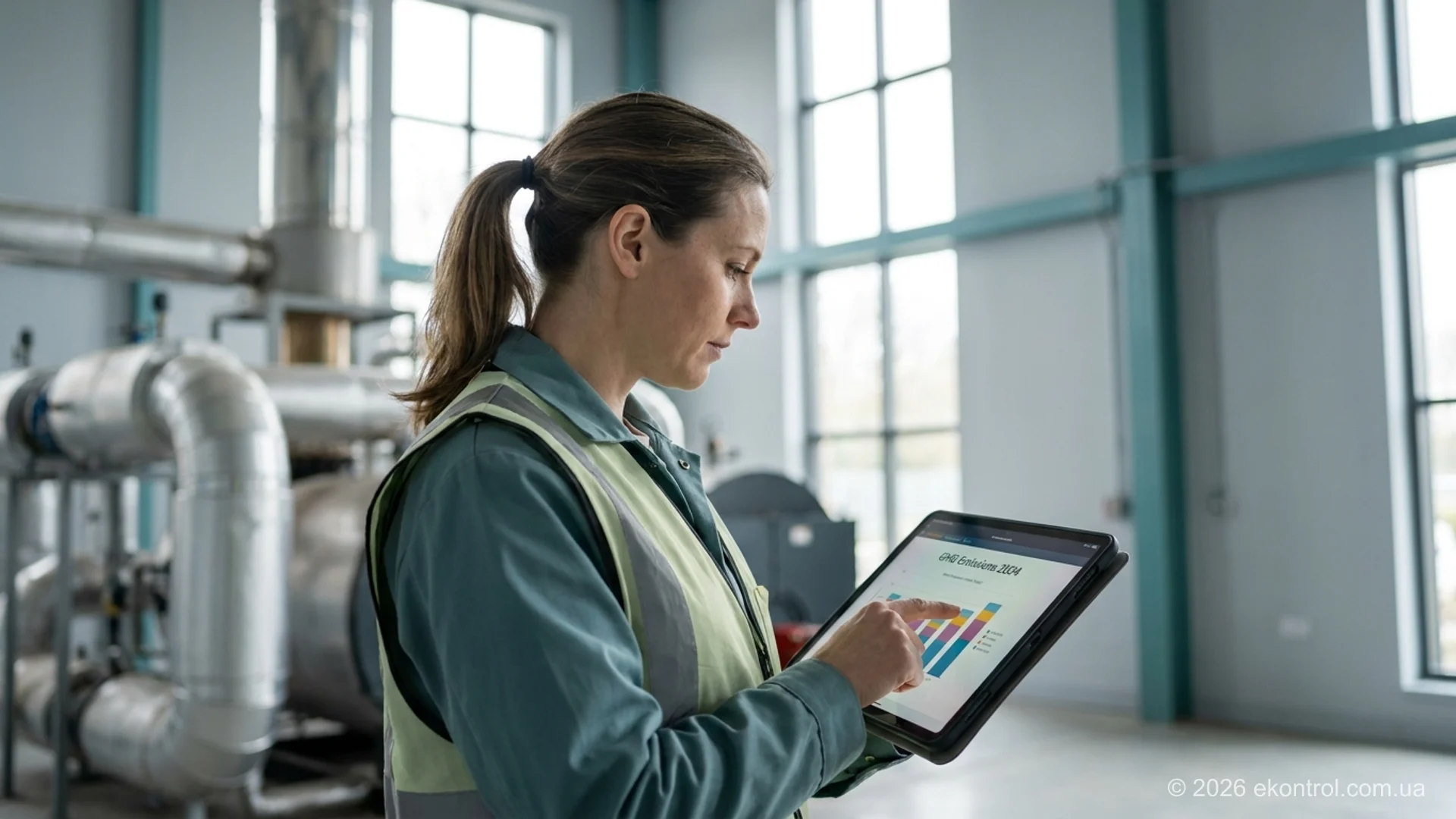
Where does the footprint come from at a manufacturing site? The boiler house burns gas. Trucks run on diesel. Grid electricity is partly coal-generated. Someone extracted, processed, and shipped your raw materials. Each flow leaves its share of emissions, and together they add up to the company's carbon footprint.
Five years ago this number mostly interested ecologists and marketing departments. In 2026, EU buyers ask for it in CBAM questionnaires, international clients in ESG surveys, and banks in loan applications. Answering "we haven't calculated it" increasingly costs you the contract, so let's walk through how to get the number and what to do with it next.
Carbon footprint essentials
A carbon footprint is the sum of all greenhouse gas emissions from a company, product, or service, expressed in tonnes of CO₂ equivalent. For a company, it's calculated under the GHG Protocol or ISO 14064-1 across three perimeters: Scope 1 for own sources, Scope 2 for purchased energy, Scope 3 for the supply chain. The base formula: activity data × emission factor. EU importers request the number for CBAM, and so do ESG questionnaires from international clients and banks.
Company Carbon Footprint vs Product Carbon Footprint
Two different calculations live under one name, and mixing them up costs time.
A company (organizational) carbon footprint answers the question "how much did the company emit over the year". The perimeter covers all sites, processes, and energy flows of the organization for the reporting period. This is the format ESG questionnaires, banks, and corporate reporting systems ask for, and it's what the GHG Protocol Corporate Standard and ISO 14064-1 describe.
A product carbon footprint answers a different question: "how much CO₂e sits in one unit of product across its life cycle". Here you count from raw material extraction to the factory gate (cradle-to-gate) or all the way to disposal (cradle-to-grave). Product calculations have a standard of their own, ISO 14067.
The two are related but not interchangeable: knowing your company's annual footprint doesn't tell you the footprint of a tonne of your product, and vice versa.
Embedded emissions for CBAM stand apart. They're neither a corporate footprint nor a full product one: the EU requires emissions per tonne of a specific good, but only within the installation's production perimeter, following its own methodology from the implementing acts. The primary data is the same, though: fuel, electricity, production volumes. That's why companies with corporate carbon accounting already in place close out CBAM reporting for exporters much faster: existing data just needs regrouping rather than collecting from scratch.
GHG Protocol or ISO 14064: Which Methodology to Use
The short answer: for most Ukrainian companies, the starting choice is the GHG Protocol Corporate Standard. Developed jointly by the World Resources Institute and WBCSD, it has been the de facto language of corporate carbon accounting since 2004: CDP, EcoVadis, SBTi, and the ESG questionnaires of international clients all speak in Scope 1, 2, 3 terms. The standard and its guidance are free, and calculation templates come with them.
ISO 14064-1 is the international standard for greenhouse gas inventories at the organization level. Methodologically it's compatible with the GHG Protocol and rests on the same principles, but it's more formal: stricter requirements for report content, definitions, and documentation. Its strength is verification: ISO 14064-3 sets the procedure for independent assurance, so when a client or regulator wants a verified number, they usually point to ISO.
In practice the two don't compete; they work as a pair. You take the accounting structure from the GHG Protocol and the formal verification framework from ISO 14064. And an honest observation from our projects: arguing about methodology at the start is almost always wasted effort. The first months of work are identical either way, since the job is to get data collection running.
| Criterion | GHG Protocol Corporate Standard | ISO 14064-1:2018 |
|---|---|---|
| Issued by | WRI and WBCSD | International Organization for Standardization (ISO) |
| Access | Free, with guidance and templates | Paid standard text |
| Reporting language | Scope 1, 2, 3: the vocabulary of ESG questionnaires, CDP, SBTi | Direct and indirect emissions by category |
| Verification | No dedicated procedure | ISO 14064-3 framework for independent verification |
| When to choose | Starting out, ESG reporting, client requests | Formal verification, tenders, regulatory requirements |
Scope 1, 2, 3: What Makes Up a Company Carbon Footprint
The GHG Protocol splits emissions into three perimeters, the scopes. The split answers a practical question: where your responsibility ends and whose emissions you're counting.
Scope 1 covers direct emissions from sources the company owns or controls: gas in boilers and furnaces, diesel in your own trucks, process emissions, refrigerant leaks from cooling equipment.
Scope 2 covers indirect emissions from purchased energy: electricity, heat, and steam. The power plant does the physical emitting, but you consumed the kilowatt-hours. The GHG Protocol requires calculating Scope 2 in two ways: location-based, using the grid average factor, and market-based, reflecting your supplier contracts and green certificates.
Scope 3 is the rest of the value chain: purchased materials and services, contractor logistics, business travel, use and disposal of sold products. The current edition of the standard lists 15 categories. For manufacturers, Scope 3 is usually the largest of the three and the hardest to collect data for.
By the way, the Scope 3 rules are being revised right now: the Phase 1 Progress Update of 31 March 2026 introduces a 95% coverage rule and a new Category 16. We covered what that changes for exporters in our news piece on the GHG Protocol Scope 3 update.
You don't need to start with all three scopes at once. A workable first-year minimum is complete Scope 1 and Scope 2 plus the Scope 3 categories that genuinely matter for your business model.
| Perimeter | What it covers | Examples for a Ukrainian manufacturer |
|---|---|---|
| Scope 1 (direct emissions) | Sources owned or controlled by the company | Gas boilers and furnaces, own vehicle fleet, process emissions, refrigerant leaks |
| Scope 2 (purchased energy) | Electricity, heat, and steam from the grid | Kilowatt-hours from the regional utility, district heating, purchased steam for production |
| Scope 3 (value chain) | 15 categories, from procurement to product disposal | Metal and grain from suppliers, outsourced transport, business travel, use of sold machinery |
How to Calculate a Company Carbon Footprint: Six Steps
One base formula works for every scope:
CO₂e emissions = activity data × emission factor
Activity data is what you already measure: cubic metres of gas, kilowatt-hours, litres of diesel, tonnes of raw material. The emission factor converts those units into kilograms of CO₂e. The formula is simple. The hard part is collecting a full year of data and picking correct factors, and that's where most of the time goes.
Here's the sequence we follow with clients:
-
Fix the organizational boundaries. Which legal entities, sites, and leased facilities fall into the perimeter. The GHG Protocol offers two approaches: operational control or equity share. For a single-entity company the choice is a formality; for a group it isn't, and it needs documenting.
-
Set the operational boundaries. Scope 1 and 2 are mandatory. From Scope 3, pick the material categories: for a manufacturer, purchased materials and logistics usually matter most.
-
Collect primary data for the reporting year. Gas and electricity bills, fuel records, transport waybills, production logs. This is the longest step: in our experience it takes more than half the project time, because the data sits scattered across accounting, the chief power engineer, and logistics.
-
Pick emission factors. Sources are covered in the next section. The main rule: every factor needs its source, year, and version recorded.
-
Multiply and consolidate. Run the multiplication, convert everything into tonnes of CO₂e using global warming potentials, and sum by scope. Double-check the units: the classic slip is mixing up kWh and MWh and inflating the footprint a thousandfold.
-
Document the methodology and fix the base year. Describe the boundaries, data sources, factors, and assumptions. The base year becomes the reference point for reduction targets and for answering the auditor's question about why last year's number was different.
An Excel calculator is perfectly fine for the first pass. What's not fine is when a year later nobody can explain where its numbers came from.
Where to Get Data and Emission Factors
The formula's two components pose two different challenges. With activity data the problem is organizational: you have it, but it's scattered across departments. With emission factors the problem is methodological: they need to come from a reliable source, and versions are easy to mix up.
Activity Data for the Carbon Footprint: Internal Sources
Most of the material already sits in accounting and the ERP: energy bills, fuel cards, supplier records, production reports. Add meter readings from the chief power engineer and transport logs. If nobody measures a flow at all (refrigerant leaks are the typical example), that's a reason to set up measurement, not to eyeball the same estimate year after year.
Emission Factors: Trusted Sources
For fuels, the base factors come from the IPCC methodologies (the 2006 Guidelines with the 2019 Refinement). International reporting widely uses the annual conversion factors from the UK's DEFRA: they're free and updated every year. The electricity factor depends on the specific country's grid: current values for Ukraine come from the national greenhouse gas inventory or from international databases such as the IEA. For Scope 3, the most accurate data comes from suppliers themselves, for example from environmental product declarations (EPD).
One rule that will save your nerves at verification: record the source, year, and version of every factor right in the calculation file, next to the number.
The most frequent calculation failures
The three mistakes we see most often: mixed-up units (kWh instead of MWh), factors with no source or year stated, and double counting, where the same diesel lands in both Scope 1 and the Scope 3 logistics category. Each one surfaces at the client's first follow-up question, so it's cheaper to check before the questionnaire goes out.
Need carbon accounting that survives a client's audit?
Ekontrol helps manufacturers set up carbon footprint calculations and an environmental management system that pass an EU client's audit. Bureau Veritas partner in Ukraine.
ISO 14001 implementation with EkontrolWhere the Number Goes: CBAM, ESG Questionnaires, Client Audits
Nobody needs a calculation for its own sake. Here's who actually asks Ukrainian companies for their carbon footprint in 2026, and in what form.
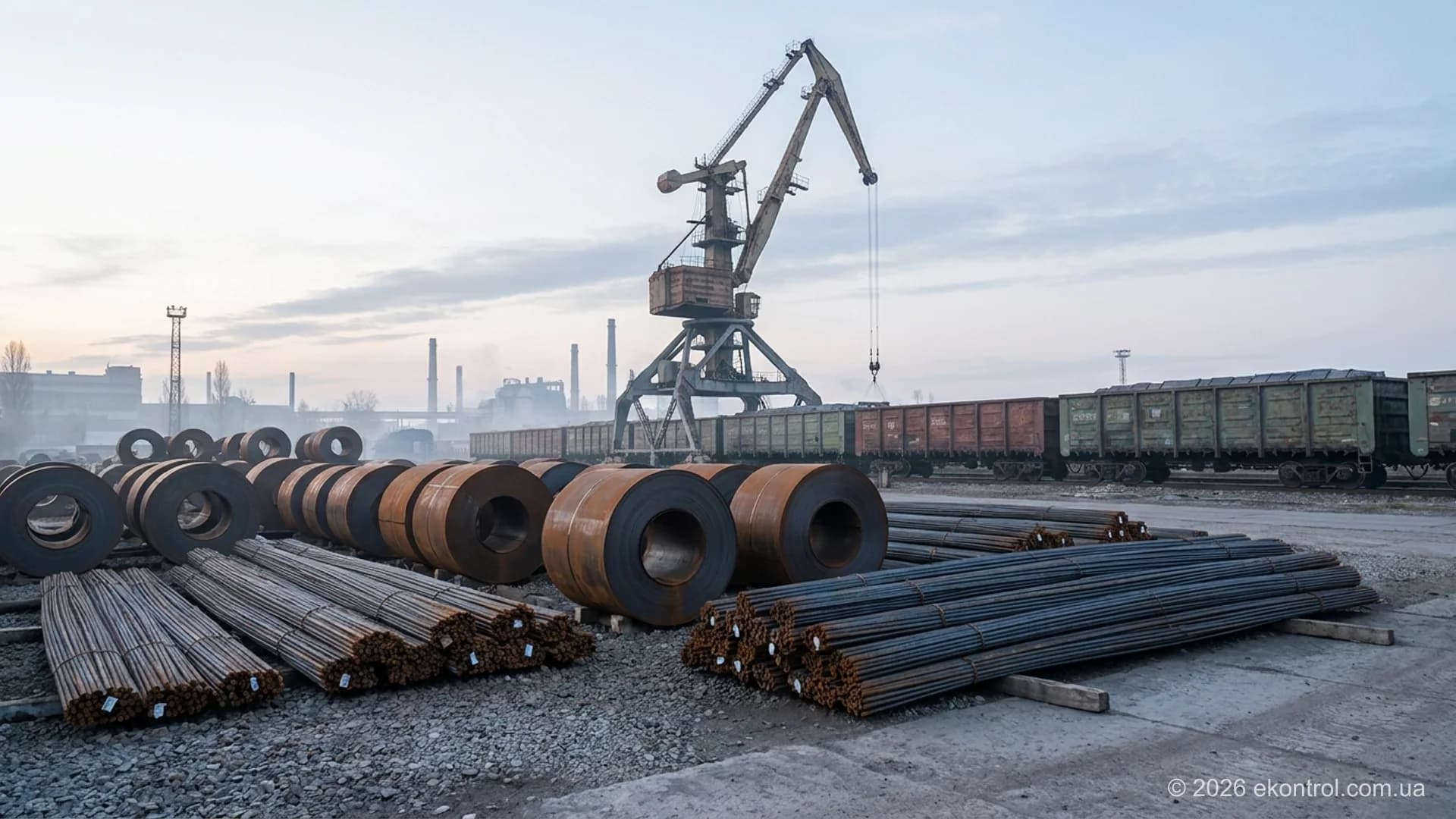
CBAM. If you export iron and steel, aluminium, fertilizers, or cement to the EU, your buyer must declare the embedded emissions of the goods: the mechanism has been running in full mode since 1 January 2026. The only place they can get that data is you. Corporate accounting supplies the lion's share of the primary data for CBAM: fuel and electricity consumption for the installation is already collected, and what remains is attributing emissions to specific goods under the EU methodology.
Client ESG questionnaires. International companies send suppliers EcoVadis or CDP Supply Chain surveys, or forms of their own. Questions about Scope 1 and 2 sit right next to questions about quality certificates, and an empty field lowers the supplier's score regardless of product quality.
Banks and investors. Lenders with Western capital include carbon metrics in borrower assessments. It isn't mass practice in Ukraine yet, but the direction is visible.
Tenders from large clients. Some corporate procurement already requires disclosing emissions or showing a reduction plan.
And there's an internal benefit that often gets forgotten: an emissions inventory is effectively a map of energy consumption. Once you see which processes produce the biggest share of the footprint, you also see where the company loses the most energy and money.
Common Mistakes in Carbon Footprint Calculations
We regularly see the mistakes below in calculations companies did on their own. None of them is fatal, but each one erodes trust in the number.
- The calculation was done once and shelved. Without an annual cycle the number is dead: there's nothing to compare against, no trend to show, and questionnaires ask for the latest reporting year.
- Scope 2 was calculated with one method only. Questionnaires increasingly ask for both values, location-based and market-based.
- Double counting. Outsourced transport got booked under Scope 1 even though the contractor burns the fuel; that belongs in Scope 3.
- Factors pulled "off the internet" with no source or year. A verifier's first query makes such a calculation fall apart.
- A material Scope 3 category was ignored. For a trading company, logistics can outweigh everything else combined.
- Nobody documented the methodology. The number exists, but after the responsible employee leaves, nobody can reproduce it.
If you recognized your own calculation in two or three points, that's normal. A first pass is rarely clean; what matters is that the second one follows a documented methodology.
How ISO 14001 Turns a One-Off Calculation into a System
Carbon accounting rests on data discipline, and that's exactly what an environmental management system under ISO 14001 provides: a frame in which the calculation repeats year after year at the same quality.
What an EMS specifically gives carbon accounting:
- a register of environmental aspects: a complete list of emission sources, including the non-obvious ones;
- document and record control: every number has a source, a date, and an owner;
- internal audits, so you find accounting errors before the client's verifier does;
- a legal requirements register, where CBAM, MRV, and new regulations are tracked systematically rather than from one request to the next.
If your installation falls under Ukraine's MRV system per Law No. 377-IX, part of the work is already done: boundaries defined, sources identified, reports verified. Corporate accounting then builds on top of what exists instead of starting from zero.
How the standard works, how long certification takes, and where to start: we collected all of it in the complete ISO 14001 guide. And an independent management system assessment helps you judge soberly how ready your current accounting and system are for client requests.
How Ekontrol Helps with Carbon Accounting
Ekontrol has worked as a Bureau Veritas partner in Ukraine since 2014 and supports manufacturers who need defensible carbon accounting: setting up GHG Protocol calculations, implementing an EMS under ISO 14001, preparing data for CBAM requests and the certification audit. A pretty report with no process behind it doesn't interest us: we set up the accounting so your team calculates the company's carbon footprint every year on its own.
If a client has already sent an ESG questionnaire or a request for emissions data, discuss the project with an expert and we'll sort out which of your existing data can be used right away and what still needs building.
Need a certification consultation?
Free ConsultationOn This Page
- What a Carbon Footprint Is in Plain Terms
- Company Carbon Footprint vs Product Carbon Footprint
- GHG Protocol or ISO 14064: Which Methodology to Use
- Scope 1, 2, 3: What Makes Up a Company Carbon Footprint
- How to Calculate a Company Carbon Footprint: Six Steps
- Where to Get Data and Emission Factors
- Where the Number Goes: CBAM, ESG Questionnaires, Client Audits
- Common Mistakes in Carbon Footprint Calculations
- How ISO 14001 Turns a One-Off Calculation into a System
- How Ekontrol Helps with Carbon Accounting
- FAQ: Common Questions About the Carbon Footprint
What a Carbon Footprint Is in Plain Terms
A carbon footprint is the total volume of greenhouse gases released into the atmosphere by a company's operations, a product, or a service. It's measured in tonnes of CO₂ equivalent (CO₂e): beyond carbon dioxide, the calculation covers methane, nitrous oxide, and fluorinated gases, each with its own global warming potential. Methane, for instance, traps roughly 28 times more heat than CO₂ over a 100-year horizon (an IPCC estimate), so one tonne of methane counts as 28 tonnes of CO₂e in an inventory.
Where does the footprint come from at a manufacturing site? The boiler house burns gas. Trucks run on diesel. Grid electricity is partly coal-generated. Someone extracted, processed, and shipped your raw materials. Each flow leaves its share of emissions, and together they add up to the company's carbon footprint.
Five years ago this number mostly interested ecologists and marketing departments. In 2026, EU buyers ask for it in CBAM questionnaires, international clients in ESG surveys, and banks in loan applications. Answering "we haven't calculated it" increasingly costs you the contract, so let's walk through how to get the number and what to do with it next.
Carbon footprint essentials
A carbon footprint is the sum of all greenhouse gas emissions from a company, product, or service, expressed in tonnes of CO₂ equivalent. For a company, it's calculated under the GHG Protocol or ISO 14064-1 across three perimeters: Scope 1 for own sources, Scope 2 for purchased energy, Scope 3 for the supply chain. The base formula: activity data × emission factor. EU importers request the number for CBAM, and so do ESG questionnaires from international clients and banks.
Company Carbon Footprint vs Product Carbon Footprint
Two different calculations live under one name, and mixing them up costs time.
A company (organizational) carbon footprint answers the question "how much did the company emit over the year". The perimeter covers all sites, processes, and energy flows of the organization for the reporting period. This is the format ESG questionnaires, banks, and corporate reporting systems ask for, and it's what the GHG Protocol Corporate Standard and ISO 14064-1 describe.
A product carbon footprint answers a different question: "how much CO₂e sits in one unit of product across its life cycle". Here you count from raw material extraction to the factory gate (cradle-to-gate) or all the way to disposal (cradle-to-grave). Product calculations have a standard of their own, ISO 14067.
The two are related but not interchangeable: knowing your company's annual footprint doesn't tell you the footprint of a tonne of your product, and vice versa.
Embedded emissions for CBAM stand apart. They're neither a corporate footprint nor a full product one: the EU requires emissions per tonne of a specific good, but only within the installation's production perimeter, following its own methodology from the implementing acts. The primary data is the same, though: fuel, electricity, production volumes. That's why companies with corporate carbon accounting already in place close out CBAM reporting for exporters much faster: existing data just needs regrouping rather than collecting from scratch.
GHG Protocol or ISO 14064: Which Methodology to Use
The short answer: for most Ukrainian companies, the starting choice is the GHG Protocol Corporate Standard. Developed jointly by the World Resources Institute and WBCSD, it has been the de facto language of corporate carbon accounting since 2004: CDP, EcoVadis, SBTi, and the ESG questionnaires of international clients all speak in Scope 1, 2, 3 terms. The standard and its guidance are free, and calculation templates come with them.
ISO 14064-1 is the international standard for greenhouse gas inventories at the organization level. Methodologically it's compatible with the GHG Protocol and rests on the same principles, but it's more formal: stricter requirements for report content, definitions, and documentation. Its strength is verification: ISO 14064-3 sets the procedure for independent assurance, so when a client or regulator wants a verified number, they usually point to ISO.
In practice the two don't compete; they work as a pair. You take the accounting structure from the GHG Protocol and the formal verification framework from ISO 14064. And an honest observation from our projects: arguing about methodology at the start is almost always wasted effort. The first months of work are identical either way, since the job is to get data collection running.
| Criterion | GHG Protocol Corporate Standard | ISO 14064-1:2018 |
|---|---|---|
| Issued by | WRI and WBCSD | International Organization for Standardization (ISO) |
| Access | Free, with guidance and templates | Paid standard text |
| Reporting language | Scope 1, 2, 3: the vocabulary of ESG questionnaires, CDP, SBTi | Direct and indirect emissions by category |
| Verification | No dedicated procedure | ISO 14064-3 framework for independent verification |
| When to choose | Starting out, ESG reporting, client requests | Formal verification, tenders, regulatory requirements |
Scope 1, 2, 3: What Makes Up a Company Carbon Footprint
The GHG Protocol splits emissions into three perimeters, the scopes. The split answers a practical question: where your responsibility ends and whose emissions you're counting.
Scope 1 covers direct emissions from sources the company owns or controls: gas in boilers and furnaces, diesel in your own trucks, process emissions, refrigerant leaks from cooling equipment.
Scope 2 covers indirect emissions from purchased energy: electricity, heat, and steam. The power plant does the physical emitting, but you consumed the kilowatt-hours. The GHG Protocol requires calculating Scope 2 in two ways: location-based, using the grid average factor, and market-based, reflecting your supplier contracts and green certificates.
Scope 3 is the rest of the value chain: purchased materials and services, contractor logistics, business travel, use and disposal of sold products. The current edition of the standard lists 15 categories. For manufacturers, Scope 3 is usually the largest of the three and the hardest to collect data for.
By the way, the Scope 3 rules are being revised right now: the Phase 1 Progress Update of 31 March 2026 introduces a 95% coverage rule and a new Category 16. We covered what that changes for exporters in our news piece on the GHG Protocol Scope 3 update.
You don't need to start with all three scopes at once. A workable first-year minimum is complete Scope 1 and Scope 2 plus the Scope 3 categories that genuinely matter for your business model.
| Perimeter | What it covers | Examples for a Ukrainian manufacturer |
|---|---|---|
| Scope 1 (direct emissions) | Sources owned or controlled by the company | Gas boilers and furnaces, own vehicle fleet, process emissions, refrigerant leaks |
| Scope 2 (purchased energy) | Electricity, heat, and steam from the grid | Kilowatt-hours from the regional utility, district heating, purchased steam for production |
| Scope 3 (value chain) | 15 categories, from procurement to product disposal | Metal and grain from suppliers, outsourced transport, business travel, use of sold machinery |
How to Calculate a Company Carbon Footprint: Six Steps
One base formula works for every scope:
CO₂e emissions = activity data × emission factor
Activity data is what you already measure: cubic metres of gas, kilowatt-hours, litres of diesel, tonnes of raw material. The emission factor converts those units into kilograms of CO₂e. The formula is simple. The hard part is collecting a full year of data and picking correct factors, and that's where most of the time goes.
Here's the sequence we follow with clients:
-
Fix the organizational boundaries. Which legal entities, sites, and leased facilities fall into the perimeter. The GHG Protocol offers two approaches: operational control or equity share. For a single-entity company the choice is a formality; for a group it isn't, and it needs documenting.
-
Set the operational boundaries. Scope 1 and 2 are mandatory. From Scope 3, pick the material categories: for a manufacturer, purchased materials and logistics usually matter most.
-
Collect primary data for the reporting year. Gas and electricity bills, fuel records, transport waybills, production logs. This is the longest step: in our experience it takes more than half the project time, because the data sits scattered across accounting, the chief power engineer, and logistics.
-
Pick emission factors. Sources are covered in the next section. The main rule: every factor needs its source, year, and version recorded.
-
Multiply and consolidate. Run the multiplication, convert everything into tonnes of CO₂e using global warming potentials, and sum by scope. Double-check the units: the classic slip is mixing up kWh and MWh and inflating the footprint a thousandfold.
-
Document the methodology and fix the base year. Describe the boundaries, data sources, factors, and assumptions. The base year becomes the reference point for reduction targets and for answering the auditor's question about why last year's number was different.
An Excel calculator is perfectly fine for the first pass. What's not fine is when a year later nobody can explain where its numbers came from.
Where to Get Data and Emission Factors
The formula's two components pose two different challenges. With activity data the problem is organizational: you have it, but it's scattered across departments. With emission factors the problem is methodological: they need to come from a reliable source, and versions are easy to mix up.
Activity Data for the Carbon Footprint: Internal Sources
Most of the material already sits in accounting and the ERP: energy bills, fuel cards, supplier records, production reports. Add meter readings from the chief power engineer and transport logs. If nobody measures a flow at all (refrigerant leaks are the typical example), that's a reason to set up measurement, not to eyeball the same estimate year after year.
Emission Factors: Trusted Sources
For fuels, the base factors come from the IPCC methodologies (the 2006 Guidelines with the 2019 Refinement). International reporting widely uses the annual conversion factors from the UK's DEFRA: they're free and updated every year. The electricity factor depends on the specific country's grid: current values for Ukraine come from the national greenhouse gas inventory or from international databases such as the IEA. For Scope 3, the most accurate data comes from suppliers themselves, for example from environmental product declarations (EPD).
One rule that will save your nerves at verification: record the source, year, and version of every factor right in the calculation file, next to the number.
The most frequent calculation failures
The three mistakes we see most often: mixed-up units (kWh instead of MWh), factors with no source or year stated, and double counting, where the same diesel lands in both Scope 1 and the Scope 3 logistics category. Each one surfaces at the client's first follow-up question, so it's cheaper to check before the questionnaire goes out.
Need carbon accounting that survives a client's audit?
Ekontrol helps manufacturers set up carbon footprint calculations and an environmental management system that pass an EU client's audit. Bureau Veritas partner in Ukraine.
ISO 14001 implementation with EkontrolWhere the Number Goes: CBAM, ESG Questionnaires, Client Audits
Nobody needs a calculation for its own sake. Here's who actually asks Ukrainian companies for their carbon footprint in 2026, and in what form.
CBAM. If you export iron and steel, aluminium, fertilizers, or cement to the EU, your buyer must declare the embedded emissions of the goods: the mechanism has been running in full mode since 1 January 2026. The only place they can get that data is you. Corporate accounting supplies the lion's share of the primary data for CBAM: fuel and electricity consumption for the installation is already collected, and what remains is attributing emissions to specific goods under the EU methodology.
Client ESG questionnaires. International companies send suppliers EcoVadis or CDP Supply Chain surveys, or forms of their own. Questions about Scope 1 and 2 sit right next to questions about quality certificates, and an empty field lowers the supplier's score regardless of product quality.
Banks and investors. Lenders with Western capital include carbon metrics in borrower assessments. It isn't mass practice in Ukraine yet, but the direction is visible.
Tenders from large clients. Some corporate procurement already requires disclosing emissions or showing a reduction plan.
And there's an internal benefit that often gets forgotten: an emissions inventory is effectively a map of energy consumption. Once you see which processes produce the biggest share of the footprint, you also see where the company loses the most energy and money.
Common Mistakes in Carbon Footprint Calculations
We regularly see the mistakes below in calculations companies did on their own. None of them is fatal, but each one erodes trust in the number.
- The calculation was done once and shelved. Without an annual cycle the number is dead: there's nothing to compare against, no trend to show, and questionnaires ask for the latest reporting year.
- Scope 2 was calculated with one method only. Questionnaires increasingly ask for both values, location-based and market-based.
- Double counting. Outsourced transport got booked under Scope 1 even though the contractor burns the fuel; that belongs in Scope 3.
- Factors pulled "off the internet" with no source or year. A verifier's first query makes such a calculation fall apart.
- A material Scope 3 category was ignored. For a trading company, logistics can outweigh everything else combined.
- Nobody documented the methodology. The number exists, but after the responsible employee leaves, nobody can reproduce it.
If you recognized your own calculation in two or three points, that's normal. A first pass is rarely clean; what matters is that the second one follows a documented methodology.
How ISO 14001 Turns a One-Off Calculation into a System
Carbon accounting rests on data discipline, and that's exactly what an environmental management system under ISO 14001 provides: a frame in which the calculation repeats year after year at the same quality.
What an EMS specifically gives carbon accounting:
- a register of environmental aspects: a complete list of emission sources, including the non-obvious ones;
- document and record control: every number has a source, a date, and an owner;
- internal audits, so you find accounting errors before the client's verifier does;
- a legal requirements register, where CBAM, MRV, and new regulations are tracked systematically rather than from one request to the next.
If your installation falls under Ukraine's MRV system per Law No. 377-IX, part of the work is already done: boundaries defined, sources identified, reports verified. Corporate accounting then builds on top of what exists instead of starting from zero.
How the standard works, how long certification takes, and where to start: we collected all of it in the complete ISO 14001 guide. And an independent management system assessment helps you judge soberly how ready your current accounting and system are for client requests.
How Ekontrol Helps with Carbon Accounting
Ekontrol has worked as a Bureau Veritas partner in Ukraine since 2014 and supports manufacturers who need defensible carbon accounting: setting up GHG Protocol calculations, implementing an EMS under ISO 14001, preparing data for CBAM requests and the certification audit. A pretty report with no process behind it doesn't interest us: we set up the accounting so your team calculates the company's carbon footprint every year on its own.
If a client has already sent an ESG questionnaire or a request for emissions data, discuss the project with an expert and we'll sort out which of your existing data can be used right away and what still needs building.