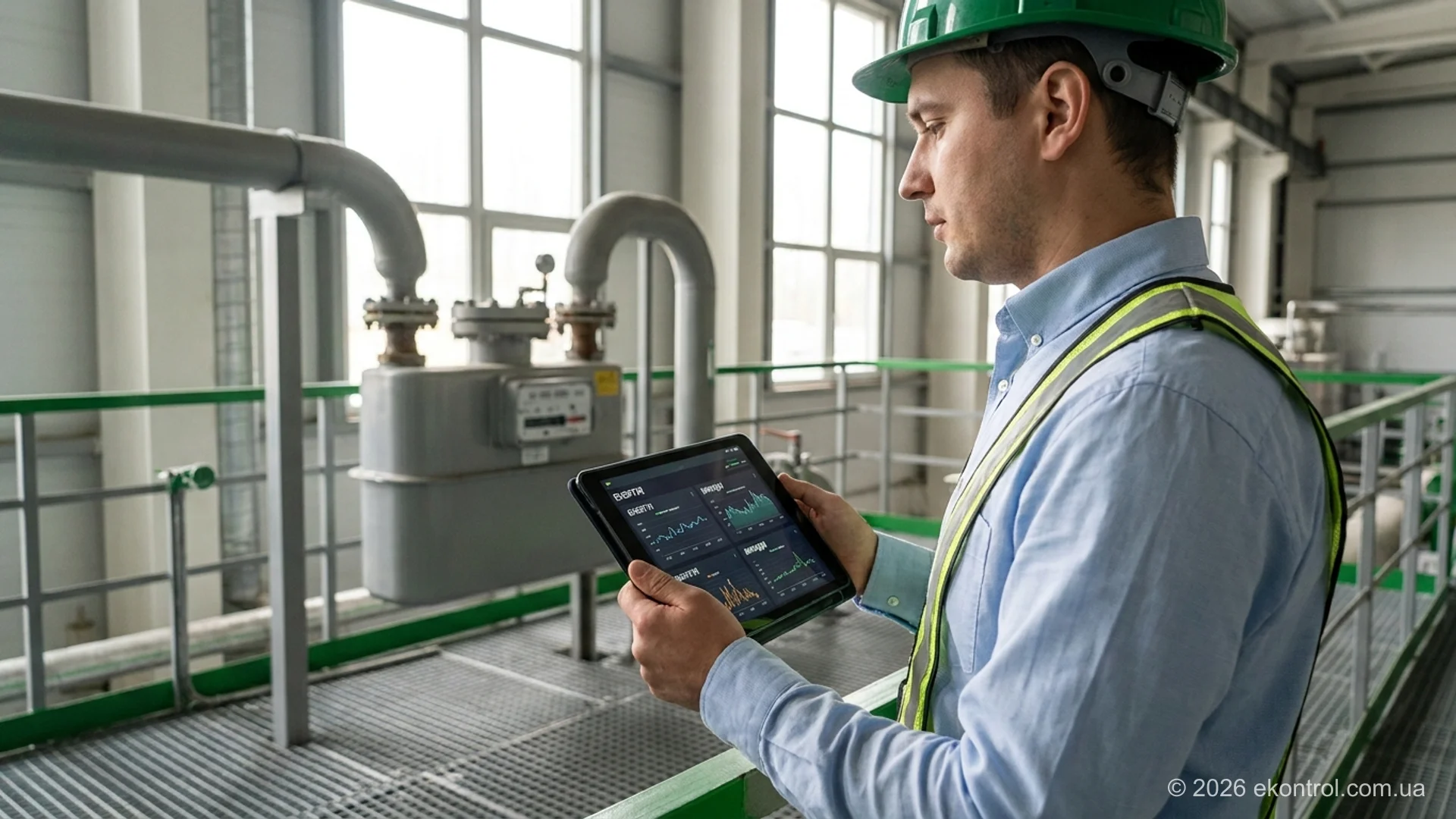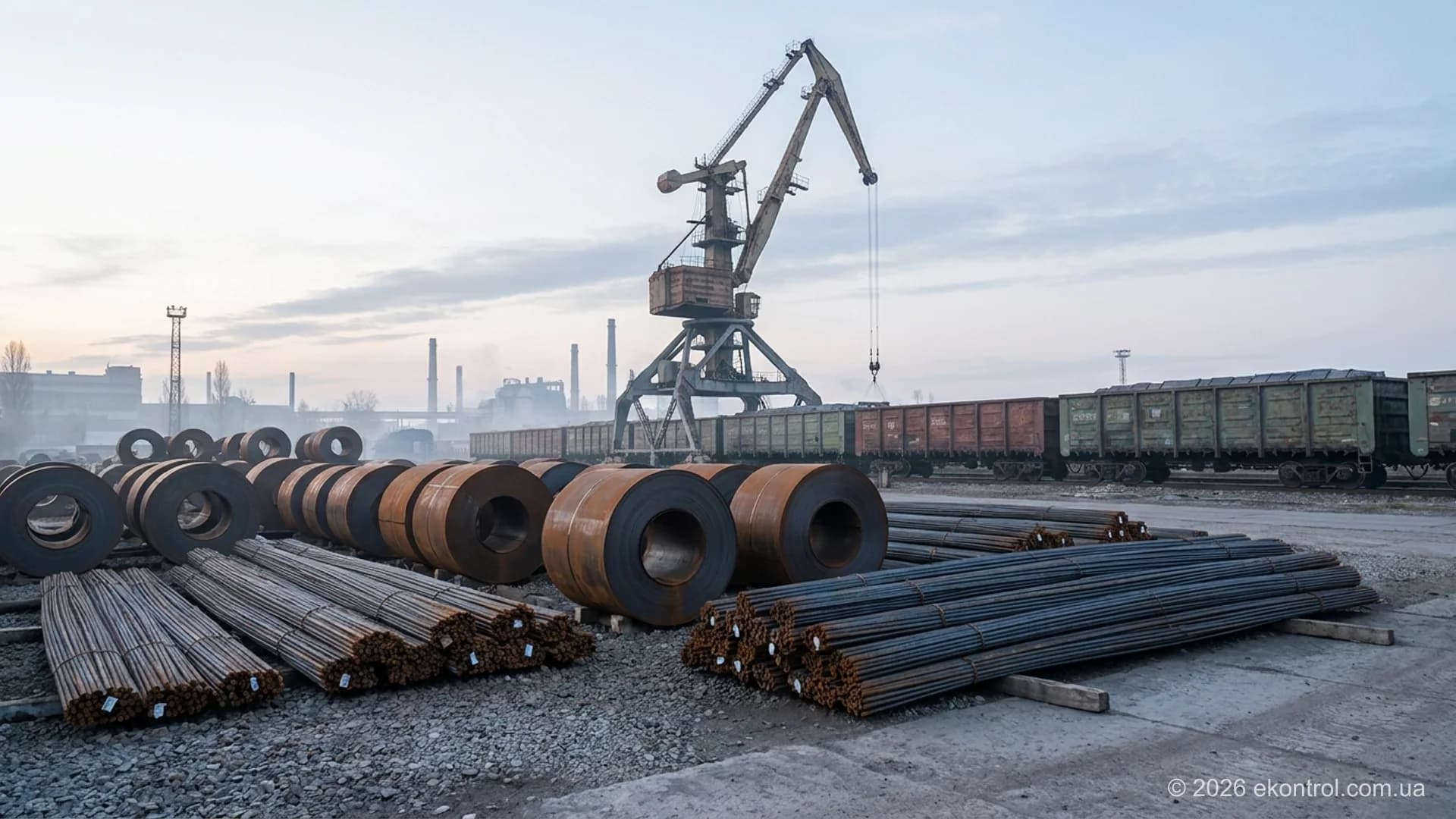

What Greenhouse Gases Are and Which Ones Business Counts
Greenhouse gas accounting is the process by which a company measures its emissions, converts them into tonnes of CO₂ equivalent, and reports them under a defined methodology. For operators of large installations in Ukraine it's a legal requirement: the national system for monitoring, reporting, and verification of emissions (MRV) is in force. For everyone else it's a market requirement: EU buyers request data for CBAM, and international customers ask for Scope 1 and 2 figures in ESG questionnaires. Let's break down what exactly gets counted, who is covered by Law No. 377-IX, and how the GHG Protocol turns scattered numbers into an inventory people trust.
The gases first. Greenhouse gases are components of the atmosphere that let sunlight through to the Earth's surface but trap its thermal radiation. That's the greenhouse effect: without it, the planet's average temperature would be roughly 33 degrees lower; with an excess of these gases, the climate warms faster than ecosystems can adapt.
International accounting works with seven gases and gas groups: carbon dioxide (CO₂), methane (CH₄), nitrous oxide (N₂O), hydrofluorocarbons (HFCs), perfluorocarbons (PFCs), sulphur hexafluoride (SF₆), and nitrogen trifluoride (NF₃). Water vapour produces the strongest greenhouse effect in the atmosphere, but corporate inventories leave it out: humans don't control its concentration directly.
Gases trap heat with different intensity, so they're compared through the global warming potential (GWP): it shows how much heat a tonne of gas will trap over 100 years relative to a tonne of CO₂. GWP is what converts every emission into a common unit, the CO₂ equivalent.
| Gas | GWP over 100 years (IPCC AR5) | Typical sources at a company |
|---|---|---|
| Carbon dioxide (CO₂) | 1 | Burning gas, coal, and diesel; purchased electricity |
| Methane (CH₄) | ≈28 | Leaks in gas networks, livestock, waste landfills |
| Nitrous oxide (N₂O) | ≈265 | Nitrogen fertilizers, nitric acid production, fuel combustion |
| Fluorinated gases (HFCs, PFCs, SF₆, NF₃) | Hundreds to tens of thousands | Refrigerants, electrical equipment, electronics manufacturing |
Greenhouse gases in accounting: the essentials
Greenhouse gases are CO₂, methane, nitrous oxide, and fluorinated gases that trap heat in the atmosphere. Accounting converts them into tonnes of CO₂ equivalent using the global warming potential (GWP). Business counts emissions in three contours: Ukraine's national MRV system for large installations under Law No. 377-IX, a corporate inventory under the GHG Protocol, and embedded emissions of products for CBAM.
MRV in Ukraine: Law No. 377-IX and Who Must Report
Ukraine's MRV system (monitoring, reporting, and verification) follows the model of the EU ETS, the European emissions trading system, but so far without the trading itself. The foundation is Law No. 377-IX "On the Principles of Monitoring, Reporting and Verification of Greenhouse Gas Emissions", adopted on December 12, 2019, and in force since January 1, 2021.
Three Cabinet of Ministers resolutions dated September 23, 2020, spell out the rules: No. 880 approves the list of covered activities, No. 960 sets the monitoring and reporting procedure, and No. 959 defines the verification procedure. Installation data and reports flow into the Unified MRV Register.
One important caveat: an emissions trading system (Ukraine's counterpart to the EU ETS) is still under development, so Law No. 377-IX creates no obligation to pay for emissions. For now the point is different: the state and the operators themselves need to know the numbers precisely. When a carbon price arrives, the bill will be based on the data the system is already collecting.
Who Falls Under MRV
The list is tied to the type of activity and the installation's capacity. Monitoring covers, among others:
- fuel combustion in installations with a total rated thermal input above 20 MW (boiler houses, CHP plants, industrial furnaces);
- oil refining and coke production;
- iron and steel production from 2.5 tonnes per hour, ferroalloys, ore roasting and sintering;
- cement clinker in rotary kilns from 500 tonnes per day, lime and dolomite in kilns from 50 tonnes per day;
- glass with a melting capacity from 20 tonnes per day;
- ammonia and nitric acid, where the accounting covers N₂O on top of CO₂.
If you recognize your installation here, it has to be registered in the Unified Register, and each reporting period needs an approved monitoring plan.
How the Cycle Works: Monitoring, Report, Verification
The cycle repeats every year. The operator monitors emissions under an approved plan, compiles an emissions report after the year ends, an independent accredited verifier checks it, and the verified report is submitted through the Unified Register. The standard deadline is March 31 of the year following the reporting year.
The full-scale invasion put the system on pause: reporting from under shelling wasn't realistic, and the state acknowledged that. Law No. 4187-IX of January 8, 2025, restarted MRV: reports for 2021 through 2023 don't have to be filed, the 2024 report was due by December 31, 2025, and from there the system returns to its normal annual rhythm. In other words, in 2026 MRV is a working obligation again, not a frozen norm.
MRV reporting is back
If your installation is registered in the Unified Register but hasn't reported since 2022, the obligation has returned: Law No. 4187-IX cancelled the reports for 2021 through 2023, but reporting resumes from the 2024 year onwards. Check the installation's status, the validity of the monitoring plan, and your contract with a verifier before the reporting campaign starts; verifiers are traditionally overloaded in March.
MRV, GHG Protocol, and CBAM: Three Regimes That Are Easy to Confuse
Confusion peaks when a company faces several requirements at once. A steel plant that exports may simultaneously be an MRV installation operator, receive CBAM requests from its buyer, and fill in an ESG questionnaire from an international customer. These are three different accounting regimes with different boundaries, and a report from one doesn't substitute for another.
| Parameter | MRV (Law No. 377-IX) | GHG Protocol (corporate accounting) | CBAM (embedded emissions) |
|---|---|---|---|
| Who requires it | The state | Customers, ESG questionnaires, banks; voluntary | The EU importer declaring your goods |
| What is counted | A single installation | The whole company or group | A tonne of a specific product |
| Which emissions | The installation's direct emissions, mostly CO₂ | Scope 1, 2, 3; all seven gases | Emissions of the production perimeter under the EU methodology |
| Verification | Mandatory, accredited verifier | Voluntary, under ISO 14064-3 | Under EU rules |
| Where the data goes | The Unified MRV Register | Reports, questionnaires, company communications | The importer's CBAM declaration |
GHG Protocol: The Standard Corporate Accounting Speaks
The good news from the table above: the primary data for all three contours largely overlaps: fuel, electricity, production volumes. So the rational strategy is one data collection process instead of three parallel accounting exercises: the numbers get regrouped for each specific report. And the common language for that process in the corporate world is the GHG Protocol.
The GHG Protocol Corporate Standard is a joint effort of the World Resources Institute and WBCSD, in use since 2004. The standard is free, comes with calculation templates and sector guides, and its terms Scope 1, 2, 3 are the vocabulary of CDP, EcoVadis, SBTi, and practically every ESG questionnaire. Beyond the base Corporate Standard, the family includes the Scope 2 Guidance with rules for purchased energy, the Corporate Value Chain Standard for Scope 3, and the Product Standard for product footprints.
An inventory under the standard rests on five principles: relevance, completeness, consistency, transparency, accuracy. Behind the dry words sits daily practice. Consistency, for instance, means you can't quietly change the methodology from year to year: if you counted fleet emissions by litres of fuel last year and by kilometres driven this year, explain the switch, otherwise the trend loses its meaning.
For formal verification, ISO 14064 sits alongside the GHG Protocol: part one describes requirements for an organization-level inventory, part three the procedure for independent assurance. They don't compete: the accounting structure usually comes from the GHG Protocol, the verification frame from ISO 14064.
Need an emissions inventory your customer will trust?
Ekontrol helps manufacturers set up greenhouse gas accounting under the GHG Protocol and build it into an environmental management system. A Bureau Veritas partner in Ukraine.
ISO 14001 certification with EkontrolScope 1, 2, 3: The Structure of a GHG Inventory
The GHG Protocol splits emissions into three perimeters, and the split answers the central methodological question: where does your responsibility end.
- Scope 1: direct emissions from sources the company owns or controls, such as boilers, furnaces, its own vehicles, process emissions, refrigerant leaks.
- Scope 2: indirect emissions from purchased electricity, heat, and steam. The power plant does the emitting, but you consumed the energy.
- Scope 3: the rest of the value chain, from purchased raw materials to the disposal of sold products. The current edition of the standard counts 15 categories.
A sensible first-year start is full Scope 1 and 2 plus two or three genuinely material Scope 3 categories. The calculation formula, six practical steps, emission factor sources, and typical mistakes are collected in our separate article on the company carbon footprint, so we won't repeat them here. If your task is to produce the number, go there. If your task is to build accounting as a process, read on.
How to Organize Data Collection for GHG Accounting
The main reason inventories fall apart isn't multiplication errors, it's chaos in the data. The numbers live scattered across departments, and every department treats them as its own.
In practice the source map looks like this:
- accounting: invoices for gas, electricity, and heat, fuel supplier documents;
- the chief power engineer: meter readings, boiler operating charts;
- logistics: fuel sheets, transport waybills, data from contracted carriers;
- procurement: volumes and range of raw materials, the basis for Scope 3;
- HR and finance: business travel, rented premises.
Three organizational rules save months. First, appoint a single process owner: someone who collects data on a schedule, not whenever they get around to it. Second, consolidate data monthly or quarterly; a yearly scramble in February, with half the documents lost, is the most expensive way to run accounting. Third, document the methodology as you go: the source of every figure, the version of every factor, all assumptions.
On tools, let's be honest: Excel is enough for a first inventory. The problem is never the tool, it's reproducibility. If nobody can explain where the numbers came from after the responsible employee leaves, you don't have accounting, you have a file. One more observation from projects: the first year almost always comes out uneven, and part of the data has to be estimated. That's fine, as long as estimates are honestly flagged as estimates and the gaps get closed by the next cycle.
Scope 3 in 2026: What the GHG Protocol Update Changes
The Scope 3 rules are being revised right now, and that's worth factoring in at the design stage of your accounting. On March 31, 2026, the GHG Protocol published its Phase 1 Progress Update, the first substantial revision of the Scope 3 Standard in 15 years.
Three changes matter. The 95% rule: a company must cover at least 95% of its mandatory Scope 3 emissions, and every exclusion has to be quantified and publicly disclosed; the materiality loophole closes. A new Category 16 for facilitated emissions: emissions a company enables through insurance, financial, and licensing activities. And three-tier data disaggregation: the report shows what share of each category was calculated from primary supplier data, industry factors, or spend-based proxies.
Formally it's still a draft, with the final edition expected in late 2027. In practice, EU buyers are rewriting their supplier questionnaires already, so collecting primary data isn't something to postpone. The full breakdown of the update, with tables on data quality tiers and the Category 16 subcategories, is in our news piece on the 95% rule and Category 16.
From a One-Off Report to a System: Where ISO 14001 Fits
A one-off report closes one request. Systematic accounting closes all the following ones, and this is where the link to an environmental management system earns its keep.
ISO 14001 gives greenhouse gas accounting a frame no calculation template provides: the register of environmental aspects becomes a complete map of emission sources; the register of legal requirements keeps MRV and CBAM under constant watch rather than remembered when a request lands; records management guarantees every figure has a source and an owner; internal audits catch errors before your customer's verifier does.
There's also a reverse effect people rarely talk about: companies with established emissions accounting find ISO 14001 certification noticeably easier, because the hardest part, data discipline, is already in place. How the standard works, how long implementation takes, and what the certification audit looks like are covered in the complete ISO 14001 guide. And to soberly assess whether your current accounting would survive verification or a client audit, start with an independent management system assessment.
How Ekontrol Helps with Greenhouse Gas Accounting
Ekontrol has worked as a Bureau Veritas partner in Ukraine since 2014. For companies that need defensible emissions accounting, we cover the full contour: setting up a GHG Protocol inventory, preparing installation operators for the restored MRV reporting, implementing an ISO 14001 environmental management system, and preparing data for CBAM requests and customer audits.
Our approach is down to earth: we don't produce a pretty report, we set up a process your team then runs on its own year after year. If you've already received a request for emissions data, or you're not sure whether your installation falls under MRV, contact the Ekontrol team and we'll go through your situation on real numbers.

Need a certification consultation?
Free ConsultationOn This Page
- What Greenhouse Gases Are and Which Ones Business Counts
- Why Business Accounts for Greenhouse Gas Emissions
- MRV in Ukraine: Law No. 377-IX and Who Must Report
- MRV, GHG Protocol, and CBAM: Three Regimes That Are Easy to Confuse
- GHG Protocol: The Standard Corporate Accounting Speaks
- Scope 1, 2, 3: The Structure of a GHG Inventory
- How to Organize Data Collection for GHG Accounting
- Scope 3 in 2026: What the GHG Protocol Update Changes
- From a One-Off Report to a System: Where ISO 14001 Fits
- How Ekontrol Helps with Greenhouse Gas Accounting
- FAQ: Common Questions About Greenhouse Gas Accounting
What Greenhouse Gases Are and Which Ones Business Counts
Greenhouse gas accounting is the process by which a company measures its emissions, converts them into tonnes of CO₂ equivalent, and reports them under a defined methodology. For operators of large installations in Ukraine it's a legal requirement: the national system for monitoring, reporting, and verification of emissions (MRV) is in force. For everyone else it's a market requirement: EU buyers request data for CBAM, and international customers ask for Scope 1 and 2 figures in ESG questionnaires. Let's break down what exactly gets counted, who is covered by Law No. 377-IX, and how the GHG Protocol turns scattered numbers into an inventory people trust.
The gases first. Greenhouse gases are components of the atmosphere that let sunlight through to the Earth's surface but trap its thermal radiation. That's the greenhouse effect: without it, the planet's average temperature would be roughly 33 degrees lower; with an excess of these gases, the climate warms faster than ecosystems can adapt.
International accounting works with seven gases and gas groups: carbon dioxide (CO₂), methane (CH₄), nitrous oxide (N₂O), hydrofluorocarbons (HFCs), perfluorocarbons (PFCs), sulphur hexafluoride (SF₆), and nitrogen trifluoride (NF₃). Water vapour produces the strongest greenhouse effect in the atmosphere, but corporate inventories leave it out: humans don't control its concentration directly.
Gases trap heat with different intensity, so they're compared through the global warming potential (GWP): it shows how much heat a tonne of gas will trap over 100 years relative to a tonne of CO₂. GWP is what converts every emission into a common unit, the CO₂ equivalent.
| Gas | GWP over 100 years (IPCC AR5) | Typical sources at a company |
|---|---|---|
| Carbon dioxide (CO₂) | 1 | Burning gas, coal, and diesel; purchased electricity |
| Methane (CH₄) | ≈28 | Leaks in gas networks, livestock, waste landfills |
| Nitrous oxide (N₂O) | ≈265 | Nitrogen fertilizers, nitric acid production, fuel combustion |
| Fluorinated gases (HFCs, PFCs, SF₆, NF₃) | Hundreds to tens of thousands | Refrigerants, electrical equipment, electronics manufacturing |
Greenhouse gases in accounting: the essentials
Greenhouse gases are CO₂, methane, nitrous oxide, and fluorinated gases that trap heat in the atmosphere. Accounting converts them into tonnes of CO₂ equivalent using the global warming potential (GWP). Business counts emissions in three contours: Ukraine's national MRV system for large installations under Law No. 377-IX, a corporate inventory under the GHG Protocol, and embedded emissions of products for CBAM.
MRV in Ukraine: Law No. 377-IX and Who Must Report
Ukraine's MRV system (monitoring, reporting, and verification) follows the model of the EU ETS, the European emissions trading system, but so far without the trading itself. The foundation is Law No. 377-IX "On the Principles of Monitoring, Reporting and Verification of Greenhouse Gas Emissions", adopted on December 12, 2019, and in force since January 1, 2021.
Three Cabinet of Ministers resolutions dated September 23, 2020, spell out the rules: No. 880 approves the list of covered activities, No. 960 sets the monitoring and reporting procedure, and No. 959 defines the verification procedure. Installation data and reports flow into the Unified MRV Register.
One important caveat: an emissions trading system (Ukraine's counterpart to the EU ETS) is still under development, so Law No. 377-IX creates no obligation to pay for emissions. For now the point is different: the state and the operators themselves need to know the numbers precisely. When a carbon price arrives, the bill will be based on the data the system is already collecting.
Who Falls Under MRV
The list is tied to the type of activity and the installation's capacity. Monitoring covers, among others:
- fuel combustion in installations with a total rated thermal input above 20 MW (boiler houses, CHP plants, industrial furnaces);
- oil refining and coke production;
- iron and steel production from 2.5 tonnes per hour, ferroalloys, ore roasting and sintering;
- cement clinker in rotary kilns from 500 tonnes per day, lime and dolomite in kilns from 50 tonnes per day;
- glass with a melting capacity from 20 tonnes per day;
- ammonia and nitric acid, where the accounting covers N₂O on top of CO₂.
If you recognize your installation here, it has to be registered in the Unified Register, and each reporting period needs an approved monitoring plan.
How the Cycle Works: Monitoring, Report, Verification
The cycle repeats every year. The operator monitors emissions under an approved plan, compiles an emissions report after the year ends, an independent accredited verifier checks it, and the verified report is submitted through the Unified Register. The standard deadline is March 31 of the year following the reporting year.
The full-scale invasion put the system on pause: reporting from under shelling wasn't realistic, and the state acknowledged that. Law No. 4187-IX of January 8, 2025, restarted MRV: reports for 2021 through 2023 don't have to be filed, the 2024 report was due by December 31, 2025, and from there the system returns to its normal annual rhythm. In other words, in 2026 MRV is a working obligation again, not a frozen norm.
MRV reporting is back
If your installation is registered in the Unified Register but hasn't reported since 2022, the obligation has returned: Law No. 4187-IX cancelled the reports for 2021 through 2023, but reporting resumes from the 2024 year onwards. Check the installation's status, the validity of the monitoring plan, and your contract with a verifier before the reporting campaign starts; verifiers are traditionally overloaded in March.
MRV, GHG Protocol, and CBAM: Three Regimes That Are Easy to Confuse
Confusion peaks when a company faces several requirements at once. A steel plant that exports may simultaneously be an MRV installation operator, receive CBAM requests from its buyer, and fill in an ESG questionnaire from an international customer. These are three different accounting regimes with different boundaries, and a report from one doesn't substitute for another.
| Parameter | MRV (Law No. 377-IX) | GHG Protocol (corporate accounting) | CBAM (embedded emissions) |
|---|---|---|---|
| Who requires it | The state | Customers, ESG questionnaires, banks; voluntary | The EU importer declaring your goods |
| What is counted | A single installation | The whole company or group | A tonne of a specific product |
| Which emissions | The installation's direct emissions, mostly CO₂ | Scope 1, 2, 3; all seven gases | Emissions of the production perimeter under the EU methodology |
| Verification | Mandatory, accredited verifier | Voluntary, under ISO 14064-3 | Under EU rules |
| Where the data goes | The Unified MRV Register | Reports, questionnaires, company communications | The importer's CBAM declaration |
GHG Protocol: The Standard Corporate Accounting Speaks
The good news from the table above: the primary data for all three contours largely overlaps: fuel, electricity, production volumes. So the rational strategy is one data collection process instead of three parallel accounting exercises: the numbers get regrouped for each specific report. And the common language for that process in the corporate world is the GHG Protocol.
The GHG Protocol Corporate Standard is a joint effort of the World Resources Institute and WBCSD, in use since 2004. The standard is free, comes with calculation templates and sector guides, and its terms Scope 1, 2, 3 are the vocabulary of CDP, EcoVadis, SBTi, and practically every ESG questionnaire. Beyond the base Corporate Standard, the family includes the Scope 2 Guidance with rules for purchased energy, the Corporate Value Chain Standard for Scope 3, and the Product Standard for product footprints.
An inventory under the standard rests on five principles: relevance, completeness, consistency, transparency, accuracy. Behind the dry words sits daily practice. Consistency, for instance, means you can't quietly change the methodology from year to year: if you counted fleet emissions by litres of fuel last year and by kilometres driven this year, explain the switch, otherwise the trend loses its meaning.
For formal verification, ISO 14064 sits alongside the GHG Protocol: part one describes requirements for an organization-level inventory, part three the procedure for independent assurance. They don't compete: the accounting structure usually comes from the GHG Protocol, the verification frame from ISO 14064.
Need an emissions inventory your customer will trust?
Ekontrol helps manufacturers set up greenhouse gas accounting under the GHG Protocol and build it into an environmental management system. A Bureau Veritas partner in Ukraine.
ISO 14001 certification with EkontrolScope 1, 2, 3: The Structure of a GHG Inventory
The GHG Protocol splits emissions into three perimeters, and the split answers the central methodological question: where does your responsibility end.
- Scope 1: direct emissions from sources the company owns or controls, such as boilers, furnaces, its own vehicles, process emissions, refrigerant leaks.
- Scope 2: indirect emissions from purchased electricity, heat, and steam. The power plant does the emitting, but you consumed the energy.
- Scope 3: the rest of the value chain, from purchased raw materials to the disposal of sold products. The current edition of the standard counts 15 categories.
A sensible first-year start is full Scope 1 and 2 plus two or three genuinely material Scope 3 categories. The calculation formula, six practical steps, emission factor sources, and typical mistakes are collected in our separate article on the company carbon footprint, so we won't repeat them here. If your task is to produce the number, go there. If your task is to build accounting as a process, read on.
How to Organize Data Collection for GHG Accounting
The main reason inventories fall apart isn't multiplication errors, it's chaos in the data. The numbers live scattered across departments, and every department treats them as its own.
In practice the source map looks like this:
- accounting: invoices for gas, electricity, and heat, fuel supplier documents;
- the chief power engineer: meter readings, boiler operating charts;
- logistics: fuel sheets, transport waybills, data from contracted carriers;
- procurement: volumes and range of raw materials, the basis for Scope 3;
- HR and finance: business travel, rented premises.
Three organizational rules save months. First, appoint a single process owner: someone who collects data on a schedule, not whenever they get around to it. Second, consolidate data monthly or quarterly; a yearly scramble in February, with half the documents lost, is the most expensive way to run accounting. Third, document the methodology as you go: the source of every figure, the version of every factor, all assumptions.
On tools, let's be honest: Excel is enough for a first inventory. The problem is never the tool, it's reproducibility. If nobody can explain where the numbers came from after the responsible employee leaves, you don't have accounting, you have a file. One more observation from projects: the first year almost always comes out uneven, and part of the data has to be estimated. That's fine, as long as estimates are honestly flagged as estimates and the gaps get closed by the next cycle.
Scope 3 in 2026: What the GHG Protocol Update Changes
The Scope 3 rules are being revised right now, and that's worth factoring in at the design stage of your accounting. On March 31, 2026, the GHG Protocol published its Phase 1 Progress Update, the first substantial revision of the Scope 3 Standard in 15 years.
Three changes matter. The 95% rule: a company must cover at least 95% of its mandatory Scope 3 emissions, and every exclusion has to be quantified and publicly disclosed; the materiality loophole closes. A new Category 16 for facilitated emissions: emissions a company enables through insurance, financial, and licensing activities. And three-tier data disaggregation: the report shows what share of each category was calculated from primary supplier data, industry factors, or spend-based proxies.
Formally it's still a draft, with the final edition expected in late 2027. In practice, EU buyers are rewriting their supplier questionnaires already, so collecting primary data isn't something to postpone. The full breakdown of the update, with tables on data quality tiers and the Category 16 subcategories, is in our news piece on the 95% rule and Category 16.
From a One-Off Report to a System: Where ISO 14001 Fits
A one-off report closes one request. Systematic accounting closes all the following ones, and this is where the link to an environmental management system earns its keep.
ISO 14001 gives greenhouse gas accounting a frame no calculation template provides: the register of environmental aspects becomes a complete map of emission sources; the register of legal requirements keeps MRV and CBAM under constant watch rather than remembered when a request lands; records management guarantees every figure has a source and an owner; internal audits catch errors before your customer's verifier does.
There's also a reverse effect people rarely talk about: companies with established emissions accounting find ISO 14001 certification noticeably easier, because the hardest part, data discipline, is already in place. How the standard works, how long implementation takes, and what the certification audit looks like are covered in the complete ISO 14001 guide. And to soberly assess whether your current accounting would survive verification or a client audit, start with an independent management system assessment.
How Ekontrol Helps with Greenhouse Gas Accounting
Ekontrol has worked as a Bureau Veritas partner in Ukraine since 2014. For companies that need defensible emissions accounting, we cover the full contour: setting up a GHG Protocol inventory, preparing installation operators for the restored MRV reporting, implementing an ISO 14001 environmental management system, and preparing data for CBAM requests and customer audits.
Our approach is down to earth: we don't produce a pretty report, we set up a process your team then runs on its own year after year. If you've already received a request for emissions data, or you're not sure whether your installation falls under MRV, contact the Ekontrol team and we'll go through your situation on real numbers.