
1. Ukraine World Agricultural Map: Sunflower Oil Market Shifts and Value-Added Refining Under FSSC 22000 and ISCC EU
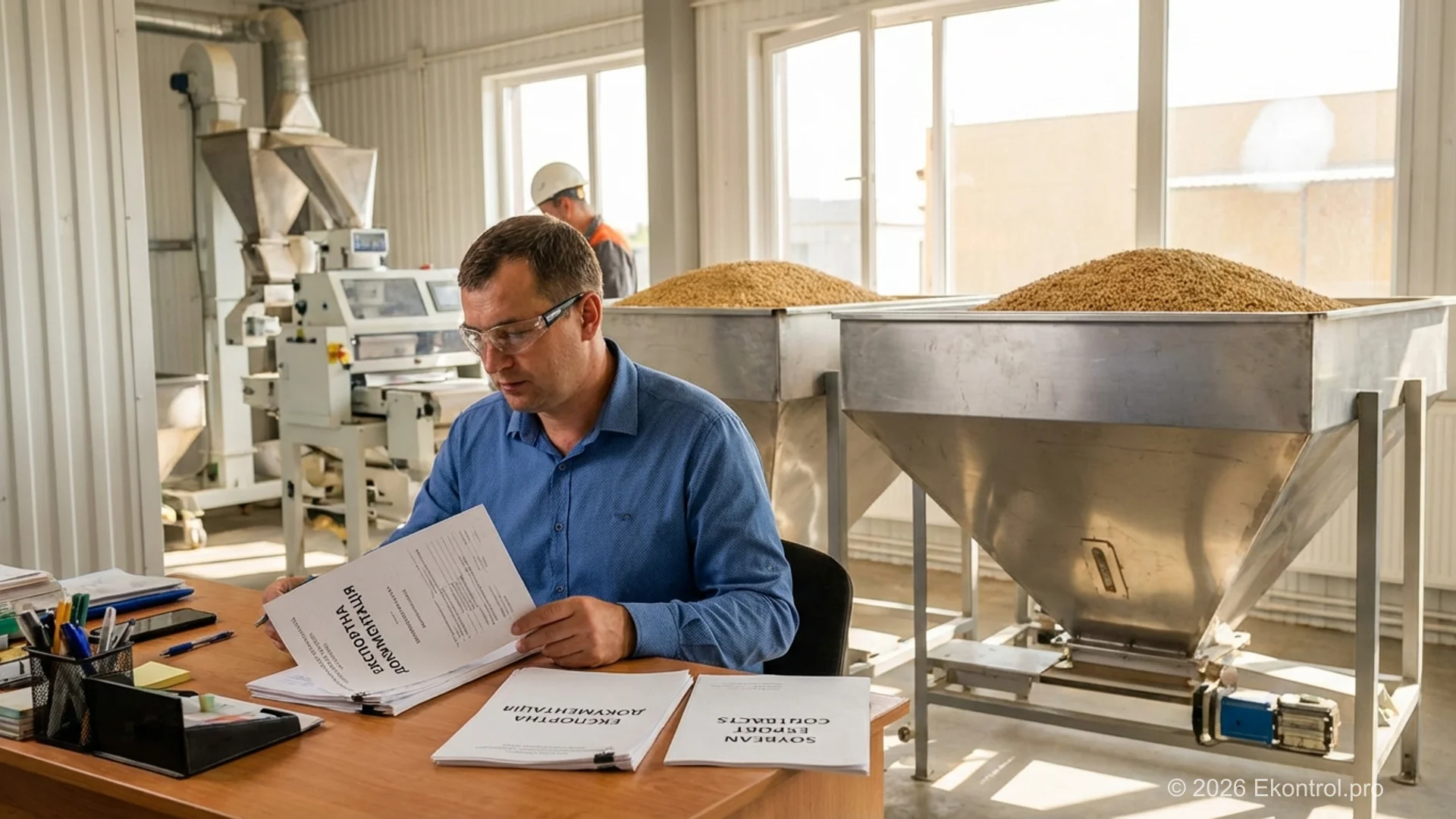
Since 2022, the Ukraine world agricultural map has undergone a structural engineering transformation, starting with the global vegetable oil sector. For over a decade, Ukraine held the undisputed number-one spot in global sunflower oil exports. Yet USDA balance sheets for the 2025/2026 marketing year show the aggressor state expanding crushing capacity and aggressively discounting crude oil into price-sensitive Indian and Turkish markets.
Meanwhile, Ukrainian oilseed crushing plants operate under constant missile threats against port terminals and energy grids, driving up per-ton extraction costs while domestic competition for sunseed intensifies.
How are Ukrainian oilseed processors protecting their margins in 2026? They're moving away from discounted bulk crude shipments and capturing high-compliance European segments where uncertified competitors can't enter:
- producing High-Oleic refined, bleached, and deodorized (RBD) sunflower oil and bottled retail SKUs for European supermarkets and infant-formula manufacturers certified under FSSC 22000 Version 6;
- supplying certified technical vegetable oils, acid oils, soapstocks, fatty acid distillates, and Used Cooking Oil (UCO) to European biorefineries producing FAME biodiesel, Hydrotreated Vegetable Oil (HVO), and Sustainable Aviation Fuel (SAF) under ISCC EU sustainability certification;
- engineering multi-stage refining protocols that strip out polycyclic aromatic hydrocarbons (PAHs such as benzo[a]pyrene), mineral oil hydrocarbons (MOSH/MOAH), and 3-MCPD / glycidyl fatty acid esters (GE) strictly capped by Commission Regulation (EU) 2023/915.
2. Losing China's Maize Monopoly and Pivoting to EU Bioethanol Refineries Under REDcert, KZR INiG, and 2BSvs
Before the full-scale invasion, China was Ukraine's largest single-country buyer of maize and barley, importing $4.3 billion worth of Ukrainian agricultural goods in 2021. When the 2022 maritime blockade halted shipments, Beijing moved fast. Chinese customs approved hundreds of Brazilian maize export facilities harvesting second-crop (safrinha) corn while boosting domestic Chinese grain acreage.
Betting on a return to pre-war Chinese bulk volumes in 2026 isn't realistic. Instead, Ukrainian maize exporters redirected flows into Spain, Italy, the Netherlands, Germany, Egypt, and Turkey. Selling into the European Union, however, requires a completely different compliance package.
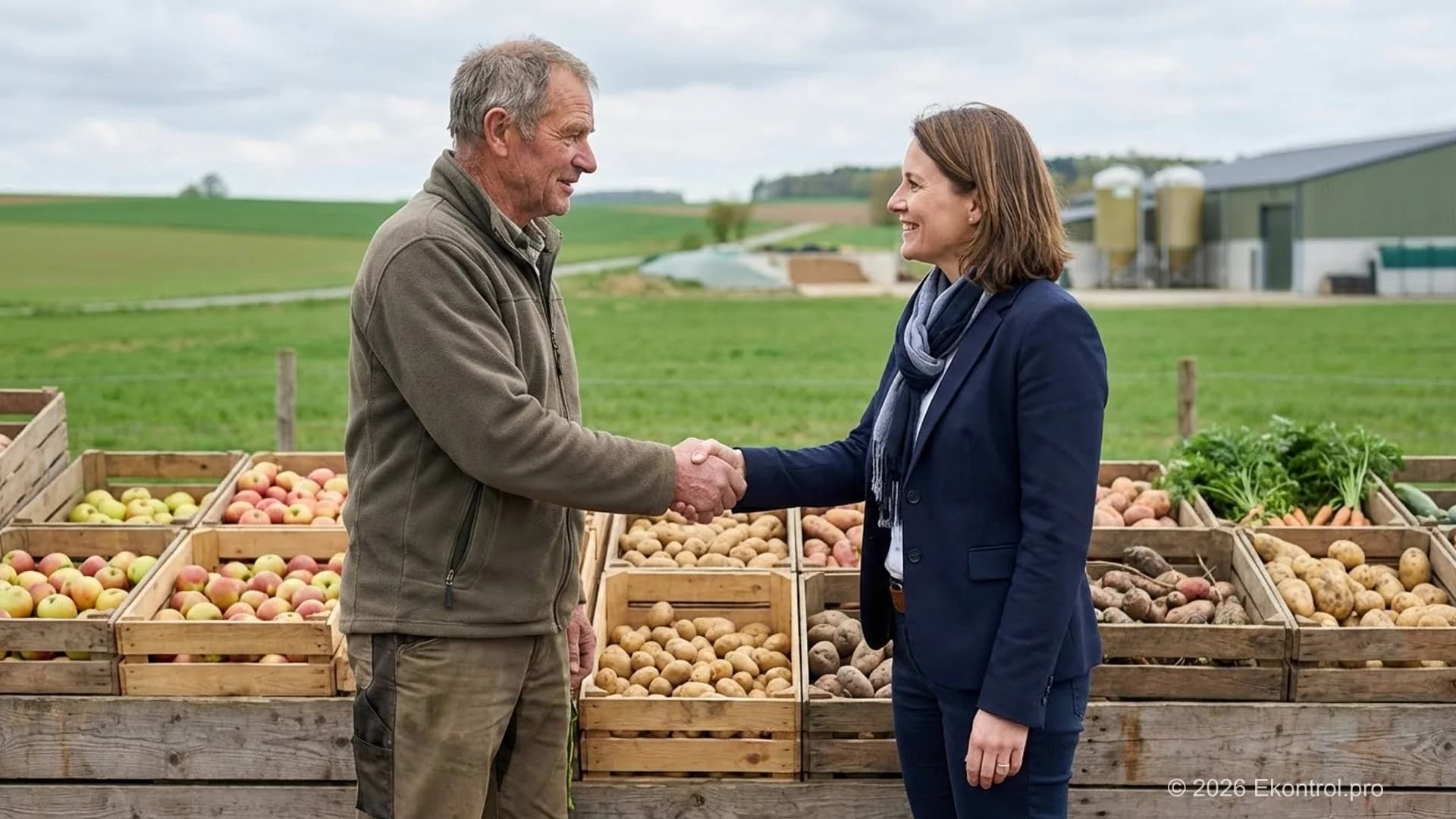
A massive share of Ukrainian maize entering the EU goes straight into bioethanol fermentation plants (Pannonia Bio, CropEnergies, Vertex Bioenergy, Tereos). Under the EU Renewable Energy Directive RED III (Directive (EU) 2023/2413), a biorefinery can't count ethanol toward national decarbonization mandates unless the incoming grain carries verified sustainability credentials. That's why multinational grain traders require Ukrainian farms and elevators to hold active certification under one of four European Commission-recognized schemes: ISCC EU, Germany's REDcert EU, Poland's Oil and Gas Institute scheme KZR INiG, or France's biomass scheme 2BSvs. Maize shipments backed by a valid Sustainability Declaration and low cultivation greenhouse gas (GHG) values command a EUR 5-15 per metric ton premium over uncertified feed corn.
3. Rebuilding African and MENA Market Share (10.6% of Exports): Sovereign Tender Specs and Phytosanitary Compliance
When Russian warships blockaded Ukraine's ports in early 2022, millions of metric tons of milling wheat destined for North and East Africa were trapped onshore. Rival exporters quickly stepped into the gap. Once Ukraine established its independent Black Sea maritime corridor, however, Ukrainian traders began systematically winning back African buyers: Africa's share of Ukrainian agri-food exports climbed from 7% in 2023 to 10.6% in 2024-2025, generating $2.6-2.8 billion in annual export revenue.
Winning sovereign tenders across MENA and Africa (Egypt's state buyer Mostakbal Misr / GASC, Algeria's OAIC, Turkey's TMO, and commercial tenders in Tunisia, Morocco, and Kenya) demands strict adherence to GAFTA physical and phytosanitary specifications:
- milling wheat moisture $\le 13.0\text{--}13.5%$, test weight (hectoliter weight) $\ge 76\text{--}78\ \text{kg/hl}$;
- dry-basis protein $\ge 11.5\text{--}12.5%$, Hagberg-Perten Falling Number $\ge 250\text{--}280\ \text{s}$, and Chopin alveograph dough strength $W \ge 220\text{--}250 \times 10^{-4}\ \text{J}$;
- zero live stored-product insects following in-transit aluminum phosphide recirculation fumigation, plus zero tolerance for quarantine ragweed seeds (Ambrosia artemisiifolia) and bunt spores (Tilletia caries, Tilletia indica).
Ukrainian exporters combine commercial shipments with the humanitarian Grain from Ukraine program, regional grain hub negotiations in West and East Africa, and export credit insurance backed by Ukraine's Export Credit Agency (ECA).
4. The EU as Ukraine's Primary Export Anchor (47.5% - 52%): Navigating Updated DCFTA Tariff-Rate Quotas
The biggest geographic shift on the Ukraine world agricultural map is the European Union's consolidation as the primary destination for Ukrainian agriculture. In 2021, the EU absorbed roughly 30% of Ukraine's agri-exports. Under the emergency Autonomous Trade Measures (ATM) duty-free regime, that share surged to 52% ($12.6 billion) in 2024.
In June 2025, the temporary ATM framework expired, transitioning bilateral trade to the updated Article 29 of the EU-Ukraine Free Trade Agreement (DCFTA) and reinstating tariff-rate quotas (TRQs). As a result, the EU's share adjusted to 47.5% ($10.7 billion) in 2025. Today's TRQ volumes are substantially larger than pre-2022 quotas, but tighter than the unrestricted 2022-2024 window.
What does that mean for your trading desk and quality department? When annual and quarterly tariff quotas are capped, you can't afford border rejections, demurrage, or discounted distressed sales. Exporters who capture the highest margins inside EU quotas are those shipping fully certified, contaminant-free lots that clear TRACES NT border inspection posts on the first pass.
5. Sensitive Agri-Food Categories in the EU: Emergency Brakes, GLOBALG.A.P. IFA v6, and Deep Processing
Rapid growth in Ukrainian consumer agri-food shipments into the EU triggered intense lobbying from European farm unions (Copa-Cogeca). Consequently, seven 'sensitive' commodity groups now face strict quota ceilings and automatic emergency brake mechanisms: poultry meat, shell eggs, white sugar, natural honey, oats, groats, and maize.
To bypass raw commodity quota bottlenecks and sell directly to European retail chains, leading Ukrainian food processors and horticultural exporters execute a two-pronged engineering strategy:
- Primary Production Certification Under GLOBALG.A.P. IFA v6: no European supermarket group (Lidl, Aldi, Rewe, Edeka, Carrefour, Biedronka) will onboard a supplier of fresh berries, apples, blueberries, or greenhouse vegetables without an active GLOBALG.A.P. Integrated Farm Assurance Version 6 certificate and the GRASP social module. Auditors verify Integrated Pest Management (IPM) logs, strict adherence to Pre-Harvest Intervals (PHI) after plant protection product sprays, microbiological irrigation water testing, and harvest hygiene.
- Moving Up the Value Chain with FSSC 22000 and ISO 22000: rather than exporting raw grain or shell eggs, Ukrainian plants invest in deep processing: spray-dried egg white (albumin) and aseptic liquid pasteurized egg products, fermented soy and pea protein concentrates, specialty glucose-fructose syrups, modified starches, and biomethane (upgraded biogas with $\text{CH}_4 \ge 96\text{--}98%$ injected into the gas grid for export to the EU under ISCC EU / REDcert EU mass-balance certificates).
6. Tri-Modal Export Logistics Engineering: Greater Odesa Deep-Water Ports, Danube Clusters, and EU Land Borders
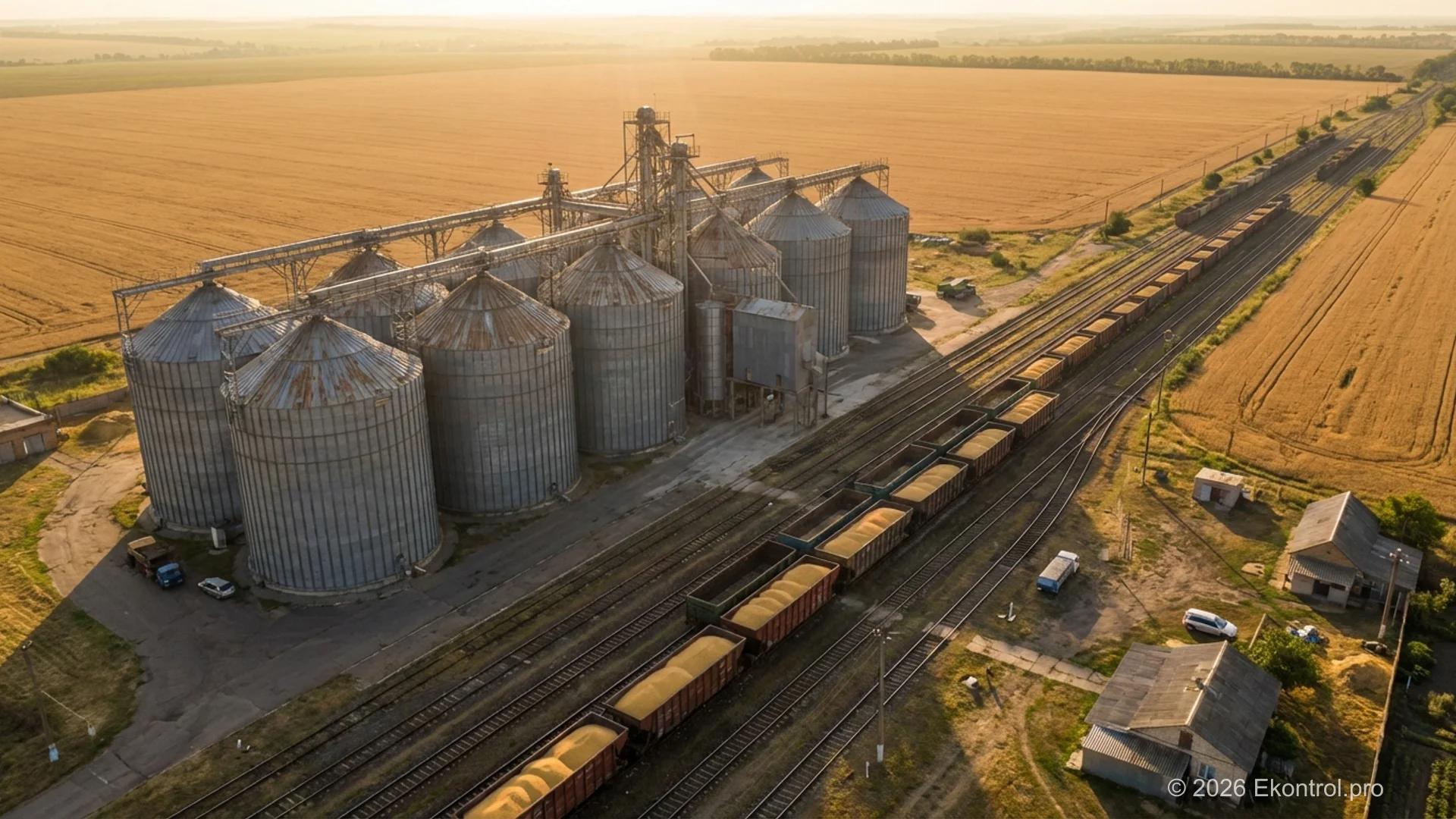
Ukraine's export resilience in 2024-2026 rests on restoring sovereign maritime navigation in the Black Sea after the collapse of the Black Sea Grain Initiative. Re-opening the deep-water port corridor slashed farm-to-FOB logistics costs from the USD 120-160/t peak seen during the 2022 overland border queues down to competitive maritime freight rates. Today, Ukrainian export logistics operates as an integrated tri-modal system.
Greater Odesa Deep-Water Ports (Pivdennyi, Chornomorsk, Odesa)
These three terminals form the financial backbone of Ukrainian agribusiness, handling 80-85% of maritime agricultural export volume. Berth drafts at Pivdennyi ($14.0\text{--}18.5\ \text{m}$) and Chornomorsk ($11.5\text{--}15.0\ \text{m}$) accommodate Panamax ($60,000\text{--}75,000\ \text{dwt}$) and Post-Panamax / Capesize ($80,000\text{--}100,000+\ \text{dwt}$) bulk carriers loading via high-capacity shiploaders at $1,500\text{--}3,000\ \text{t/hour}$. Scale economy on Panamax hulls delivers the lowest per-ton ocean freight into Egypt, Indonesia, Bangladesh, Vietnam, China, and Spain.
Danube River Port Cluster (Izmail, Reni, Ust-Dunaisk)
During the 2022-2023 naval blockade, the Danube ports kept Ukrainian exports alive, multiplying throughput after the opening of the Bystre Mouth and rapid berth expansion in Izmail and Reni. Navigable draft limits across the Bystre and Sulina canals ($7.0\text{--}7.2\ \text{m}$) define the cluster's engineering profile: terminals load Handysize coasters ($3,000\text{--}10,000\ \text{dwt}$) sailing directly to Romanian, Bulgarian, Greek, Turkish, Italian, and Cypriot ports, or dispatch river barge convoys for ship-to-ship transshipment onto Panamax vessels at the deep-water anchorage of Constanta, Romania.
EU Western Land Border Terminals (1520 mm to 1435 mm Gauge Change)
Rail and road border crossings at Yahodyn-Dorohusk, Mostyska-Medyka, Izov-Hrubieszow, Chop-Zahony, and Vadul-Siret-Vicsani bridge Ukraine's broad-gauge rail network ($1520\ \text{mm}$) with the European standard gauge ($1435\ \text{mm}$). Despite higher bogie-exchange and transshipment costs, western dry ports remain indispensable for direct mill-to-refinery deliveries of ISCC-certified rapeseed into Germany, GMP+ soybean and sunflower meal into Poland and the Netherlands, flexitank vegetable oils, and temperature-controlled food products.
| Logistics Parameter | Greater Odesa Deep-Water Ports (Pivdennyi, Chornomorsk, Odesa) | Danube River Port Cluster (Izmail, Reni, Ust-Dunaisk + Constanta) | EU Western Land Border Terminals (1520 mm -> 1435 mm Rail & Road) |
|---|---|---|---|
| Typical Shipment Lot Size | Handymax, Panamax, Post-Panamax: 30,000 - 100,000+ metric tons | Coasters: 3,000 - 10,000 t; barge convoys to Constanta: 6,000 - 18,000 t | Block unit train: 1,500 - 3,200 t; road hopper/tanker trucks: 22 - 24 t |
| Infrastructure Constraints | Ballistic/drone strike defense, hull and cargo War Risk Insurance premiums | Bystre and Sulina canal draft limit (7.0-7.2 m), pilotage and barge queue management | Bogie exchange or silo transshipment (1520 mm to 1435 mm), UZ/PKP slot allocation |
| Primary Commodity Mix | Bulk maize, milling/feed wheat, barley, soybeans, crude sunflower oil, sunseed meal | Mid-sized grain/oilseed parcels to Mediterranean buyers, vegetable oil coasters, fertilizers | ISCC EU rapeseed to German crushers, GMP+ meal, refined bottled oil, biomethane, fresh produce |
| Mandatory Transshipment & Quality Controls | GAFTA / FOSFA superintendence (SGS, Cotecna, Bureau Veritas), hold fumigation, ISO/IEC 17025 lab tests | GMP+ FSA (Storage and Transhipment of feed scope) barge cleanliness audits, previous-cargo verification via IDTF database | Customs sealing, EU Border Inspection Post (BIP) veterinary/phytosanitary clearance in TRACES NT |
7. Kakhovka Dam Destruction Fallout ($359.3M): Southern Irrigation Collapse, Soil Salinization, and Crop Shifts
The June 2023 destruction of the Kakhovka Hydroelectric Power Plant dam inflicted at least $359.3 million in verified direct damage to agricultural melioration assets and drained the $18.2\ \text{km}^3$ Kakhovka Reservoir. That single water body supplied $94%$ of irrigation systems in Kherson Oblast, $74%$ in Zaporizhzhia Oblast, and $30%$ in Dnipropetrovsk Oblast through the Kakhovka Main, North Crimean, and Pivnichno-Rohachytskyi canals (covering more than 580,000 hectares of engineered irrigation).
For Ukraine's agricultural export capacity, losing southern irrigation creates four structural engineering and soil-chemistry consequences:
- Collapse of Water-Intensive Row Crops on Unirrigated Steppe Land: without Dnipro water, dryland yields of maize, soybeans, rice, and processing tomatoes across the southern Steppe drop by 65-75%, rendering conventional irrigated crop rotations economically unviable.
- Secondary Solonetzic Salinization and Wind Erosion: halting freshwater flushing under high-evaporation steppe conditions draws mineralized groundwater upward, accumulating exchangeable sodium ($\text{Na}^+$) in the soil absorption complex of southern chernozems and dark-chestnut soils, degrading soil structure, and triggering dust storms.
- Agronomic Rotation Re-Engineering: farms across right-bank Kherson, Mykolaiv, and southern Dnipropetrovsk oblasts are shifting acreage into winter-hardy, drought-escaping crops (winter wheat, winter barley, winter peas, winter rapeseed) that utilize autumn-winter soil moisture reserves, while replacing spring maize with grain sorghum, safflower, oilseed flax, coriander, and drought-tolerant sunflower hybrids.
- Pressurized Subsurface Drip Modernization: where localized water intake remains possible from the lower Dnipro, Inhulets, or Pivdennyi Buh rivers, farms are abandoning open unlined earth canals (which lose up to 40% of water to seepage and evaporation) and installing closed pressurized pipelines paired with Subsurface Drip Irrigation (SDI) and precision fertigation.
8. Nationwide Climate Warming (+11.2 °C) and Its Direct Impact on RED III Greenhouse Gas Calculations
Climate pressure is no longer confined to Ukraine's southern Steppe; it now governs agronomy across the central Forest-Steppe and northern Polissia zones. Meteorological records show the average annual temperature across Ukraine's farming belt has climbed from +8.6 °C in the 1990s to +11.2 °C in 2024-2026. The Selyaninov hydrothermal coefficient isoline of $\text{HTC} < 0.7$ (marking severe moisture deficit) has migrated 150-200 kilometers north, encompassing Cherkasy, Poltava, Kirovohrad, and southern Kyiv and Vinnytsia oblasts.
Why does nationwide warming threaten not just physical grain yields, but also your ability to pass European export certification?
Under the ISCC EU and RED III greenhouse gas calculation methodology, every kilogram of synthetic nitrogen fertilizer (urea, UAN, ammonium nitrate), liter of diesel fuel, and pesticide input applied per hectare is divided by the actual harvested yield ($\text{t/ha}$) to compute cultivation emissions ($e_{ec}$). When a July heatwave at $+38^\circ\text{C}$ slashes maize yields from a planned $9.5\ \text{t/ha}$ down to $5.8\ \text{t/ha}$, the specific carbon footprint per metric ton of harvested grain ($\text{kg CO}_2\text{eq/t}$) jumps by 40-60%! If your per-ton cultivation emissions breach the biorefinery's GHG savings ceiling, your rapeseed or maize shipment loses its sustainable biofuel eligibility.
That's why adopting moisture-conserving tillage (No-Till, Strip-Till, Mini-Till), applying nitrogen fertilizers with urease and nitrification inhibitors (cutting field $\text{N}_2\text{O}$ emissions, which carry a Global Warming Potential 273 times higher than $\text{CO}2$), and capturing the RED III soil carbon accumulation bonus ($e{sca}$) simultaneously protect physical crop yields and keep your grain within ISCC EU carbon limits.
Multinational Trader Requirements (ADM, Bunge, Cargill, LDC, Kernel) and ISO/IEC 17025 Port Laboratory Testing
To sell grain, oilseeds, vegetable oil, or meal to multinational trading houses (ADM, Bunge, Cargill, Louis Dreyfus Company, Kernel, Viterra) on CPT-port or DAP-EU border terms, harvesting the crop is only half the job. Every export parcel must clear international sustainability and feed/food safety schemes alongside accredited laboratory testing.
1. Biomass Sustainability Schemes: ISCC EU, REDcert EU, KZR INiG, and 2BSvs
For rapeseed, maize, and soybean exports into the European Union, the baseline requirement is ISCC EU certification (official system documents are maintained on the ISCC System website). Multinational traders also accept Germany's REDcert EU, Poland's KZR INiG, and France's 2BSvs schemes.
All four schemes enforce the Directive (EU) 2023/2413 (RED III) life-cycle greenhouse gas equation:
$$E = e_{ec} + e_l + e_p + e_{td} + e_u - e_{sca} - e_{ccs} - e_{ccr}$$
where $e_{ec}$ covers cultivation and extraction emissions (seed, synthetic N-P-K fertilizers, field $\text{N}2\text{O}$ soil emissions, diesel fuel, and elevator drying energy); $e_l$ captures annualized land-use change emissions (strictly prohibiting conversion of forests, peatlands, wetlands, or high-biodiversity grasslands after January 1, 2008); $e_p$ accounts for processing (crushing or ethanol fermentation); $e{td}$ measures transport and distribution to the EU plant; and $e_{sca}$ grants a carbon credit ($-45\ \text{g CO}_2\text{eq/MJ}$) for regenerative soil carbon accumulation. Every First Gathering Point (linear elevator or trader) must maintain a site-specific, quarterly Mass Balance ledger tracking incoming certified farm Self-Declarations against outgoing Sustainability Declarations.
2. GMP+ FSA Feed Safety Assurance for Oilseed Meals and Feed Ingredients
When exporting sunflower meal, soybean meal, granulated sugar beet pulp, corn DDGS, or feed-grade vegetable oils to Europe, buyers require certification under the GMP+ Feed Safety Assurance scheme (certified company directories and transport rules are published on the GMP+ International portal). The most frequent audit failure involves bulk transport contamination. Before loading any barge, rail hopper, or road truck with GMP+ feed material, the operator must verify the vessel's last 3-5 cargoes against the IDTF (International Database Transport for Feed), execute the required cleaning regime (A, B, C, or D), and document a physical Loading Compartment Inspection (LCI).
3. ISO/IEC 17025 Port and Pre-Shipment Laboratory Testing
Official state control over food and feed export consignments in Ukraine is governed by Law of Ukraine No. 2042-VIII on State Control over Compliance with Legislation on Food, Feed, Animal By-products, Animal Health and Welfare, while contractual GAFTA/FOSFA composite samples are tested exclusively in laboratories accredited to ISO/IEC 17025.
Four analytical parameters account for the vast majority of EU RASFF border rejections of Ukrainian agricultural exports:
- Pesticide Maximum Residue Levels (MRLs under Regulation (EC) No 396/2005): the single highest rejection risk involves the organophosphate insecticides chlorpyrifos and chlorpyrifos-methyl, which carry a zero-tolerance EU limit set at the analytical Limit of Quantification $\text{LOQ} \le 0.01\ \text{mg/kg}$. Even if a farmer didn't spray chlorpyrifos in the field, storing clean rapeseed or sunseed inside an elevator silo or barge hold that held chlorpyrifos-treated grain two years ago can cross-contaminate the parcel above $0.01\ \text{mg/kg}$. Multi-residue screening of 500+ active substances is performed via QuEChERS extraction (EN 15662) followed by GC-MS/MS and LC-MS/MS.
- Mycotoxins (Regulation (EU) 2023/915): aflatoxin $B_1$ ($\le 2.0\ \mu\text{g/kg}$ for direct human consumption and $\le 5.0\ \mu\text{g/kg}$ in maize prior to sorting/physical treatment), sum of aflatoxins $B_1 + B_2 + G_1 + G_2$ ($\le 4.0\text{--}10.0\ \mu\text{g/kg}$), deoxynivalenol (DON), zearalenone (ZEA), ochratoxin A (OTA), and fumonisins $B_1 + B_2$, quantified via immunoaffinity cleanup and LC-MS/MS.
- Quantitative Real-Time PCR for GMO Events (ISO 21569 / ISO 21570): verifying the absence of unauthorized genetically modified events in rapeseed (GT73, MS8, RF3) and maize (MON810, NK603) down to a $0.01%$ limit of detection.
- Dioxins, Furans, and Polycyclic Aromatic Hydrocarbons (PAHs): crude and refined sunflower oil lots are tested for dioxins and dioxin-like PCBs using high-resolution gas chromatography / high-resolution mass spectrometry (HRGC-HRMS), alongside benzo[a]pyrene ($\le 2.0\ \mu\text{g/kg}$) and PAH4 sum ($\le 10.0\ \mu\text{g/kg}$), which spike whenever sunseed is dried in direct-fired dryers burning straw, husks, or wood pellets without an indirect heat exchanger.
| Certification Standard / Scheme | Target Commodities & Supply Chain Scope | Core Engineering & Audit Requirements | Primary Buyers & Target Markets |
|---|---|---|---|
| ISCC EU / REDcert EU / KZR INiG / 2BSvs | Rapeseed, maize, soybeans, sunflower oil, biomethane, processing residues (UCO, soapstock) | Polygon/field traceability (Farmer Self-Declarations), no post-2008 deforestation, RED III GHG calculation, elevator Mass Balance | Global grain traders (ADM, Bunge, Cargill, LDC, Kernel), EU biodiesel (FAME/HVO) and bioethanol refineries |
| GMP+ FSA (R1.0 standard with Technical Specifications, scopes per list F0.3) | Sunflower and soybean meal, expeller cake, feed vegetable oil, corn DDGS, wheat bran, feed grains | Feed HACCP plan, dioxin/pesticide/heavy metal/Salmonella monitoring, transport cleanliness verification via IDTF | Compound feed and premix mills in the Netherlands, Germany, Poland, Spain, France, and Italy |
| GLOBALG.A.P. IFA v6 (+ GRASP module) | Primary farm production of arable crops, fresh fruits, berries (blueberries, apples), and vegetables | Integrated Pest Management (IPM), spray logs & Pre-Harvest Intervals (PHI), irrigation water microbiology, worker welfare | Direct retail supply contracts with European supermarket chains (Lidl, Aldi, Rewe, Carrefour, Tesco, Biedronka) |
| FSSC 22000 V6 / ISO 22000 | Oilseed crushing & refining plants, flour mills, egg processing plants, sugar refineries, dairy facilities | ISO/TS 22002-1 PRPs, CCP validation, 3-MCPD/PAH/MOSH-MOAH control, allergen management, Food Fraud mitigation | Multinational FMCG food manufacturers, retail private-label programs, and ingredient buyers across the EU, MENA, and Asia |
| ISO/IEC 17025 | Port terminal, oilseed crushing plant, and inland route-elevator testing laboratories | Method validation for GC-MS/MS, LC-MS/MS, Real-Time PCR, measurement uncertainty budgets, proficiency testing (PT) | Recognition of Certificates of Analysis by EU border authorities (TRACES NT), trade banks, and GAFTA/FOSFA surveyors |
Hidden Elevator Hazard: Cross-Contamination with Chlorpyrifos and PAHs
Over 60% of chlorpyrifos residue rejections (> 0.01 mg/kg) in Ukrainian export rapeseed and sunflower seed originate not from field spraying, but from cross-contamination inside legacy elevator silos, grain dryers, and barge holds previously treated with organophosphate fumigants. Similarly, drying sunseed in direct-fired furnaces burning husks or straw without a heat exchanger drives crude oil benzo[a]pyrene levels to 8-15 mcg/kg, far above the EU 2.0 mcg/kg ceiling.
| Strategic Agribusiness Indicator | Pre-War Baseline (2021) | Current Reality (2024-2026) | Engineering & Compliance Impact on Exporters |
|---|---|---|---|
| EU Share of Ukrainian Agri-Exports | ~30% of total agricultural exports | 52% ($12.6B) in 2024; 47.5% ($10.7B) in 2025 following return of DCFTA quotas | Strict quota calendar management under DCFTA Art. 29 and mandatory ISCC EU, GMP+, GLOBALG.A.P., FSSC 22000 compliance |
| Agri-Exports to China (Maize, Barley, Meal) | $4.3 billion (single largest country buyer) | Sharp contraction and opportunistic shipments due to Brazilian safrinha corn expansion | Re-engineering maize supply chains for Spanish, Italian, Dutch, and German bioethanol and compound feed plants |
| African Market Share in Agri-Exports | ~7% (steady Black Sea shipments) | Rebounded to 10.6% ($2.6-2.8B annually) via the Ukrainian Black Sea corridor | Tighter control over protein, Falling Number, quarantine ragweed seeds, and phosphine fumigation for MENA/African tenders |
| Southern Irrigation (Kakhovka HPP Fallout) | 580,000+ ha irrigated from the 18.2 km³ Kakhovka Reservoir | $359.3M direct melioration damage; loss of main canal water intake in Kherson and Zaporizhzhia | Transition to drought-escaping winter crops, sorghum, safflower, flax, and closed subsurface drip irrigation |
| Mean Annual Farming Zone Temperature | +8.6 °C (1990s climatic baseline) | +11.2 °C (2024-2026), northward shift of arid HTC < 0.7 zone into Central Forest-Steppe | Adoption of Strip-Till / No-Till, nitrification inhibitors, and individual farm N2O emission calculations under RED III |
Ukraine World Agricultural Map in 2026: Step-by-Step Export Certification Roadmap for Agribusinesses
Put all eight structural shifts together and one conclusion stands out: in 2026, an agribusiness's net margin is decided in the compliance office, the elevator laboratory, and at the border crossing. Ekontrol's engineering team uses a four-step implementation roadmap when conducting a diagnostic audit and preparing Ukrainian agro-holdings, elevators, and processors for international certification.
- Certify Your Biomass Supply Chain Under ISCC EU or REDcert EU Before Harvest Starts. Don't wait until July or September when traders are already locking in forward contracts for rapeseed and maize. Preparing a linear elevator or trading desk for an ISCC EU audit takes 4-6 weeks: verifying land parcels against satellite imagery to prove zero post-2008 deforestation, collecting signed Farmer Self-Declarations, calculating actual farm cultivation GHG emissions ($e_{ec}$) to beat punitive NUTS2 default values, and setting up a site-specific Mass Balance ledger.
- Implement GMP+ FSA Across Crushing Plants, Feed Mills, and Transshipment Terminals. Exporting sunflower or soybean meal into the EU requires a validated feed HACCP plan, contracted dioxin and pesticide residue monitoring, and strict IDTF previous-cargo verification and cleaning logs for every barge, railcar, and truck.
- Upgrade Elevator Grain Dryers and ISO/IEC 17025 Pre-Shipment Testing. Retrofit direct-fired sunseed and corn dryers with indirect heat exchangers to eliminate benzo[a]pyrene and dioxin contamination during seed drying. Screen incoming farm trucks for moisture, protein, mycotoxins, and GMOs, and test composite block-train samples for chlorpyrifos ($\le 0.01\ \text{mg/kg}$) via GC-MS/MS in an ISO/IEC 17025 accredited lab before dispatch.
- Certify Value-Added Processing Under FSSC 22000 V6 and Primary Horticulture Under GLOBALG.A.P. IFA v6. Holding these standards lets you sell bottled oil, specialty flour, egg products, berries, and fresh produce directly to European retail distribution centers without giving up margin to commodity intermediaries.
Book a Diagnostic Audit and ISCC EU, GMP+, or FSSC 22000 Implementation with Ekontrol
Planning to export rapeseed, maize, soybeans, sunflower oil, or oilseed meal to the EU in the 2026/2027 season? Ekontrol's lead auditors conduct on-site diagnostic audits of elevators and processing plants, calculate actual RED III greenhouse gas emissions, and deliver turnkey standard implementation (ISCC EU, REDcert EU, KZR INiG, GMP+ FSA, GLOBALG.A.P., FSSC 22000, and ISO/IEC 17025) with full support during your official certification audit.
Commercial ROI of Sustainability Certification for Grain Exporters
Holding an active ISCC EU certificate backed by individual farm GHG cultivation calculations earns Ukrainian grain exporters a EUR 8-15 per metric ton price premium on rapeseed and maize. Across a single 20,000-ton export parcel, that generates EUR 160,000 to EUR 300,000 in additional revenue, paying back consulting and certification audit costs on the very first unit train or coaster shipment.
Conclusion: The New Ukraine World Agricultural Map and Export Priorities for 2026-2027
In 2026, the Ukraine world agricultural map reflects a permanent shift from raw volume maximization to compliance-driven agribusiness engineering. Statistical assessments from the Food and Agriculture Organization of the United Nations (FAO) confirm that despite wartime infrastructure attacks, the destruction of the Kakhovka Reservoir, and nationwide warming to $+11.2^\circ\text{C}$, Ukraine remains a pillar of global food security.
Yet the rules governing market access have changed for good: the European Union (absorbing 47.5%-52% of exports) enforces strict DCFTA quota calendars, Regulation (EC) No 396/2005 pesticide MRLs, and RED III sustainability certification (ISCC EU, REDcert, KZR INiG, 2BSvs), while feed and value-added food channels require GMP+ FSA, GLOBALG.A.P., FSSC 22000, ISO 22000, and ISO/IEC 17025 laboratory verification.
Ready to protect your export margins and qualify your elevator, farm, or processing plant for direct contracts with European buyers and multinational traders? Contact the Ekontrol team for a free engineering consultation and certification timeline.
Need a certification consultation?
Free ConsultationOn This Page
- 1. Ukraine World Agricultural Map: Sunflower Oil Market Shifts and Value-Added Refining Under FSSC 22000 and ISCC EU
- 2. Losing China's Maize Monopoly and Pivoting to EU Bioethanol Refineries Under REDcert, KZR INiG, and 2BSvs
- 3. Rebuilding African and MENA Market Share (10.6% of Exports): Sovereign Tender Specs and Phytosanitary Compliance
- 4. The EU as Ukraine's Primary Export Anchor (47.5% - 52%): Navigating Updated DCFTA Tariff-Rate Quotas
- 5. Sensitive Agri-Food Categories in the EU: Emergency Brakes, GLOBALG.A.P. IFA v6, and Deep Processing
- 6. Tri-Modal Export Logistics Engineering: Greater Odesa Deep-Water Ports, Danube Clusters, and EU Land Borders
- 7. Kakhovka Dam Destruction Fallout ($359.3M): Southern Irrigation Collapse, Soil Salinization, and Crop Shifts
- 8. Nationwide Climate Warming (+11.2 °C) and Its Direct Impact on RED III Greenhouse Gas Calculations
- Multinational Trader Requirements (ADM, Bunge, Cargill, LDC, Kernel) and ISO/IEC 17025 Port Laboratory Testing
- Ukraine World Agricultural Map in 2026: Step-by-Step Export Certification Roadmap for Agribusinesses
- Conclusion: The New Ukraine World Agricultural Map and Export Priorities for 2026-2027
1. Ukraine World Agricultural Map: Sunflower Oil Market Shifts and Value-Added Refining Under FSSC 22000 and ISCC EU
Since 2022, the Ukraine world agricultural map has undergone a structural engineering transformation, starting with the global vegetable oil sector. For over a decade, Ukraine held the undisputed number-one spot in global sunflower oil exports. Yet USDA balance sheets for the 2025/2026 marketing year show the aggressor state expanding crushing capacity and aggressively discounting crude oil into price-sensitive Indian and Turkish markets.
Meanwhile, Ukrainian oilseed crushing plants operate under constant missile threats against port terminals and energy grids, driving up per-ton extraction costs while domestic competition for sunseed intensifies.
How are Ukrainian oilseed processors protecting their margins in 2026? They're moving away from discounted bulk crude shipments and capturing high-compliance European segments where uncertified competitors can't enter:
- producing High-Oleic refined, bleached, and deodorized (RBD) sunflower oil and bottled retail SKUs for European supermarkets and infant-formula manufacturers certified under FSSC 22000 Version 6;
- supplying certified technical vegetable oils, acid oils, soapstocks, fatty acid distillates, and Used Cooking Oil (UCO) to European biorefineries producing FAME biodiesel, Hydrotreated Vegetable Oil (HVO), and Sustainable Aviation Fuel (SAF) under ISCC EU sustainability certification;
- engineering multi-stage refining protocols that strip out polycyclic aromatic hydrocarbons (PAHs such as benzo[a]pyrene), mineral oil hydrocarbons (MOSH/MOAH), and 3-MCPD / glycidyl fatty acid esters (GE) strictly capped by Commission Regulation (EU) 2023/915.
2. Losing China's Maize Monopoly and Pivoting to EU Bioethanol Refineries Under REDcert, KZR INiG, and 2BSvs
Before the full-scale invasion, China was Ukraine's largest single-country buyer of maize and barley, importing $4.3 billion worth of Ukrainian agricultural goods in 2021. When the 2022 maritime blockade halted shipments, Beijing moved fast. Chinese customs approved hundreds of Brazilian maize export facilities harvesting second-crop (safrinha) corn while boosting domestic Chinese grain acreage.
Betting on a return to pre-war Chinese bulk volumes in 2026 isn't realistic. Instead, Ukrainian maize exporters redirected flows into Spain, Italy, the Netherlands, Germany, Egypt, and Turkey. Selling into the European Union, however, requires a completely different compliance package.
A massive share of Ukrainian maize entering the EU goes straight into bioethanol fermentation plants (Pannonia Bio, CropEnergies, Vertex Bioenergy, Tereos). Under the EU Renewable Energy Directive RED III (Directive (EU) 2023/2413), a biorefinery can't count ethanol toward national decarbonization mandates unless the incoming grain carries verified sustainability credentials. That's why multinational grain traders require Ukrainian farms and elevators to hold active certification under one of four European Commission-recognized schemes: ISCC EU, Germany's REDcert EU, Poland's Oil and Gas Institute scheme KZR INiG, or France's biomass scheme 2BSvs. Maize shipments backed by a valid Sustainability Declaration and low cultivation greenhouse gas (GHG) values command a EUR 5-15 per metric ton premium over uncertified feed corn.
3. Rebuilding African and MENA Market Share (10.6% of Exports): Sovereign Tender Specs and Phytosanitary Compliance
When Russian warships blockaded Ukraine's ports in early 2022, millions of metric tons of milling wheat destined for North and East Africa were trapped onshore. Rival exporters quickly stepped into the gap. Once Ukraine established its independent Black Sea maritime corridor, however, Ukrainian traders began systematically winning back African buyers: Africa's share of Ukrainian agri-food exports climbed from 7% in 2023 to 10.6% in 2024-2025, generating $2.6-2.8 billion in annual export revenue.
Winning sovereign tenders across MENA and Africa (Egypt's state buyer Mostakbal Misr / GASC, Algeria's OAIC, Turkey's TMO, and commercial tenders in Tunisia, Morocco, and Kenya) demands strict adherence to GAFTA physical and phytosanitary specifications:
- milling wheat moisture $\le 13.0\text{--}13.5%$, test weight (hectoliter weight) $\ge 76\text{--}78\ \text{kg/hl}$;
- dry-basis protein $\ge 11.5\text{--}12.5%$, Hagberg-Perten Falling Number $\ge 250\text{--}280\ \text{s}$, and Chopin alveograph dough strength $W \ge 220\text{--}250 \times 10^{-4}\ \text{J}$;
- zero live stored-product insects following in-transit aluminum phosphide recirculation fumigation, plus zero tolerance for quarantine ragweed seeds (Ambrosia artemisiifolia) and bunt spores (Tilletia caries, Tilletia indica).
Ukrainian exporters combine commercial shipments with the humanitarian Grain from Ukraine program, regional grain hub negotiations in West and East Africa, and export credit insurance backed by Ukraine's Export Credit Agency (ECA).
4. The EU as Ukraine's Primary Export Anchor (47.5% - 52%): Navigating Updated DCFTA Tariff-Rate Quotas
The biggest geographic shift on the Ukraine world agricultural map is the European Union's consolidation as the primary destination for Ukrainian agriculture. In 2021, the EU absorbed roughly 30% of Ukraine's agri-exports. Under the emergency Autonomous Trade Measures (ATM) duty-free regime, that share surged to 52% ($12.6 billion) in 2024.
In June 2025, the temporary ATM framework expired, transitioning bilateral trade to the updated Article 29 of the EU-Ukraine Free Trade Agreement (DCFTA) and reinstating tariff-rate quotas (TRQs). As a result, the EU's share adjusted to 47.5% ($10.7 billion) in 2025. Today's TRQ volumes are substantially larger than pre-2022 quotas, but tighter than the unrestricted 2022-2024 window.
What does that mean for your trading desk and quality department? When annual and quarterly tariff quotas are capped, you can't afford border rejections, demurrage, or discounted distressed sales. Exporters who capture the highest margins inside EU quotas are those shipping fully certified, contaminant-free lots that clear TRACES NT border inspection posts on the first pass.
5. Sensitive Agri-Food Categories in the EU: Emergency Brakes, GLOBALG.A.P. IFA v6, and Deep Processing
Rapid growth in Ukrainian consumer agri-food shipments into the EU triggered intense lobbying from European farm unions (Copa-Cogeca). Consequently, seven 'sensitive' commodity groups now face strict quota ceilings and automatic emergency brake mechanisms: poultry meat, shell eggs, white sugar, natural honey, oats, groats, and maize.
To bypass raw commodity quota bottlenecks and sell directly to European retail chains, leading Ukrainian food processors and horticultural exporters execute a two-pronged engineering strategy:
- Primary Production Certification Under GLOBALG.A.P. IFA v6: no European supermarket group (Lidl, Aldi, Rewe, Edeka, Carrefour, Biedronka) will onboard a supplier of fresh berries, apples, blueberries, or greenhouse vegetables without an active GLOBALG.A.P. Integrated Farm Assurance Version 6 certificate and the GRASP social module. Auditors verify Integrated Pest Management (IPM) logs, strict adherence to Pre-Harvest Intervals (PHI) after plant protection product sprays, microbiological irrigation water testing, and harvest hygiene.
- Moving Up the Value Chain with FSSC 22000 and ISO 22000: rather than exporting raw grain or shell eggs, Ukrainian plants invest in deep processing: spray-dried egg white (albumin) and aseptic liquid pasteurized egg products, fermented soy and pea protein concentrates, specialty glucose-fructose syrups, modified starches, and biomethane (upgraded biogas with $\text{CH}_4 \ge 96\text{--}98%$ injected into the gas grid for export to the EU under ISCC EU / REDcert EU mass-balance certificates).
6. Tri-Modal Export Logistics Engineering: Greater Odesa Deep-Water Ports, Danube Clusters, and EU Land Borders
Ukraine's export resilience in 2024-2026 rests on restoring sovereign maritime navigation in the Black Sea after the collapse of the Black Sea Grain Initiative. Re-opening the deep-water port corridor slashed farm-to-FOB logistics costs from the USD 120-160/t peak seen during the 2022 overland border queues down to competitive maritime freight rates. Today, Ukrainian export logistics operates as an integrated tri-modal system.
Greater Odesa Deep-Water Ports (Pivdennyi, Chornomorsk, Odesa)
These three terminals form the financial backbone of Ukrainian agribusiness, handling 80-85% of maritime agricultural export volume. Berth drafts at Pivdennyi ($14.0\text{--}18.5\ \text{m}$) and Chornomorsk ($11.5\text{--}15.0\ \text{m}$) accommodate Panamax ($60,000\text{--}75,000\ \text{dwt}$) and Post-Panamax / Capesize ($80,000\text{--}100,000+\ \text{dwt}$) bulk carriers loading via high-capacity shiploaders at $1,500\text{--}3,000\ \text{t/hour}$. Scale economy on Panamax hulls delivers the lowest per-ton ocean freight into Egypt, Indonesia, Bangladesh, Vietnam, China, and Spain.
Danube River Port Cluster (Izmail, Reni, Ust-Dunaisk)
During the 2022-2023 naval blockade, the Danube ports kept Ukrainian exports alive, multiplying throughput after the opening of the Bystre Mouth and rapid berth expansion in Izmail and Reni. Navigable draft limits across the Bystre and Sulina canals ($7.0\text{--}7.2\ \text{m}$) define the cluster's engineering profile: terminals load Handysize coasters ($3,000\text{--}10,000\ \text{dwt}$) sailing directly to Romanian, Bulgarian, Greek, Turkish, Italian, and Cypriot ports, or dispatch river barge convoys for ship-to-ship transshipment onto Panamax vessels at the deep-water anchorage of Constanta, Romania.
EU Western Land Border Terminals (1520 mm to 1435 mm Gauge Change)
Rail and road border crossings at Yahodyn-Dorohusk, Mostyska-Medyka, Izov-Hrubieszow, Chop-Zahony, and Vadul-Siret-Vicsani bridge Ukraine's broad-gauge rail network ($1520\ \text{mm}$) with the European standard gauge ($1435\ \text{mm}$). Despite higher bogie-exchange and transshipment costs, western dry ports remain indispensable for direct mill-to-refinery deliveries of ISCC-certified rapeseed into Germany, GMP+ soybean and sunflower meal into Poland and the Netherlands, flexitank vegetable oils, and temperature-controlled food products.
| Logistics Parameter | Greater Odesa Deep-Water Ports (Pivdennyi, Chornomorsk, Odesa) | Danube River Port Cluster (Izmail, Reni, Ust-Dunaisk + Constanta) | EU Western Land Border Terminals (1520 mm -> 1435 mm Rail & Road) |
|---|---|---|---|
| Typical Shipment Lot Size | Handymax, Panamax, Post-Panamax: 30,000 - 100,000+ metric tons | Coasters: 3,000 - 10,000 t; barge convoys to Constanta: 6,000 - 18,000 t | Block unit train: 1,500 - 3,200 t; road hopper/tanker trucks: 22 - 24 t |
| Infrastructure Constraints | Ballistic/drone strike defense, hull and cargo War Risk Insurance premiums | Bystre and Sulina canal draft limit (7.0-7.2 m), pilotage and barge queue management | Bogie exchange or silo transshipment (1520 mm to 1435 mm), UZ/PKP slot allocation |
| Primary Commodity Mix | Bulk maize, milling/feed wheat, barley, soybeans, crude sunflower oil, sunseed meal | Mid-sized grain/oilseed parcels to Mediterranean buyers, vegetable oil coasters, fertilizers | ISCC EU rapeseed to German crushers, GMP+ meal, refined bottled oil, biomethane, fresh produce |
| Mandatory Transshipment & Quality Controls | GAFTA / FOSFA superintendence (SGS, Cotecna, Bureau Veritas), hold fumigation, ISO/IEC 17025 lab tests | GMP+ FSA (Storage and Transhipment of feed scope) barge cleanliness audits, previous-cargo verification via IDTF database | Customs sealing, EU Border Inspection Post (BIP) veterinary/phytosanitary clearance in TRACES NT |
7. Kakhovka Dam Destruction Fallout ($359.3M): Southern Irrigation Collapse, Soil Salinization, and Crop Shifts
The June 2023 destruction of the Kakhovka Hydroelectric Power Plant dam inflicted at least $359.3 million in verified direct damage to agricultural melioration assets and drained the $18.2\ \text{km}^3$ Kakhovka Reservoir. That single water body supplied $94%$ of irrigation systems in Kherson Oblast, $74%$ in Zaporizhzhia Oblast, and $30%$ in Dnipropetrovsk Oblast through the Kakhovka Main, North Crimean, and Pivnichno-Rohachytskyi canals (covering more than 580,000 hectares of engineered irrigation).
For Ukraine's agricultural export capacity, losing southern irrigation creates four structural engineering and soil-chemistry consequences:
- Collapse of Water-Intensive Row Crops on Unirrigated Steppe Land: without Dnipro water, dryland yields of maize, soybeans, rice, and processing tomatoes across the southern Steppe drop by 65-75%, rendering conventional irrigated crop rotations economically unviable.
- Secondary Solonetzic Salinization and Wind Erosion: halting freshwater flushing under high-evaporation steppe conditions draws mineralized groundwater upward, accumulating exchangeable sodium ($\text{Na}^+$) in the soil absorption complex of southern chernozems and dark-chestnut soils, degrading soil structure, and triggering dust storms.
- Agronomic Rotation Re-Engineering: farms across right-bank Kherson, Mykolaiv, and southern Dnipropetrovsk oblasts are shifting acreage into winter-hardy, drought-escaping crops (winter wheat, winter barley, winter peas, winter rapeseed) that utilize autumn-winter soil moisture reserves, while replacing spring maize with grain sorghum, safflower, oilseed flax, coriander, and drought-tolerant sunflower hybrids.
- Pressurized Subsurface Drip Modernization: where localized water intake remains possible from the lower Dnipro, Inhulets, or Pivdennyi Buh rivers, farms are abandoning open unlined earth canals (which lose up to 40% of water to seepage and evaporation) and installing closed pressurized pipelines paired with Subsurface Drip Irrigation (SDI) and precision fertigation.
8. Nationwide Climate Warming (+11.2 °C) and Its Direct Impact on RED III Greenhouse Gas Calculations
Climate pressure is no longer confined to Ukraine's southern Steppe; it now governs agronomy across the central Forest-Steppe and northern Polissia zones. Meteorological records show the average annual temperature across Ukraine's farming belt has climbed from +8.6 °C in the 1990s to +11.2 °C in 2024-2026. The Selyaninov hydrothermal coefficient isoline of $\text{HTC} < 0.7$ (marking severe moisture deficit) has migrated 150-200 kilometers north, encompassing Cherkasy, Poltava, Kirovohrad, and southern Kyiv and Vinnytsia oblasts.
Why does nationwide warming threaten not just physical grain yields, but also your ability to pass European export certification?
Under the ISCC EU and RED III greenhouse gas calculation methodology, every kilogram of synthetic nitrogen fertilizer (urea, UAN, ammonium nitrate), liter of diesel fuel, and pesticide input applied per hectare is divided by the actual harvested yield ($\text{t/ha}$) to compute cultivation emissions ($e_{ec}$). When a July heatwave at $+38^\circ\text{C}$ slashes maize yields from a planned $9.5\ \text{t/ha}$ down to $5.8\ \text{t/ha}$, the specific carbon footprint per metric ton of harvested grain ($\text{kg CO}_2\text{eq/t}$) jumps by 40-60%! If your per-ton cultivation emissions breach the biorefinery's GHG savings ceiling, your rapeseed or maize shipment loses its sustainable biofuel eligibility.
That's why adopting moisture-conserving tillage (No-Till, Strip-Till, Mini-Till), applying nitrogen fertilizers with urease and nitrification inhibitors (cutting field $\text{N}_2\text{O}$ emissions, which carry a Global Warming Potential 273 times higher than $\text{CO}2$), and capturing the RED III soil carbon accumulation bonus ($e{sca}$) simultaneously protect physical crop yields and keep your grain within ISCC EU carbon limits.
Multinational Trader Requirements (ADM, Bunge, Cargill, LDC, Kernel) and ISO/IEC 17025 Port Laboratory Testing
To sell grain, oilseeds, vegetable oil, or meal to multinational trading houses (ADM, Bunge, Cargill, Louis Dreyfus Company, Kernel, Viterra) on CPT-port or DAP-EU border terms, harvesting the crop is only half the job. Every export parcel must clear international sustainability and feed/food safety schemes alongside accredited laboratory testing.
1. Biomass Sustainability Schemes: ISCC EU, REDcert EU, KZR INiG, and 2BSvs
For rapeseed, maize, and soybean exports into the European Union, the baseline requirement is ISCC EU certification (official system documents are maintained on the ISCC System website). Multinational traders also accept Germany's REDcert EU, Poland's KZR INiG, and France's 2BSvs schemes.
All four schemes enforce the Directive (EU) 2023/2413 (RED III) life-cycle greenhouse gas equation:
$$E = e_{ec} + e_l + e_p + e_{td} + e_u - e_{sca} - e_{ccs} - e_{ccr}$$
where $e_{ec}$ covers cultivation and extraction emissions (seed, synthetic N-P-K fertilizers, field $\text{N}2\text{O}$ soil emissions, diesel fuel, and elevator drying energy); $e_l$ captures annualized land-use change emissions (strictly prohibiting conversion of forests, peatlands, wetlands, or high-biodiversity grasslands after January 1, 2008); $e_p$ accounts for processing (crushing or ethanol fermentation); $e{td}$ measures transport and distribution to the EU plant; and $e_{sca}$ grants a carbon credit ($-45\ \text{g CO}_2\text{eq/MJ}$) for regenerative soil carbon accumulation. Every First Gathering Point (linear elevator or trader) must maintain a site-specific, quarterly Mass Balance ledger tracking incoming certified farm Self-Declarations against outgoing Sustainability Declarations.
2. GMP+ FSA Feed Safety Assurance for Oilseed Meals and Feed Ingredients
When exporting sunflower meal, soybean meal, granulated sugar beet pulp, corn DDGS, or feed-grade vegetable oils to Europe, buyers require certification under the GMP+ Feed Safety Assurance scheme (certified company directories and transport rules are published on the GMP+ International portal). The most frequent audit failure involves bulk transport contamination. Before loading any barge, rail hopper, or road truck with GMP+ feed material, the operator must verify the vessel's last 3-5 cargoes against the IDTF (International Database Transport for Feed), execute the required cleaning regime (A, B, C, or D), and document a physical Loading Compartment Inspection (LCI).
3. ISO/IEC 17025 Port and Pre-Shipment Laboratory Testing
Official state control over food and feed export consignments in Ukraine is governed by Law of Ukraine No. 2042-VIII on State Control over Compliance with Legislation on Food, Feed, Animal By-products, Animal Health and Welfare, while contractual GAFTA/FOSFA composite samples are tested exclusively in laboratories accredited to ISO/IEC 17025.
Four analytical parameters account for the vast majority of EU RASFF border rejections of Ukrainian agricultural exports:
- Pesticide Maximum Residue Levels (MRLs under Regulation (EC) No 396/2005): the single highest rejection risk involves the organophosphate insecticides chlorpyrifos and chlorpyrifos-methyl, which carry a zero-tolerance EU limit set at the analytical Limit of Quantification $\text{LOQ} \le 0.01\ \text{mg/kg}$. Even if a farmer didn't spray chlorpyrifos in the field, storing clean rapeseed or sunseed inside an elevator silo or barge hold that held chlorpyrifos-treated grain two years ago can cross-contaminate the parcel above $0.01\ \text{mg/kg}$. Multi-residue screening of 500+ active substances is performed via QuEChERS extraction (EN 15662) followed by GC-MS/MS and LC-MS/MS.
- Mycotoxins (Regulation (EU) 2023/915): aflatoxin $B_1$ ($\le 2.0\ \mu\text{g/kg}$ for direct human consumption and $\le 5.0\ \mu\text{g/kg}$ in maize prior to sorting/physical treatment), sum of aflatoxins $B_1 + B_2 + G_1 + G_2$ ($\le 4.0\text{--}10.0\ \mu\text{g/kg}$), deoxynivalenol (DON), zearalenone (ZEA), ochratoxin A (OTA), and fumonisins $B_1 + B_2$, quantified via immunoaffinity cleanup and LC-MS/MS.
- Quantitative Real-Time PCR for GMO Events (ISO 21569 / ISO 21570): verifying the absence of unauthorized genetically modified events in rapeseed (GT73, MS8, RF3) and maize (MON810, NK603) down to a $0.01%$ limit of detection.
- Dioxins, Furans, and Polycyclic Aromatic Hydrocarbons (PAHs): crude and refined sunflower oil lots are tested for dioxins and dioxin-like PCBs using high-resolution gas chromatography / high-resolution mass spectrometry (HRGC-HRMS), alongside benzo[a]pyrene ($\le 2.0\ \mu\text{g/kg}$) and PAH4 sum ($\le 10.0\ \mu\text{g/kg}$), which spike whenever sunseed is dried in direct-fired dryers burning straw, husks, or wood pellets without an indirect heat exchanger.
| Certification Standard / Scheme | Target Commodities & Supply Chain Scope | Core Engineering & Audit Requirements | Primary Buyers & Target Markets |
|---|---|---|---|
| ISCC EU / REDcert EU / KZR INiG / 2BSvs | Rapeseed, maize, soybeans, sunflower oil, biomethane, processing residues (UCO, soapstock) | Polygon/field traceability (Farmer Self-Declarations), no post-2008 deforestation, RED III GHG calculation, elevator Mass Balance | Global grain traders (ADM, Bunge, Cargill, LDC, Kernel), EU biodiesel (FAME/HVO) and bioethanol refineries |
| GMP+ FSA (R1.0 standard with Technical Specifications, scopes per list F0.3) | Sunflower and soybean meal, expeller cake, feed vegetable oil, corn DDGS, wheat bran, feed grains | Feed HACCP plan, dioxin/pesticide/heavy metal/Salmonella monitoring, transport cleanliness verification via IDTF | Compound feed and premix mills in the Netherlands, Germany, Poland, Spain, France, and Italy |
| GLOBALG.A.P. IFA v6 (+ GRASP module) | Primary farm production of arable crops, fresh fruits, berries (blueberries, apples), and vegetables | Integrated Pest Management (IPM), spray logs & Pre-Harvest Intervals (PHI), irrigation water microbiology, worker welfare | Direct retail supply contracts with European supermarket chains (Lidl, Aldi, Rewe, Carrefour, Tesco, Biedronka) |
| FSSC 22000 V6 / ISO 22000 | Oilseed crushing & refining plants, flour mills, egg processing plants, sugar refineries, dairy facilities | ISO/TS 22002-1 PRPs, CCP validation, 3-MCPD/PAH/MOSH-MOAH control, allergen management, Food Fraud mitigation | Multinational FMCG food manufacturers, retail private-label programs, and ingredient buyers across the EU, MENA, and Asia |
| ISO/IEC 17025 | Port terminal, oilseed crushing plant, and inland route-elevator testing laboratories | Method validation for GC-MS/MS, LC-MS/MS, Real-Time PCR, measurement uncertainty budgets, proficiency testing (PT) | Recognition of Certificates of Analysis by EU border authorities (TRACES NT), trade banks, and GAFTA/FOSFA surveyors |
Hidden Elevator Hazard: Cross-Contamination with Chlorpyrifos and PAHs
Over 60% of chlorpyrifos residue rejections (> 0.01 mg/kg) in Ukrainian export rapeseed and sunflower seed originate not from field spraying, but from cross-contamination inside legacy elevator silos, grain dryers, and barge holds previously treated with organophosphate fumigants. Similarly, drying sunseed in direct-fired furnaces burning husks or straw without a heat exchanger drives crude oil benzo[a]pyrene levels to 8-15 mcg/kg, far above the EU 2.0 mcg/kg ceiling.
| Strategic Agribusiness Indicator | Pre-War Baseline (2021) | Current Reality (2024-2026) | Engineering & Compliance Impact on Exporters |
|---|---|---|---|
| EU Share of Ukrainian Agri-Exports | ~30% of total agricultural exports | 52% ($12.6B) in 2024; 47.5% ($10.7B) in 2025 following return of DCFTA quotas | Strict quota calendar management under DCFTA Art. 29 and mandatory ISCC EU, GMP+, GLOBALG.A.P., FSSC 22000 compliance |
| Agri-Exports to China (Maize, Barley, Meal) | $4.3 billion (single largest country buyer) | Sharp contraction and opportunistic shipments due to Brazilian safrinha corn expansion | Re-engineering maize supply chains for Spanish, Italian, Dutch, and German bioethanol and compound feed plants |
| African Market Share in Agri-Exports | ~7% (steady Black Sea shipments) | Rebounded to 10.6% ($2.6-2.8B annually) via the Ukrainian Black Sea corridor | Tighter control over protein, Falling Number, quarantine ragweed seeds, and phosphine fumigation for MENA/African tenders |
| Southern Irrigation (Kakhovka HPP Fallout) | 580,000+ ha irrigated from the 18.2 km³ Kakhovka Reservoir | $359.3M direct melioration damage; loss of main canal water intake in Kherson and Zaporizhzhia | Transition to drought-escaping winter crops, sorghum, safflower, flax, and closed subsurface drip irrigation |
| Mean Annual Farming Zone Temperature | +8.6 °C (1990s climatic baseline) | +11.2 °C (2024-2026), northward shift of arid HTC < 0.7 zone into Central Forest-Steppe | Adoption of Strip-Till / No-Till, nitrification inhibitors, and individual farm N2O emission calculations under RED III |
Ukraine World Agricultural Map in 2026: Step-by-Step Export Certification Roadmap for Agribusinesses
Put all eight structural shifts together and one conclusion stands out: in 2026, an agribusiness's net margin is decided in the compliance office, the elevator laboratory, and at the border crossing. Ekontrol's engineering team uses a four-step implementation roadmap when conducting a diagnostic audit and preparing Ukrainian agro-holdings, elevators, and processors for international certification.
- Certify Your Biomass Supply Chain Under ISCC EU or REDcert EU Before Harvest Starts. Don't wait until July or September when traders are already locking in forward contracts for rapeseed and maize. Preparing a linear elevator or trading desk for an ISCC EU audit takes 4-6 weeks: verifying land parcels against satellite imagery to prove zero post-2008 deforestation, collecting signed Farmer Self-Declarations, calculating actual farm cultivation GHG emissions ($e_{ec}$) to beat punitive NUTS2 default values, and setting up a site-specific Mass Balance ledger.
- Implement GMP+ FSA Across Crushing Plants, Feed Mills, and Transshipment Terminals. Exporting sunflower or soybean meal into the EU requires a validated feed HACCP plan, contracted dioxin and pesticide residue monitoring, and strict IDTF previous-cargo verification and cleaning logs for every barge, railcar, and truck.
- Upgrade Elevator Grain Dryers and ISO/IEC 17025 Pre-Shipment Testing. Retrofit direct-fired sunseed and corn dryers with indirect heat exchangers to eliminate benzo[a]pyrene and dioxin contamination during seed drying. Screen incoming farm trucks for moisture, protein, mycotoxins, and GMOs, and test composite block-train samples for chlorpyrifos ($\le 0.01\ \text{mg/kg}$) via GC-MS/MS in an ISO/IEC 17025 accredited lab before dispatch.
- Certify Value-Added Processing Under FSSC 22000 V6 and Primary Horticulture Under GLOBALG.A.P. IFA v6. Holding these standards lets you sell bottled oil, specialty flour, egg products, berries, and fresh produce directly to European retail distribution centers without giving up margin to commodity intermediaries.
Book a Diagnostic Audit and ISCC EU, GMP+, or FSSC 22000 Implementation with Ekontrol
Planning to export rapeseed, maize, soybeans, sunflower oil, or oilseed meal to the EU in the 2026/2027 season? Ekontrol's lead auditors conduct on-site diagnostic audits of elevators and processing plants, calculate actual RED III greenhouse gas emissions, and deliver turnkey standard implementation (ISCC EU, REDcert EU, KZR INiG, GMP+ FSA, GLOBALG.A.P., FSSC 22000, and ISO/IEC 17025) with full support during your official certification audit.
Commercial ROI of Sustainability Certification for Grain Exporters
Holding an active ISCC EU certificate backed by individual farm GHG cultivation calculations earns Ukrainian grain exporters a EUR 8-15 per metric ton price premium on rapeseed and maize. Across a single 20,000-ton export parcel, that generates EUR 160,000 to EUR 300,000 in additional revenue, paying back consulting and certification audit costs on the very first unit train or coaster shipment.
Conclusion: The New Ukraine World Agricultural Map and Export Priorities for 2026-2027
In 2026, the Ukraine world agricultural map reflects a permanent shift from raw volume maximization to compliance-driven agribusiness engineering. Statistical assessments from the Food and Agriculture Organization of the United Nations (FAO) confirm that despite wartime infrastructure attacks, the destruction of the Kakhovka Reservoir, and nationwide warming to $+11.2^\circ\text{C}$, Ukraine remains a pillar of global food security.
Yet the rules governing market access have changed for good: the European Union (absorbing 47.5%-52% of exports) enforces strict DCFTA quota calendars, Regulation (EC) No 396/2005 pesticide MRLs, and RED III sustainability certification (ISCC EU, REDcert, KZR INiG, 2BSvs), while feed and value-added food channels require GMP+ FSA, GLOBALG.A.P., FSSC 22000, ISO 22000, and ISO/IEC 17025 laboratory verification.
Ready to protect your export margins and qualify your elevator, farm, or processing plant for direct contracts with European buyers and multinational traders? Contact the Ekontrol team for a free engineering consultation and certification timeline.