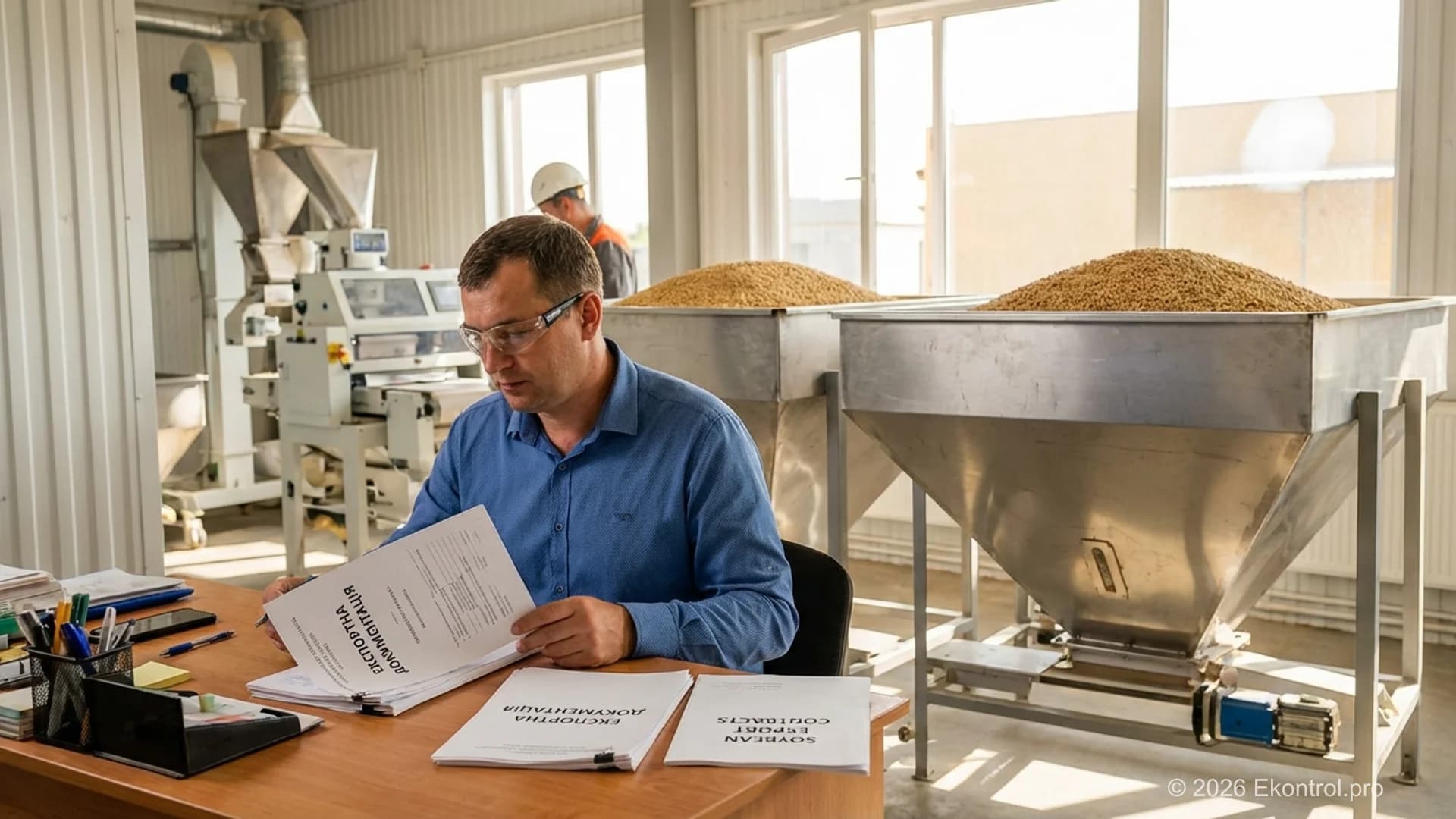

What Is ISCC PLUS Certification (Definition + Quick Facts)
ISCC PLUS certification (sometimes written as ISCC+) is a voluntary chain-of-custody scheme run by ISCC System GmbH. In plain terms, it proves your product really does contain verified bio-based, bio-circular or circular (recycled) content, and that the content can be tracked from feedstock all the way to the finished good. Unlike ISCC EU, the scheme sits outside the EU Renewable Energy Directive and covers chemicals, plastics, packaging, food, feed and intermediates.
Last updated: May 2026. This guide reflects the ISCC PLUS material list released in February 2026 and the current version of ISCC PLUS system documents.
A few facts worth memorising before you go further:
- Certificates are valid for 12 months. After that, you re-audit. No exceptions.
- The scheme allows three chain-of-custody options: physical segregation, controlled blending and mass balance.
- It runs on a site-by-site rule. Every production site that handles ISCC-certified material gets its own audit and its own certificate.
- After an audit you have a 40-day corrective action window to close any non-conformities before the certification body finalises the decision.
- ISCC PLUS recognises bio-based, bio-circular (think used cooking oil derivatives) and circular (mechanically or chemically recycled) feedstocks.
Honest comparison with the past: five years ago, ISCC was almost a synonym for biofuels. The picture has shifted. Most growth now sits in chemicals, packaging and consumer goods, where brand owners need a credible way to back up renewable or recycled content claims in their final products. Procurement teams at large EU buyers treat ISCC PLUS roughly the way they used to treat ISO 9001 a decade ago: as the entry ticket, not a differentiator.
ISCC PLUS vs ISCC EU vs REDcert: Side-by-Side Comparison
These three schemes get confused all the time. There's a reason: shared auditors, similar terminology, partially overlapping procedures. But confusing them gets expensive fast. Pick the wrong one and you'll burn months of consultancy and a budget cycle on a gap analysis that doesn't help you. The table below sorts you out before any of that happens.
| Criterion | ISCC PLUS | ISCC EU | REDcert / REDcert² |
|---|---|---|---|
| Primary purpose | Voluntary scheme for non-RED markets: chemicals, plastics, packaging, food and feed | EU-recognised scheme for RED II/III bioenergy and biofuels compliance | EU-recognised scheme for RED II compliance (REDcert) and circular chemicals (REDcert²) |
| Geographic recognition | Global, voluntary, used by brand owners worldwide | EU-binding for renewable fuels and bioliquids | EU-binding for biofuels; REDcert² used internationally for circular polymers |
| Eligible feedstocks | Bio, bio-circular and circular (recycled) materials per Feb 2026 material list | Biomass and waste/residues for bioenergy under RED II/III | Biomass for fuels (REDcert) and circular feedstocks for chemicals (REDcert²) |
| Chain-of-custody options | Physical segregation, controlled blending, mass balance | Mass balance (RED-specified rules) | Mass balance with scheme-specific calculation rules |
| Certification cycle | 12 months, annual surveillance via recertification audit | 12 months | 12 months |
| Site-by-site certification | Yes, each production site holds its own certificate | Yes | Yes |
| Typical buyers asking for it | Brand owners, FMCG, packaging converters, chemical OEMs | Fuel blenders, refiners, energy utilities | Same as ISCC EU/PLUS depending on variant |
| Greenhouse gas calculation required | Optional, often requested by buyers for Scope 3 reporting | Mandatory under RED II/III thresholds | Mandatory under RED II |
Quick gut-check. If a buyer mentions "renewable diesel", "SAF" or "Renewable Energy Directive compliance", you almost certainly need ISCC EU or REDcert. If the conversation is about "recycled content claims", "bio-attributed polyethylene" or "sustainable packaging", then ISCC PLUS (often shortened to ISCC+) is the right scheme. For a closer look at how mass balance and attribution work specifically in chemical recycling, see our breakdown of mass balance and attribution in chemical recycling.
Who Needs ISCC PLUS in 2026: Industries and Use Cases
ISCC PLUS certification matters for anyone whose customers want a documented sustainability story for non-energy materials. The clearest demand signals come from:
- Chemicals and polymers producing bio-attributed or recycled-content monomers, polymers, solvents and intermediates.
- Packaging converters supplying flexible films, rigid packaging and PET resin with verified circular content.
- Food, feed and ingredients companies with sustainability claims on certified vegetable oils, glycerine, lecithins and protein meals.
- Traders, logistics operators and tank terminals that handle material between certified sites.
- Brand owners that want a defensible Scope 3 narrative for procurement disclosures.
One clarification: grain and oilseed traders feeding EU biofuel chains usually need ISCC EU rather than PLUS — see ISCC EU certification for grain traders for that route.
Here's the honest pattern for Ukrainian and Eastern European exporters in agriculture and the food industry: the trigger is almost always one of two scenarios. Either an EU buyer drops ISCC PLUS into a tender as a pass/fail filter, or a global FMCG group updates requirements for tier-one suppliers. In both cases the conversation moves from "would be nice to have" to "sign by Q3 or lose the contract" within a week.
What changed in 2026 is the speed. The Corporate Sustainability Reporting Directive forced many EU buyers to publicly report Scope 3, and ISCC PLUS evidence flows directly into those reports. In practice that means suppliers who already hold the certificate skip several months of onboarding when a new buyer starts mapping its supply chain.
ISCC PLUS Material List (Feb 2026): What Qualifies
The ISCC PLUS material list from February 2026 lays out which feedstocks and intermediates can carry ISCC PLUS claims. ISCC updates the list from time to time, so always cross-check against the live version before scoping a new product family, not the PDF you saved last year.
The materials sit in three categories.
1. Bio-based feedstocks (virgin biomass)
- Vegetable oils: soy, rapeseed, sunflower and palm derivatives.
- Sugars, starches and fermentation feedstocks (corn, wheat, sugarcane).
- Forestry-derived materials including tall oil, lignin and wood-based cellulose.
- Bio-naphtha, bio-ethanol and bio-methanol when used as chemical feedstock rather than fuel.
2. Bio-circular feedstocks (waste, residues and by-products of biological origin)
- Used cooking oil and animal fat derivatives.
- Tall oil pitch and other forestry residues.
- Agricultural residues such as straw, husks and bagasse.
- Specific food-industry side streams listed in the Feb 2026 update.
3. Circular feedstocks (recycled materials)
- Mechanically recycled polymers (PE, PP, PET, PS) where traceability is preserved batch by batch.
- Chemically recycled feedstocks: pyrolysis oil from mixed plastic waste, depolymerisation outputs, dissolution products.
- Recycled solvents and intermediates that re-enter the chemical value chain.
What does not qualify
Fossil-virgin feedstocks, materials without a verifiable origin, and inputs already counted under another scheme can't claim ISCC PLUS. Recycled content from sources that fail the ISCC sustainability or traceability requirements (a typical example: mixed waste streams without documented mass-balance allocation) is also excluded.
Our working rule of thumb: if you can't link the input back to a clearly defined origin point with audit-grade documentation, assume it doesn't qualify and check with the certification body before writing it into a customer specification. Fixing this retroactively costs more than asking upfront.
Business Benefits of ISCC PLUS in International Supply Chains
The most obvious benefit of ISCC PLUS certification is straightforward: access to deals that would otherwise get filtered out at pre-qualification. International tenders increasingly list traceability and verified sustainability among non-negotiable procurement requirements. Even a perfect product at a competitive price simply drops off the shortlist if the supplier can't show the certificate. This isn't theory. We see it every year in updated requirements from major chemical and food buyers.
The second benefit is less obvious, but often more valuable. When a buyer sees a working ISCC PLUS system on your side, their own compliance risk goes down. In practice that translates into faster contract approvals, fewer surprise customer audits, and shipments that move through customs without paperwork holds.
The third benefit is internal, and it usually surprises people more than the first two. Most companies underestimate how much operational discipline they pick up while preparing for the audit. Clean data flows, clear ownership of control points, batch records that actually reconcile in your reports: this all stays valuable even if a customer never asks to see the certificate. One Ukrainian manufacturer we worked with reported their contract processing time dropped roughly a third after implementation. Not because of the certificate itself, but because the preparation forced them to rebuild documentation flows they'd been patching with tape for years.

Key ISCC PLUS Requirements: Chain of Custody, Mass Balance, Suppliers
An ISCC PLUS audit zeroes in on three things: traceability of certified material, mass balance accounting and supplier control. Everything else is, in one way or another, downstream of those three.
Traceability means any batch of certified material can be reconstructed step by step through your operations. Batch identification, mixing controls, attribute transfers between documents and shipment records all have to connect into a single coherent chain.
Mass balance. The volumes and sustainability attributes you report should match the verified data on the ground. ISCC formally describes mass balance as a chain-of-custody approach where certified and non-certified inputs may be physically mixed but are tracked in bookkeeping so that no more certified output is sold than was put in. Many companies still run on quarterly Excel reconciliations. Honest warning: that setup breaks the moment volumes spike or someone experienced leaves the team.
Supplier control. Nothing unverified or undocumented should enter your chain. Minimum: standardised onboarding, status checks at intake, periodic data quality reviews and contract clauses on liability for non-conformities.
Day to day, this all looks like batch identification rules, mixing controls, attribute transfers between documents, pre-shipment data checks, and records stored so an auditor can reconstruct the picture months later without you holding their hand. Drop one piece and you've got a gap. We've walked into companies with elegant procedures on paper that couldn't trace a single batch end to end when we actually tested it.
The reliable approach is to build ISCC PLUS into how you actually run the business, not maintain a parallel paperwork exercise for the auditor. When traceability and mass balance live inside real workflows, the audit becomes a routine check rather than a crisis with sleepless nights.
Audit Checklist: What ISCC PLUS Auditors Examine
Before you book the external auditor, run your system through the matrix below. If even one box is empty, you're inviting findings before you start.
| Audit Area | What the Auditor Examines | Required Evidence | Risk If Deficient |
|---|---|---|---|
| Traceability | Batch chain from input to output, including attribute transfer | Linked records, batch codes, movement documents, ERP exports | Chain of custody gap, system-level major non-conformity |
| Mass balance | Consistency of certified volumes and attributes across the period | Mass-balance bookkeeping, registers, monthly reconciliations | Volume discrepancy, risk of shipment rejection or claim withdrawal |
| Suppliers | Status, certificate validity and data quality of incoming material | Supplier register, valid sustainability declarations, contract clauses | Unverified raw material entering the certified chain |
| Site-by-site coverage | Each production site in scope is included in the certificate | Site list, scope statement, internal audit per site | Loss of certification for the missing site, customer claim risk |
| System management | Roles, training, internal audits and corrective actions | Responsibility matrix, training logs, internal audit reports | Formal system without execution, repeated findings |
How ISCC PLUS Certification Works: Process and 12-Month Cycle
The certification process follows a predictable sequence: preparation, document review, on-site or remote verification of actual operations, findings resolution, certification decision. Once the certificate is issued, it lives for 12 months and the cycle repeats with a recertification audit.
Where do most companies trip up? In the gap between paper and practice. Auditors aren't checking how thick your binder is. They check whether what your people actually do on the floor matches what your documents claim. The short version: almost all findings live in that gap.
Weak spots cluster around handoff points. Procurement to warehouse. Warehouse to logistics. Logistics to sales. When those teams don't talk to each other or their systems don't pass data cleanly, you end up with documents that are individually correct but don't add up to an evidence chain. We see this pattern in most first-cycle audits. It's fixable, provided someone catches it before the auditor does.
Getting the certificate isn't the finish line. Companies that treat the first audit as a one-off sprint usually spend more time and money in the next cycle, because the system decays between audits and gets rebuilt under deadline pressure. Continuous internal verification keeps the cost flat.
Before the external auditor shows up, close these checkpoints:
- Run a full traceability test on a real batch, both forward and backward through the chain.
- Confirm mass-balance bookkeeping and reconciliations are current, not two months stale.
- Test staff readiness based on what they actually do, not on a training attendance log.
- Verify every site in scope appears in the internal audit reports.
A non-conformity raised at the audit triggers the 40-day corrective action window. You document the root cause, the corrective action, the verification of effectiveness, and submit evidence to the certification body. Miss that window or submit weak evidence, and the certificate decision is either delayed or refused.
ISCC PLUS Cost and Timeline by Industry (2026 Benchmarks)
| Sector | Typical project duration | External audit fee (single site) | Total first-year cost (incl. consulting) |
|---|---|---|---|
| Chemicals / polymers | 4 to 6 months | EUR 6,000 to 12,000 | EUR 25,000 to 60,000 |
| Packaging converters | 3 to 5 months | EUR 5,000 to 9,000 | EUR 18,000 to 40,000 |
| Food and feed ingredients | 3 to 5 months | EUR 4,500 to 8,000 | EUR 15,000 to 35,000 |
| Trader / logistics operator | 2 to 4 months | EUR 3,500 to 6,500 | EUR 10,000 to 22,000 |
| Multi-site producer (3+ sites) | 5 to 9 months | EUR 6,000 to 12,000 per site | EUR 60,000 to 150,000 |
Caveat on the numbers. These ranges assume a single chain-of-custody method, English-language documentation and a relatively clean baseline. If you're starting from scratch with no internal traceability systems, aim for the upper end. Recurring costs in years two and three typically drop by 30 to 50 percent because the system is already in place and only needs maintenance and surveillance audits.
Documents and Team Roles: What Must Be Ready by Audit Day
An ISCC PLUS audit needs a system people actually use, not a binder on a shelf. The minimum document set: an ISCC PLUS policy, procedures for traceability and mass balance, supplier management rules, record templates, internal audit protocols, a corrective action plan, and proof your team has been trained. Skip any of these and the auditor flags it within the first hour.
Roles matter just as much. Who owns incoming data? Who runs reconciliations? Who does the final check before a shipment leaves? Who raises the flag when something looks off? Who talks to the certification body? If nobody can answer those five questions clearly, the system falls apart no matter how beautifully the procedures are formatted. We've tested this many times.
A simple trick that works well: one-page role cards for each function. Nothing fancy, just a clear summary of what that person owns, what they check, and when they escalate. This cuts the risk of tasks falling through cracks between departments and helps new hires get up to speed faster. An hour to draft each card, weeks saved over time.
Working with Suppliers and the Site-by-Site Rule
An ISCC PLUS certificate is only as strong as the weakest link upstream. If a supplier sends bad data, that becomes your problem at audit time, not theirs.
Proper supplier control looks like this: standardised onboarding, status and document verification at intake, periodic data quality reviews, contract clauses that spell out liability for non-conformities, and a mechanism for holding risky batches until questions are answered. None of this is exciting work. But companies that do it systematically pick up far fewer critical findings and keep their supply lines running smoothly during high-volume periods.
The site-by-site certification rule deserves a separate mention, because that's where budgets get blown. ISCC PLUS treats each production site as its own scope. A company with three plants needs three site audits and three certificates, even if the management system is identical. New sites can't piggy-back on a parent certificate. Account for this from the start of scoping or the budget will slip by Q2 of the project.
Most Common ISCC PLUS Audit Findings (and How to Avoid Them)
Across first-cycle ISCC PLUS audits, the same handful of findings keeps showing up. Honestly, we could predict most of them before the project even starts, that's how repeatable they are.
- Traceability gaps at handoff points. Documents are individually correct but don't link batch IDs across procurement, warehouse and logistics. Fix: a single batch-ID field that travels through the ERP and physical paperwork from receiving to shipment.
- Mass-balance reconciliations done too rarely. Quarterly checks let small errors stack up silently. Fix: switch to monthly mass-balance closure for high-volume flows, weekly for the largest products.
- Supplier blind spots. Strong internal system, weak control over external participants. Fix: a supplier register with certificate validity dates, automated expiry alerts, and renewed sustainability declarations on file before the audit window opens.
- Site-by-site scope errors. A new production line at a second site is treated as covered by the existing certificate. Fix: trigger a scope review whenever a new physical location starts handling certified material.
- Form-over-function templates. Beautifully designed Excel templates that nobody fills in correctly because the workflow was never mapped. Fix: design the workflow first, then the template, and pilot it with the people who'll actually use it. Not the other way around.
- Training that exists on paper only. Attendance sheets without applied verification. Fix: bake a short practical task into the training (e.g. receiving a sample batch and producing the outbound mass-balance entry).
The antidote across all six is the same thing: rhythm. Short weekly operational checks, monthly KPI reviews, corrective actions closed promptly and verified for effectiveness rather than ticked off for the report.
KPIs and ROI of ISCC PLUS for Management
Leadership wants numbers, not procedures. KPIs worth tracking on a regular annual support cycle:
- Share of new contracts where ISCC PLUS was a pass/fail entry condition.
- Time to assemble a contract evidence package.
- Number of traceability incidents per quarter.
- First-pass rate for batch evidence reviews.
- Trend line on internal and external audit findings.
ROI rarely shows up in month one, and that's fine. The payoff combines new contracts won, shipment rejections avoided, hours saved on manual corrections, and better supply-chain predictability. For most companies the picture sharpens between months six and eighteen of consistent operation. Once those numbers reach management dashboards, ISCC PLUS stops being framed as compliance and starts being framed as a growth tool.

90-Day ISCC PLUS Implementation Roadmap
Without sharp structure, ISCC PLUS turns into a project that never quite finishes. A 90-day plan with strict phase boundaries works best for most single-site and small multi-site companies. Month one, diagnostics and system design. Month two, go live on the floor. Month three, stabilise and run a dress rehearsal.
Days 1 to 30, scoping and design. Define your certification scope, map product flows, draw process boundaries and list every counterparty in the chain. Build a risk map: where could traceability break, where could mass-balance errors sneak in, which handoff points lose document integrity most often. Lock down a responsibility matrix that names specific people across procurement, warehousing, logistics, sales, quality and compliance. In parallel, assemble the base system package: policy, batch identification procedure, mass-balance procedure, records management rules, supplier protocols, internal audit rules and non-conformity handling. Generic boilerplate is useless here. Every procedure should answer four questions: who does it, when, in what format, and what happens when something goes wrong.
Days 31 to 60, go live. Documents leave the planning stage and land in daily operations. Logs and control points go active. Training runs in applied form rather than slide reviews: people receive a batch, verify its attributes, fill out movement documents, build the outbound package for a client and handle a non-conformity. Around mid-month, run the first traceability test on a real batch, both forward from receiving to shipment and backward from shipment to origin. If the team can't reconstruct that path quickly and without contradictions, you're not audit-ready. Better to discover that now than during the external visit. Start regular mass-balance reconciliation in this window. A short weekly cycle on the highest-volume flows works well, because small errors caught early stay small.
Days 61 to 90, dress rehearsal and packaging the evidence. Run an internal audit that mirrors the external one: documents, records, roles, control actions, supplier management, deviation response. Every gap turns into a corrective action, and every corrective action gets verified for effectiveness rather than ticked off. Assemble the audit package: current procedure versions, responsibility matrix, training records, traceability test evidence, mass-balance logs, corrective action register, supplier register and a brief management report on system readiness. Well-organised packages speed up the auditor's work and reduce pressure on the team on audit day.
One detail companies consistently underestimate is internal communication. If ISCC PLUS shows up as a pile of new documents with no explanation of why any of it matters, people will treat it as extra paperwork and resent it. Hard to blame them, honestly. Hold short weekly status meetings throughout the 90 days: what got done, what problems surfaced, what's changing next week, where leadership needs to step in.
Multi-site companies should start with a pilot at one site, adjust, and only then roll out. Trying to launch everywhere at once tends to overwhelm everyone and produce mediocre results across all sites. The staged approach also makes costs visible by phase and lets resources shift before problems snowball. That gives management a cleaner financial story than one large implementation line item.
What triggers ISCC PLUS audit findings most often is the gap between what is on paper and what happens on the floor. If you never test traceability end to end and only check mass balance sporadically, non-conformities pile up quietly. Regular internal reconciliations and chain testing catch the issues well before the external auditor arrives.
Not sure whether your system is ready for ISCC PLUS certification? A diagnostic audit measures your current processes against scheme requirements, identifies the critical gaps, and produces a focused preparation plan.
Companies that assign clear process owners, run mass-balance reconciliations on a fixed schedule and train teams hands-on consistently pass the ISCC PLUS audit in the first cycle and walk away with significantly fewer corrective actions.
Conclusion: ISCC PLUS as a Market-Access Tool in 2026
ISCC PLUS (ISCC+) in 2026 is a practical way to show that your supply chain is managed, auditable and consistent with the sustainability claims your buyers fold into their own reporting. It opens international conversations that would otherwise close before they even start.
The certificate by itself is just paper. The real value shows up when traceability, mass balance, supplier control and verification routines are woven into daily operations. That's when stable contracts, smoother documentation cycles and operational visibility turn into real bargaining power at the negotiating table.
At Ekontrol we work alongside companies through every phase, from scoping to audit readiness to post-certification maintenance. Done well, ISCC PLUS stops being a cost line and starts being an investment in staying competitive for years to come.
For biofuel exports to the EU a certificate is no longer enough — the consignment has to be registered in the Union Database. What that means in practice: RED III and the Union Database.
Need Help Preparing for ISCC PLUS Certification?
Ekontrol will help you set up traceability, mass balance and document workflows so that the audit proceeds predictably and without unnecessary stress for your team.
Get a Consultation
Need a certification consultation?
Free ConsultationOn This Page
- What Is ISCC PLUS Certification (Definition + Quick Facts)
- ISCC PLUS vs ISCC EU vs REDcert: Side-by-Side Comparison
- Who Needs ISCC PLUS in 2026: Industries and Use Cases
- ISCC PLUS Material List (Feb 2026): What Qualifies
- Business Benefits of ISCC PLUS in International Supply Chains
- Key ISCC PLUS Requirements: Chain of Custody, Mass Balance, Suppliers
- How ISCC PLUS Certification Works: Process and 12-Month Cycle
- ISCC PLUS Cost and Timeline by Industry (2026 Benchmarks)
- Conclusion: ISCC PLUS as a Market-Access Tool in 2026
What Is ISCC PLUS Certification (Definition + Quick Facts)
ISCC PLUS certification (sometimes written as ISCC+) is a voluntary chain-of-custody scheme run by ISCC System GmbH. In plain terms, it proves your product really does contain verified bio-based, bio-circular or circular (recycled) content, and that the content can be tracked from feedstock all the way to the finished good. Unlike ISCC EU, the scheme sits outside the EU Renewable Energy Directive and covers chemicals, plastics, packaging, food, feed and intermediates.
Last updated: May 2026. This guide reflects the ISCC PLUS material list released in February 2026 and the current version of ISCC PLUS system documents.
A few facts worth memorising before you go further:
- Certificates are valid for 12 months. After that, you re-audit. No exceptions.
- The scheme allows three chain-of-custody options: physical segregation, controlled blending and mass balance.
- It runs on a site-by-site rule. Every production site that handles ISCC-certified material gets its own audit and its own certificate.
- After an audit you have a 40-day corrective action window to close any non-conformities before the certification body finalises the decision.
- ISCC PLUS recognises bio-based, bio-circular (think used cooking oil derivatives) and circular (mechanically or chemically recycled) feedstocks.
Honest comparison with the past: five years ago, ISCC was almost a synonym for biofuels. The picture has shifted. Most growth now sits in chemicals, packaging and consumer goods, where brand owners need a credible way to back up renewable or recycled content claims in their final products. Procurement teams at large EU buyers treat ISCC PLUS roughly the way they used to treat ISO 9001 a decade ago: as the entry ticket, not a differentiator.
ISCC PLUS vs ISCC EU vs REDcert: Side-by-Side Comparison
These three schemes get confused all the time. There's a reason: shared auditors, similar terminology, partially overlapping procedures. But confusing them gets expensive fast. Pick the wrong one and you'll burn months of consultancy and a budget cycle on a gap analysis that doesn't help you. The table below sorts you out before any of that happens.
| Criterion | ISCC PLUS | ISCC EU | REDcert / REDcert² |
|---|---|---|---|
| Primary purpose | Voluntary scheme for non-RED markets: chemicals, plastics, packaging, food and feed | EU-recognised scheme for RED II/III bioenergy and biofuels compliance | EU-recognised scheme for RED II compliance (REDcert) and circular chemicals (REDcert²) |
| Geographic recognition | Global, voluntary, used by brand owners worldwide | EU-binding for renewable fuels and bioliquids | EU-binding for biofuels; REDcert² used internationally for circular polymers |
| Eligible feedstocks | Bio, bio-circular and circular (recycled) materials per Feb 2026 material list | Biomass and waste/residues for bioenergy under RED II/III | Biomass for fuels (REDcert) and circular feedstocks for chemicals (REDcert²) |
| Chain-of-custody options | Physical segregation, controlled blending, mass balance | Mass balance (RED-specified rules) | Mass balance with scheme-specific calculation rules |
| Certification cycle | 12 months, annual surveillance via recertification audit | 12 months | 12 months |
| Site-by-site certification | Yes, each production site holds its own certificate | Yes | Yes |
| Typical buyers asking for it | Brand owners, FMCG, packaging converters, chemical OEMs | Fuel blenders, refiners, energy utilities | Same as ISCC EU/PLUS depending on variant |
| Greenhouse gas calculation required | Optional, often requested by buyers for Scope 3 reporting | Mandatory under RED II/III thresholds | Mandatory under RED II |
Quick gut-check. If a buyer mentions "renewable diesel", "SAF" or "Renewable Energy Directive compliance", you almost certainly need ISCC EU or REDcert. If the conversation is about "recycled content claims", "bio-attributed polyethylene" or "sustainable packaging", then ISCC PLUS (often shortened to ISCC+) is the right scheme. For a closer look at how mass balance and attribution work specifically in chemical recycling, see our breakdown of mass balance and attribution in chemical recycling.
Who Needs ISCC PLUS in 2026: Industries and Use Cases
ISCC PLUS certification matters for anyone whose customers want a documented sustainability story for non-energy materials. The clearest demand signals come from:
- Chemicals and polymers producing bio-attributed or recycled-content monomers, polymers, solvents and intermediates.
- Packaging converters supplying flexible films, rigid packaging and PET resin with verified circular content.
- Food, feed and ingredients companies with sustainability claims on certified vegetable oils, glycerine, lecithins and protein meals.
- Traders, logistics operators and tank terminals that handle material between certified sites.
- Brand owners that want a defensible Scope 3 narrative for procurement disclosures.
One clarification: grain and oilseed traders feeding EU biofuel chains usually need ISCC EU rather than PLUS — see ISCC EU certification for grain traders for that route.
Here's the honest pattern for Ukrainian and Eastern European exporters in agriculture and the food industry: the trigger is almost always one of two scenarios. Either an EU buyer drops ISCC PLUS into a tender as a pass/fail filter, or a global FMCG group updates requirements for tier-one suppliers. In both cases the conversation moves from "would be nice to have" to "sign by Q3 or lose the contract" within a week.
What changed in 2026 is the speed. The Corporate Sustainability Reporting Directive forced many EU buyers to publicly report Scope 3, and ISCC PLUS evidence flows directly into those reports. In practice that means suppliers who already hold the certificate skip several months of onboarding when a new buyer starts mapping its supply chain.
ISCC PLUS Material List (Feb 2026): What Qualifies
The ISCC PLUS material list from February 2026 lays out which feedstocks and intermediates can carry ISCC PLUS claims. ISCC updates the list from time to time, so always cross-check against the live version before scoping a new product family, not the PDF you saved last year.
The materials sit in three categories.
1. Bio-based feedstocks (virgin biomass)
- Vegetable oils: soy, rapeseed, sunflower and palm derivatives.
- Sugars, starches and fermentation feedstocks (corn, wheat, sugarcane).
- Forestry-derived materials including tall oil, lignin and wood-based cellulose.
- Bio-naphtha, bio-ethanol and bio-methanol when used as chemical feedstock rather than fuel.
2. Bio-circular feedstocks (waste, residues and by-products of biological origin)
- Used cooking oil and animal fat derivatives.
- Tall oil pitch and other forestry residues.
- Agricultural residues such as straw, husks and bagasse.
- Specific food-industry side streams listed in the Feb 2026 update.
3. Circular feedstocks (recycled materials)
- Mechanically recycled polymers (PE, PP, PET, PS) where traceability is preserved batch by batch.
- Chemically recycled feedstocks: pyrolysis oil from mixed plastic waste, depolymerisation outputs, dissolution products.
- Recycled solvents and intermediates that re-enter the chemical value chain.
What does not qualify
Fossil-virgin feedstocks, materials without a verifiable origin, and inputs already counted under another scheme can't claim ISCC PLUS. Recycled content from sources that fail the ISCC sustainability or traceability requirements (a typical example: mixed waste streams without documented mass-balance allocation) is also excluded.
Our working rule of thumb: if you can't link the input back to a clearly defined origin point with audit-grade documentation, assume it doesn't qualify and check with the certification body before writing it into a customer specification. Fixing this retroactively costs more than asking upfront.
Business Benefits of ISCC PLUS in International Supply Chains
The most obvious benefit of ISCC PLUS certification is straightforward: access to deals that would otherwise get filtered out at pre-qualification. International tenders increasingly list traceability and verified sustainability among non-negotiable procurement requirements. Even a perfect product at a competitive price simply drops off the shortlist if the supplier can't show the certificate. This isn't theory. We see it every year in updated requirements from major chemical and food buyers.
The second benefit is less obvious, but often more valuable. When a buyer sees a working ISCC PLUS system on your side, their own compliance risk goes down. In practice that translates into faster contract approvals, fewer surprise customer audits, and shipments that move through customs without paperwork holds.
The third benefit is internal, and it usually surprises people more than the first two. Most companies underestimate how much operational discipline they pick up while preparing for the audit. Clean data flows, clear ownership of control points, batch records that actually reconcile in your reports: this all stays valuable even if a customer never asks to see the certificate. One Ukrainian manufacturer we worked with reported their contract processing time dropped roughly a third after implementation. Not because of the certificate itself, but because the preparation forced them to rebuild documentation flows they'd been patching with tape for years.
Key ISCC PLUS Requirements: Chain of Custody, Mass Balance, Suppliers
An ISCC PLUS audit zeroes in on three things: traceability of certified material, mass balance accounting and supplier control. Everything else is, in one way or another, downstream of those three.
Traceability means any batch of certified material can be reconstructed step by step through your operations. Batch identification, mixing controls, attribute transfers between documents and shipment records all have to connect into a single coherent chain.
Mass balance. The volumes and sustainability attributes you report should match the verified data on the ground. ISCC formally describes mass balance as a chain-of-custody approach where certified and non-certified inputs may be physically mixed but are tracked in bookkeeping so that no more certified output is sold than was put in. Many companies still run on quarterly Excel reconciliations. Honest warning: that setup breaks the moment volumes spike or someone experienced leaves the team.
Supplier control. Nothing unverified or undocumented should enter your chain. Minimum: standardised onboarding, status checks at intake, periodic data quality reviews and contract clauses on liability for non-conformities.
Day to day, this all looks like batch identification rules, mixing controls, attribute transfers between documents, pre-shipment data checks, and records stored so an auditor can reconstruct the picture months later without you holding their hand. Drop one piece and you've got a gap. We've walked into companies with elegant procedures on paper that couldn't trace a single batch end to end when we actually tested it.
The reliable approach is to build ISCC PLUS into how you actually run the business, not maintain a parallel paperwork exercise for the auditor. When traceability and mass balance live inside real workflows, the audit becomes a routine check rather than a crisis with sleepless nights.
Audit Checklist: What ISCC PLUS Auditors Examine
Before you book the external auditor, run your system through the matrix below. If even one box is empty, you're inviting findings before you start.
| Audit Area | What the Auditor Examines | Required Evidence | Risk If Deficient |
|---|---|---|---|
| Traceability | Batch chain from input to output, including attribute transfer | Linked records, batch codes, movement documents, ERP exports | Chain of custody gap, system-level major non-conformity |
| Mass balance | Consistency of certified volumes and attributes across the period | Mass-balance bookkeeping, registers, monthly reconciliations | Volume discrepancy, risk of shipment rejection or claim withdrawal |
| Suppliers | Status, certificate validity and data quality of incoming material | Supplier register, valid sustainability declarations, contract clauses | Unverified raw material entering the certified chain |
| Site-by-site coverage | Each production site in scope is included in the certificate | Site list, scope statement, internal audit per site | Loss of certification for the missing site, customer claim risk |
| System management | Roles, training, internal audits and corrective actions | Responsibility matrix, training logs, internal audit reports | Formal system without execution, repeated findings |
How ISCC PLUS Certification Works: Process and 12-Month Cycle
The certification process follows a predictable sequence: preparation, document review, on-site or remote verification of actual operations, findings resolution, certification decision. Once the certificate is issued, it lives for 12 months and the cycle repeats with a recertification audit.
Where do most companies trip up? In the gap between paper and practice. Auditors aren't checking how thick your binder is. They check whether what your people actually do on the floor matches what your documents claim. The short version: almost all findings live in that gap.
Weak spots cluster around handoff points. Procurement to warehouse. Warehouse to logistics. Logistics to sales. When those teams don't talk to each other or their systems don't pass data cleanly, you end up with documents that are individually correct but don't add up to an evidence chain. We see this pattern in most first-cycle audits. It's fixable, provided someone catches it before the auditor does.
Getting the certificate isn't the finish line. Companies that treat the first audit as a one-off sprint usually spend more time and money in the next cycle, because the system decays between audits and gets rebuilt under deadline pressure. Continuous internal verification keeps the cost flat.
Before the external auditor shows up, close these checkpoints:
- Run a full traceability test on a real batch, both forward and backward through the chain.
- Confirm mass-balance bookkeeping and reconciliations are current, not two months stale.
- Test staff readiness based on what they actually do, not on a training attendance log.
- Verify every site in scope appears in the internal audit reports.
A non-conformity raised at the audit triggers the 40-day corrective action window. You document the root cause, the corrective action, the verification of effectiveness, and submit evidence to the certification body. Miss that window or submit weak evidence, and the certificate decision is either delayed or refused.
ISCC PLUS Cost and Timeline by Industry (2026 Benchmarks)
| Sector | Typical project duration | External audit fee (single site) | Total first-year cost (incl. consulting) |
|---|---|---|---|
| Chemicals / polymers | 4 to 6 months | EUR 6,000 to 12,000 | EUR 25,000 to 60,000 |
| Packaging converters | 3 to 5 months | EUR 5,000 to 9,000 | EUR 18,000 to 40,000 |
| Food and feed ingredients | 3 to 5 months | EUR 4,500 to 8,000 | EUR 15,000 to 35,000 |
| Trader / logistics operator | 2 to 4 months | EUR 3,500 to 6,500 | EUR 10,000 to 22,000 |
| Multi-site producer (3+ sites) | 5 to 9 months | EUR 6,000 to 12,000 per site | EUR 60,000 to 150,000 |
Caveat on the numbers. These ranges assume a single chain-of-custody method, English-language documentation and a relatively clean baseline. If you're starting from scratch with no internal traceability systems, aim for the upper end. Recurring costs in years two and three typically drop by 30 to 50 percent because the system is already in place and only needs maintenance and surveillance audits.
Documents and Team Roles: What Must Be Ready by Audit Day
An ISCC PLUS audit needs a system people actually use, not a binder on a shelf. The minimum document set: an ISCC PLUS policy, procedures for traceability and mass balance, supplier management rules, record templates, internal audit protocols, a corrective action plan, and proof your team has been trained. Skip any of these and the auditor flags it within the first hour.
Roles matter just as much. Who owns incoming data? Who runs reconciliations? Who does the final check before a shipment leaves? Who raises the flag when something looks off? Who talks to the certification body? If nobody can answer those five questions clearly, the system falls apart no matter how beautifully the procedures are formatted. We've tested this many times.
A simple trick that works well: one-page role cards for each function. Nothing fancy, just a clear summary of what that person owns, what they check, and when they escalate. This cuts the risk of tasks falling through cracks between departments and helps new hires get up to speed faster. An hour to draft each card, weeks saved over time.
Working with Suppliers and the Site-by-Site Rule
An ISCC PLUS certificate is only as strong as the weakest link upstream. If a supplier sends bad data, that becomes your problem at audit time, not theirs.
Proper supplier control looks like this: standardised onboarding, status and document verification at intake, periodic data quality reviews, contract clauses that spell out liability for non-conformities, and a mechanism for holding risky batches until questions are answered. None of this is exciting work. But companies that do it systematically pick up far fewer critical findings and keep their supply lines running smoothly during high-volume periods.
The site-by-site certification rule deserves a separate mention, because that's where budgets get blown. ISCC PLUS treats each production site as its own scope. A company with three plants needs three site audits and three certificates, even if the management system is identical. New sites can't piggy-back on a parent certificate. Account for this from the start of scoping or the budget will slip by Q2 of the project.
Most Common ISCC PLUS Audit Findings (and How to Avoid Them)
Across first-cycle ISCC PLUS audits, the same handful of findings keeps showing up. Honestly, we could predict most of them before the project even starts, that's how repeatable they are.
- Traceability gaps at handoff points. Documents are individually correct but don't link batch IDs across procurement, warehouse and logistics. Fix: a single batch-ID field that travels through the ERP and physical paperwork from receiving to shipment.
- Mass-balance reconciliations done too rarely. Quarterly checks let small errors stack up silently. Fix: switch to monthly mass-balance closure for high-volume flows, weekly for the largest products.
- Supplier blind spots. Strong internal system, weak control over external participants. Fix: a supplier register with certificate validity dates, automated expiry alerts, and renewed sustainability declarations on file before the audit window opens.
- Site-by-site scope errors. A new production line at a second site is treated as covered by the existing certificate. Fix: trigger a scope review whenever a new physical location starts handling certified material.
- Form-over-function templates. Beautifully designed Excel templates that nobody fills in correctly because the workflow was never mapped. Fix: design the workflow first, then the template, and pilot it with the people who'll actually use it. Not the other way around.
- Training that exists on paper only. Attendance sheets without applied verification. Fix: bake a short practical task into the training (e.g. receiving a sample batch and producing the outbound mass-balance entry).
The antidote across all six is the same thing: rhythm. Short weekly operational checks, monthly KPI reviews, corrective actions closed promptly and verified for effectiveness rather than ticked off for the report.
KPIs and ROI of ISCC PLUS for Management
Leadership wants numbers, not procedures. KPIs worth tracking on a regular annual support cycle:
- Share of new contracts where ISCC PLUS was a pass/fail entry condition.
- Time to assemble a contract evidence package.
- Number of traceability incidents per quarter.
- First-pass rate for batch evidence reviews.
- Trend line on internal and external audit findings.
ROI rarely shows up in month one, and that's fine. The payoff combines new contracts won, shipment rejections avoided, hours saved on manual corrections, and better supply-chain predictability. For most companies the picture sharpens between months six and eighteen of consistent operation. Once those numbers reach management dashboards, ISCC PLUS stops being framed as compliance and starts being framed as a growth tool.
90-Day ISCC PLUS Implementation Roadmap
Without sharp structure, ISCC PLUS turns into a project that never quite finishes. A 90-day plan with strict phase boundaries works best for most single-site and small multi-site companies. Month one, diagnostics and system design. Month two, go live on the floor. Month three, stabilise and run a dress rehearsal.
Days 1 to 30, scoping and design. Define your certification scope, map product flows, draw process boundaries and list every counterparty in the chain. Build a risk map: where could traceability break, where could mass-balance errors sneak in, which handoff points lose document integrity most often. Lock down a responsibility matrix that names specific people across procurement, warehousing, logistics, sales, quality and compliance. In parallel, assemble the base system package: policy, batch identification procedure, mass-balance procedure, records management rules, supplier protocols, internal audit rules and non-conformity handling. Generic boilerplate is useless here. Every procedure should answer four questions: who does it, when, in what format, and what happens when something goes wrong.
Days 31 to 60, go live. Documents leave the planning stage and land in daily operations. Logs and control points go active. Training runs in applied form rather than slide reviews: people receive a batch, verify its attributes, fill out movement documents, build the outbound package for a client and handle a non-conformity. Around mid-month, run the first traceability test on a real batch, both forward from receiving to shipment and backward from shipment to origin. If the team can't reconstruct that path quickly and without contradictions, you're not audit-ready. Better to discover that now than during the external visit. Start regular mass-balance reconciliation in this window. A short weekly cycle on the highest-volume flows works well, because small errors caught early stay small.
Days 61 to 90, dress rehearsal and packaging the evidence. Run an internal audit that mirrors the external one: documents, records, roles, control actions, supplier management, deviation response. Every gap turns into a corrective action, and every corrective action gets verified for effectiveness rather than ticked off. Assemble the audit package: current procedure versions, responsibility matrix, training records, traceability test evidence, mass-balance logs, corrective action register, supplier register and a brief management report on system readiness. Well-organised packages speed up the auditor's work and reduce pressure on the team on audit day.
One detail companies consistently underestimate is internal communication. If ISCC PLUS shows up as a pile of new documents with no explanation of why any of it matters, people will treat it as extra paperwork and resent it. Hard to blame them, honestly. Hold short weekly status meetings throughout the 90 days: what got done, what problems surfaced, what's changing next week, where leadership needs to step in.
Multi-site companies should start with a pilot at one site, adjust, and only then roll out. Trying to launch everywhere at once tends to overwhelm everyone and produce mediocre results across all sites. The staged approach also makes costs visible by phase and lets resources shift before problems snowball. That gives management a cleaner financial story than one large implementation line item.
What triggers ISCC PLUS audit findings most often is the gap between what is on paper and what happens on the floor. If you never test traceability end to end and only check mass balance sporadically, non-conformities pile up quietly. Regular internal reconciliations and chain testing catch the issues well before the external auditor arrives.
Not sure whether your system is ready for ISCC PLUS certification? A diagnostic audit measures your current processes against scheme requirements, identifies the critical gaps, and produces a focused preparation plan.
Companies that assign clear process owners, run mass-balance reconciliations on a fixed schedule and train teams hands-on consistently pass the ISCC PLUS audit in the first cycle and walk away with significantly fewer corrective actions.
Conclusion: ISCC PLUS as a Market-Access Tool in 2026
ISCC PLUS (ISCC+) in 2026 is a practical way to show that your supply chain is managed, auditable and consistent with the sustainability claims your buyers fold into their own reporting. It opens international conversations that would otherwise close before they even start.
The certificate by itself is just paper. The real value shows up when traceability, mass balance, supplier control and verification routines are woven into daily operations. That's when stable contracts, smoother documentation cycles and operational visibility turn into real bargaining power at the negotiating table.
At Ekontrol we work alongside companies through every phase, from scoping to audit readiness to post-certification maintenance. Done well, ISCC PLUS stops being a cost line and starts being an investment in staying competitive for years to come.
For biofuel exports to the EU a certificate is no longer enough — the consignment has to be registered in the Union Database. What that means in practice: RED III and the Union Database.
Need Help Preparing for ISCC PLUS Certification?
Ekontrol will help you set up traceability, mass balance and document workflows so that the audit proceeds predictably and without unnecessary stress for your team.
Get a Consultation