
What Happened at the CraftUP Ukraine Final
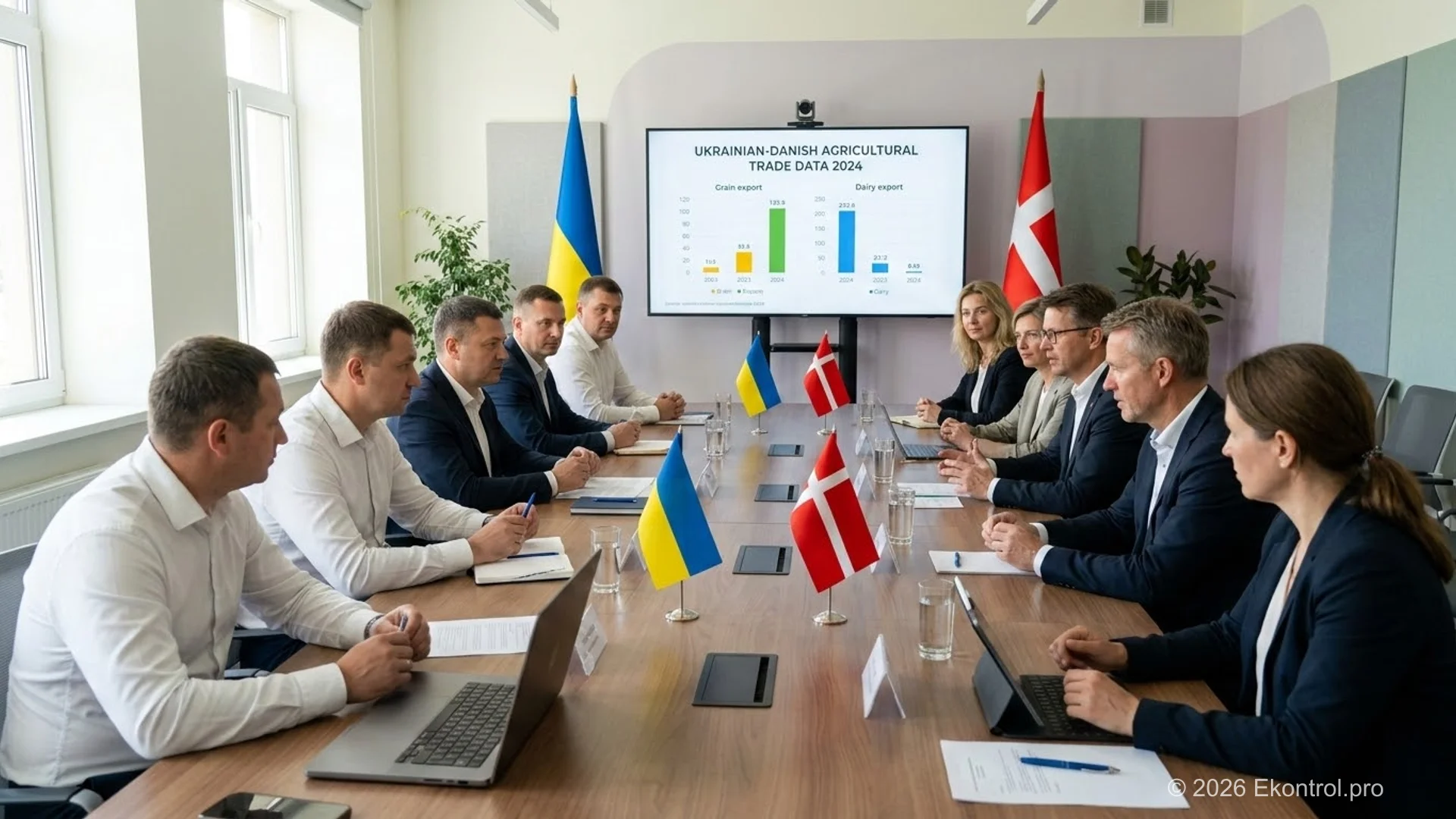
On 15 September, I, Denys Honchar, Director of Ekontrol LLC, sat on the expert council at the CraftUP Ukraine final, a training and grant programme for craft food producers. Ten finalists pitched at the Netherlands Embassy in Kyiv, and our nine-member council voted for the winners. The participants were incredible; I'm glad I met them in person.
The results are out: the Medunytsya family apiary came first (UAH 350,000), the Dvir Indychky ("Turkey Yard") farm second (UAH 200,000) and the Nagorny Family Mill third (UAH 150,000). The other seven finalists got UAH 50,000 each.
Three of the five finalists I describe below won prizes. The whole council decided, so my impressions simply matched its choice.
The online outlet AgroPortal.ua (in Ukrainian) runs the programme with Dutch government support under the Private Sector Development programme. Fellow council members represented the Netherlands Embassy, the agriculture ministry, the State Service of Ukraine on Food Safety and Consumer Protection (SSUFSCP), agribusiness associations and others. My company also partnered on the training course.
CraftUP Ukraine in Numbers
- Launched 11 December 2025; 400+ applications.
- 40 participants from 19 regions, 15 lectures (May to July), mentoring for all 10 finalists.
- Grant fund: UAH 1.05 million.
- Grants pay for equipment and/or services; amounts exclude taxes.
What Craft Food Production Is and Why It Needs Support
Craft food production is small-batch, often family-run food or drink production where the owner personally answers for raw materials, recipe and process. Ukrainian law has no such term and no separate law on craft producers.
The closest legal concepts came with Law No. 3221-IX, in force since 26 October 2023:
- a craft (artisanal) food product is of animal origin only: Ukrainian main ingredient, one facility, own recipe or process, up to 1,000 kg or litres a week (yearly average);
- a small facility makes food of animal origin within the same weekly limit.
So jam or pickles can't legally be craft (artisanal) products.
Per Pro-Consulting's study for CraftUP Ukraine, 92% of surveyed producers make at most 500 kg, litres or units weekly, only 10% export, and 96% say they need training.
Small firms pay disproportionately for equipment, transport and workshops, and few can afford a technologist, as our work with food companies shows.
Five Craft Food Producers from My Notes
Council members had briefing materials for notes, and I saved my notes. Choosing was hard, as all ten deserve attention; here are five, in no particular order.
Medunytsya Family Apiary, Dnipropetrovsk Region
Iryna and Oleksandr Karabut run the Medunytsya family apiary near Kryvyi Rih. Co-owner Iryna pitched the project and was very well prepared. They make unusual honeys, like coriander honey, which I'd never tasted, plus creamed honey and nuts in honey. Every batch is lab-tested.
The first-place grant will buy a commercial vehicle for fairs, sales beyond the region and, as I understood, moving equipment. Congratulating Iryna, Carolien Spaans of the Netherlands Embassy recalled Andrey Kurkov's novel Grey Bees and wished the vehicle would carry honey across Ukraine rather than evacuate bees.
By law, extracting honey at the apiary is primary production, exempt from HACCP; creamed honey or nuts in honey from a workshop aren't.
Vinologist Winery, Odesa Region
Mykhailo Prokopets, founder of the craft winery Vinologist, is hugely passionate about his work. He makes wine from local Bessarabian grapes like Odesa Black and Sukholymanskyi White, with a vineyard in the Izmail district. Licensed as a small producer last year, he's now pursuing a geographical indication and making sparkling wine this season.
He has kept studying winemaking since 2019 and heads the Odesa Region Winemakers' Association, an NGO founded in July 2026. To me, he proves one craft producer can lead a region's winemakers.
Dvir Indychky Farm, Poltava Region
Olena Shaposhnyk and her husband Volodymyr, a livestock specialist, run the Dvir Indychky family farm. They aim to scale up into systematic production, with an itemised equipment list: a bowl cutter, climate chamber, meat grinder, autoclave, refrigerator and air conditioner, plus a workshop meeting food safety standards. The council awarded them second place.
Next: a proper workshop, a poultry house for 500 birds, a year-round cycle and dry-cured turkey leg. This couple adores their work and keeps boldly moving forward despite everything.
Nagorny Family Mill, Zhytomyr Region
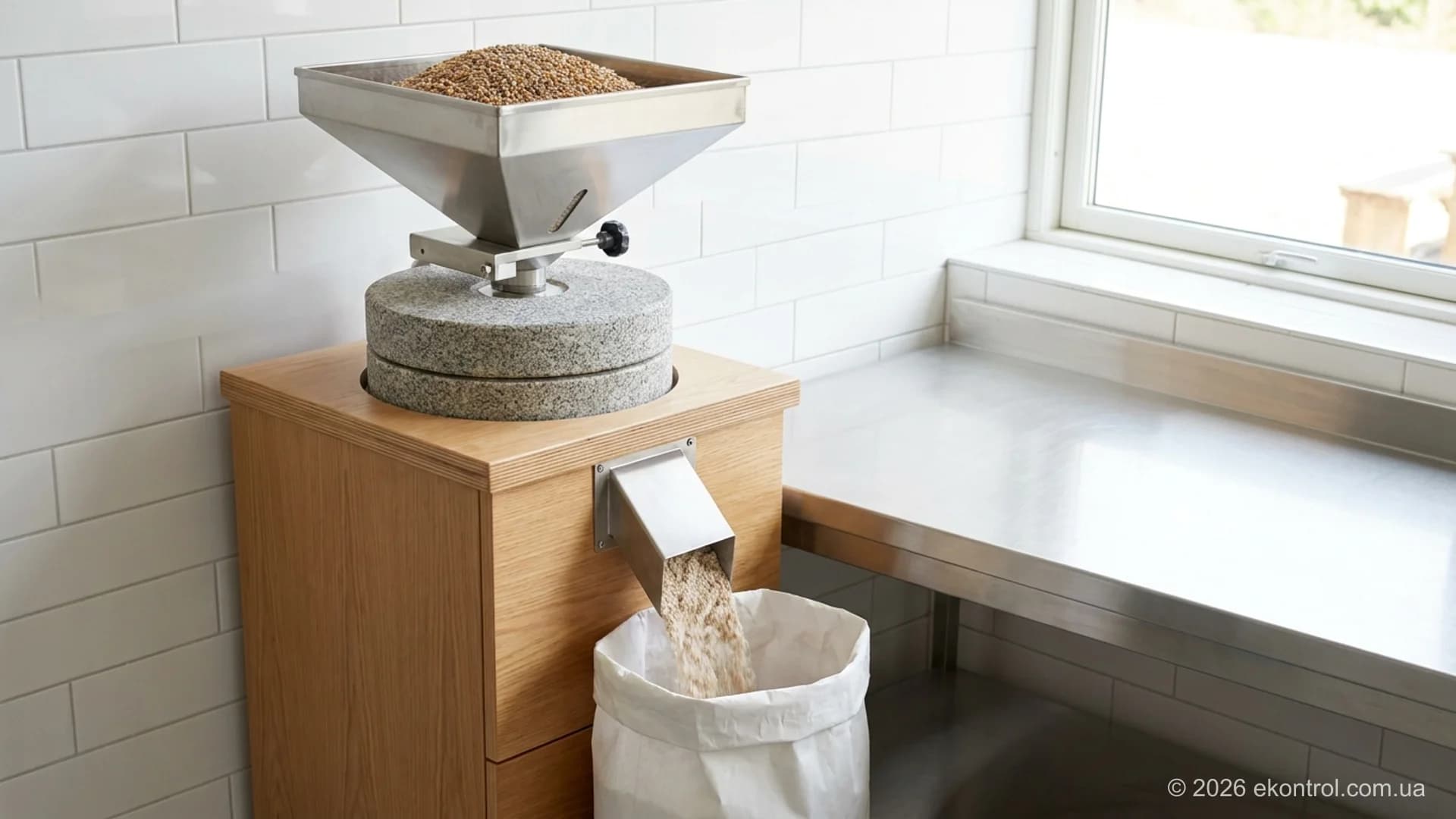
Stone mills fascinate me; whole-grain flour, to me, is the soul of Ukraine. The Nagorny Family Mill is in Zabolot village, Radomyshl community. Co-owner Viktoriia Nahorna moved there from Kyiv with her family after the full-scale invasion began.
The community's only stone mill grinds up to 2 tonnes of wheat, whole-grain wheat and coarse rye flour a month. The family grows rye on a small plot and buys wheat from local farmers; the third-place grant will buy a tractor.
A local bakery bakes with their flour, including whole-grain products for schools and kindergartens. As a food safety consultant, I was glad they asked their mentor about implementing HACCP. They want HACCP-ready premises and already lab-test every flour batch.
Sady Longo Maï, Zakarpattia
Olha Zubyk co-founded Sady Longo Maï in Nyzhnie Selyshche, Khust district, with her Austrian husband Jürgen. Part of the European Longo Maï cooperative, the farm takes a thoroughly European approach.
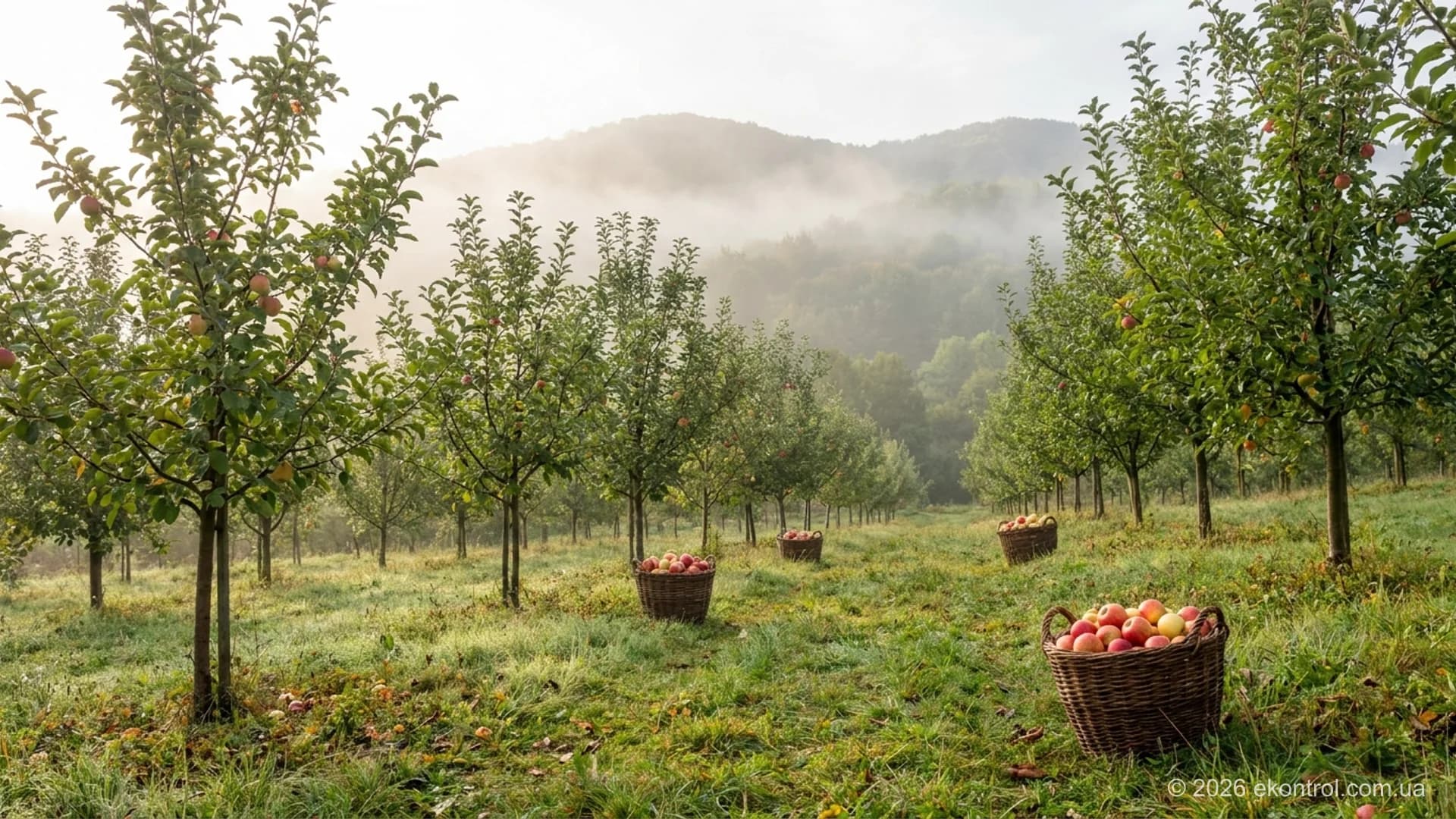
They make direct-pressed juices, apple cider vinegar and Dychka cider, and lease 14 hectares for their orchard with the Selyskyi Mayetok service cooperative, where they've planted bitter and bittersweet cider varieties. Until those trees mature, cider comes from local wild apples.
Volunteers join the harvest, and the work turns into a celebration. Olha and Jürgen also keep Lacaune dairy sheep and are developing cheesemaking.
All CraftUP Ukraine Finalists and Results
The finalists vary widely: FUNNY BEAR in Vinnytsia has made fresh-milk ice cream since 2006, so craft isn't always a young business, while Petro Skrypchuk, a professor from Rivne, makes cold-pressed walnut oil. Places four to ten weren't published; the other seven follow in Ukrainian alphabetical order.
| Finalist | Business | Region | Products | Result |
|---|---|---|---|---|
| Iryna Karabut | Medunytsya | Dnipropetrovsk | honey, creamed honey | 1st place, UAH 350,000 |
| Olena Shaposhnyk | Dvir Indychky | Poltava | turkey, smoked meats | 2nd place, UAH 200,000 |
| Viktoriia Nahorna | Nagorny Family Mill | Zhytomyr | stone-ground flour | 3rd place, UAH 150,000 |
| Viktor Yesipov | Dwarf Brewery | Kharkiv | craft beer | UAH 50,000 |
| Olha Zubyk | Sady Longo Maï | Zakarpattia | juice, vinegar, cider | UAH 50,000 |
| Anton Korolchuk | Green Clover | Khmelnytskyi | hydroponic basil, pesto | UAH 50,000 |
| Viktoriia Lukashova | FUNNY BEAR | Vinnytsia | fresh-milk ice cream | UAH 50,000 |
| Ivan Marakhonko | no brand | Kyiv | adjika, fermented sauces | UAH 50,000 |
| Mykhailo Prokopets | Vinologist | Odesa | Bessarabian-grape wine | UAH 50,000 |
| Petro Skrypchuk | walnut orchard | Rivne | walnut oil, macerates | UAH 50,000 |
My Takeaway: Craft Food Producers Can't Scale without HACCP
To move forward, many participants must strictly follow requirements based on HACCP principles. I'm convinced that for craft producers, quality, safety and the legal requirements the state enforces always come first.
For AgroPortal, I put it this way: "Proper implementation of the requirements of a safety management system based on HACCP principles is always a challenge." In small operations, two or three people make, pack, deliver and sell, leaving little energy for paperwork.
The same study found only about a third of respondents have HACCP (regular or simplified), ISO 22000 or another system, and about half have registration or a permit. While 86% want to sell through retail chains, 58% don't fully know their requirements.
As volumes grow, every mistake costs more.
Where Craft Food Producers Go Wrong with Equipment
We often see equipment bought before the workshop is planned; then raw materials meet finished goods, washing space runs short and the fridge blocks the future clean zone. So plan flows and zoning with a technologist first, then order equipment. That's practical advice; the law sets no such order.
Getting your workshop ready for an inspection or retail chains?
Ekontrol can help write HACCP procedures for your volumes, prepare facility registration documents and check labels against the rules in force from 1 October.
Learn about HACCP implementationWhat Ukrainian Law Requires from Craft Food Producers
Craft has no special regime, but the law eases some rules for small workshops.
Under Articles 20 and 21 of Law of Ukraine No. 771/97-VR "On Basic Principles and Requirements for Food Safety and Quality", HACCP-based procedures are mandatory for all operators, including small facilities since 20 September 2019. Only primary production is exempt; no certification is required. Small facilities may simplify: without critical control points, hygiene rules plus validation and verification suffice, and approved guides offer model plans, while visual monitoring only needs to log deviations. Our food workshop document templates help you start but don't replace an approved guide.
Plant-based products need only free state registration of the facility, filed at least 10 days ahead; silence for 15 working days means consent. Animal-origin products need an operating permit at 0.17 of the minimum monthly wage (UAH 1,469.99 in 2026), but small facilities (up to 1,000 kg or litres weekly) and craft (artisanal) products only register, declaring weekly volumes.
Scheduled inspections are suspended under martial law, though unscheduled ones can happen if life or health is at risk. Under Article 65 of Law No. 2042-VIII on state control, having no HACCP procedures costs a legal entity 30 minimum monthly wages and a sole proprietor (FOP) 15, roughly UAH 259,000 and UAH 130,000 in 2026. A first violation brings an order to fix it instead.
Law No. 2639-VIII "On Information for Consumers on Food Products" requires 13 mandatory label elements in Ukrainian, including allergens and the batch number. Since 16 September 2026, "GMO-free" is banned on products that can't contain GMOs; on 1 October the wartime labelling relaxations end.
| Product | What to arrange | HACCP: law and practice | Also consider |
|---|---|---|---|
| Honey, creamed honey | apiary passport and registration; workshop: registration or permit | not at the apiary, required in a workshop; decrystallise at 40–42 °C max | veterinary check; harvest country on label; nut honey isn't just "honey" |
| Wine | registration, licence, production base declaration | required; grape intake control | small producer: up to 100,000 litres a year, Ukrainian raw materials; sugar content on sparkling labels |
| Cider | registration, licence | required; fermentation control | licence at 0.15 minimum monthly wage yearly per site, about UAH 1,297 in 2026 |
| Turkey meat, smoked products | permit, or registration if small | required; curing, smoking, drying | slaughter only at permitted slaughterhouses; Order No. 813 hygiene rules; check "jamón" with a lawyer |
| Flour for school bread | free registration | required, simplified possible; lab testing | in practice, both mill and school-supplying bakery need registration and HACCP |
| Juices, cider vinegar | registration | required, simplified possible | small batches for end buyers may skip nutrition values; packaging needs compliance declarations; "eco" requires organic certification |
| Ice cream from milk | permit, or registration if small | required; raw milk safety | allergens and batch number on label |
How to Register Craft Food Production in Ukraine
The usual order for small workshops:
- Legal form. Register as a sole proprietor (FOP) or an LLC with the right KVED code; Viktoriia Nahorna set up her FOP online via Diia.
- Facility regime. Raw materials and volumes decide between registration and a permit; clarify borderline cases with the SSUFSCP in writing. Once the experimental eFood system launches, these services move there.
- Write HACCP procedures for your process and volumes before production starts.
- Check your label before the first batch: the wartime relaxations end on 1 October.
- Licence. Under Law No. 3817-IX, winemakers need a production licence and a production base declaration filed with the SSUFSCP; cider and beer need licences too.
- School and kindergarten suppliers share responsibility for food safety with the institution (para. 11, Cabinet of Ministers Resolution No. 305); see our school canteen requirements overview.
If your workshop already runs with document gaps, a preliminary diagnostic will find them before an inspector does.
What HACCP Gives a Small Producer
In our experience, retail chains and HoReCa buyers often want to see a food safety system before the first delivery. Schools and kindergartens log your facility number and cook under HACCP procedures. For exporters, working HACCP is the base for ISO 22000 certification, and you'll rest easier knowing your process risks.
What's Next for CraftUP Ukraine Participants
All ten finalists got grants. By year-end, the organiser plans an initiative group and a concept for uniting craft food producers. I support that: joining forces could really help with food safety and HACCP, since craft producers face similar challenges whatever they make.
Plenty of work lies ahead. But looking at these people, you realise nothing will stop them. They'll get it done.
If you're a craft food producer preparing for registration, an inspection or retail chains, get in touch and we'll work out where to start.
Sources
- AgroPortal: results (17 September 2026), expert council (27 August 2026, Ukrainian), course partners (23 July 2026), market study (23 March 2026)
- Netherlands Embassy agricultural office: CraftUP Ukraine page
- Laws (Ukrainian): No. 771/97-VR, No. 3221-IX, food security and livestock, No. 2042-VIII, No. 2639-VIII, No. 3817-IX, alcohol and tobacco, Cabinet Resolution No. 305, school meals
- SSUFSCP: operating permit procedure (Ukrainian)
Need a certification consultation?
Free ConsultationOn This Page
- What Happened at the CraftUP Ukraine Final
- What Craft Food Production Is and Why It Needs Support
- Five Craft Food Producers from My Notes
- All CraftUP Ukraine Finalists and Results
- My Takeaway: Craft Food Producers Can't Scale without HACCP
- What Ukrainian Law Requires from Craft Food Producers
- How to Register Craft Food Production in Ukraine
- What's Next for CraftUP Ukraine Participants
- Sources
What Happened at the CraftUP Ukraine Final
On 15 September, I, Denys Honchar, Director of Ekontrol LLC, sat on the expert council at the CraftUP Ukraine final, a training and grant programme for craft food producers. Ten finalists pitched at the Netherlands Embassy in Kyiv, and our nine-member council voted for the winners. The participants were incredible; I'm glad I met them in person.
The results are out: the Medunytsya family apiary came first (UAH 350,000), the Dvir Indychky ("Turkey Yard") farm second (UAH 200,000) and the Nagorny Family Mill third (UAH 150,000). The other seven finalists got UAH 50,000 each.
Three of the five finalists I describe below won prizes. The whole council decided, so my impressions simply matched its choice.
The online outlet AgroPortal.ua (in Ukrainian) runs the programme with Dutch government support under the Private Sector Development programme. Fellow council members represented the Netherlands Embassy, the agriculture ministry, the State Service of Ukraine on Food Safety and Consumer Protection (SSUFSCP), agribusiness associations and others. My company also partnered on the training course.
CraftUP Ukraine in Numbers
- Launched 11 December 2025; 400+ applications.
- 40 participants from 19 regions, 15 lectures (May to July), mentoring for all 10 finalists.
- Grant fund: UAH 1.05 million.
- Grants pay for equipment and/or services; amounts exclude taxes.
What Craft Food Production Is and Why It Needs Support
Craft food production is small-batch, often family-run food or drink production where the owner personally answers for raw materials, recipe and process. Ukrainian law has no such term and no separate law on craft producers.
The closest legal concepts came with Law No. 3221-IX, in force since 26 October 2023:
- a craft (artisanal) food product is of animal origin only: Ukrainian main ingredient, one facility, own recipe or process, up to 1,000 kg or litres a week (yearly average);
- a small facility makes food of animal origin within the same weekly limit.
So jam or pickles can't legally be craft (artisanal) products.
Per Pro-Consulting's study for CraftUP Ukraine, 92% of surveyed producers make at most 500 kg, litres or units weekly, only 10% export, and 96% say they need training.
Small firms pay disproportionately for equipment, transport and workshops, and few can afford a technologist, as our work with food companies shows.
Five Craft Food Producers from My Notes
Council members had briefing materials for notes, and I saved my notes. Choosing was hard, as all ten deserve attention; here are five, in no particular order.
Medunytsya Family Apiary, Dnipropetrovsk Region
Iryna and Oleksandr Karabut run the Medunytsya family apiary near Kryvyi Rih. Co-owner Iryna pitched the project and was very well prepared. They make unusual honeys, like coriander honey, which I'd never tasted, plus creamed honey and nuts in honey. Every batch is lab-tested.
The first-place grant will buy a commercial vehicle for fairs, sales beyond the region and, as I understood, moving equipment. Congratulating Iryna, Carolien Spaans of the Netherlands Embassy recalled Andrey Kurkov's novel Grey Bees and wished the vehicle would carry honey across Ukraine rather than evacuate bees.
By law, extracting honey at the apiary is primary production, exempt from HACCP; creamed honey or nuts in honey from a workshop aren't.
Vinologist Winery, Odesa Region
Mykhailo Prokopets, founder of the craft winery Vinologist, is hugely passionate about his work. He makes wine from local Bessarabian grapes like Odesa Black and Sukholymanskyi White, with a vineyard in the Izmail district. Licensed as a small producer last year, he's now pursuing a geographical indication and making sparkling wine this season.
He has kept studying winemaking since 2019 and heads the Odesa Region Winemakers' Association, an NGO founded in July 2026. To me, he proves one craft producer can lead a region's winemakers.
Dvir Indychky Farm, Poltava Region
Olena Shaposhnyk and her husband Volodymyr, a livestock specialist, run the Dvir Indychky family farm. They aim to scale up into systematic production, with an itemised equipment list: a bowl cutter, climate chamber, meat grinder, autoclave, refrigerator and air conditioner, plus a workshop meeting food safety standards. The council awarded them second place.
Next: a proper workshop, a poultry house for 500 birds, a year-round cycle and dry-cured turkey leg. This couple adores their work and keeps boldly moving forward despite everything.
Nagorny Family Mill, Zhytomyr Region
Stone mills fascinate me; whole-grain flour, to me, is the soul of Ukraine. The Nagorny Family Mill is in Zabolot village, Radomyshl community. Co-owner Viktoriia Nahorna moved there from Kyiv with her family after the full-scale invasion began.
The community's only stone mill grinds up to 2 tonnes of wheat, whole-grain wheat and coarse rye flour a month. The family grows rye on a small plot and buys wheat from local farmers; the third-place grant will buy a tractor.
A local bakery bakes with their flour, including whole-grain products for schools and kindergartens. As a food safety consultant, I was glad they asked their mentor about implementing HACCP. They want HACCP-ready premises and already lab-test every flour batch.
Sady Longo Maï, Zakarpattia
Olha Zubyk co-founded Sady Longo Maï in Nyzhnie Selyshche, Khust district, with her Austrian husband Jürgen. Part of the European Longo Maï cooperative, the farm takes a thoroughly European approach.
They make direct-pressed juices, apple cider vinegar and Dychka cider, and lease 14 hectares for their orchard with the Selyskyi Mayetok service cooperative, where they've planted bitter and bittersweet cider varieties. Until those trees mature, cider comes from local wild apples.
Volunteers join the harvest, and the work turns into a celebration. Olha and Jürgen also keep Lacaune dairy sheep and are developing cheesemaking.
All CraftUP Ukraine Finalists and Results
The finalists vary widely: FUNNY BEAR in Vinnytsia has made fresh-milk ice cream since 2006, so craft isn't always a young business, while Petro Skrypchuk, a professor from Rivne, makes cold-pressed walnut oil. Places four to ten weren't published; the other seven follow in Ukrainian alphabetical order.
| Finalist | Business | Region | Products | Result |
|---|---|---|---|---|
| Iryna Karabut | Medunytsya | Dnipropetrovsk | honey, creamed honey | 1st place, UAH 350,000 |
| Olena Shaposhnyk | Dvir Indychky | Poltava | turkey, smoked meats | 2nd place, UAH 200,000 |
| Viktoriia Nahorna | Nagorny Family Mill | Zhytomyr | stone-ground flour | 3rd place, UAH 150,000 |
| Viktor Yesipov | Dwarf Brewery | Kharkiv | craft beer | UAH 50,000 |
| Olha Zubyk | Sady Longo Maï | Zakarpattia | juice, vinegar, cider | UAH 50,000 |
| Anton Korolchuk | Green Clover | Khmelnytskyi | hydroponic basil, pesto | UAH 50,000 |
| Viktoriia Lukashova | FUNNY BEAR | Vinnytsia | fresh-milk ice cream | UAH 50,000 |
| Ivan Marakhonko | no brand | Kyiv | adjika, fermented sauces | UAH 50,000 |
| Mykhailo Prokopets | Vinologist | Odesa | Bessarabian-grape wine | UAH 50,000 |
| Petro Skrypchuk | walnut orchard | Rivne | walnut oil, macerates | UAH 50,000 |
My Takeaway: Craft Food Producers Can't Scale without HACCP
To move forward, many participants must strictly follow requirements based on HACCP principles. I'm convinced that for craft producers, quality, safety and the legal requirements the state enforces always come first.
For AgroPortal, I put it this way: "Proper implementation of the requirements of a safety management system based on HACCP principles is always a challenge." In small operations, two or three people make, pack, deliver and sell, leaving little energy for paperwork.
The same study found only about a third of respondents have HACCP (regular or simplified), ISO 22000 or another system, and about half have registration or a permit. While 86% want to sell through retail chains, 58% don't fully know their requirements.
As volumes grow, every mistake costs more.
Where Craft Food Producers Go Wrong with Equipment
We often see equipment bought before the workshop is planned; then raw materials meet finished goods, washing space runs short and the fridge blocks the future clean zone. So plan flows and zoning with a technologist first, then order equipment. That's practical advice; the law sets no such order.
Getting your workshop ready for an inspection or retail chains?
Ekontrol can help write HACCP procedures for your volumes, prepare facility registration documents and check labels against the rules in force from 1 October.
Learn about HACCP implementationWhat Ukrainian Law Requires from Craft Food Producers
Craft has no special regime, but the law eases some rules for small workshops.
Under Articles 20 and 21 of Law of Ukraine No. 771/97-VR "On Basic Principles and Requirements for Food Safety and Quality", HACCP-based procedures are mandatory for all operators, including small facilities since 20 September 2019. Only primary production is exempt; no certification is required. Small facilities may simplify: without critical control points, hygiene rules plus validation and verification suffice, and approved guides offer model plans, while visual monitoring only needs to log deviations. Our food workshop document templates help you start but don't replace an approved guide.
Plant-based products need only free state registration of the facility, filed at least 10 days ahead; silence for 15 working days means consent. Animal-origin products need an operating permit at 0.17 of the minimum monthly wage (UAH 1,469.99 in 2026), but small facilities (up to 1,000 kg or litres weekly) and craft (artisanal) products only register, declaring weekly volumes.
Scheduled inspections are suspended under martial law, though unscheduled ones can happen if life or health is at risk. Under Article 65 of Law No. 2042-VIII on state control, having no HACCP procedures costs a legal entity 30 minimum monthly wages and a sole proprietor (FOP) 15, roughly UAH 259,000 and UAH 130,000 in 2026. A first violation brings an order to fix it instead.
Law No. 2639-VIII "On Information for Consumers on Food Products" requires 13 mandatory label elements in Ukrainian, including allergens and the batch number. Since 16 September 2026, "GMO-free" is banned on products that can't contain GMOs; on 1 October the wartime labelling relaxations end.
| Product | What to arrange | HACCP: law and practice | Also consider |
|---|---|---|---|
| Honey, creamed honey | apiary passport and registration; workshop: registration or permit | not at the apiary, required in a workshop; decrystallise at 40–42 °C max | veterinary check; harvest country on label; nut honey isn't just "honey" |
| Wine | registration, licence, production base declaration | required; grape intake control | small producer: up to 100,000 litres a year, Ukrainian raw materials; sugar content on sparkling labels |
| Cider | registration, licence | required; fermentation control | licence at 0.15 minimum monthly wage yearly per site, about UAH 1,297 in 2026 |
| Turkey meat, smoked products | permit, or registration if small | required; curing, smoking, drying | slaughter only at permitted slaughterhouses; Order No. 813 hygiene rules; check "jamón" with a lawyer |
| Flour for school bread | free registration | required, simplified possible; lab testing | in practice, both mill and school-supplying bakery need registration and HACCP |
| Juices, cider vinegar | registration | required, simplified possible | small batches for end buyers may skip nutrition values; packaging needs compliance declarations; "eco" requires organic certification |
| Ice cream from milk | permit, or registration if small | required; raw milk safety | allergens and batch number on label |
How to Register Craft Food Production in Ukraine
The usual order for small workshops:
- Legal form. Register as a sole proprietor (FOP) or an LLC with the right KVED code; Viktoriia Nahorna set up her FOP online via Diia.
- Facility regime. Raw materials and volumes decide between registration and a permit; clarify borderline cases with the SSUFSCP in writing. Once the experimental eFood system launches, these services move there.
- Write HACCP procedures for your process and volumes before production starts.
- Check your label before the first batch: the wartime relaxations end on 1 October.
- Licence. Under Law No. 3817-IX, winemakers need a production licence and a production base declaration filed with the SSUFSCP; cider and beer need licences too.
- School and kindergarten suppliers share responsibility for food safety with the institution (para. 11, Cabinet of Ministers Resolution No. 305); see our school canteen requirements overview.
If your workshop already runs with document gaps, a preliminary diagnostic will find them before an inspector does.
What HACCP Gives a Small Producer
In our experience, retail chains and HoReCa buyers often want to see a food safety system before the first delivery. Schools and kindergartens log your facility number and cook under HACCP procedures. For exporters, working HACCP is the base for ISO 22000 certification, and you'll rest easier knowing your process risks.
What's Next for CraftUP Ukraine Participants
All ten finalists got grants. By year-end, the organiser plans an initiative group and a concept for uniting craft food producers. I support that: joining forces could really help with food safety and HACCP, since craft producers face similar challenges whatever they make.
Plenty of work lies ahead. But looking at these people, you realise nothing will stop them. They'll get it done.
If you're a craft food producer preparing for registration, an inspection or retail chains, get in touch and we'll work out where to start.
Sources
- AgroPortal: results (17 September 2026), expert council (27 August 2026, Ukrainian), course partners (23 July 2026), market study (23 March 2026)
- Netherlands Embassy agricultural office: CraftUP Ukraine page
- Laws (Ukrainian): No. 771/97-VR, No. 3221-IX, food security and livestock, No. 2042-VIII, No. 2639-VIII, No. 3817-IX, alcohol and tobacco, Cabinet Resolution No. 305, school meals
- SSUFSCP: operating permit procedure (Ukrainian)