
Who Joined the Coordination Meeting
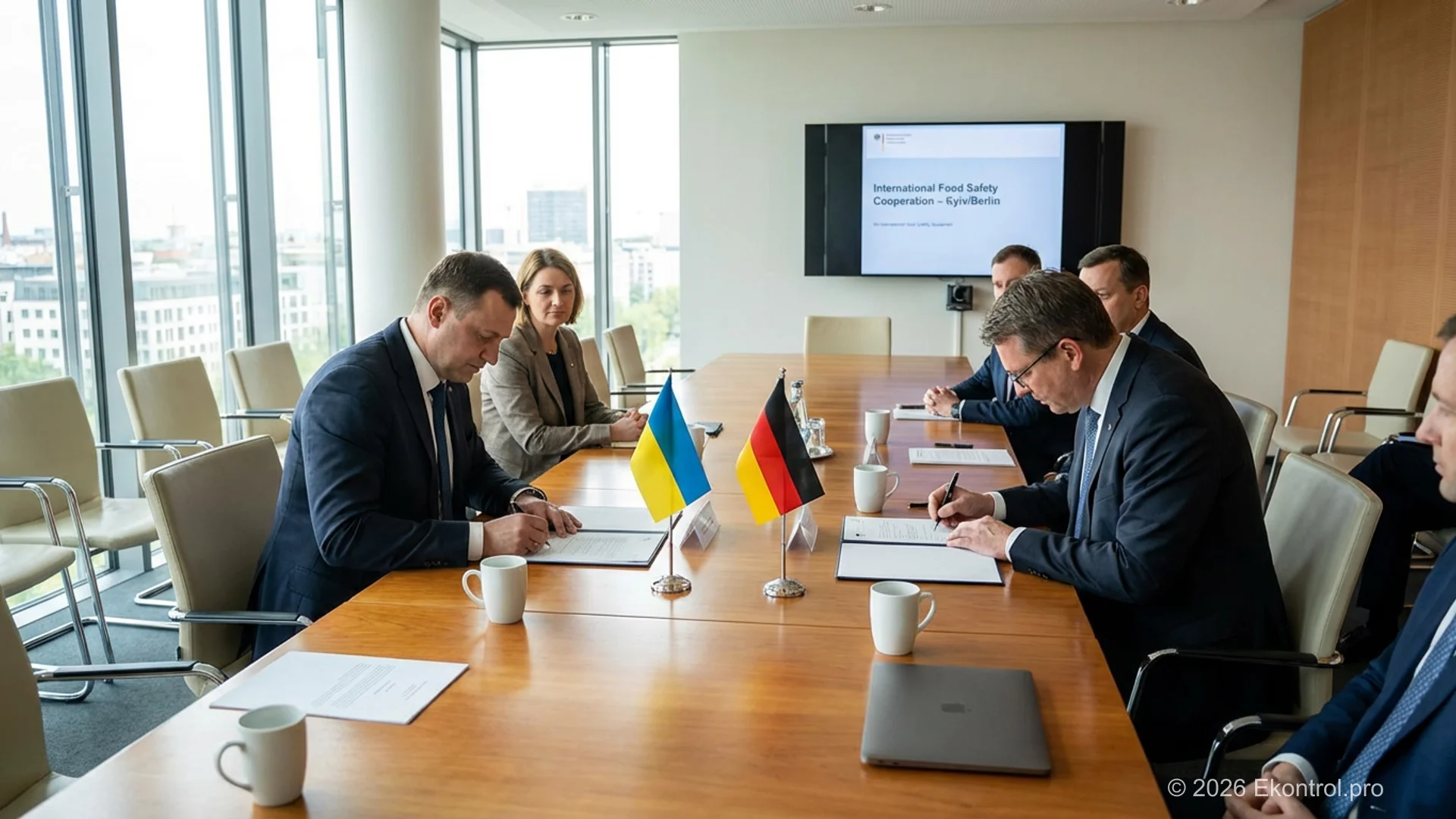
On 28 January 2026, Ukraine's State Service on Food Safety and Consumer Protection (SSFSCP) and its Danish partners held an online meeting of the Coordination Working Group (CWG) and agreed on what they'll work on during the year. The first half of 2026 got priority.
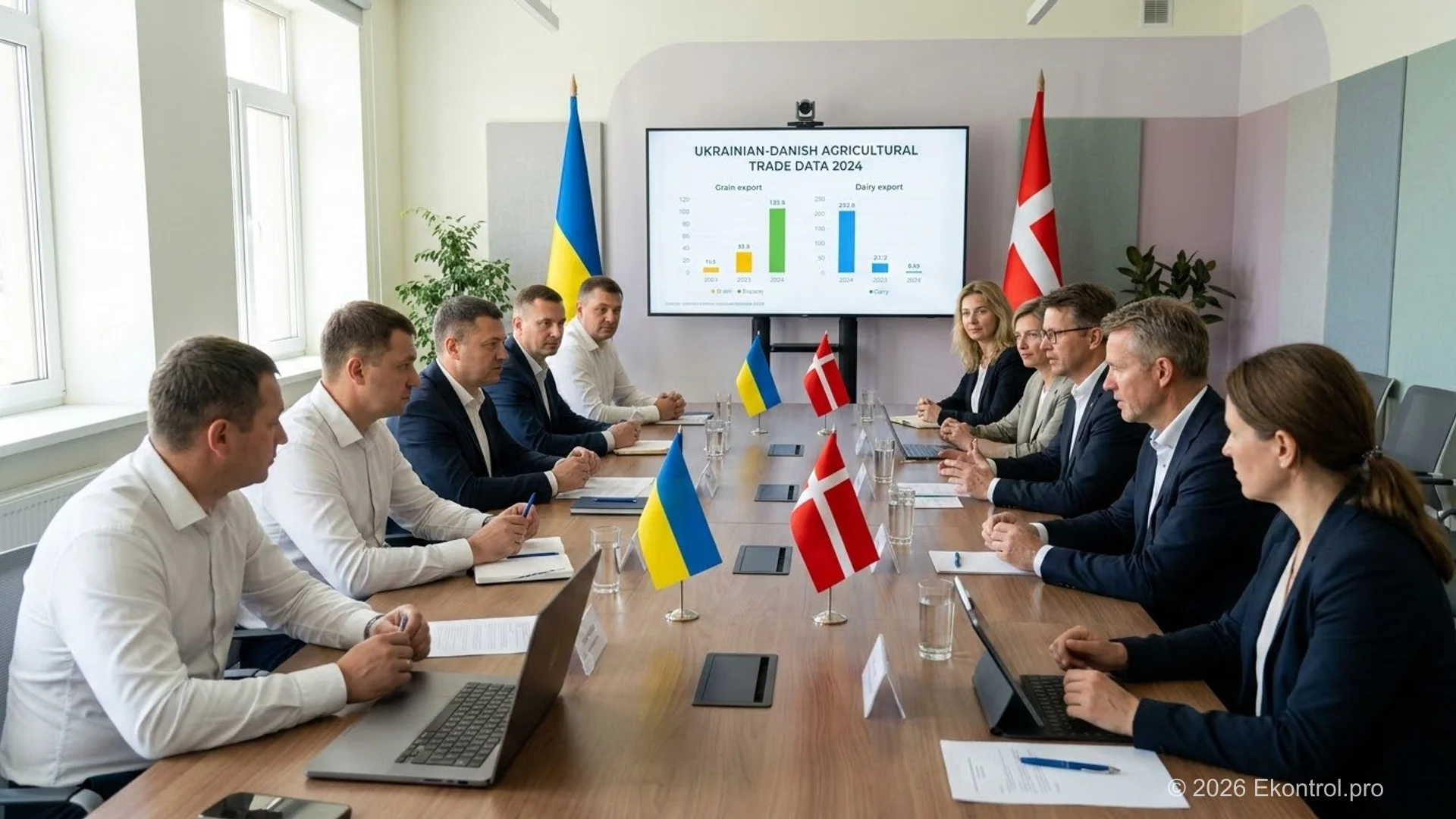
Ukraine was represented by SSFSCP Deputy Heads Oleh Osiian and Volodymyr Kusturov, along with the Ministry of Economy, Environment and Agriculture of Ukraine. From the Danish side: the Embassy of Denmark in Ukraine and the Danish Veterinary and Food Administration (Fødevarestyrelsen), the body that does in Denmark roughly what the SSFSCP does in Ukraine.
Volodymyr Kusturov framed the partnership bluntly (our translation):
"We see the Danish-Ukrainian partnership as an important instrument of real change. It's a chance to systematically renew our approaches to state control, to make them more transparent, more effective and compliant with European requirements."
Who sits at the table matters more than it looks. Put a regulator, a diplomatic channel and a counterpart technical agency in one room, and an agreement stands a chance of becoming a written instruction and a training calendar instead of a meeting record.
The meeting in brief
Date: 28 January 2026, online. Format: a Coordination Working Group (CWG) session under the Strategic Sector Cooperation between Ukraine and the Kingdom of Denmark in food and agriculture. Participants: the SSFSCP (Deputy Heads Oleh Osiian and Volodymyr Kusturov), the Ministry of Economy, Environment and Agriculture of Ukraine, the Embassy of Denmark in Ukraine, and the Danish Veterinary and Food Administration. Subject: the 2026 plan of joint activities, weighted toward the first half of the year. The official statement was published on 29 January 2026.
What Priorities Were Set for 2026
Three things sit at the centre: building institutional capacity in the competent authorities, introducing a resource-efficient system of state control, and bringing Ukrainian procedures closer to EU standards.
"Resource-efficient" isn't a polite way of saying "fewer inspections." It describes a model where an inspector's time goes where the risk is higher, and where a decision rests on a test result.
Areas where concrete steps were discussed:
- food safety;
- veterinary medicine, animal health and welfare;
- phytosanitary control;
- border control treated as part of the state control system rather than a separate function;
- environmentally friendly ("green") solutions in the food and agricultural sectors.
Working formats are specific too: expert missions, online consultations, webinars and training events. That's no longer an abstract "exchange of experience" but a calendar someone has to staff.
It helps to know the scale of the programme behind all this. Strategic Sector Cooperation (SSC) is a Danish aid instrument under which Danish public authorities work directly with their sister authorities abroad on capacity, legislation and regulatory frameworks. Denmark launched two SSC inception phases in Ukraine back in 2024: one in water and environment, one in food and agriculture. So this CWG isn't a one-off meeting. It's the working body of a programme now in its third year.
Laboratory Network and AMR Monitoring
Most of the substance in the statement sits in one quote from Oleh Osiian, spelling out what the Danish support actually covers:
"The methodological and practical support provided is very important, as it will help us implement modern European approaches faster: to testing materials and articles in contact with food, to AMR monitoring and other areas. The cooperation on practical mastery of testing methods, control and analysis of results is especially valued."
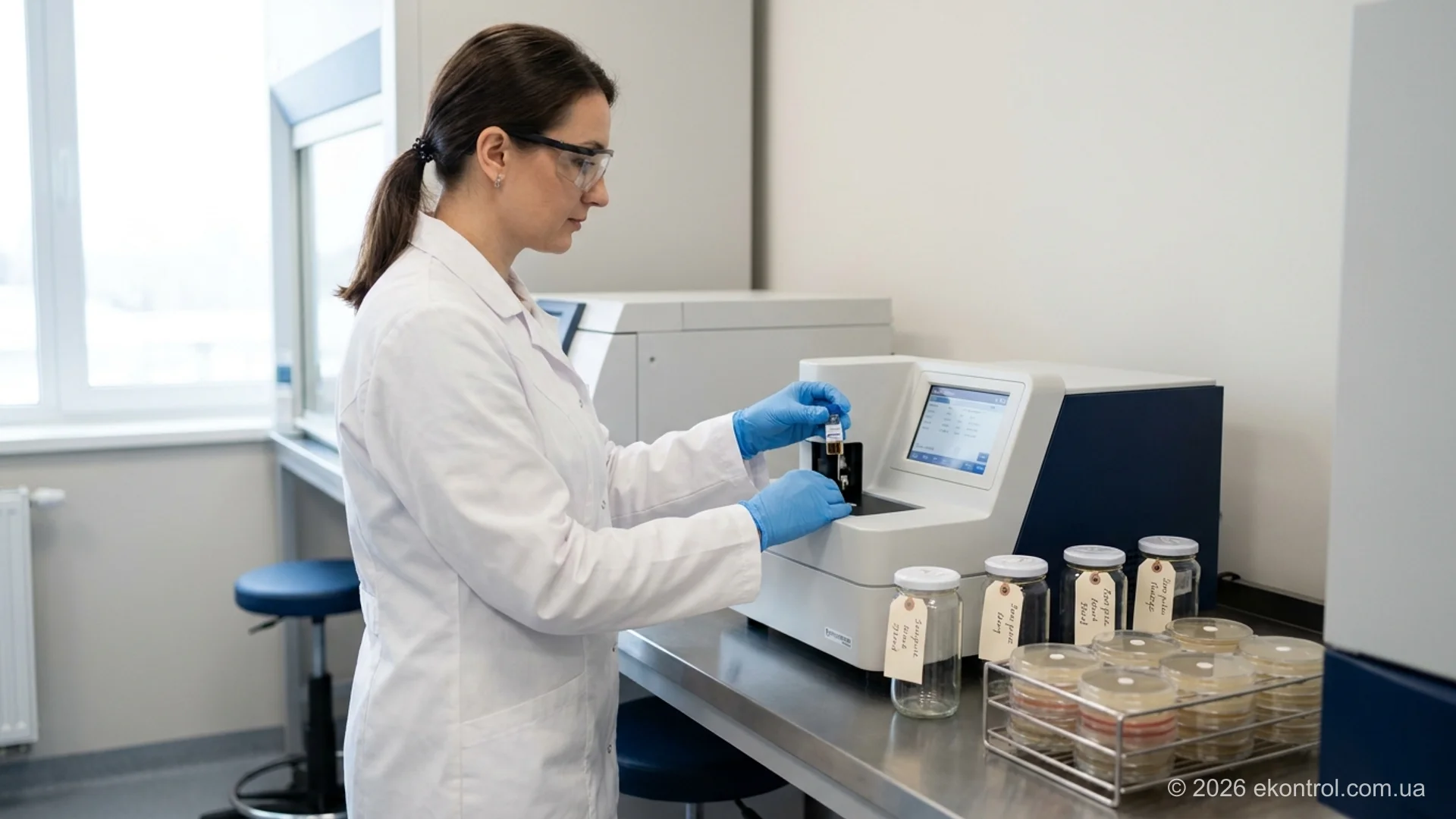
Look at the first item, because retellings of this news almost always drop it. Materials and articles in contact with food, or food contact materials (FCM), means packaging, containers, conveyor belts, seals, gloves. Ukraine has very few laboratories covering the full range of migration testing under European methods, and every exporter to the EU has run into that personally.
AMR monitoring is the second theme, and it already has a legal frame. Since 1 March 2026 Ukraine has run national antimicrobial resistance monitoring using EUCAST methodology, launched by the veterinary medicine law together with a Ministry of Agrarian Policy order. Danish support lands on that freshly built structure.
For a laboratory it all comes down to accreditation in the end. A method picked up on a study visit has to be validated, added to the accreditation scope and maintained, which puts you squarely in ISO/IEC 17025 territory and regular proficiency testing.
Updating the Regulatory Framework and Sampling Rules
Osiian's quote has a second half that's easy to skip past, and it covers the most mundane thing there is: support "in improving the regulatory framework, particularly regarding sampling, sample quantities and frequency."
Sounds like a technical detail. It's the foundation the whole monitoring system stands on.
No mass spectrometer, however expensive, will save you if the sample was taken in the wrong place, the wrong way, at the wrong time. A sampling error doesn't get corrected at the testing stage; it just gets reproduced in the report wearing the face of a reliable result. Set the frequency too low and the state sees a rosy picture for years. Set it too high and laboratory capacity burns on samples that show nothing.
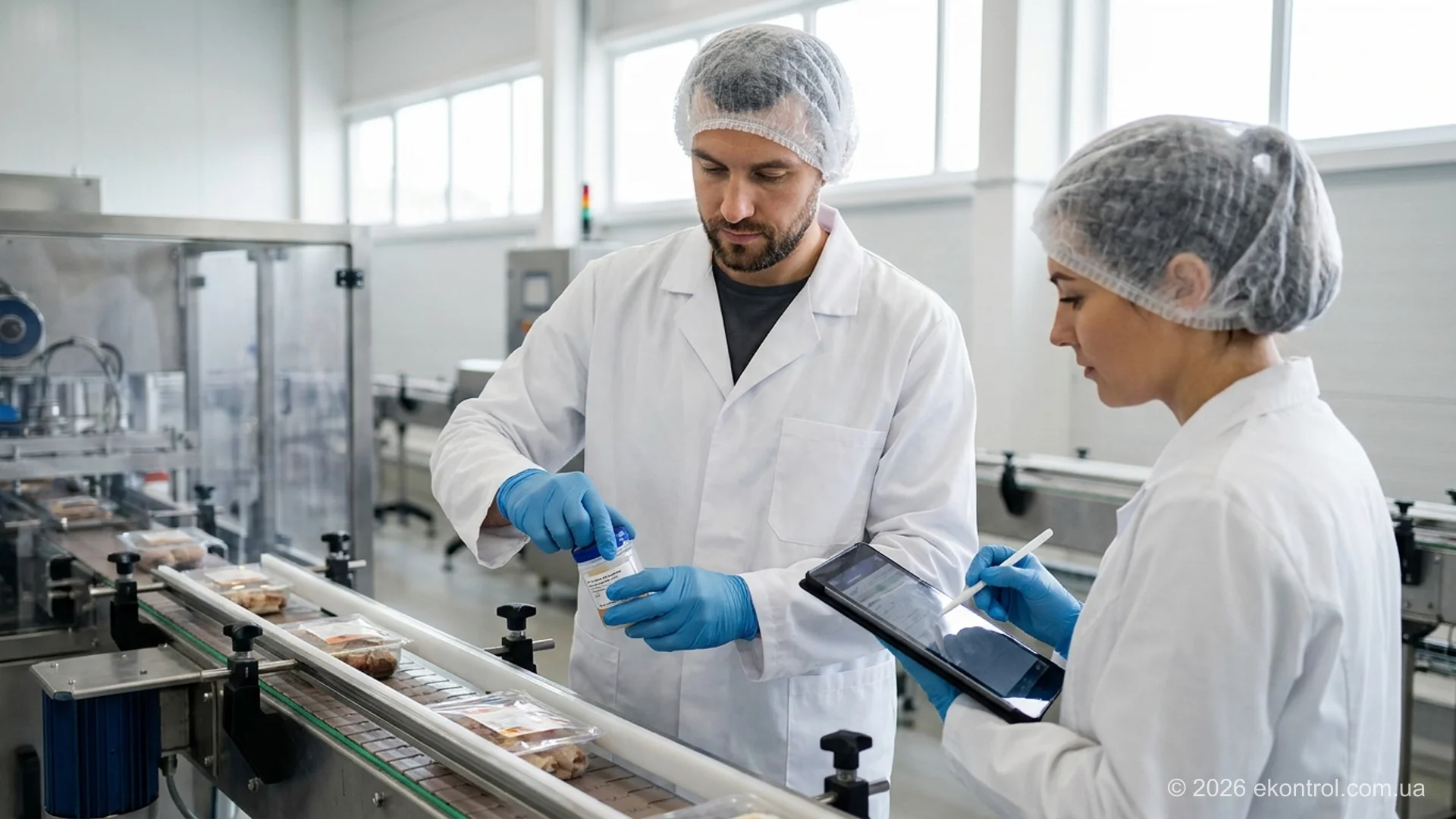
Market operators get something practical out of harmonising these rules. Clearer requirements for sampling points, quantities and frequency shrink the grey zones in own-check programmes, which today every operator interprets its own way.
Phytosanitary Measures, Border Control and 'Green' Solutions
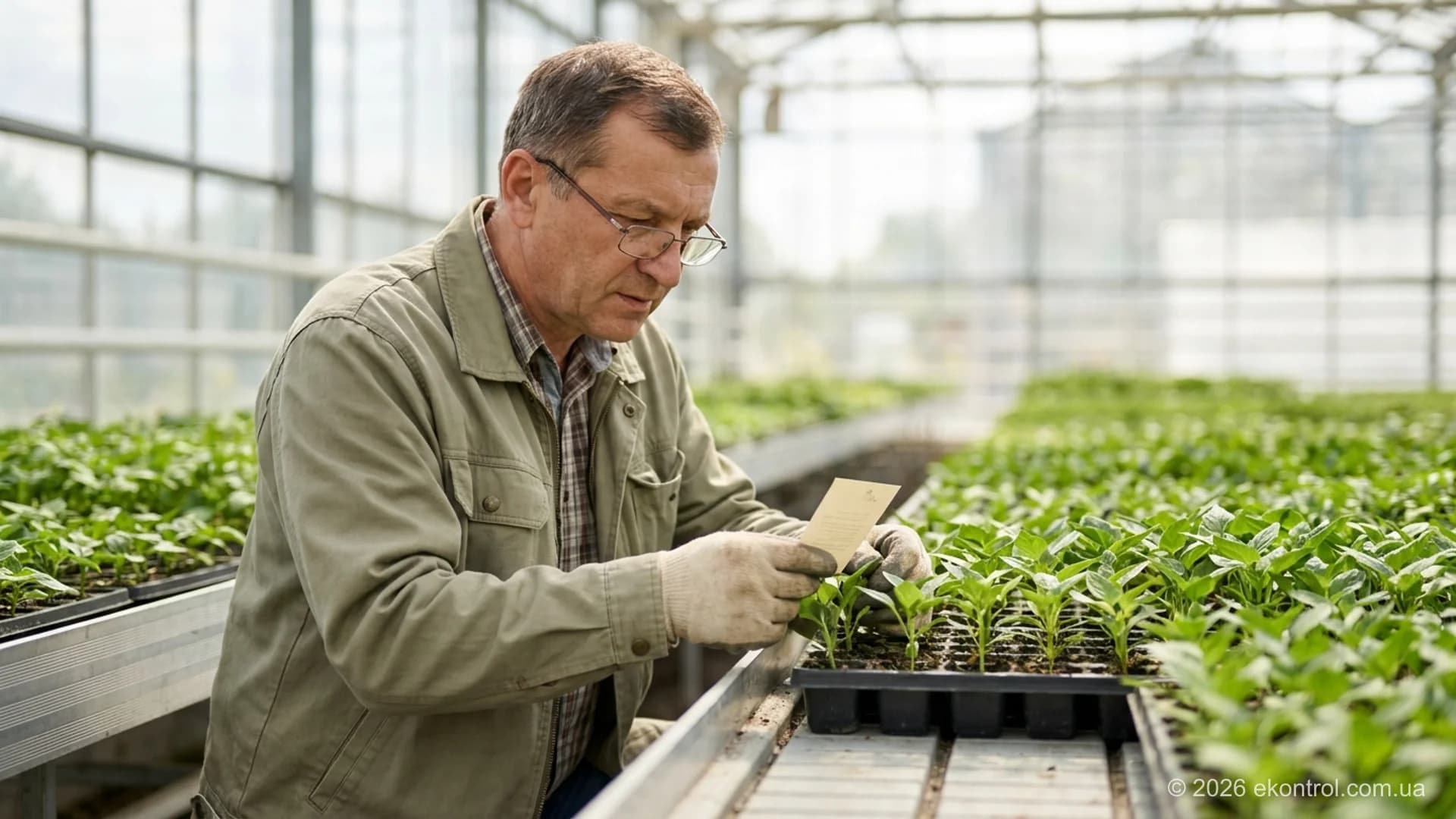
Here the statement makes a connection that usually falls apart in summaries. The SSFSCP doesn't list "green" solutions in food and agriculture as a separate bullet. It ties them specifically to the regulation of phytosanitary requirements and the use of plant passports.
A plant passport isn't a quality certificate and isn't an export document. It's a label that travels with regulated plant material inside the market and lets you trace a consignment back to the operator who put it into circulation. Growers may grumble about one more piece of paper, but it's what makes containing an outbreak locally possible instead of banning a whole region.
Border control appears in the statement as an element of the state control system. That distinction isn't cosmetic: checks at the border have to draw on the same data and the same laboratories as domestic monitoring, or the border develops a parallel reality with its own criteria.
Where the news ends and our reading begins
The SSFSCP statement is a record of intentions for 2026. It contains no new requirements for market operators, no entry-into-force dates and no promises of "digitalised control." Everything below about business preparation is Ekontrol's editorial reading of where the agreed priorities point, not a government position. No new obligation lands on your company tomorrow because of this meeting.
Ready for control under European rules
Ekontrol prepares food and agricultural companies for state control and certification: HACCP system diagnostics, own-check programmes, batch traceability, certification audit support. Bureau Veritas partner in Ukraine.
ISO 22000 certificationWhy This Matters for Ukrainian Businesses
The honest answer: on its own, not much. No new obligation appeared on 28 January.
What matters is the direction. Danish assistance is going into capacity rather than inspection volume: laboratories, methods, sampling rules, coordination between authorities. In a year or two that shows up in how an inspector talks to you, citing a test result instead of a remark about how a logbook was filled in.
Who'll feel it first:
- food producers, especially those working with packaging and containers;
- laboratories and testing centres, since adopting the new methods falls on them;
- exporters of products of animal and plant origin;
- operators involved in border logistics and the movement of regulated plant material.
A similar script already played out with Germany's BVL: the SSFSCP and BVL stepping up cooperation. Same toolkit, same focus on laboratory capacity. Comparing the two partnerships a year from now will be instructive precisely because the tools are identical.
What Companies Should Do Now
Nothing urgent. But three things are worth checking while there's time, rather than a week before an inspection.
First, your own-check programme. Look at where your sampling points and frequencies came from: a risk assessment, or an old template nobody has revisited since HACCP went in. If it's the template, that's the cheapest fix available to you.
Second, traceability. A consignment you can't reconstruct within an hour costs more in an argument with a regulator than any laboratory does. That applies to plant passports too, if you handle regulated plant material.
Third, people. The person who takes the sample and the person who talks to the inspector are often the same person, and they were usually trained verbally, "the way we did it last year." Write it down: an instruction, a training record, a check that it was understood.
Fourth, optional but useful. If the EU is your market, compare your own procedures with how the same questions are handled there. A gap analysis before the audit costs less than a gap found during one.
Conclusion
That 28 January session isn't an event. It's a date in the calendar of a Danish programme that has been running in Ukraine since 2024. What counts is what sits behind it: methods for food contact materials, AMR monitoring, sampling rules, plant passports, border control, plus concrete working formats for the first half of the year.
Will that support reach district laboratories, or stop at the central office? That's the question worth watching. If it reaches them, this becomes the most visible change in Ukrainian state control in years. If it doesn't, we get one more report on successful cooperation.
How much weight Ukraine brings to talks like these is visible in the export numbers: the world agricultural map after the full-scale war.
Sources
- SSFSCP, "Ukraine and Denmark agreed on cooperation priorities in food and agriculture for 2026", 29.01.2026 (in Ukrainian): dpss.gov.ua
- Ministry of Foreign Affairs of Denmark, "Strategic Framework. Denmark's Partnership with Ukraine", 17.03.2025: um.dk
- Danida, overview of Strategic Sector Cooperation projects: um.dk
- Danish Veterinary and Food Administration (Fødevarestyrelsen): foedevarestyrelsen.dk
- SSFSCP, international technical cooperation: dpss.gov.ua
Need a certification consultation?
Free ConsultationOn This Page
- Who Joined the Coordination Meeting
- What Priorities Were Set for 2026
- Laboratory Network and AMR Monitoring
- Updating the Regulatory Framework and Sampling Rules
- Phytosanitary Measures, Border Control and 'Green' Solutions
- Why This Matters for Ukrainian Businesses
- What Companies Should Do Now
- Conclusion
- Sources
Who Joined the Coordination Meeting
On 28 January 2026, Ukraine's State Service on Food Safety and Consumer Protection (SSFSCP) and its Danish partners held an online meeting of the Coordination Working Group (CWG) and agreed on what they'll work on during the year. The first half of 2026 got priority.
Ukraine was represented by SSFSCP Deputy Heads Oleh Osiian and Volodymyr Kusturov, along with the Ministry of Economy, Environment and Agriculture of Ukraine. From the Danish side: the Embassy of Denmark in Ukraine and the Danish Veterinary and Food Administration (Fødevarestyrelsen), the body that does in Denmark roughly what the SSFSCP does in Ukraine.
Volodymyr Kusturov framed the partnership bluntly (our translation):
"We see the Danish-Ukrainian partnership as an important instrument of real change. It's a chance to systematically renew our approaches to state control, to make them more transparent, more effective and compliant with European requirements."
Who sits at the table matters more than it looks. Put a regulator, a diplomatic channel and a counterpart technical agency in one room, and an agreement stands a chance of becoming a written instruction and a training calendar instead of a meeting record.
The meeting in brief
Date: 28 January 2026, online. Format: a Coordination Working Group (CWG) session under the Strategic Sector Cooperation between Ukraine and the Kingdom of Denmark in food and agriculture. Participants: the SSFSCP (Deputy Heads Oleh Osiian and Volodymyr Kusturov), the Ministry of Economy, Environment and Agriculture of Ukraine, the Embassy of Denmark in Ukraine, and the Danish Veterinary and Food Administration. Subject: the 2026 plan of joint activities, weighted toward the first half of the year. The official statement was published on 29 January 2026.
What Priorities Were Set for 2026
Three things sit at the centre: building institutional capacity in the competent authorities, introducing a resource-efficient system of state control, and bringing Ukrainian procedures closer to EU standards.
"Resource-efficient" isn't a polite way of saying "fewer inspections." It describes a model where an inspector's time goes where the risk is higher, and where a decision rests on a test result.
Areas where concrete steps were discussed:
- food safety;
- veterinary medicine, animal health and welfare;
- phytosanitary control;
- border control treated as part of the state control system rather than a separate function;
- environmentally friendly ("green") solutions in the food and agricultural sectors.
Working formats are specific too: expert missions, online consultations, webinars and training events. That's no longer an abstract "exchange of experience" but a calendar someone has to staff.
It helps to know the scale of the programme behind all this. Strategic Sector Cooperation (SSC) is a Danish aid instrument under which Danish public authorities work directly with their sister authorities abroad on capacity, legislation and regulatory frameworks. Denmark launched two SSC inception phases in Ukraine back in 2024: one in water and environment, one in food and agriculture. So this CWG isn't a one-off meeting. It's the working body of a programme now in its third year.
Laboratory Network and AMR Monitoring
Most of the substance in the statement sits in one quote from Oleh Osiian, spelling out what the Danish support actually covers:
"The methodological and practical support provided is very important, as it will help us implement modern European approaches faster: to testing materials and articles in contact with food, to AMR monitoring and other areas. The cooperation on practical mastery of testing methods, control and analysis of results is especially valued."
Look at the first item, because retellings of this news almost always drop it. Materials and articles in contact with food, or food contact materials (FCM), means packaging, containers, conveyor belts, seals, gloves. Ukraine has very few laboratories covering the full range of migration testing under European methods, and every exporter to the EU has run into that personally.
AMR monitoring is the second theme, and it already has a legal frame. Since 1 March 2026 Ukraine has run national antimicrobial resistance monitoring using EUCAST methodology, launched by the veterinary medicine law together with a Ministry of Agrarian Policy order. Danish support lands on that freshly built structure.
For a laboratory it all comes down to accreditation in the end. A method picked up on a study visit has to be validated, added to the accreditation scope and maintained, which puts you squarely in ISO/IEC 17025 territory and regular proficiency testing.
Updating the Regulatory Framework and Sampling Rules
Osiian's quote has a second half that's easy to skip past, and it covers the most mundane thing there is: support "in improving the regulatory framework, particularly regarding sampling, sample quantities and frequency."
Sounds like a technical detail. It's the foundation the whole monitoring system stands on.
No mass spectrometer, however expensive, will save you if the sample was taken in the wrong place, the wrong way, at the wrong time. A sampling error doesn't get corrected at the testing stage; it just gets reproduced in the report wearing the face of a reliable result. Set the frequency too low and the state sees a rosy picture for years. Set it too high and laboratory capacity burns on samples that show nothing.
Market operators get something practical out of harmonising these rules. Clearer requirements for sampling points, quantities and frequency shrink the grey zones in own-check programmes, which today every operator interprets its own way.
Phytosanitary Measures, Border Control and 'Green' Solutions
Here the statement makes a connection that usually falls apart in summaries. The SSFSCP doesn't list "green" solutions in food and agriculture as a separate bullet. It ties them specifically to the regulation of phytosanitary requirements and the use of plant passports.
A plant passport isn't a quality certificate and isn't an export document. It's a label that travels with regulated plant material inside the market and lets you trace a consignment back to the operator who put it into circulation. Growers may grumble about one more piece of paper, but it's what makes containing an outbreak locally possible instead of banning a whole region.
Border control appears in the statement as an element of the state control system. That distinction isn't cosmetic: checks at the border have to draw on the same data and the same laboratories as domestic monitoring, or the border develops a parallel reality with its own criteria.
Where the news ends and our reading begins
The SSFSCP statement is a record of intentions for 2026. It contains no new requirements for market operators, no entry-into-force dates and no promises of "digitalised control." Everything below about business preparation is Ekontrol's editorial reading of where the agreed priorities point, not a government position. No new obligation lands on your company tomorrow because of this meeting.
Ready for control under European rules
Ekontrol prepares food and agricultural companies for state control and certification: HACCP system diagnostics, own-check programmes, batch traceability, certification audit support. Bureau Veritas partner in Ukraine.
ISO 22000 certificationWhy This Matters for Ukrainian Businesses
The honest answer: on its own, not much. No new obligation appeared on 28 January.
What matters is the direction. Danish assistance is going into capacity rather than inspection volume: laboratories, methods, sampling rules, coordination between authorities. In a year or two that shows up in how an inspector talks to you, citing a test result instead of a remark about how a logbook was filled in.
Who'll feel it first:
- food producers, especially those working with packaging and containers;
- laboratories and testing centres, since adopting the new methods falls on them;
- exporters of products of animal and plant origin;
- operators involved in border logistics and the movement of regulated plant material.
A similar script already played out with Germany's BVL: the SSFSCP and BVL stepping up cooperation. Same toolkit, same focus on laboratory capacity. Comparing the two partnerships a year from now will be instructive precisely because the tools are identical.
What Companies Should Do Now
Nothing urgent. But three things are worth checking while there's time, rather than a week before an inspection.
First, your own-check programme. Look at where your sampling points and frequencies came from: a risk assessment, or an old template nobody has revisited since HACCP went in. If it's the template, that's the cheapest fix available to you.
Second, traceability. A consignment you can't reconstruct within an hour costs more in an argument with a regulator than any laboratory does. That applies to plant passports too, if you handle regulated plant material.
Third, people. The person who takes the sample and the person who talks to the inspector are often the same person, and they were usually trained verbally, "the way we did it last year." Write it down: an instruction, a training record, a check that it was understood.
Fourth, optional but useful. If the EU is your market, compare your own procedures with how the same questions are handled there. A gap analysis before the audit costs less than a gap found during one.
Conclusion
That 28 January session isn't an event. It's a date in the calendar of a Danish programme that has been running in Ukraine since 2024. What counts is what sits behind it: methods for food contact materials, AMR monitoring, sampling rules, plant passports, border control, plus concrete working formats for the first half of the year.
Will that support reach district laboratories, or stop at the central office? That's the question worth watching. If it reaches them, this becomes the most visible change in Ukrainian state control in years. If it doesn't, we get one more report on successful cooperation.
How much weight Ukraine brings to talks like these is visible in the export numbers: the world agricultural map after the full-scale war.
Sources
- SSFSCP, "Ukraine and Denmark agreed on cooperation priorities in food and agriculture for 2026", 29.01.2026 (in Ukrainian): dpss.gov.ua
- Ministry of Foreign Affairs of Denmark, "Strategic Framework. Denmark's Partnership with Ukraine", 17.03.2025: um.dk
- Danida, overview of Strategic Sector Cooperation projects: um.dk
- Danish Veterinary and Food Administration (Fødevarestyrelsen): foedevarestyrelsen.dk
- SSFSCP, international technical cooperation: dpss.gov.ua