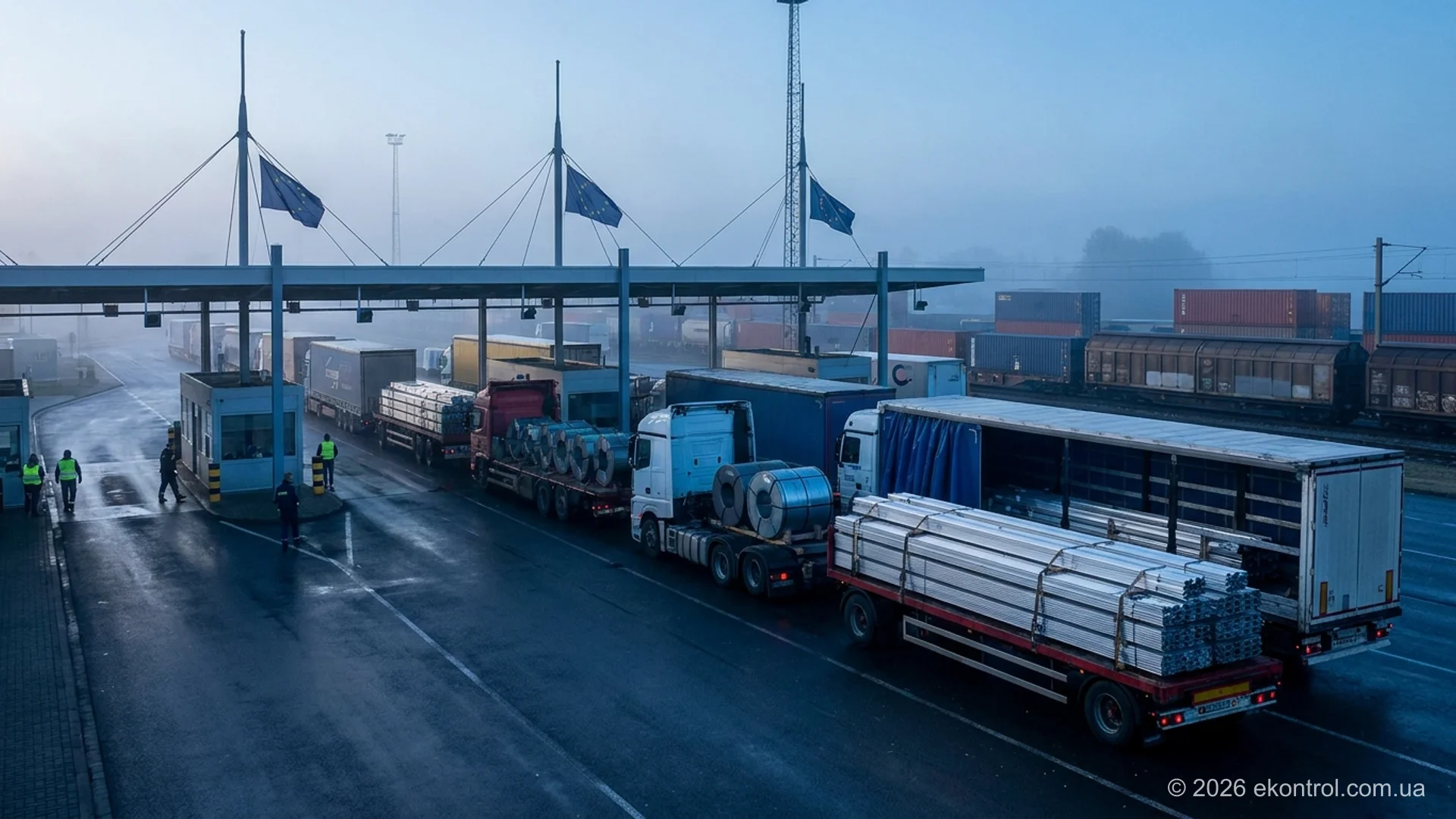

5th All-Ukrainian Food Business 2025 Congress: Industry Takeaways and Ekontrol Participation
The 5th All-Ukrainian Food Business 2025 Congress, organized by Tech Media Group in May 2025, exposed a clear shift in how Ukrainian food and beverage processors manage regulatory risk. Earlier in the decade, plant directors focused on emergency logistics and replacing disrupted ingredient suppliers. Today, margin growth depends on strict technical compliance. Bilateral screening under Chapter 12 of the EU accession negotiating framework (food safety, veterinary, and phytosanitary policy), the return of risk-based state inspections by the State Service of Ukraine on Food Safety and Consumer Protection (SSFSCP), the rollout of the eFood digital registry, and tighter private-label audits by European supermarket chains have raised the bar for every processor.
Denys Honchar, CEO of Ekontrol LLC, joined the congress expert panel alongside quality directors from dairy, meat, oilseed, confectionery, grain, and beverage plants. His message to plant owners was direct: a generic 400-page binder sitting in the chief technologist's office won't pass a supermarket buyer's audit or an EU border veterinary check. When an auditor working under a scheme recognized by the Global Food Safety Initiative (GFSI) walks onto your shop floor and sees a gap between paper logs and actual line hygiene, you lose the contract.
Why 2025 and 2026 Changed the Compliance Baseline for Processors
Four operational pressures now converge on Ukrainian food manufacturers. First, the end of unconditional EU autonomous trade preferences brought back tariff-rate quotas and stricter border sampling. Any laboratory finding of prohibited pesticide residues, mycotoxins, veterinary drugs, or Salmonella triggers an immediate notification in the European Rapid Alert System for Food and Feed (RASFF). Second, domestic supermarket chains in Ukraine have standardized their supplier checklists around FSSC 22000, BRCGS, and IFS.
Third, state oversight has gone digital through the eFood portal, meaning inspectors arrive at your gate with a complete electronic risk profile of your capacity. Fourth, high staff turnover on processing lines makes thick text procedures useless: when a third of line operators change within a year, you can't maintain HACCP or ISO 22000 through complex manuals. You need one-page visual instructions at workstations, automated Critical Control Point (CCP) monitoring, and a preventive diagnostic audit.
Field Audit Findings from the Ekontrol Engineering Team
Across pre-certification gap assessments conducted by Ekontrol at Ukrainian food processing plants in 2025 and 2026, more than 65% of facilities held bound HACCP manuals on paper but couldn't demonstrate empirical validation of critical limits or complete a 4-hour mass-balance traceability test covering reworked batches. Those exact two gaps account for the majority of critical non-conformities during FSSC 22000, BRCGS, IFS, and SSFSCP state audits.
Harmonizing Ukrainian Food Legislation with the EU Hygiene Package: Laws No. 771/97-VR, No. 2042-VIII, and No. 2639-VIII
Ukraine's European integration track in agri-food processing rests on transposing the EU Hygiene Package: Regulations (EC) No 178/2002, No 852/2004, No 853/2004, and Official Controls Regulation (EU) 2017/625. At the Food Business 2025 Congress, regulatory specialists and legal practitioners examined how these rules operate today through three core Ukrainian statutes.
Core Food Business Operator Obligations under Law No. 771/97-VR
The foundation of national food law is Law of Ukraine No. 771/97-VR On Basic Principles and Requirements for Food Safety and Quality. Articles 20 and 21 place primary legal liability for food safety directly on the food business operator. No third-party certificate or state lab report absolves a manufacturer from complying with general hygiene requirements (Section VII of the Law) and maintaining permanent procedures based on HACCP principles.
Your facility falls under one of two authorization regimes:
- State Registration of Capacities (Article 25 of Law No. 771/97-VR) is mandatory for operators producing, storing, or selling plant-origin foods, beverages, confectionery, bakery items, catering services, and retail stores (assigned an individual number
r-UA-XX-XX-XXXX). - Operating Permit (Article 23 of Law No. 771/97-VR) is required for facilities processing or storing animal-origin foods (slaughterhouses, meat-packing plants, dairies, fish processors, egg-product plants), issued only after an on-site inspection by the SSFSCP.
Article 20 of Law No. 771/97-VR also enforces a strict 24-hour notification and recall duty: if you have reasonable grounds to suspect a released batch fails safety requirements, you must inform the competent authority within one business day and initiate market withdrawal.
Risk-Based Official Controls under Law No. 2042-VIII
Inspection procedures follow Law of Ukraine No. 2042-VIII On State Control for Compliance with Legislation on Food, Feed, Animal By-Products, Animal Health and Welfare, aligned with Regulation (EU) 2017/625. Routine sanitary inspections occur without prior warning, except for scheduled state HACCP audits, which carry a 3-business-day notice.
Each facility receives a risk score based on product category, production volume, and past inspection results. Mandatory video recording by inspectors and plant managers protects businesses from arbitrary claims while making it impossible to ignore visible shop-floor hygiene violations.
Consumer Information and Allergen Labeling Rules under Law No. 2639-VIII
Law of Ukraine No. 2639-VIII "On Information for Consumers Regarding Food Products" transposes Regulation (EU) No 1169/2011. Retail quality managers at the congress noted that labeling errors remain the top trigger for shipment rejections. Labels must meet four requirements:
- Visual differentiation (via bold font, contrasting style, or background color inside the ingredients list) of all 14 priority allergens: gluten cereals, crustaceans, eggs, fish, peanuts, soybeans, milk and lactose, tree nuts, celery, mustard, sesame, sulfites above 10 mg/kg, lupin, and molluscs.
- Minimum font x-height of 1.2 mm (or 0.9 mm if the largest packaging surface is under 80 sq. cm).
- Mandatory nutrition declaration per 100 g or 100 ml (energy value, fat, saturates, carbohydrate, sugars, protein, and salt as
sodium x 2.5) plus proper distinction between "Use by" and "Best before" dates.
During turnkey implementation, our specialists verify every product specification and label proof against Law No. 2639-VIII.
| Ukrainian Statute | EU Acquis Equivalent | Core Operator Obligations | Penalties and Commercial Consequences |
|---|---|---|---|
| Law of Ukraine No. 771/97-VR | Regulations (EC) No 178/2002 and No 852/2004 | Facility registration or operating permit, Prerequisite Programs (PRPs), permanent HACCP procedures, one-step traceability, 24-hour unsafe product recall | Prohibition of product circulation, forced market recall, suspension or revocation of the facility operating permit |
| Law of Ukraine No. 2042-VIII | Regulation (EU) 2017/625 on Official Controls | Unannounced access for SSFSCP inspectors, state HACCP audit under standardized checklist, official laboratory sampling, video recording | Article 65 fines (10 to 50 minimum monthly wages for missing HACCP or operating without a permit), 10-day production suspension order |
| Law of Ukraine No. 2639-VIII | Regulation (EU) No 1169/2011 on Food Information | Typographic emphasis of 14 allergens, mandatory nutrition table, 1.2 mm x-height font, primary ingredient origin, accurate shelf-life dating | Fine of up to 30 minimum wages for undeclared allergens, immediate retail delisting, RASFF border rejection on export lots |
| CMU Resolution No. 523 (eFood System) | EU Member State Digital Establishment Registries | Electronic verification of facility data, online permit applications, feed operator declarations, and qualified electronic signature (QES) tracking | Mismatched activity codes or facility addresses in the public registry block TRACES NT export health certificates |
Digital eFood Traceability, RASFF Border Alerts, and TRACES NT Export Certification
A central theme of the 5th Food Business Congress and 2026 regulatory updates is the transition from paper registries to digital oversight managed by the SSFSCP and the European Commission.
The eFood Digital Registry and One-Step-Back, One-Step-Forward Traceability
Launched under Cabinet of Ministers Resolution No. 523, the Unified State Electronic System for Food Safety and Consumer Protection (eFood) unifies 17 state registries and provides 9 online services: from registering capacities and issuing operating permits to registering feed facilities and approved exporters.
Inside the plant, Article 22 of Law No. 771/97-VR requires "one step back, one step forward" traceability. However, during certification audits under FSSC 22000, BRCGS, or IFS, your team has at most 4 hours from the moment the auditor picks a finished pack to document:
- exact lot numbers of all raw materials, ingredients, additives, and primary food-contact packaging (film, jars, caps, labels) used in that run;
- incoming inspection protocols and supplier Certificates of Analysis (CoAs);
- CCP and Operational Prerequisite Program (OPRP) monitoring logs from the production shift;
- a closed mass balance: exact kilograms of raw inputs entering the line versus finished goods produced, technological losses, waste, reworked material (rework), and the specific buyers who received every pallet.
Rework tracking is where even large factories fail audits. If a technologist blends leftover semi-finished product from Tuesday's shift into Wednesday's batch without recording the parent batch number, any pathogen finding forces a week-long recall.
Managing RASFF Notifications and TRACES NT Health Certificates at the EU Border
For exporters shipping to the EU, border clearance relies on the Rapid Alert System for Food and Feed (RASFF) and the Trade Control and Expert System (TRACES NT), where Health Certificates and Common Health Entry Documents (CHED) are issued with verification by an SSFSCP veterinarian. When an EU Border Control Post detects a non-conformity, RASFF issues one of three notices:
- Alert Notification when a product posing a serious risk is already on the EU market and requires immediate withdrawal.
- Border Rejection Notification when a consignment is blocked at the external EU border for return or destruction at the exporter's expense.
- Information Notification when a hazard is identified in a lot that hasn't reached retail distribution.
Most border rejections of Ukrainian shipments stem from Salmonella spp. in poultry meat and meal, chlorpyrifos and pesticide MRL exceedances in grains and berries, aflatoxins and ochratoxin A in nuts and spices, and undeclared allergens in confectionery. One RASFF alert places the exporter under reinforced border checks in TRACES NT, detaining the next 10 to 30 consecutive shipments for mandatory laboratory analysis at the shipper's cost.
Entering Ukrainian and European Retail Chains: Comparing FSSC 22000, BRCGS, and IFS
At the Food Business 2025 Congress, supermarket procurement directors stated a clear commercial rule: basic HACCP or a standalone ISO 22000 certificate suffices only for local distribution. To manufacture Private Label products or supply European retail chains (Lidl, Aldi, Kaufland, Biedronka, Carrefour, Tesco, Metro), processors need certification benchmarked by the Global Food Safety Initiative (GFSI).
GFSI benchmarking sets strict rules both on the food plant and on the accreditation body, certification body, and auditor exams, allowing retail buyers to trust your certificate without conducting separate second-party inspections.
FSSC 22000 Architecture (Version 6 and Version 7 Transition)
FSSC 22000 leads in certified sites across Ukraine among producers of food products, edible oils, dairy ingredients, and packaging. It combines three components:
- the management system framework of ISO 22000 with PDCA cycles and risk-based thinking;
- sector Prerequisite Program specifications (ISO/TS 22002-1 for food manufacturing, ISO/TS 22002-4 for packaging, and the harmonized ISO 22002-100 series);
- the FSSC 22000 Additional Requirements.
Version 6 Additional Requirements (and Version 7 updates) cover documented Food Fraud Vulnerability Assessments (VACCP), Food Defense Threat Plans (TACCP), measurable Food Safety Culture metrics, hygienic equipment design and change validation, allergen controls, risk-based Pathogen Environmental Monitoring, and Food Loss and Waste reduction.
BRCGS Food Safety and IFS Food Requirements for Private Label Processors
Buyer geography determines which retail standard you need. UK, Nordic, and North American retailers require BRCGS (Food Safety Issue 9), while German, French, Polish, and Austrian supermarket and discount chains require IFS (IFS Food Version 8).
Unlike process-based FSSC 22000, both BRCGS and IFS are prescriptive shop-floor standards regulating physical production risk zones (High Risk, High Care, Ambient High Care), positive air-pressure differentials, and shift registers for knives, needles, glass, and brittle plastic.
In IFS Food v8, auditors grade clauses on a percentage scale (Foundation and Higher Level) and check 10 Knock-Out (KO) requirements. Failing any single KO clause (covering CCP control, personal hygiene, raw material specs, foreign body mitigation, traceability, or corrective actions) blocks certification automatically. Moreover, all three GFSI schemes mandate at least one unannounced audit every three years.
| Criterion | FSSC 22000 (v6 / v7) | BRCGS Food Safety (Issue 9) | IFS Food (v8) | ISO 22000 / HACCP |
|---|---|---|---|---|
| GFSI Recognition | Full GFSI recognition | Full GFSI recognition | Full GFSI recognition | Not GFSI-benchmarked |
| Target Markets & Buyers | Multinational B2B processors, global FMCG brands, domestic and export retail | UK, Nordic, and North American retail, global QSR networks, Private Label | European retail and discount chains (Germany, France, Poland, Austria, Italy) | Domestic Ukrainian market, Law No. 771/97-VR compliance, public tenders |
| Audit Grading System | Pass / Fail (zero Critical findings; Major and Minor closed within 28 days) | Grades AA, A, B, C, D by finding count/severity (+ for unannounced audit) | Foundation (75-95%) or Higher Level (>=95%), plus 10 Knock-Out (KO) clauses | Conformity / Non-conformity to ISO 22000 or SSFSCP checklist |
| Unannounced Audits | At least 1 every 3 years during surveillance | At least 1 every 3 years (4-month audit window) | At least 1 every 3 years (Star status in IFS portal) | Scheduled CB audits (unannounced SSFSCP inspections) |
| Timeline with Ekontrol | 4-7 months based on infrastructure | 5-8 months with High Risk/Care zoning | 4-7 months with 10 KO and recall drills | 2-4 months from gap audit to deployment |
Planning to Enter European Retail or Upgrade to FSSC 22000, BRCGS, or IFS?
Ekontrol's lead auditors will conduct an on-site diagnostic audit of your facility, evaluate zoning and sanitary engineering, calculate realistic upgrade budgets, and prepare your team for certification without halting production.
Book a Diagnostic AuditSSFSCP State Inspections in 2025 and 2026: Common HACCP Failures and ISO 22000 Advantages
Practical preparation for official inspections conducted by the SSFSCP sparked the most questions from the floor at the Food Business 2025 Congress. Unannounced inspections triggered by consumer complaints, RASFF border alerts, public procurement checks, or operating permit applications use two standardized checklists: the Sanitary Hygiene Inspection Act and the State HACCP Audit Act. A template HACCP binder locked in an office drawer collapses within 20 minutes of an inspector's plant walkthrough.
Five Critical Shop-Floor HACCP Non-Conformities During State Audits
Based on Ekontrol's field projects providing on-site audit support, inspectors most frequently cite five systemic failures:
- Process flow diagrams that don't match the shop floor. The binder shows an outdated diagram while the plant added a packaging machine, cools semi-finished product in a hallway, or reprocesses rework. Under Article 21 of Law No. 771/97-VR, an inaccurate flow diagram invalidates the hazard analysis.
- Intersection of raw and ready-to-eat trajectories. Raw materials in transport cartons, waste, maintenance staff, and exposed thermally processed food move through a shared corridor or elevator without physical or time separation.
- Pre-filled CCP logs. Identical
4.0 °Creadings written in the same ink days in advance, paired with an uncalibrated thermometer, count as falsified monitoring. - Unvalidated critical limits and missing corrective actions. Metal detector operators don't know how to quarantine and re-screen product packs produced since the previous successful test-piece check (
Fe,Non-Fe,SUS). - Broken Prerequisite Programs (PRPs). Toxic rodenticide baits placed inside processing rooms instead of mechanical traps, unshielded lights, ceiling condensation above open lines, and missing potable water lab reports.
Why Integrating ISO 22000 Protects Processors Better Than Standalone HACCP
Basic HACCP covers only the production line, whereas ISO 22000 embeds those principles inside a management system with dual PDCA cycles (organizational and operational). It separates Prerequisite Programs (PRPs), Operational Prerequisite Programs (OPRPs), and Critical Control Points (CCPs). Instead of 15 artificial CCPs, the plant focuses on 2 or 3 true CCPs (such as pasteurization and metal detection) while managing allergen washdowns or sieve checks as OPRPs, backed by internal audits and management review.
Financial Sanctions under Article 65 of Law of Ukraine No. 2042-VIII
Failure to implement and maintain permanent HACCP-based procedures carries a statutory fine of 30 minimum monthly wages for legal entities (and 15 minimum wages for sole proprietors). Producing or storing animal-origin foods without a valid operating permit triggers a fine of 30 minimum wages, while selling mislabeled products with undeclared allergens costs up to 30 minimum wages plus mandatory batch withdrawal. Furthermore, when violations pose a direct threat to human health, the Chief State Veterinary Inspector has the authority to suspend production for up to 10 business days.
Export Market Diversification: Halal and Kosher Certification for MENA, Asia, and North America
Geographic export diversification was a major commercial focus at the Food Business 2025 Congress. As EU tariff-rate quotas tighten on agri-food commodities, processors secure higher margins across the Middle East and North Africa (MENA), Gulf Cooperation Council (GCC) states (UAE, Saudi Arabia, Qatar, Kuwait), Turkey, Israel, Indonesia, Malaysia, and retail chains in the US and Canada. Accessing these markets requires Halal and Kosher certification, where ingredient auditing is as strict as FSSC 22000.
Halal Certification Requirements (OIC/SMIIC, GSO, MS 1500) for Ingredients and Sanitation
Halal certification follows destination market standards: OIC/SMIIC 1 and GSO 2055-1 for Gulf states and Turkey, or MS 1500 and HAS 23000 for Malaysia and Indonesia. During plant preparation, we audit four areas:
- Origin of every ingredient and processing aid. Even in confectionery, dairy, oilseed, or beverage plants, auditors verify that emulsifiers (E471, E472 must be plant-derived), enzymes, gelatin, glycerin, whey, L-cysteine, and flavor solvents contain zero porcine derivatives or prohibited ethyl alcohol.
- CIP sanitation chemicals and food-grade lubricants. Detergents, H1 lubricants, and filtration aids must be free of Haram/Najis animal fats.
- Cross-contamination prevention. Plants need dedicated lines or validated sanitation protocols prior to Halal production runs.
- Recognized certification body accreditation. Certificates must come from bodies accredited by GAC, EIAC, SFDA, JAKIM, or BPJPH.
Kosher Certification Rules: Mashgiach Supervision, Pareve Status, and Line Kosherization
Kosher certification (OU, OK, Star-K, Badatz, KLP) opens doors to Israel and mainstream supermarkets in the US, the UK, and France, where shoppers view the kosher mark as proof of ingredient purity.
Kosher standards divide foods and lines into meat (Fleishig), dairy (Milchig), and neutral (Pareve: plant oils, flour, grains, honey, juices, water, eggs, fish). For B2B ingredient exporters and sweet or beverage producers, Pareve status is the most commercially flexible. If a line previously processed dairy ingredients, switching to a Pareve run requires formal kosherization (Hag'alah with boiling water at 95-100 °C or live steam supervised by a rabbinical representative, the Mashgiach). Ekontrol builds these checks directly into your supplier approval and Food Fraud procedures under ISO 22000 and FSSC 22000.
Laboratory Verification and ISO/IEC 17025 Accreditation: Building Defensible Test Evidence
At the 5th Food Business 2025 Congress, speakers addressed why EU border inspectors and GFSI auditors reject test protocols from unaccredited labs. Under FSSC 22000 (Additional Requirement 2.5.1), BRCGS (Clause 5.6), and IFS, all analyses critical to food safety must be performed by laboratories accredited to ISO/IEC 17025.
In Ukraine, the national accreditation body signatory to the ILAC MRA and EA MLA mutual recognition agreements is the National Accreditation Agency of Ukraine (NAAU). Only test reports issued within the accredited scope of an NAAU-accredited laboratory under DSTU EN ISO/IEC 17025 hold international evidentiary standing.
Role of Accredited Laboratories in CCP Verification and Environmental Monitoring
A plant's annual testing schedule with accredited laboratories covers five mandatory streams:
- Pathogen Environmental Monitoring (PEM). Dividing the plant into 4 hygienic zones under ISO 18593 (Zone 1 covers direct food-contact surfaces; Zone 2 covers adjacent equipment frames; Zone 3 covers floors, drains, walls, and carts; Zone 4 covers warehouses and locker rooms) for routine Listeria monocytogenes and Salmonella spp. swabbing.
- Chemical contaminant screening. Testing raw materials and finished goods for pesticides (GC-MS/MS, LC-MS/MS), mycotoxins (aflatoxins B1/M1, deoxynivalenol, zearalenone, ochratoxin A), heavy metals (Pb, Cd, Hg, As), and veterinary drugs.
- Allergen cleaning validation. Quantitative ELISA or PCR testing of swabs and first-run product after switching from allergen-containing to allergen-free recipes.
- Potable water, process ice, and culinary steam. Microbiological and full chemical testing of water contacting products or CIP lines.
- Shelf-life validation studies. Confirming microbiological and chemical stability across the entire shelf life under standard and stress temperatures.
When Food Processors Should Accredit Their In-House Laboratory to ISO/IEC 17025
For large dairies, meat complexes, oilseed crushers, and grain terminals, accrediting an in-house factory lab with NAAU under ISO/IEC 17025 eliminates external testing delays. Ekontrol prepares industrial laboratories end-to-end: from room layout, method verification, measurement uncertainty calculation, and metrological traceability to Proficiency Testing (PT/ILC) rounds and NAAU assessment support.
| Laboratory Control Object | Target Analytes and Indicators | Recommended Frequency | Regulatory and Method Baseline | Required Laboratory Status |
|---|---|---|---|---|
| Production Environment (Zones 1-4, ISO 18593) | Listeria monocytogenes, Listeria spp., Salmonella spp., Enterobacteriaceae, Total Plate Count | Weekly or monthly under a risk-based PEM schedule | ISO 11290-1, ISO 6579-1, Commission Regulation (EC) No 2073/2005 | ISO/IEC 17025 accredited lab or validated method with active PT participation |
| Incoming Plant and Animal Raw Materials | Pesticides (MRLs), mycotoxins (B1, M1, DON, OTA), heavy metals (Pb, Cd, Hg, As), antibiotic residues | Per supplier risk matrix and prior to assembling export consignments | Regulation (EU) 2023/915 (contaminants), Regulation (EC) No 396/2005 (pesticides) | Strictly NAAU / ILAC MRA accredited laboratory under ISO/IEC 17025 |
| Allergen Cleaning Validation (CIP / Changeover) | Residual gluten, milk, soy, peanut, tree nut, and egg proteins | Initial validation, detergent changes, and annually | Quantitative ELISA or PCR on swabs and first-run product | ISO/IEC 17025 lab plus rapid swabs for shift checks |
| Potable Water, Process Ice, and Steam | E. coli, enterococci, coliforms, nitrates, iron, hardness, pesticides | Full panel annually plus quarterly microbiological checks | DSanPiN 2.2.4-171-10, Directive (EU) 2020/2184 | ISO/IEC 17025 accredited laboratory |
| Finished Product & Shelf-Life Studies | Pathogens, yeasts/molds, peroxide/acid values, aw, pH | Every batch plus full shelf-life trial for new SKUs | Product spec, DSTU / TU, Regulation (EC) No 2073/2005 | ISO/IEC 17025 accredited laboratory |
Step-by-Step Certification and Compliance Roadmap for Food Processors with Ekontrol
Discussions at the All-Ukrainian Food Business 2025 Congress confirmed a practical rule: effective certification starts at the raw material receiving dock, in the processing hall, in the boiler room, and in the maintenance shop. Ekontrol applies a five-stage engineering roadmap to prepare processors for FSSC 22000, BRCGS, IFS, ISO 22000, Halal, Kosher, and ISO/IEC 17025.
Stage 1. On-Site Diagnostic Audit (Gap Analysis) and Flow Engineering
Lead auditors inspect your site through an on-site diagnostic audit: from site perimeter, staff changing rooms, and ventilation to floor drains, processing lines, and warehouses. The plant receives an illustrated report with photo evidence of every non-conformity, risk ranking, and practical flow-zoning adjustments without unnecessary capital reconstruction.
Stage 2. Turnkey Engineering Implementation
During turnkey implementation, we develop process flow diagrams, HACCP hazard analyses, prerequisite programs, and Food Fraud and Food Defense plans around your actual equipment. Instead of multi-page manuals, line operators receive laminated one-page visual instructions with photos right at their workstations, solving staff turnover challenges.
Stage 3. Laboratory Validation and Export Modules
Alongside ISO/IEC 17025 accredited laboratories, we perform empirical validation of critical limits (thermal mapping of ovens, metal detector sensitivity tests, ELISA allergen cleaning validation, and Zones 1-4 Listeria swabbing) while integrating Halal and Kosher requirements into raw material specifications.
Stage 4. Traceability Stress-Testing and Audit Support
A month before certification, we conduct a cross-departmental internal audit and a timed 4-hour mock recall with full mass-balance accounting. During Stage 1 and Stage 2 audits, our audit support service helps your team defend technical risk assessments and close any findings with root-cause CAPA plans.
Stage 5. Annual Support and Unannounced Inspection Readiness
Because GFSI schemes and the SSFSCP conduct unannounced audits under Law No. 2042-VIII, our annual support experts run quarterly surveillance audits of the shop floor, update hazard analyses when new recipes launch, and train incoming personnel.
Measurable Results with the Ekontrol Engineering Team
Food processors that complete end-to-end preparation with Ekontrol, from on-site gap diagnostics to certification audit support, cut FSSC 22000, BRCGS, IFS, and ISO 22000 implementation timelines by 35-40% on average while avoiding overspending on unnecessary facility reconstruction. Reach out via our contact page to scope your plant's project.
Primary Regulatory Sources and Industry Standards
This regulatory briefing based on the All-Ukrainian Food Business 2025 Congress and 2025-2026 audit practice relies on official primary statutes and international certification schemes:
- Law of Ukraine No. 771/97-VR On Basic Principles and Requirements for Food Safety and Quality, governing capacity registration, operating permits, traceability, and mandatory HACCP procedures.
- Law of Ukraine No. 2042-VIII On State Control for Compliance with Legislation on Food, Feed, Animal By-Products, Animal Health and Welfare, establishing risk-based inspections, state HACCP audits, and operator liability.
- Official portal of the State Service of Ukraine on Food Safety and Consumer Protection (SSFSCP), covering the eFood electronic system, national registries, and TRACES NT export certification.
- Official FSSC 22000 Scheme Documents, detailing food safety management system requirements, prerequisite programs, and scheme additional requirements.
- Official resource of the Global Food Safety Initiative (GFSI / The Consumer Goods Forum), defining mutual recognition criteria for FSSC 22000, BRCGS, and IFS.
- Official portal of the National Accreditation Agency of Ukraine (NAAU), maintaining the register of testing laboratories accredited to DSTU EN ISO/IEC 17025.
To book an audit or request a certification consultation for your facility, contact Ekontrol specialists through the contact page.
Ready to Build a Food Safety System That Passes Any Retail or State Audit?
Contact Ekontrol's specialists to calculate timelines and budgets for HACCP, ISO 22000, FSSC 22000, BRCGS, IFS, Halal, Kosher, or ISO/IEC 17025 laboratory accreditation.
Request an Ekontrol Consultation
Need a certification consultation?
Free ConsultationOn This Page
- 5th All-Ukrainian Food Business 2025 Congress: Industry Takeaways and Ekontrol Participation
- Harmonizing Ukrainian Food Legislation with the EU Hygiene Package: Laws No. 771/97-VR, No. 2042-VIII, and No. 2639-VIII
- Digital eFood Traceability, RASFF Border Alerts, and TRACES NT Export Certification
- Entering Ukrainian and European Retail Chains: Comparing FSSC 22000, BRCGS, and IFS
- SSFSCP State Inspections in 2025 and 2026: Common HACCP Failures and ISO 22000 Advantages
- Export Market Diversification: Halal and Kosher Certification for MENA, Asia, and North America
- Laboratory Verification and ISO/IEC 17025 Accreditation: Building Defensible Test Evidence
- Step-by-Step Certification and Compliance Roadmap for Food Processors with Ekontrol
- Primary Regulatory Sources and Industry Standards
5th All-Ukrainian Food Business 2025 Congress: Industry Takeaways and Ekontrol Participation
The 5th All-Ukrainian Food Business 2025 Congress, organized by Tech Media Group in May 2025, exposed a clear shift in how Ukrainian food and beverage processors manage regulatory risk. Earlier in the decade, plant directors focused on emergency logistics and replacing disrupted ingredient suppliers. Today, margin growth depends on strict technical compliance. Bilateral screening under Chapter 12 of the EU accession negotiating framework (food safety, veterinary, and phytosanitary policy), the return of risk-based state inspections by the State Service of Ukraine on Food Safety and Consumer Protection (SSFSCP), the rollout of the eFood digital registry, and tighter private-label audits by European supermarket chains have raised the bar for every processor.
Denys Honchar, CEO of Ekontrol LLC, joined the congress expert panel alongside quality directors from dairy, meat, oilseed, confectionery, grain, and beverage plants. His message to plant owners was direct: a generic 400-page binder sitting in the chief technologist's office won't pass a supermarket buyer's audit or an EU border veterinary check. When an auditor working under a scheme recognized by the Global Food Safety Initiative (GFSI) walks onto your shop floor and sees a gap between paper logs and actual line hygiene, you lose the contract.
Why 2025 and 2026 Changed the Compliance Baseline for Processors
Four operational pressures now converge on Ukrainian food manufacturers. First, the end of unconditional EU autonomous trade preferences brought back tariff-rate quotas and stricter border sampling. Any laboratory finding of prohibited pesticide residues, mycotoxins, veterinary drugs, or Salmonella triggers an immediate notification in the European Rapid Alert System for Food and Feed (RASFF). Second, domestic supermarket chains in Ukraine have standardized their supplier checklists around FSSC 22000, BRCGS, and IFS.
Third, state oversight has gone digital through the eFood portal, meaning inspectors arrive at your gate with a complete electronic risk profile of your capacity. Fourth, high staff turnover on processing lines makes thick text procedures useless: when a third of line operators change within a year, you can't maintain HACCP or ISO 22000 through complex manuals. You need one-page visual instructions at workstations, automated Critical Control Point (CCP) monitoring, and a preventive diagnostic audit.
Field Audit Findings from the Ekontrol Engineering Team
Across pre-certification gap assessments conducted by Ekontrol at Ukrainian food processing plants in 2025 and 2026, more than 65% of facilities held bound HACCP manuals on paper but couldn't demonstrate empirical validation of critical limits or complete a 4-hour mass-balance traceability test covering reworked batches. Those exact two gaps account for the majority of critical non-conformities during FSSC 22000, BRCGS, IFS, and SSFSCP state audits.
Harmonizing Ukrainian Food Legislation with the EU Hygiene Package: Laws No. 771/97-VR, No. 2042-VIII, and No. 2639-VIII
Ukraine's European integration track in agri-food processing rests on transposing the EU Hygiene Package: Regulations (EC) No 178/2002, No 852/2004, No 853/2004, and Official Controls Regulation (EU) 2017/625. At the Food Business 2025 Congress, regulatory specialists and legal practitioners examined how these rules operate today through three core Ukrainian statutes.
Core Food Business Operator Obligations under Law No. 771/97-VR
The foundation of national food law is Law of Ukraine No. 771/97-VR On Basic Principles and Requirements for Food Safety and Quality. Articles 20 and 21 place primary legal liability for food safety directly on the food business operator. No third-party certificate or state lab report absolves a manufacturer from complying with general hygiene requirements (Section VII of the Law) and maintaining permanent procedures based on HACCP principles.
Your facility falls under one of two authorization regimes:
- State Registration of Capacities (Article 25 of Law No. 771/97-VR) is mandatory for operators producing, storing, or selling plant-origin foods, beverages, confectionery, bakery items, catering services, and retail stores (assigned an individual number
r-UA-XX-XX-XXXX). - Operating Permit (Article 23 of Law No. 771/97-VR) is required for facilities processing or storing animal-origin foods (slaughterhouses, meat-packing plants, dairies, fish processors, egg-product plants), issued only after an on-site inspection by the SSFSCP.
Article 20 of Law No. 771/97-VR also enforces a strict 24-hour notification and recall duty: if you have reasonable grounds to suspect a released batch fails safety requirements, you must inform the competent authority within one business day and initiate market withdrawal.
Risk-Based Official Controls under Law No. 2042-VIII
Inspection procedures follow Law of Ukraine No. 2042-VIII On State Control for Compliance with Legislation on Food, Feed, Animal By-Products, Animal Health and Welfare, aligned with Regulation (EU) 2017/625. Routine sanitary inspections occur without prior warning, except for scheduled state HACCP audits, which carry a 3-business-day notice.
Each facility receives a risk score based on product category, production volume, and past inspection results. Mandatory video recording by inspectors and plant managers protects businesses from arbitrary claims while making it impossible to ignore visible shop-floor hygiene violations.
Consumer Information and Allergen Labeling Rules under Law No. 2639-VIII
Law of Ukraine No. 2639-VIII "On Information for Consumers Regarding Food Products" transposes Regulation (EU) No 1169/2011. Retail quality managers at the congress noted that labeling errors remain the top trigger for shipment rejections. Labels must meet four requirements:
- Visual differentiation (via bold font, contrasting style, or background color inside the ingredients list) of all 14 priority allergens: gluten cereals, crustaceans, eggs, fish, peanuts, soybeans, milk and lactose, tree nuts, celery, mustard, sesame, sulfites above 10 mg/kg, lupin, and molluscs.
- Minimum font x-height of 1.2 mm (or 0.9 mm if the largest packaging surface is under 80 sq. cm).
- Mandatory nutrition declaration per 100 g or 100 ml (energy value, fat, saturates, carbohydrate, sugars, protein, and salt as
sodium x 2.5) plus proper distinction between "Use by" and "Best before" dates.
During turnkey implementation, our specialists verify every product specification and label proof against Law No. 2639-VIII.
| Ukrainian Statute | EU Acquis Equivalent | Core Operator Obligations | Penalties and Commercial Consequences |
|---|---|---|---|
| Law of Ukraine No. 771/97-VR | Regulations (EC) No 178/2002 and No 852/2004 | Facility registration or operating permit, Prerequisite Programs (PRPs), permanent HACCP procedures, one-step traceability, 24-hour unsafe product recall | Prohibition of product circulation, forced market recall, suspension or revocation of the facility operating permit |
| Law of Ukraine No. 2042-VIII | Regulation (EU) 2017/625 on Official Controls | Unannounced access for SSFSCP inspectors, state HACCP audit under standardized checklist, official laboratory sampling, video recording | Article 65 fines (10 to 50 minimum monthly wages for missing HACCP or operating without a permit), 10-day production suspension order |
| Law of Ukraine No. 2639-VIII | Regulation (EU) No 1169/2011 on Food Information | Typographic emphasis of 14 allergens, mandatory nutrition table, 1.2 mm x-height font, primary ingredient origin, accurate shelf-life dating | Fine of up to 30 minimum wages for undeclared allergens, immediate retail delisting, RASFF border rejection on export lots |
| CMU Resolution No. 523 (eFood System) | EU Member State Digital Establishment Registries | Electronic verification of facility data, online permit applications, feed operator declarations, and qualified electronic signature (QES) tracking | Mismatched activity codes or facility addresses in the public registry block TRACES NT export health certificates |
Digital eFood Traceability, RASFF Border Alerts, and TRACES NT Export Certification
A central theme of the 5th Food Business Congress and 2026 regulatory updates is the transition from paper registries to digital oversight managed by the SSFSCP and the European Commission.
The eFood Digital Registry and One-Step-Back, One-Step-Forward Traceability
Launched under Cabinet of Ministers Resolution No. 523, the Unified State Electronic System for Food Safety and Consumer Protection (eFood) unifies 17 state registries and provides 9 online services: from registering capacities and issuing operating permits to registering feed facilities and approved exporters.
Inside the plant, Article 22 of Law No. 771/97-VR requires "one step back, one step forward" traceability. However, during certification audits under FSSC 22000, BRCGS, or IFS, your team has at most 4 hours from the moment the auditor picks a finished pack to document:
- exact lot numbers of all raw materials, ingredients, additives, and primary food-contact packaging (film, jars, caps, labels) used in that run;
- incoming inspection protocols and supplier Certificates of Analysis (CoAs);
- CCP and Operational Prerequisite Program (OPRP) monitoring logs from the production shift;
- a closed mass balance: exact kilograms of raw inputs entering the line versus finished goods produced, technological losses, waste, reworked material (rework), and the specific buyers who received every pallet.
Rework tracking is where even large factories fail audits. If a technologist blends leftover semi-finished product from Tuesday's shift into Wednesday's batch without recording the parent batch number, any pathogen finding forces a week-long recall.
Managing RASFF Notifications and TRACES NT Health Certificates at the EU Border
For exporters shipping to the EU, border clearance relies on the Rapid Alert System for Food and Feed (RASFF) and the Trade Control and Expert System (TRACES NT), where Health Certificates and Common Health Entry Documents (CHED) are issued with verification by an SSFSCP veterinarian. When an EU Border Control Post detects a non-conformity, RASFF issues one of three notices:
- Alert Notification when a product posing a serious risk is already on the EU market and requires immediate withdrawal.
- Border Rejection Notification when a consignment is blocked at the external EU border for return or destruction at the exporter's expense.
- Information Notification when a hazard is identified in a lot that hasn't reached retail distribution.
Most border rejections of Ukrainian shipments stem from Salmonella spp. in poultry meat and meal, chlorpyrifos and pesticide MRL exceedances in grains and berries, aflatoxins and ochratoxin A in nuts and spices, and undeclared allergens in confectionery. One RASFF alert places the exporter under reinforced border checks in TRACES NT, detaining the next 10 to 30 consecutive shipments for mandatory laboratory analysis at the shipper's cost.
Entering Ukrainian and European Retail Chains: Comparing FSSC 22000, BRCGS, and IFS
At the Food Business 2025 Congress, supermarket procurement directors stated a clear commercial rule: basic HACCP or a standalone ISO 22000 certificate suffices only for local distribution. To manufacture Private Label products or supply European retail chains (Lidl, Aldi, Kaufland, Biedronka, Carrefour, Tesco, Metro), processors need certification benchmarked by the Global Food Safety Initiative (GFSI).
GFSI benchmarking sets strict rules both on the food plant and on the accreditation body, certification body, and auditor exams, allowing retail buyers to trust your certificate without conducting separate second-party inspections.
FSSC 22000 Architecture (Version 6 and Version 7 Transition)
FSSC 22000 leads in certified sites across Ukraine among producers of food products, edible oils, dairy ingredients, and packaging. It combines three components:
- the management system framework of ISO 22000 with PDCA cycles and risk-based thinking;
- sector Prerequisite Program specifications (ISO/TS 22002-1 for food manufacturing, ISO/TS 22002-4 for packaging, and the harmonized ISO 22002-100 series);
- the FSSC 22000 Additional Requirements.
Version 6 Additional Requirements (and Version 7 updates) cover documented Food Fraud Vulnerability Assessments (VACCP), Food Defense Threat Plans (TACCP), measurable Food Safety Culture metrics, hygienic equipment design and change validation, allergen controls, risk-based Pathogen Environmental Monitoring, and Food Loss and Waste reduction.
BRCGS Food Safety and IFS Food Requirements for Private Label Processors
Buyer geography determines which retail standard you need. UK, Nordic, and North American retailers require BRCGS (Food Safety Issue 9), while German, French, Polish, and Austrian supermarket and discount chains require IFS (IFS Food Version 8).
Unlike process-based FSSC 22000, both BRCGS and IFS are prescriptive shop-floor standards regulating physical production risk zones (High Risk, High Care, Ambient High Care), positive air-pressure differentials, and shift registers for knives, needles, glass, and brittle plastic.
In IFS Food v8, auditors grade clauses on a percentage scale (Foundation and Higher Level) and check 10 Knock-Out (KO) requirements. Failing any single KO clause (covering CCP control, personal hygiene, raw material specs, foreign body mitigation, traceability, or corrective actions) blocks certification automatically. Moreover, all three GFSI schemes mandate at least one unannounced audit every three years.
| Criterion | FSSC 22000 (v6 / v7) | BRCGS Food Safety (Issue 9) | IFS Food (v8) | ISO 22000 / HACCP |
|---|---|---|---|---|
| GFSI Recognition | Full GFSI recognition | Full GFSI recognition | Full GFSI recognition | Not GFSI-benchmarked |
| Target Markets & Buyers | Multinational B2B processors, global FMCG brands, domestic and export retail | UK, Nordic, and North American retail, global QSR networks, Private Label | European retail and discount chains (Germany, France, Poland, Austria, Italy) | Domestic Ukrainian market, Law No. 771/97-VR compliance, public tenders |
| Audit Grading System | Pass / Fail (zero Critical findings; Major and Minor closed within 28 days) | Grades AA, A, B, C, D by finding count/severity (+ for unannounced audit) | Foundation (75-95%) or Higher Level (>=95%), plus 10 Knock-Out (KO) clauses | Conformity / Non-conformity to ISO 22000 or SSFSCP checklist |
| Unannounced Audits | At least 1 every 3 years during surveillance | At least 1 every 3 years (4-month audit window) | At least 1 every 3 years (Star status in IFS portal) | Scheduled CB audits (unannounced SSFSCP inspections) |
| Timeline with Ekontrol | 4-7 months based on infrastructure | 5-8 months with High Risk/Care zoning | 4-7 months with 10 KO and recall drills | 2-4 months from gap audit to deployment |
Planning to Enter European Retail or Upgrade to FSSC 22000, BRCGS, or IFS?
Ekontrol's lead auditors will conduct an on-site diagnostic audit of your facility, evaluate zoning and sanitary engineering, calculate realistic upgrade budgets, and prepare your team for certification without halting production.
Book a Diagnostic AuditSSFSCP State Inspections in 2025 and 2026: Common HACCP Failures and ISO 22000 Advantages
Practical preparation for official inspections conducted by the SSFSCP sparked the most questions from the floor at the Food Business 2025 Congress. Unannounced inspections triggered by consumer complaints, RASFF border alerts, public procurement checks, or operating permit applications use two standardized checklists: the Sanitary Hygiene Inspection Act and the State HACCP Audit Act. A template HACCP binder locked in an office drawer collapses within 20 minutes of an inspector's plant walkthrough.
Five Critical Shop-Floor HACCP Non-Conformities During State Audits
Based on Ekontrol's field projects providing on-site audit support, inspectors most frequently cite five systemic failures:
- Process flow diagrams that don't match the shop floor. The binder shows an outdated diagram while the plant added a packaging machine, cools semi-finished product in a hallway, or reprocesses rework. Under Article 21 of Law No. 771/97-VR, an inaccurate flow diagram invalidates the hazard analysis.
- Intersection of raw and ready-to-eat trajectories. Raw materials in transport cartons, waste, maintenance staff, and exposed thermally processed food move through a shared corridor or elevator without physical or time separation.
- Pre-filled CCP logs. Identical
4.0 °Creadings written in the same ink days in advance, paired with an uncalibrated thermometer, count as falsified monitoring. - Unvalidated critical limits and missing corrective actions. Metal detector operators don't know how to quarantine and re-screen product packs produced since the previous successful test-piece check (
Fe,Non-Fe,SUS). - Broken Prerequisite Programs (PRPs). Toxic rodenticide baits placed inside processing rooms instead of mechanical traps, unshielded lights, ceiling condensation above open lines, and missing potable water lab reports.
Why Integrating ISO 22000 Protects Processors Better Than Standalone HACCP
Basic HACCP covers only the production line, whereas ISO 22000 embeds those principles inside a management system with dual PDCA cycles (organizational and operational). It separates Prerequisite Programs (PRPs), Operational Prerequisite Programs (OPRPs), and Critical Control Points (CCPs). Instead of 15 artificial CCPs, the plant focuses on 2 or 3 true CCPs (such as pasteurization and metal detection) while managing allergen washdowns or sieve checks as OPRPs, backed by internal audits and management review.
Financial Sanctions under Article 65 of Law of Ukraine No. 2042-VIII
Failure to implement and maintain permanent HACCP-based procedures carries a statutory fine of 30 minimum monthly wages for legal entities (and 15 minimum wages for sole proprietors). Producing or storing animal-origin foods without a valid operating permit triggers a fine of 30 minimum wages, while selling mislabeled products with undeclared allergens costs up to 30 minimum wages plus mandatory batch withdrawal. Furthermore, when violations pose a direct threat to human health, the Chief State Veterinary Inspector has the authority to suspend production for up to 10 business days.
Export Market Diversification: Halal and Kosher Certification for MENA, Asia, and North America
Geographic export diversification was a major commercial focus at the Food Business 2025 Congress. As EU tariff-rate quotas tighten on agri-food commodities, processors secure higher margins across the Middle East and North Africa (MENA), Gulf Cooperation Council (GCC) states (UAE, Saudi Arabia, Qatar, Kuwait), Turkey, Israel, Indonesia, Malaysia, and retail chains in the US and Canada. Accessing these markets requires Halal and Kosher certification, where ingredient auditing is as strict as FSSC 22000.
Halal Certification Requirements (OIC/SMIIC, GSO, MS 1500) for Ingredients and Sanitation
Halal certification follows destination market standards: OIC/SMIIC 1 and GSO 2055-1 for Gulf states and Turkey, or MS 1500 and HAS 23000 for Malaysia and Indonesia. During plant preparation, we audit four areas:
- Origin of every ingredient and processing aid. Even in confectionery, dairy, oilseed, or beverage plants, auditors verify that emulsifiers (E471, E472 must be plant-derived), enzymes, gelatin, glycerin, whey, L-cysteine, and flavor solvents contain zero porcine derivatives or prohibited ethyl alcohol.
- CIP sanitation chemicals and food-grade lubricants. Detergents, H1 lubricants, and filtration aids must be free of Haram/Najis animal fats.
- Cross-contamination prevention. Plants need dedicated lines or validated sanitation protocols prior to Halal production runs.
- Recognized certification body accreditation. Certificates must come from bodies accredited by GAC, EIAC, SFDA, JAKIM, or BPJPH.
Kosher Certification Rules: Mashgiach Supervision, Pareve Status, and Line Kosherization
Kosher certification (OU, OK, Star-K, Badatz, KLP) opens doors to Israel and mainstream supermarkets in the US, the UK, and France, where shoppers view the kosher mark as proof of ingredient purity.
Kosher standards divide foods and lines into meat (Fleishig), dairy (Milchig), and neutral (Pareve: plant oils, flour, grains, honey, juices, water, eggs, fish). For B2B ingredient exporters and sweet or beverage producers, Pareve status is the most commercially flexible. If a line previously processed dairy ingredients, switching to a Pareve run requires formal kosherization (Hag'alah with boiling water at 95-100 °C or live steam supervised by a rabbinical representative, the Mashgiach). Ekontrol builds these checks directly into your supplier approval and Food Fraud procedures under ISO 22000 and FSSC 22000.
Laboratory Verification and ISO/IEC 17025 Accreditation: Building Defensible Test Evidence
At the 5th Food Business 2025 Congress, speakers addressed why EU border inspectors and GFSI auditors reject test protocols from unaccredited labs. Under FSSC 22000 (Additional Requirement 2.5.1), BRCGS (Clause 5.6), and IFS, all analyses critical to food safety must be performed by laboratories accredited to ISO/IEC 17025.
In Ukraine, the national accreditation body signatory to the ILAC MRA and EA MLA mutual recognition agreements is the National Accreditation Agency of Ukraine (NAAU). Only test reports issued within the accredited scope of an NAAU-accredited laboratory under DSTU EN ISO/IEC 17025 hold international evidentiary standing.
Role of Accredited Laboratories in CCP Verification and Environmental Monitoring
A plant's annual testing schedule with accredited laboratories covers five mandatory streams:
- Pathogen Environmental Monitoring (PEM). Dividing the plant into 4 hygienic zones under ISO 18593 (Zone 1 covers direct food-contact surfaces; Zone 2 covers adjacent equipment frames; Zone 3 covers floors, drains, walls, and carts; Zone 4 covers warehouses and locker rooms) for routine Listeria monocytogenes and Salmonella spp. swabbing.
- Chemical contaminant screening. Testing raw materials and finished goods for pesticides (GC-MS/MS, LC-MS/MS), mycotoxins (aflatoxins B1/M1, deoxynivalenol, zearalenone, ochratoxin A), heavy metals (Pb, Cd, Hg, As), and veterinary drugs.
- Allergen cleaning validation. Quantitative ELISA or PCR testing of swabs and first-run product after switching from allergen-containing to allergen-free recipes.
- Potable water, process ice, and culinary steam. Microbiological and full chemical testing of water contacting products or CIP lines.
- Shelf-life validation studies. Confirming microbiological and chemical stability across the entire shelf life under standard and stress temperatures.
When Food Processors Should Accredit Their In-House Laboratory to ISO/IEC 17025
For large dairies, meat complexes, oilseed crushers, and grain terminals, accrediting an in-house factory lab with NAAU under ISO/IEC 17025 eliminates external testing delays. Ekontrol prepares industrial laboratories end-to-end: from room layout, method verification, measurement uncertainty calculation, and metrological traceability to Proficiency Testing (PT/ILC) rounds and NAAU assessment support.
| Laboratory Control Object | Target Analytes and Indicators | Recommended Frequency | Regulatory and Method Baseline | Required Laboratory Status |
|---|---|---|---|---|
| Production Environment (Zones 1-4, ISO 18593) | Listeria monocytogenes, Listeria spp., Salmonella spp., Enterobacteriaceae, Total Plate Count | Weekly or monthly under a risk-based PEM schedule | ISO 11290-1, ISO 6579-1, Commission Regulation (EC) No 2073/2005 | ISO/IEC 17025 accredited lab or validated method with active PT participation |
| Incoming Plant and Animal Raw Materials | Pesticides (MRLs), mycotoxins (B1, M1, DON, OTA), heavy metals (Pb, Cd, Hg, As), antibiotic residues | Per supplier risk matrix and prior to assembling export consignments | Regulation (EU) 2023/915 (contaminants), Regulation (EC) No 396/2005 (pesticides) | Strictly NAAU / ILAC MRA accredited laboratory under ISO/IEC 17025 |
| Allergen Cleaning Validation (CIP / Changeover) | Residual gluten, milk, soy, peanut, tree nut, and egg proteins | Initial validation, detergent changes, and annually | Quantitative ELISA or PCR on swabs and first-run product | ISO/IEC 17025 lab plus rapid swabs for shift checks |
| Potable Water, Process Ice, and Steam | E. coli, enterococci, coliforms, nitrates, iron, hardness, pesticides | Full panel annually plus quarterly microbiological checks | DSanPiN 2.2.4-171-10, Directive (EU) 2020/2184 | ISO/IEC 17025 accredited laboratory |
| Finished Product & Shelf-Life Studies | Pathogens, yeasts/molds, peroxide/acid values, aw, pH | Every batch plus full shelf-life trial for new SKUs | Product spec, DSTU / TU, Regulation (EC) No 2073/2005 | ISO/IEC 17025 accredited laboratory |
Step-by-Step Certification and Compliance Roadmap for Food Processors with Ekontrol
Discussions at the All-Ukrainian Food Business 2025 Congress confirmed a practical rule: effective certification starts at the raw material receiving dock, in the processing hall, in the boiler room, and in the maintenance shop. Ekontrol applies a five-stage engineering roadmap to prepare processors for FSSC 22000, BRCGS, IFS, ISO 22000, Halal, Kosher, and ISO/IEC 17025.
Stage 1. On-Site Diagnostic Audit (Gap Analysis) and Flow Engineering
Lead auditors inspect your site through an on-site diagnostic audit: from site perimeter, staff changing rooms, and ventilation to floor drains, processing lines, and warehouses. The plant receives an illustrated report with photo evidence of every non-conformity, risk ranking, and practical flow-zoning adjustments without unnecessary capital reconstruction.
Stage 2. Turnkey Engineering Implementation
During turnkey implementation, we develop process flow diagrams, HACCP hazard analyses, prerequisite programs, and Food Fraud and Food Defense plans around your actual equipment. Instead of multi-page manuals, line operators receive laminated one-page visual instructions with photos right at their workstations, solving staff turnover challenges.
Stage 3. Laboratory Validation and Export Modules
Alongside ISO/IEC 17025 accredited laboratories, we perform empirical validation of critical limits (thermal mapping of ovens, metal detector sensitivity tests, ELISA allergen cleaning validation, and Zones 1-4 Listeria swabbing) while integrating Halal and Kosher requirements into raw material specifications.
Stage 4. Traceability Stress-Testing and Audit Support
A month before certification, we conduct a cross-departmental internal audit and a timed 4-hour mock recall with full mass-balance accounting. During Stage 1 and Stage 2 audits, our audit support service helps your team defend technical risk assessments and close any findings with root-cause CAPA plans.
Stage 5. Annual Support and Unannounced Inspection Readiness
Because GFSI schemes and the SSFSCP conduct unannounced audits under Law No. 2042-VIII, our annual support experts run quarterly surveillance audits of the shop floor, update hazard analyses when new recipes launch, and train incoming personnel.
Measurable Results with the Ekontrol Engineering Team
Food processors that complete end-to-end preparation with Ekontrol, from on-site gap diagnostics to certification audit support, cut FSSC 22000, BRCGS, IFS, and ISO 22000 implementation timelines by 35-40% on average while avoiding overspending on unnecessary facility reconstruction. Reach out via our contact page to scope your plant's project.
Primary Regulatory Sources and Industry Standards
This regulatory briefing based on the All-Ukrainian Food Business 2025 Congress and 2025-2026 audit practice relies on official primary statutes and international certification schemes:
- Law of Ukraine No. 771/97-VR On Basic Principles and Requirements for Food Safety and Quality, governing capacity registration, operating permits, traceability, and mandatory HACCP procedures.
- Law of Ukraine No. 2042-VIII On State Control for Compliance with Legislation on Food, Feed, Animal By-Products, Animal Health and Welfare, establishing risk-based inspections, state HACCP audits, and operator liability.
- Official portal of the State Service of Ukraine on Food Safety and Consumer Protection (SSFSCP), covering the eFood electronic system, national registries, and TRACES NT export certification.
- Official FSSC 22000 Scheme Documents, detailing food safety management system requirements, prerequisite programs, and scheme additional requirements.
- Official resource of the Global Food Safety Initiative (GFSI / The Consumer Goods Forum), defining mutual recognition criteria for FSSC 22000, BRCGS, and IFS.
- Official portal of the National Accreditation Agency of Ukraine (NAAU), maintaining the register of testing laboratories accredited to DSTU EN ISO/IEC 17025.
To book an audit or request a certification consultation for your facility, contact Ekontrol specialists through the contact page.
Ready to Build a Food Safety System That Passes Any Retail or State Audit?
Contact Ekontrol's specialists to calculate timelines and budgets for HACCP, ISO 22000, FSSC 22000, BRCGS, IFS, Halal, Kosher, or ISO/IEC 17025 laboratory accreditation.
Request an Ekontrol Consultation