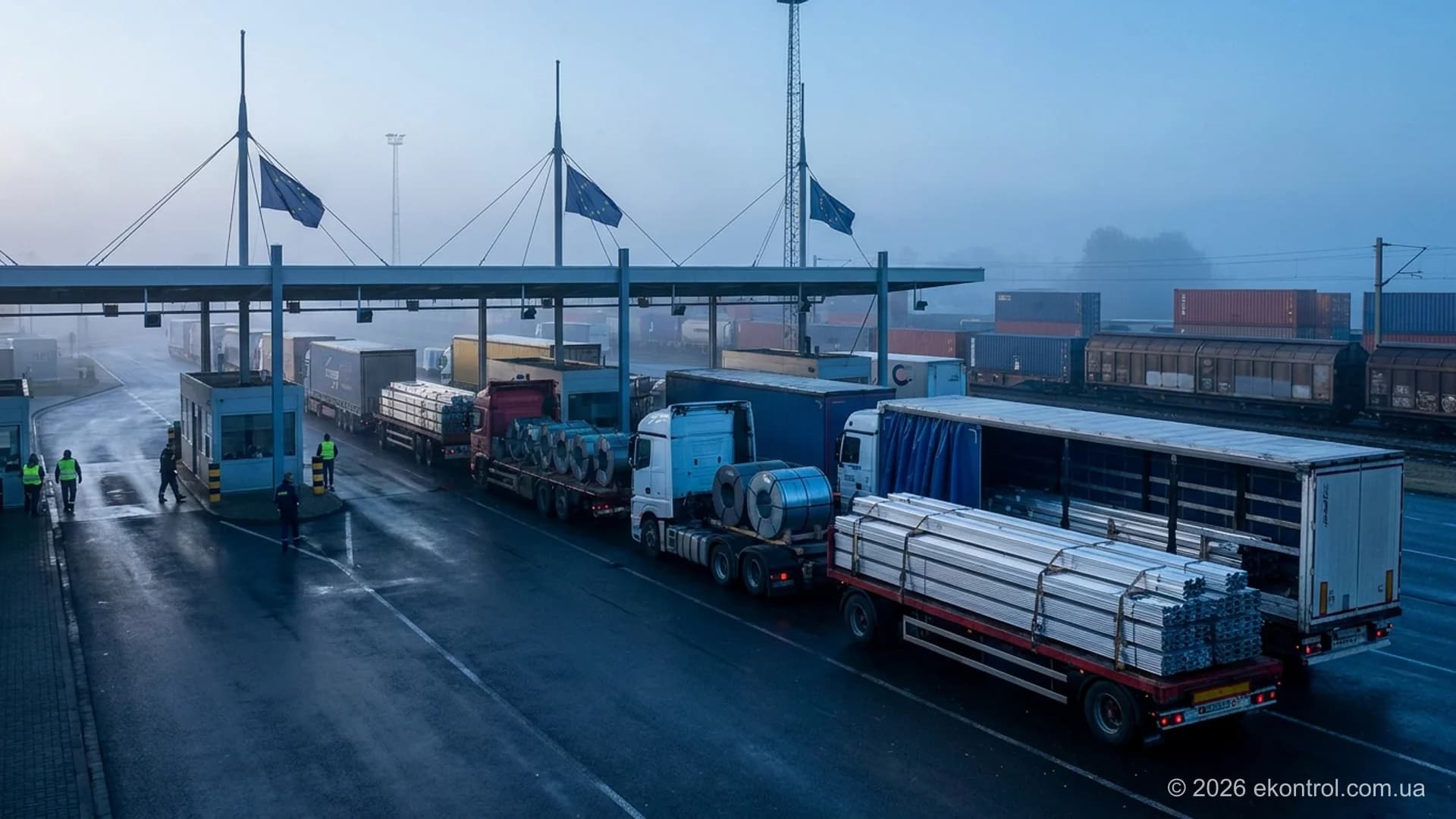

GMP+ Feed Certification 2026 Update Architecture: S9.1 Change List, FSA Module, and FRA Audit Durations
The regulatory package for the GMP+ Feed Certification scheme (GMP+ FC 2020), announced by GMP+ International on February 17, 2026 and formally published on Monday, March 2, 2026, initiates a mandatory one-year transition window for every certified feed chain operator worldwide. Full operational compliance is required by March 2, 2027. For Ukrainian inland and port grain elevators, oilseed crushing plants, compound feed mills, premix manufacturers, and bulk road carriers, these revisions directly reshape what certification body inspectors verify during surveillance and recertification audits. Updating a few paragraphs in your Feed Safety Manual won't pass muster when auditors check procurement dossiers, grain dryer burner records, laboratory registration, and road transport logs.
The GMP+ FC 2020 framework operates across two distinct modules: Feed Safety Assurance (FSA), which governs biological, chemical, and physical hazard control built on HACCP principles, and Feed Responsibility Assurance (FRA), which covers responsible soy sourcing, GMO-controlled supply chains, and carbon footprint data across feed materials. Every normative and editorial revision published on March 2, 2026 is cataloged in scheme document S9.1 List of changes GMP+ FC scheme 2020. Within S9.1, updates are divided into textual clarifications (which tighten audit evidence expectations without altering the underlying requirement) and substantive normative changes that require modifying your HACCP hazard analysis, supplier qualification matrix, or sampling frequency.
Revised Minimum Audit Durations in CR3.0 and Mandatory Harmonisation Materials
Under certification rules CR2.0 Assessment and Certification of Feed Safety Assurance and CR3.0 Assessment and Certification of Feed Responsibility Assurance, the 2026 revision introduces updated minimum audit duration tables (Minimum Audit Time) for the FRA module and combined FSA+FRA assessments. Previously, multi-scope facilities often expected downward rounding of audit person-days when combining schemes. Under the updated CR3.0 tables, on-site audit duration scales directly with the number of processing lines, the volume of transactions managed under mass balance or physical segregation (such as MI5.1 Production and Trade of RTRS soy or MI5.4 GMO controlled standards), and active Gatekeeper scopes.
At the same time, GMP+ International overhauled its auditor examination system and rolled out mandatory Harmonisation Materials for certification bodies. Why does this matter when you book audit support or prepare your internal quality team? Auditors across different certification bodies now grade evidence against identical case studies. If your plant's procedure for triggering an Early Warning System (EWS) report or inspecting a bulk trailer's previous three loads lacks verifiable records, the inspector is bound by harmonisation rules to issue a Major Nonconformity.
TS1.2 Purchase Updates and Gatekeeper Protocols for Ukrainian Grain and Oilseed Meal Exporters
Technical Specification TS1.2 Purchase acts as the perimeter firewall of the GMP+ supply chain: a certified company may purchase feed materials, feed additives, premixes, compound feed, and storage or transport services solely from suppliers holding an active GMP+ FSA certificate or an approved equivalent scheme certificate (Ovocom FCA, QS, AIC TASCC/UFAS/FEMAS, Pastus+, Qualimat). You must verify each supplier's certification scope and status in the GMP+ International company database prior to contract execution and re-verify status according to your documented supplier monitoring schedule.
In Ukraine's agricultural export sector, primary production presents a structural reality: the vast majority of arable farms and many inland country elevators aren't GMP+ certified. To legally bring Ukrainian maize, wheat, barley, soybeans, or rapeseed into the certified European feed chain, a grain trader, port terminal, or oilseed crushing plant must act as a Gatekeeper under the specific annexes of TS1.2 Purchase.
Engineering Gatekeeper Protocol for Unprocessed Grains, Oilseeds, and Legumes
Acting as a Gatekeeper under section 4.3.1 of TS1.2 (covering unprocessed agricultural grains, oilseeds, and pulses) transfers full legal and toxicological liability for raw material safety onto the certified buyer. The 2026 update tightens traceability and analytical release rules for every lot entering the chain through a Gatekeeper facility:
- Contractual Quality Agreement and Grower Declaration: Before intake, the Gatekeeper signs a supply specification with the farm or uncertified elevator defining maximum moisture, foreign matter, absence of chemically dressed seed grain (
TS1.4), applied plant protection products and fumigants, and the thermal drying technology used. - Hazard Risk Assessment via Feed Support Products (FSP): Your quality engineer cross-references the crop and country of origin against GMP+
Risk AssessmentsandFSPfact sheets. For Ukrainian maize, the hazard profile targets aflatoxin B1, deoxynivalenol (DON), zearalenone (ZEA), and fumonisins (B1+B2); for oilseeds, it targets pesticide residues, heavy metals, and drying-derived polycyclic aromatic hydrocarbons (PAHs) and dioxins. - Positive Release Quarantine and Representative Sampling: Incoming lots from uncertified suppliers can't be commingled in silos with certified stock until intake verification is complete. Trained samplers collect incremental and aggregate samples strictly under
TS1.6(harmonized with Regulation (EC) No 152/2009 and ISO 24333), log the sampling certificate, and seal a retained reference sample. - Analytical Clearance via a GMP+ B11 Registered Laboratory: Critical contaminants must be tested in a
GMP+ B11registered testing laboratory accredited to ISO/IEC 17025. Only after the certificate of analysis confirms that all parameters sit belowTS1.5thresholds may the authorized quality manager lift quarantine and release the batch asGMP+ FSA assured.
Fair warning: the standard grain Gatekeeper protocol in section 4.3.1 applies only to unprocessed primary agricultural commodities. If your company purchases processed feed materials such as sunflower meal, soybean meal, expeller cake, vegetable crude oil, former foodstuffs, or feed additives from a non-certified producer, TS1.2 requires a specialized Gatekeeper dossier, an on-site supplier audit against GMP+ checklists, and, for specific categories, prior written exemption approval from your certification body and GMP+ International. During a pre-certification diagnostic audit, Ekontrol lead auditors regularly catch exporters attempting to clear uncertified oilseed meal under the raw grain Gatekeeper clause, which triggers an immediate Major Nonconformity.
| GMP+ FC 2020 Document | Regulatory Scope | Normative Changes Effective March 2, 2026 | Operational Impact on Certified Facilities | Mandatory Audit Evidence Required | Nonconformity Classification |
|---|---|---|---|---|---|
| S9.1 and CR2.0 / CR3.0 | Scheme change list, FSA and FRA certification rules | Updated minimum audit times for the FRA module, revised auditor examination, and mandatory Harmonisation Materials | Recalculation of surveillance and recertification person-days, stricter uniform evidence grading by CB auditors | Documented S9.1 gap analysis matrix, updated CB audit schedule, HACCP team training records | Major NCR if S9.1 changes are not analyzed and implemented by March 2, 2027 |
| TS1.2 Purchase | Sourcing of raw materials, additives, services, and Gatekeeper protocols | Clarified Gatekeeper boundaries for unprocessed crops versus processed feed materials and additives | Overhaul of farmer and elevator supply contracts, ban on clearing uncertified meal via raw grain Gatekeeper rules | Supplier certificate verification log, Gatekeeper dossiers, quarantine release logs, B11 CoAs | Major NCR and certificate suspension risk for purchasing outside TS1.2 rules |
| TS1.4 Forbidden Products & Fuels | Prohibited feed materials and fuels for direct-contact drying | Expanded negative list of forbidden substances and stricter verification of direct-firing grain dryer fuels | Elimination of unapproved solid or waste fuels in direct dryers, transition to natural gas/LPG or indirect heat exchangers | Fuel quality certificates, burner maintenance logs, PAH4 and dioxin test reports on dried grain | Critical / Major NCR with immediate batch quarantine and EWS notification |
| TS1.5 Specific Feed Safety Limits | Maximum permitted levels and Action / Rejection Limits | Refined toxicological thresholds for aflatoxin B1, dioxins, PCBs, heavy metals, pesticides, and botanical impurities | Mandatory mathematical normalization of lab results to 12% reference moisture before batch disposition | Raw material and finished feed specifications incorporating the 12% moisture conversion equation | Major NCR for releasing lots above limits or failing to normalize moisture to 12% |
| TS1.6 Monitoring and TS1.7 EWS | Monitoring plans, sampling frequencies, database reporting, and EWS | Updated regional risk profiles, sampling equations, and 12-hour EWS reporting workflow | Higher testing frequencies for high-risk maize and vegetable oils, immediate lockdown of nonconforming lots | Approved Monitoring Plan, ISO 24333 sampling logs, GMP+ Monitoring Database uploads, EWS records | Major NCR for missed mandatory monitoring protocols or EWS reporting delays beyond 12 hours |
| TS3.3 Road Transport and IDTF | Bulk road transport of solid and liquid feed materials | Updated cargo classifications in the IDTF database and stricter enforcement of cleaning regimes A, B, C, D | Mandatory verification of at least 3 previous loads prior to loading, physical compartment inspection | Vehicle logbooks showing 3 prior loads, cleaning station certificates, LCI/LCID inspection reports | Major NCR for loading after a Regime D cargo or without verified Regime C disinfection |
| GMP+ B11 / TS1.2 Lab Rules | Laboratory registration and analytical performance criteria | Strict verification of GMP+ Registered Laboratory status, LOQ, recovery, HorRat, and PT rounds under ISO/IEC 17025 | Rejection of CoAs from unaccredited or non-B11 laboratories for statutory TS1.6 monitoring parameters | Active GMP+ B11 registry listing, NAAU / EA MLA ISO/IEC 17025 accreditation scope | Major NCR: non-B11 analytical certificates are deemed invalid for TS1.6 compliance |
TS1.4 Forbidden Products & Fuels Revision: Prohibited Materials and Direct-Firing Grain Drying Rules
Technical Specification TS1.4 Forbidden Products and Fuels establishes the hard red lines of the GMP+ scheme. Any introduction of a substance from the Forbidden List into the feed stream permanently strips the affected lot of feed-grade status and mandates disposal or diversion outside the feed and food chains. In the March 2, 2026 update package, GMP+ International expanded and clarified several entries following European RASFF alerts and EWS investigations.
Materials strictly prohibited across all feed operations include:
- Seed grain and oilseeds treated with plant protection products (seed dressings): Even a handful of dyed kernels coated with fungicide or insecticide dressings (such as thiamethoxam, imidacloprid, fludioxonil, or tebuconazole) discovered in a tipper truck bed or elevator intake pit contaminates the entire load.
- Animal by-products and catering waste: Processed animal proteins (outside explicitly authorized, physically segregated fishmeal or non-ruminant channels), all catering and kitchen waste (
Catering Waste), digestive tract contents, and treated hides or leather shavings. - Sewage sludge and municipal solid waste: Sludges from urban or industrial wastewater treatment plants, regardless of thermal or biological treatment, along with solid urban waste.
- Wood and plant residues treated with preservatives: Sawdust, woodchips, or hulls treated with creosote, pentachlorophenol, copper-chrome-arsenate, or surface coatings and paints.
- Packaging remnants and industrial processing waste: Plastic film fragments, aluminum foil, rubber, and spent mineral lubricants originating from unpacking former foodstuffs or industrial equipment.
Thermodynamics and Chemistry of Direct Grain Drying Under TS1.4
The second pillar of TS1.4 directly impacts Ukrainian grain elevators drying high-moisture maize (harvested at 22% to 30% moisture) and sunflower seed. In a direct-firing grain dryer (Direct Drying), combustion flue gases from the burner mix directly with ambient dilution air and pass through the moving grain column. Whenever combustion is incomplete or the fuel contains halogens, sulfur, heavy metals, or aromatic hydrocarbons, the outer pericarp of the grain kernel acts as a chemical adsorbent. Soot and flue gas condensates deposit polycyclic aromatic hydrocarbons (PAHs, specifically benzo[a]pyrene and the sum of PAH4: benzo[a]pyrene, chrysene, benz[a]anthracene, and benzo[b]fluoranthene) alongside polychlorinated dibenzo-p-dioxins and dibenzofurans (PCDD/Fs) directly onto the feed material.
Under TS1.4 Forbidden Products and Fuels, the following fuels are strictly prohibited in direct-drying installations for feed materials:
- Hard coal, lignite, anthracite, peat, and derived briquettes.
- Waste engine oils, hydraulic fluids, pyrolysis oil from scrap tires, and high-sulfur heavy fuel oil (mazut).
- Demolition wood, railway sleepers, particleboard (MDF/chipboard), and any chemically treated or painted timber.
- Municipal waste, plastics, printed paper waste, and unverified agricultural biomass pellets with elevated chlorine or ash content.
If an elevator operates biomass furnaces burning woodchips, sunflower husk pellets, or straw briquettes, the only compliant engineering design during implementation of TS1.4 is installing an indirect heat exchanger (Indirect Drying). In an indirect system, combustion flue gases are vented through an isolated exhaust stack and never touch the grain, while only clean heated ambient air enters the drying shaft. Facilities operating direct-firing burners on natural gas or liquefied petroleum gas (LPG) must perform annual instrumental burner tuning (measuring $CO$, $NO_x$, and Bacharach soot index) and include annual PAH4 and dioxin testing of dried grain in their TS1.6 monitoring plan.
Audit Red Flag: Direct-Firing Biomass Burners and Heat Exchanger Integrity on Grain Elevators
Burning sunflower husk pellets, straw, or woodchips in direct-contact grain dryers without an indirect heat exchanger elevates benzo[a]pyrene and PAH4 levels in maize and oilseed meal to 5 to 15 times the permitted threshold. During a GMP+ audit, the inspector walks the dryer gallery, inspects the burner manifold and fuel purchase invoices, and requests annual leak-test certificates for heat exchanger tubes. Finding cracked heat exchanger welds or soot carryover on dried kernels triggers an immediate Major Nonconformity and mandatory EWS evaluation.
TS1.5 Specific Feed Safety Limits: Aflatoxin B1, Dioxins, Heavy Metals, and Pesticide Thresholds
Technical Specification TS1.5 Specific Feed Safety Limits codifies quantitative maximum permitted levels for undesirable substances in feed materials and compound feeds, aligned with European Union feed hygiene legislation and the FAO/WHO Codex Alimentarius Code of Practice on Good Animal Feeding (CXC 54-2004). Across most contaminants in the GMP+ scheme, two operational thresholds govern quality decisions:
- Action Limit: An early-warning threshold. Exceeding the Action Limit requires an immediate internal root-cause investigation (reviewing crop origin, storage aeration, or drying parameters), supplier notification, and increased sampling frequency on subsequent deliveries.
- Rejection Limit: The statutory maximum permitted level. Any lot exceeding the
Rejection Limitis unfit for feed use, must be placed under immediate physical quarantine, and triggers mandatory 12-hourEWSreporting underTS1.7.
Mathematical Normalization to 12% Reference Moisture
All numerical thresholds in TS1.5 (except those for liquid oils and fats) are expressed on a 12% reference moisture basis (corresponding to 88% dry matter). Because testing laboratories frequently report concentrations on an as-received moisture basis or on a 100% dry matter basis, your quality team must normalize every analytical result before comparing it against TS1.5 limits:
$$C_{12%} = C_{\text{measured}} \times \frac{88}{100 - W_{\text{actual}}}$$
where $C_{12%}$ is the moisture-normalized concentration at 12% moisture, and $C_{\text{measured}}$ is the laboratory value measured at actual sample moisture $W_{\text{actual}}$ (in percent). For example, if a lot of wet maize received from the field ($W_{\text{actual}} = 21%$) tests at 0.0046 mg/kg (4.6 ppb) for aflatoxin B1 on an as-is basis, normalizing to 12% moisture yields $0.0046 \times (88 / 79) = 0.00512\text{ mg/kg}$ (5.12 ppb), which breaches the 0.005 mg/kg Rejection Limit for dairy feed materials.
Core Contaminant Thresholds Under TS1.5 in 2026
The March 2, 2026 revision refines limit tables and analytical footnotes across four priority contaminant groups:
- Mycotoxins (Specifically Aflatoxin B1): For general feed materials, the
Rejection Limitfor aflatoxin B1 is0.020 mg/kg(20 ug/kgor20 ppb). However, for maize and oilseed meals supplied to compound feed mills producing dairy cattle rations,TS1.5enforces a stringent0.003 mg/kg(3 ppb) Action Limit and a0.005 mg/kg(5 ppb) Rejection Limit. This strict cap prevents metabolic carry-over (1% to 6%) of aflatoxin B1 into aflatoxin M1 in raw cow's milk. Guidance values for deoxynivalenol (DON) sit at8.0 mg/kgin cereal feed materials, zearalenone (ZEA) at2.0 to 3.0 mg/kgin maize products, and ochratoxin A at0.25 mg/kg. - Dioxins and Polychlorinated Biphenyls (PCBs): For feed materials of plant origin (grains, oilseeds, sunflower and soybean meal), the
Rejection Limitfor the sum of polychlorinated dibenzo-p-dioxins and dibenzofurans (PCDD/Fs) is0.75 ng WHO-PCDD/F-TEQ/kg(Action Limit0.50 ng/kg), while the sum of dioxins and dioxin-like PCBs (dl-PCBs) is capped at1.25 ng WHO-PCDD/F-PCB-TEQ/kg. For vegetable oils and fats, the dioxin limit is0.75 ng/kg, the sum of dioxins plusdl-PCBsis1.50 ng/kg, and non-dioxin-like indicator PCBs (ndl-PCBs, sum of congeners PCB 28, 52, 101, 138, 153, and 180) are limited to10 ug/kg. - Heavy Metals and Fluorine: In plant-derived feed materials,
Rejection Limitsat 12% moisture are10.0 mg/kgfor Lead (Pb,Action Limit5.0 mg/kg),1.0 mg/kgfor Cadmium (Cd,Action Limit0.50 mg/kg),2.0 mg/kgfor total Arsenic (As),0.10 mg/kgfor Mercury (Hg), and150 mg/kgfor Fluorine (F). - Pesticide Residues and Botanical Impurities: Pesticide residues must comply with statutory Maximum Residue Levels (
MRLs) under Regulation (EC) No 396/2005 adjusted for processing concentration factors (with strict scrutiny on banned organophosphates such as chlorpyrifos and chlorpyrifos-methyl at the0.01 mg/kgdefault limit, pirimiphos-methyl, glyphosate, and haloxyfop-P in sunflower oil and meal). For noxious botanical impurities underTS1.5, common ragweed seeds (Ambrosia artemisiifolia) are capped at50 mg/kg, thorn apple (Datura stramonium) at1000 mg/kg, and rye ergot (Claviceps purpurea) at1000 mg/kg.
TS1.6 Monitoring and TS1.7 Monitoring Results: Sampling Equations and 12-Hour EWS Notification
Incorporating TS1.5 limits into your product specifications won't protect your certificate if your sampling technique misses localized contamination pockets. Technical Specification TS1.6 Monitoring requires every GMP+ certified participant to maintain a risk-based annual Monitoring Plan that integrates mandatory target protocols (Aflatoxin B1 in Maize, Dioxins and PCBs in Oils and Fats, and Crop Processing protocols).
Representative Sampling Physics Under Regulation (EC) No 152/2009 and ISO 24333
In bulk grain and oilseed meal testing, up to 85% of total measurement variance for mycotoxins originates during primary sampling and sample division rather than inside the analytical instrument. Aspergillus flavus and Fusarium molds colonize grain bulks in isolated thermal and moisture hotspots. Scooping a 1 kg grab sample from the top of a truck bed has zero validity during a GMP+ audit.
Under TS1.6, bulk lots must be sampled using an automated cross-cut stream sampler on the conveyor belt or a multi-aperture pneumatic/mechanical spear across the full depth of the compartment. The required number of incremental samples (Incremental Samples) and aggregate sample mass (Aggregate Sample) follow strict mathematical rules:
- For bulk lots between 50 and 500 metric tons: the minimum number of incremental samples equals $\sqrt{20 \times M}$ (where $M$ is lot weight in metric tons), up to 100 incremental samples depending on the contaminant protocol.
- For ship holds or silo lots exceeding 500 metric tons: the consignment is divided into 500-ton or 1,000-ton sub-lots, and 100 incremental samples are drawn per sub-lot.
- For aflatoxin B1 monitoring in maize, the aggregate sample must weigh at least 10 kg (100 incremental samples of 100 g each). The entire 10 kg aggregate sample must be finely ground and homogenized (via dry milling or wet slurry mixing) before splitting out the analytical test portion. Splitting whole kernels down to a 500 g bag on a riffle divider prior to grinding invalidates the test under
TS1.6.
TS1.7 Monitoring Results Database and the 12-Hour EWS Protocol
Technical Specification TS1.7 Monitoring Results governs two mandatory post-analysis obligations. First, analytical data generated under mandatory TS1.6 monitoring protocols must be uploaded to the GMP+ Monitoring Database and shared with downstream buyers where required by crop-specific protocols.
Second, whenever a confirmed laboratory result (normalized to 12% moisture) exceeds a Rejection Limit in TS1.5 or reveals a prohibited substance under TS1.4, the certified company must execute the Early Warning System (EWS) protocol within 12 hours of result confirmation:
- Immediate Physical and ERP Quarantine: The nonconforming silo cell, warehouse bay, or oil tank is locked in your ERP/WMS software and physically tagged on the shop floor.
- 12-Hour EWS Notification Submission: The official EWS notification form is transmitted within 12 hours to GMP+ International, your Certification Body, and the national competent authority (in Ukraine, the State Service of Ukraine on Food Safety and Consumer Protection (SSUFSCP) under Article 20 of the Law of Ukraine On Feed Safety and Hygiene No. 2264-VIII).
- Downstream Customer Notification and Recall: If any portion of the contaminated lot has already been dispatched, all buyers and transport operators must be notified immediately to halt feeding or processing.
- Statutory Prohibition on Dilution (
Ban on Dilution): Blending a contaminated lot (for example, maize at12 ppbaflatoxin B1) with clean grain (1 ppb) to bring the weighted average below5 ppbis strictly illegal under EU feed regulations andGMP+ FC 2020, resulting in immediate certificate withdrawal.
| Contaminant and Feed Matrix | TS1.5 Action Limit (at 12% Moisture) | TS1.5 Rejection Limit (at 12% Moisture) | Reference Analytical Method (GMP+ B11 Lab) | Required Limit of Quantification (LOQ) | Mandatory TS1.7 Action Above Rejection Limit |
|---|---|---|---|---|---|
| Aflatoxin B1 in maize and dairy cattle feed materials | 0.003 mg/kg (3.0 ug/kg) | 0.005 mg/kg (5.0 ug/kg) | LC-MS/MS or HPLC-FLD with immunoaffinity column cleanup | LOQ <= 0.001 mg/kg (1.0 ug/kg) | Silo quarantine, 12-hour EWS filing, strict ban on blending, diversion only via approved detoxification or non-dairy channel |
| Aflatoxin B1 in general feed materials | 0.010 mg/kg (10.0 ug/kg) | 0.020 mg/kg (20.0 ug/kg) | LC-MS/MS or HPLC-FLD (ISO 17375) | LOQ <= 0.002 mg/kg (2.0 ug/kg) | Batch lockdown, 12-hour EWS notification to GMP+ International, CB, and SSUFSCP |
| Dioxins (sum of PCDD/Fs) in meals, grains, and oils | 0.50 ng WHO-PCDD/F-TEQ/kg | 0.75 ng WHO-PCDD/F-TEQ/kg | High-resolution gas chromatography / high-resolution mass spectrometry (GC-HRMS or GC-MS/MS) | LOQ sufficient to quantify 0.20 ng TEQ/kg reliably | Tank/lot quarantine, 12-hour EWS report, root-cause investigation of dryer fuel or thermal heating fluids |
| Sum of dioxins and dioxin-like PCBs (dl-PCBs) in vegetable oils | 1.00 ng WHO-PCDD/F-PCB-TEQ/kg | 1.50 ng WHO-PCDD/F-PCB-TEQ/kg (1.25 ng/kg in meals) | GC-HRMS or GC-MS/MS per Regulation (EU) 2017/771 | LOQ <= 1/5 of the maximum level per congener | Halt tanker loading, file 12-hour EWS, trace crude pressing and solvent extraction batches |
| Lead (Pb) and Cadmium (Cd) in plant feed materials | Pb: 5.0 mg/kg; Cd: 0.50 mg/kg | Pb: 10.0 mg/kg; Cd: 1.0 mg/kg | Inductively Coupled Plasma Mass Spectrometry (ICP-MS) or AAS (EN 15763) | LOQ <= 0.20 mg/kg for Pb; LOQ <= 0.05 mg/kg for Cd | Isolate lot, submit 12-hour EWS, audit supplier soil background and mineral fertilizer inputs |
| Arsenic (As) and Mercury (Hg) in plant feed materials | As: 1.5 mg/kg; Hg: 0.07 mg/kg | As: 2.0 mg/kg; Hg: 0.10 mg/kg | ICP-MS or Hydride/Cold-Vapor AAS (EN 16277) | LOQ <= 0.10 mg/kg for As; LOQ <= 0.01 mg/kg for Hg | Quarantine lot, file 12-hour EWS, perform unannounced supplier origin review |
| Chlorpyrifos, chlorpyrifos-methyl, and pesticide residues | 50% to 80% of statutory MRL | Statutory MRL per Regulation (EC) No 396/2005 (0.01 mg/kg default for banned active substances) | QuEChERS multi-residue extraction with LC-MS/MS and GC-MS/MS (EN 15662) | LOQ <= 0.005 to 0.010 mg/kg | Block export dispatch, file 12-hour EWS, revoke grower qualification under TS1.2 |
Engineering Rule for LIMS Moisture Normalization and Retained Reference Samples
When assembling export vessels of maize or sunflower meal at Ukrainian port terminals, Ekontrol engineers configure the Laboratory Information Management System (LIMS) to calculate 12% moisture-normalized values automatically alongside expanded measurement uncertainty. In addition, every >= 10 kg aggregate sample, once fully ground and homogenized, must be divided into an analytical subsample for the GMP+ B11 laboratory and a tamper-evident sealed reference sample stored in a cool, dark archive below +15 degrees Celsius for at least 6 months (or the full shelf life of the feed).
Need a Gap Audit or Turnkey Transition to the 2026 GMP+ Requirements?
Ekontrol lead engineers audit your TS1.2-TS3.3 procedures, configure Gatekeeper and monitoring protocols, and prepare your elevator, crushing plant, or transport fleet for zero-nonconformity certification.
Book an Expert ConsultationGMP+ B11 Registered Laboratory Rules and ISO/IEC 17025 Testing Laboratory Accreditation
A frequent source of Major Nonconformities during GMP+ audits in Ukraine involves laboratory qualification. Quality managers often assume that running tests in an on-site elevator lab equipped with an ELISA reader or outsourcing samples to any general commercial lab satisfies TS1.6. Under GMP+ FC 2020 (TS1.2 Purchase and GMP+ B11 Registered Laboratory / TS4.2), all statutory analyses for critical contaminants required under TS1.6 (aflatoxin B1, dioxins and dioxin-like PCBs, non-dioxin-like PCBs, heavy metals and fluorine, and pesticides) must be conducted exclusively by a GMP+ Registered Laboratory (B11).
Analytical Performance Criteria and ISO/IEC 17025 Accreditation (NAAU / EA MLA)
For a testing laboratory to achieve and maintain GMP+ B11 registration in the GMP+ International registry, it must satisfy three strict metrological pillars:
- Active ISO/IEC 17025 Accreditation: The laboratory must hold valid accreditation from a national accreditation body that is a signatory to the
ILAC MRAandEA MLAmultilateral recognition arrangements, such as the National Accreditation Agency of Ukraine (NAAU). Crucially, the exact analyte (for example, aflatoxin B1 byLC-MS/MSor cadmium and lead byICP-MS) and the corresponding feed matrix (cereals, oilseed meals, vegetable oils) must be explicitly listed on the laboratory's accredited scope schedule. - Validated Method Performance Criteria (
Performance Criteria): Analytical methods underGMP+ B11must achieve a Limit of Quantification (LOQ) no higher than0.4times the applicableAction LimitinTS1.5. Spike recovery rates must remain within 70% to 120% (or 50% to 120% for ultra-trace dioxin and mycotoxin ranges), and inter-laboratory reproducibility precision (HorRat, defined as observed $RSD_R$ divided by the Horwitz-Thompson predicted value) must not exceed2.0. - Mandatory Annual Proficiency Testing (
PT): EveryGMP+ B11registered laboratory must participate annually in proficiency testing schemes accredited to ISO/IEC 17043 for each registered parameter. Any questionable or unsatisfactory PT result ($|z\text{-score}| > 2.0$, and especially $|z\text{-score}| \ge 3.0$) requires a documented root-cause investigation, chromatographic recalibration, and verification by the certification body before the laboratory can continue issuing GMP+ compliant reports.
Separating Elevator Rapid Screening from Statutory B11 Release Certificates
Does the GMP+ B11 mandate prohibit your elevator's intake lab from using lateral flow strip tests (LFD) or ELISA kits at the weighbridge? Not at all. Rapid immunoassays remain essential for real-time truck sorting during harvest peaks. However, your Feed Safety Management System must draw a sharp operational boundary: internal rapid screening results serve only for internal bin segregation and cannot be counted toward your mandatory TS1.6 monitoring frequency or used to clear a Gatekeeper quarantine lot. Whenever a rapid strip test approaches or exceeds the Action Limit (0.003 mg/kg for aflatoxin B1), the lot must be quarantined and a homogenized sample dispatched to an ISO/IEC 17025 accredited GMP+ B11 laboratory for confirmatory chromatographic analysis (LC-MS/MS or HPLC-FLD).
TS3.3 Road Transport and IDTF Logistics Control: Cleaning Regimes A, B, C, D and Prohibited Loads
Cross-contamination of bulk feed materials inside grain tippers, walking-floor trailers, silo tankers, and liquid oil road tankers ranks as the second leading cause of European EWS alerts. Technical Specification TS3.3 Road Transport (corresponding to GMP+ B4 Transport) and the International Database Transport for Feed (IDTF) define mandatory engineering controls for every vehicle entering a certified feed chain.
Every commodity previously carried in a loading compartment is assigned a unique IDTF number and one of four mandatory cleaning and disinfection regimes prior to loading feed materials:
- Regime A (
Dry Cleaning): Thorough dry mechanical cleaning (sweeping, industrial vacuuming, or compressed-air blowing) following dry, non-hazardous neutral loads such as untreated food/feed grains. - Regime B (
Cleaning with Water): Wet washing of walls, floors, tarpaulins, and discharge slides using potable water (with an approved food-grade detergent where sticky or dusty residues exist), required after cargoes such as specific mineral fertilizers, road salt, or wet beet pulp. - Regime C (
Cleaning and Disinfection): Complete wet detergent washing followed by chemical disinfection using an approved biocide and final rinsing with potable water. Regime C is mandatory after loads carrying microbiological hazards (Salmonella, molds) or restricted feed ingredients. - Regime D (
Forbidden Previous Load): Strictly prohibited previous cargo. Any compartment that has carried a Regime D substance (mineral oils, petrochemicals, toxic chemicals, treated seeds, Category 1-2 animal by-products, municipal sewage sludge, crushed glass, or radioactive materials) is barred from carrying feed. Re-admitting a trailer after a Regime D load requires a formal multi-stage decontamination procedure (including seal replacement) followed by physical inspection and sign-off by an accredited inspection body issuing an officialLCI/LCID/LCIAS(Loading Compartment Inspection) certificate.
Verifying the Previous Three Loads and Inspecting Dead Zones Before Loading
The 2026 update reinforces gate-control verification of the vehicle's Transport Logbook before any truck is spotted under a loading spout at a certified elevator or crushing plant. Prior to loading, your dispatch inspector must:
- Verify at least the previous three loads in chronological order in the vehicle's logbook, recording the exact commodity name and
IDTFcode for each haul. - Confirm that the executed cleaning regime (
A,B, orC) matches or exceeds theIDTFrequirement for the prior loads, and for RegimesBandC, inspect the original washing station certificate (verifying wash water temperature, detergent and disinfectant names and concentrations, date, time, and post-wash security seal numbers). - Conduct a physical climb-up or hatch inspection of the empty compartment, checking dead zones (corner welds, bulkhead ribs, auger troughs, discharge valves, and tarpaulin undersides) to confirm the compartment is visibly clean, completely dry, and free of foreign odors or cargo remnants. Both the plant inspector and the driver must sign the loading inspection record before loading starts.
Integrating GMP+ FC 2020 with ISO 22000, FSSC 22000 Category D, and ISCC EU at Agro-Processing Plants
Ukrainian oilseed crushing plants, soybean and rapeseed processors, compound feed mills, and port grain terminals rarely operate under a single certification scheme. A typical export crushing facility simultaneously ships crude or refined sunflower and rapeseed oil to food manufacturers (requiring ISO 22000 or FSSC 22000), supplies technical vegetable oil and maize to European biodiesel and bioethanol refineries (requiring ISCC EU sustainability certification under Directive RED III), and exports pelleted oilseed meal and cake to European compound feed groups under GMP+.
Maintaining three or four disconnected quality manuals creates document drift and buries production engineers, lab staff, and procurement officers in duplicate paperwork. During turnkey implementation, Ekontrol architects a single Integrated Management System (IMS) where every scheme shares a unified operational backbone.
Shared Core Across ISO 22000, FSSC 22000 Category D (ISO/TS 22002-6), and GMP+ FSA
The GMP+ FC 2020 standard (R1.0 Feed Safety Management Systems Requirements) is built directly on the high-level structure of ISO 22000 and Codex Alimentarius HACCP principles. If your facility already holds FSSC 22000 certification (under food chain Category C for vegetable oil production or Category D for animal feed production governed by Prerequisite Program specification ISO/TS 22002-6), over 75% of your system architecture is already in place:
- Unified Policy, Organizational Context, and Food/Feed Safety Team: One multidisciplinary HACCP/FSMS team (comprising the chief technologist, chief engineer, laboratory head, elevator superintendent, and logistics manager) governs both food and feed product streams.
- Harmonized Prerequisite Programs (
PRPs): Pest control, sanitation and CIP/dry-cleaning schedules, metrological calibration of weighbridges and thermal sensors, glass and brittle plastic control, allergen management, and site security (Food/Feed DefenseandFood/Feed Fraud Mitigationunder FSSC 22000 v6/v7) run on unified standard operating procedures. - GMP+ Specific Engineering Overlays: To make your ISO 22000 / FSSC 22000 system fully compliant with
GMP+ FC 2020, you bolt on theTS1.5specific contaminant limits (with 12% moisture normalization), theTS1.4negative list of prohibited products and direct-drying fuels,TS1.2supplier verification and Gatekeeper protocols,GMP+ B11ISO/IEC 17025 laboratory registration,TS3.3IDTFtransport checks, and the 12-hourTS1.7EWSreporting timer.
Synchronizing Traceability and Mass Balance Between GMP+ FRA and ISCC EU
Integrating the GMP+ FRA responsibility module with ISCC EU delivers immediate operational efficiency for grain traders and oilseed processors:
- Unified Grower Qualification and Land-Use Verification: When qualifying farms under the
TS1.2Gatekeeper protocol and collecting growerSelf-Declarationsunder ISCC EU, your procurement team verifies field coordinates,NUTS2regional emissions status, and protection of high-carbon-stock land (post-2008 deforestation ban) in a single onboarding workflow. - Single Mass Balance Ledger (
Mass Balance): Tracking incoming grain and oilseed tonnages, extraction yield ratios (Conversion Factorsfor oil, meal, and husk), and outgoing dispatches across three-month mass balance periods in one ERP ledger lets your team generateSustainability Declarationsinside the EuropeanUnion Database (UDB)for ISCC EU while simultaneously proving mass balance integrity during combinedGMP+ FSA/FRAaudits.
| Operational Control Domain | GMP+ FC 2020 (FSA & FRA, 2026 Revision) | ISO 22000:2018 (FSMS Core) | FSSC 22000 v6/v7 (Categories C & D) | ISCC EU (RED III & Union Database) | Unified IMS Architecture by Ekontrol |
|---|---|---|---|---|---|
| Supplier Qualification & Raw Material Intake | Purchase from GMP+ certified suppliers or strict TS1.2 Gatekeeper protocol | Supplier evaluation under Clause 7.1.6 and incoming inspection against specs | FSSC Additional Requirement 2.5.1 (management of services/procurement) + VACCP fraud plan | Certified ISCC traders or farms with signed Self-Declarations and NUTS2 land verification | Single grower onboarding dossier covering feed safety, banned seed dressings, and RED III land criteria |
| Contaminant Limits & Laboratory Testing | TS1.5 limits (at 12% moisture), TS1.6 plan, testing strictly in a GMP+ B11 Registered Lab | Verification of CCP and OPRP critical limits under Clauses 8.5 and 8.8 | FSSC 2.5.1 requirement mandating ISO/IEC 17025 accredited laboratories for verification | Laboratory verification of moisture, free fatty acids, and lower heating value for yield checks | Master ISO 24333 sampling schedule routing analytical samples to an ISO/IEC 17025 + GMP+ B11 lab |
| Utilities, Grain Drying & GHG Emissions | TS1.4 ban on toxic fuels in direct dryers, mandatory PAH4 and dioxin verification | Process environment control preventing chemical contamination of product | ISO/TS 22002-1 / 22002-6 engineering controls for steam, air, water, and ventilation | Exact metering of natural gas, electricity, and biomass fuel for processing GHG emissions (E_p) | Integrated dryer utility log satisfying TS1.4 fuel compliance and ISCC EU GHG calculation |
| Bulk Transport & Dispatch Logistics | TS3.3 & IDTF database: check 3 prior loads, cleaning regimes A, B, C, D, and LCI certificates | Transport hygiene controls preventing cross-contamination during dispatch | Transport PRPs plus TACCP tamper-evident sealing and food/feed defense controls | Batch transport traceability recording transport mode and distance for E_td emissions | Unified vehicle gate-check sheet (3 prior IDTF loads + wash certificate + seals + distance log) |
| Traceability & Mass Balance Accounting | 4-hour forward/backward traceability test, mass balance or segregation under FRA module | One-step-back, one-step-forward traceability under Clause 8.3 | Annual traceability and mass balance mock recalls covering packaging and rework | Strict 3-month site mass balance ledger synchronized with Union Database (UDB) entries | Single ERP mass balance matrix with unified conversion factors and 2-hour mock recall drills |
| Incident Response & Product Recall | TS1.7 mandatory 12-hour EWS notification to GMP+ International, CB, and SSUFSCP | Nonconforming product control and withdrawal/recall procedure under Clause 8.9 | FSSC 2.5.5 mandatory CB notification within 3 working days for serious events/recalls | Immediate correction or withdrawal of issued Proofs of Sustainability (POS) in UDB | Master crisis response SOP governed by the strictest timer (12-hour EWS + simultaneous CB notice) |
Engineering Roadmap for the 2026 GMP+ Transition and Turnkey Audit Support with Ekontrol
The one-year transition window running from March 2, 2026 to March 2, 2027 closes faster than most operational teams anticipate, especially across summer grain, rapeseed, sunflower, and autumn maize harvest campaigns. Facilities that postpone updating their procedures until the final month before a surveillance audit run into a hard evidentiary wall: certification body inspectors don't just read updated procedures; they sample months of completed intake logs, GMP+ B11 certificates of analysis, moisture normalization calculations, and IDTF vehicle inspection sheets.
Four-Phase Engineering Transition Plan for GMP+ FC 2020
To pass your 2026-2027 GMP+ surveillance or recertification audit with zero Major Nonconformities, Ekontrol lead engineers structure the transition across four focused phases:
- Phase 1 (Weeks 1-2): S9.1 Gap Analysis, Dryer Fuel Audit, and B11 Laboratory Verification. We perform a clause-by-clause gap audit of your existing Feed Safety Manual against
S9.1 List of changes GMP+ FC scheme 2020. We verify every subcontracted laboratory's activeGMP+ B11listing and ISO/IEC 17025 scope with NAAU, inspect grain dryer burners and heat exchangers againstTS1.4, and audit supplier contracts againstTS1.2. - Phase 2 (Weeks 3-5): Re-Engineering HACCP Plans, TS1.6 Monitoring, and Gatekeeper Dossiers. We update raw material and finished feed specifications with the
TS1.512% moisture normalization formula, recalibrate your annualTS1.6Monitoring Plan, overhaulTS3.3(IDTF) vehicle inspection checklists, and update the 12-hourTS1.7EWSescalation workflow. For facilities holdingGMP+ FRAscopes, we recalculate audit person-days and budgets under the revisedCR3.0tables. - Phase 3 (Weeks 6-10): Shop-Floor Training and Operational Record Accumulation. We train weighbridge samplers, grain dryer operators, logistics dispatchers, and procurement managers directly on the shop floor. Teams practice drawing 10 kg aggregate samples under Regulation (EC) No 152/2009 and ISO 24333, full-sample grinding prior to splitting, and auditing the previous three loads in driver logbooks.
- Phase 4 (Weeks 11-12): Pre-Audit Traceability Stress Test, Mock EWS Drill, and Internal Audit. We execute a rigorous internal audit under ISO 19011 featuring a timed 2-to-3-hour vertical traceability and mass balance stress test (from export bill of lading back to silo logs, drying records,
GMP+ B11CoAs, and farmer Gatekeeper intake tickets) plus a timed 12-hour mockEWSnotification drill.
The engineering team at Ekontrol delivers end-to-end compliance: from an initial diagnostic audit and turnkey implementation of GMP+ (standalone or integrated with ISO 22000, FSSC 22000, and ISCC EU) to preparing testing laboratories for ISO/IEC 17025 and GMP+ B11 registration and providing on-site audit support during your certification body assessment. Reach out via our contact page to request a tailored transition roadmap and fixed-fee proposal for your facility.
Ekontrol Pre-Audit Checklist: 5 Verification Points Before Your 2026-2027 GMP+ Audit
- Confirm in the GMP+ International registry that every external testing laboratory you use holds an active GMP+ B11 Registered Laboratory status for the exact analytes (aflatoxin B1, dioxins, PCBs, heavy metals, pesticides) listed in your TS1.6 Monitoring Plan.
- Verify that all incoming and outgoing analytical results for mycotoxins and heavy metals are mathematically normalized to 12% reference moisture before comparing them against TS1.5 thresholds.
- Audit every grain dryer on site: direct-firing burners must use only TS1.4 approved fuels with annual PAH4 and dioxin verification, while solid-biomass furnaces must operate with leak-tested indirect heat exchangers.
- Sample 20 completed road transport intake files: each file must record at least 3 previous loads with IDTF codes, the verified cleaning regime (A, B, or C), and a signed pre-loading compartment inspection checklist.
- Run a timed mock EWS drill under TS1.7 to prove your team can quarantine a nonconforming lot and compile notifications for GMP+ International, your Certification Body, and the SSUFSCP within the mandatory 12-hour window.

Need a certification consultation?
Free ConsultationOn This Page
- GMP+ Feed Certification 2026 Update Architecture: S9.1 Change List, FSA Module, and FRA Audit Durations
- TS1.2 Purchase Updates and Gatekeeper Protocols for Ukrainian Grain and Oilseed Meal Exporters
- TS1.4 Forbidden Products & Fuels Revision: Prohibited Materials and Direct-Firing Grain Drying Rules
- TS1.5 Specific Feed Safety Limits: Aflatoxin B1, Dioxins, Heavy Metals, and Pesticide Thresholds
- TS1.6 Monitoring and TS1.7 Monitoring Results: Sampling Equations and 12-Hour EWS Notification
- GMP+ B11 Registered Laboratory Rules and ISO/IEC 17025 Testing Laboratory Accreditation
- TS3.3 Road Transport and IDTF Logistics Control: Cleaning Regimes A, B, C, D and Prohibited Loads
- Integrating GMP+ FC 2020 with ISO 22000, FSSC 22000 Category D, and ISCC EU at Agro-Processing Plants
- Engineering Roadmap for the 2026 GMP+ Transition and Turnkey Audit Support with Ekontrol
GMP+ Feed Certification 2026 Update Architecture: S9.1 Change List, FSA Module, and FRA Audit Durations
The regulatory package for the GMP+ Feed Certification scheme (GMP+ FC 2020), announced by GMP+ International on February 17, 2026 and formally published on Monday, March 2, 2026, initiates a mandatory one-year transition window for every certified feed chain operator worldwide. Full operational compliance is required by March 2, 2027. For Ukrainian inland and port grain elevators, oilseed crushing plants, compound feed mills, premix manufacturers, and bulk road carriers, these revisions directly reshape what certification body inspectors verify during surveillance and recertification audits. Updating a few paragraphs in your Feed Safety Manual won't pass muster when auditors check procurement dossiers, grain dryer burner records, laboratory registration, and road transport logs.
The GMP+ FC 2020 framework operates across two distinct modules: Feed Safety Assurance (FSA), which governs biological, chemical, and physical hazard control built on HACCP principles, and Feed Responsibility Assurance (FRA), which covers responsible soy sourcing, GMO-controlled supply chains, and carbon footprint data across feed materials. Every normative and editorial revision published on March 2, 2026 is cataloged in scheme document S9.1 List of changes GMP+ FC scheme 2020. Within S9.1, updates are divided into textual clarifications (which tighten audit evidence expectations without altering the underlying requirement) and substantive normative changes that require modifying your HACCP hazard analysis, supplier qualification matrix, or sampling frequency.
Revised Minimum Audit Durations in CR3.0 and Mandatory Harmonisation Materials
Under certification rules CR2.0 Assessment and Certification of Feed Safety Assurance and CR3.0 Assessment and Certification of Feed Responsibility Assurance, the 2026 revision introduces updated minimum audit duration tables (Minimum Audit Time) for the FRA module and combined FSA+FRA assessments. Previously, multi-scope facilities often expected downward rounding of audit person-days when combining schemes. Under the updated CR3.0 tables, on-site audit duration scales directly with the number of processing lines, the volume of transactions managed under mass balance or physical segregation (such as MI5.1 Production and Trade of RTRS soy or MI5.4 GMO controlled standards), and active Gatekeeper scopes.
At the same time, GMP+ International overhauled its auditor examination system and rolled out mandatory Harmonisation Materials for certification bodies. Why does this matter when you book audit support or prepare your internal quality team? Auditors across different certification bodies now grade evidence against identical case studies. If your plant's procedure for triggering an Early Warning System (EWS) report or inspecting a bulk trailer's previous three loads lacks verifiable records, the inspector is bound by harmonisation rules to issue a Major Nonconformity.
TS1.2 Purchase Updates and Gatekeeper Protocols for Ukrainian Grain and Oilseed Meal Exporters
Technical Specification TS1.2 Purchase acts as the perimeter firewall of the GMP+ supply chain: a certified company may purchase feed materials, feed additives, premixes, compound feed, and storage or transport services solely from suppliers holding an active GMP+ FSA certificate or an approved equivalent scheme certificate (Ovocom FCA, QS, AIC TASCC/UFAS/FEMAS, Pastus+, Qualimat). You must verify each supplier's certification scope and status in the GMP+ International company database prior to contract execution and re-verify status according to your documented supplier monitoring schedule.
In Ukraine's agricultural export sector, primary production presents a structural reality: the vast majority of arable farms and many inland country elevators aren't GMP+ certified. To legally bring Ukrainian maize, wheat, barley, soybeans, or rapeseed into the certified European feed chain, a grain trader, port terminal, or oilseed crushing plant must act as a Gatekeeper under the specific annexes of TS1.2 Purchase.
Engineering Gatekeeper Protocol for Unprocessed Grains, Oilseeds, and Legumes
Acting as a Gatekeeper under section 4.3.1 of TS1.2 (covering unprocessed agricultural grains, oilseeds, and pulses) transfers full legal and toxicological liability for raw material safety onto the certified buyer. The 2026 update tightens traceability and analytical release rules for every lot entering the chain through a Gatekeeper facility:
- Contractual Quality Agreement and Grower Declaration: Before intake, the Gatekeeper signs a supply specification with the farm or uncertified elevator defining maximum moisture, foreign matter, absence of chemically dressed seed grain (
TS1.4), applied plant protection products and fumigants, and the thermal drying technology used. - Hazard Risk Assessment via Feed Support Products (FSP): Your quality engineer cross-references the crop and country of origin against GMP+
Risk AssessmentsandFSPfact sheets. For Ukrainian maize, the hazard profile targets aflatoxin B1, deoxynivalenol (DON), zearalenone (ZEA), and fumonisins (B1+B2); for oilseeds, it targets pesticide residues, heavy metals, and drying-derived polycyclic aromatic hydrocarbons (PAHs) and dioxins. - Positive Release Quarantine and Representative Sampling: Incoming lots from uncertified suppliers can't be commingled in silos with certified stock until intake verification is complete. Trained samplers collect incremental and aggregate samples strictly under
TS1.6(harmonized with Regulation (EC) No 152/2009 and ISO 24333), log the sampling certificate, and seal a retained reference sample. - Analytical Clearance via a GMP+ B11 Registered Laboratory: Critical contaminants must be tested in a
GMP+ B11registered testing laboratory accredited to ISO/IEC 17025. Only after the certificate of analysis confirms that all parameters sit belowTS1.5thresholds may the authorized quality manager lift quarantine and release the batch asGMP+ FSA assured.
Fair warning: the standard grain Gatekeeper protocol in section 4.3.1 applies only to unprocessed primary agricultural commodities. If your company purchases processed feed materials such as sunflower meal, soybean meal, expeller cake, vegetable crude oil, former foodstuffs, or feed additives from a non-certified producer, TS1.2 requires a specialized Gatekeeper dossier, an on-site supplier audit against GMP+ checklists, and, for specific categories, prior written exemption approval from your certification body and GMP+ International. During a pre-certification diagnostic audit, Ekontrol lead auditors regularly catch exporters attempting to clear uncertified oilseed meal under the raw grain Gatekeeper clause, which triggers an immediate Major Nonconformity.
| GMP+ FC 2020 Document | Regulatory Scope | Normative Changes Effective March 2, 2026 | Operational Impact on Certified Facilities | Mandatory Audit Evidence Required | Nonconformity Classification |
|---|---|---|---|---|---|
| S9.1 and CR2.0 / CR3.0 | Scheme change list, FSA and FRA certification rules | Updated minimum audit times for the FRA module, revised auditor examination, and mandatory Harmonisation Materials | Recalculation of surveillance and recertification person-days, stricter uniform evidence grading by CB auditors | Documented S9.1 gap analysis matrix, updated CB audit schedule, HACCP team training records | Major NCR if S9.1 changes are not analyzed and implemented by March 2, 2027 |
| TS1.2 Purchase | Sourcing of raw materials, additives, services, and Gatekeeper protocols | Clarified Gatekeeper boundaries for unprocessed crops versus processed feed materials and additives | Overhaul of farmer and elevator supply contracts, ban on clearing uncertified meal via raw grain Gatekeeper rules | Supplier certificate verification log, Gatekeeper dossiers, quarantine release logs, B11 CoAs | Major NCR and certificate suspension risk for purchasing outside TS1.2 rules |
| TS1.4 Forbidden Products & Fuels | Prohibited feed materials and fuels for direct-contact drying | Expanded negative list of forbidden substances and stricter verification of direct-firing grain dryer fuels | Elimination of unapproved solid or waste fuels in direct dryers, transition to natural gas/LPG or indirect heat exchangers | Fuel quality certificates, burner maintenance logs, PAH4 and dioxin test reports on dried grain | Critical / Major NCR with immediate batch quarantine and EWS notification |
| TS1.5 Specific Feed Safety Limits | Maximum permitted levels and Action / Rejection Limits | Refined toxicological thresholds for aflatoxin B1, dioxins, PCBs, heavy metals, pesticides, and botanical impurities | Mandatory mathematical normalization of lab results to 12% reference moisture before batch disposition | Raw material and finished feed specifications incorporating the 12% moisture conversion equation | Major NCR for releasing lots above limits or failing to normalize moisture to 12% |
| TS1.6 Monitoring and TS1.7 EWS | Monitoring plans, sampling frequencies, database reporting, and EWS | Updated regional risk profiles, sampling equations, and 12-hour EWS reporting workflow | Higher testing frequencies for high-risk maize and vegetable oils, immediate lockdown of nonconforming lots | Approved Monitoring Plan, ISO 24333 sampling logs, GMP+ Monitoring Database uploads, EWS records | Major NCR for missed mandatory monitoring protocols or EWS reporting delays beyond 12 hours |
| TS3.3 Road Transport and IDTF | Bulk road transport of solid and liquid feed materials | Updated cargo classifications in the IDTF database and stricter enforcement of cleaning regimes A, B, C, D | Mandatory verification of at least 3 previous loads prior to loading, physical compartment inspection | Vehicle logbooks showing 3 prior loads, cleaning station certificates, LCI/LCID inspection reports | Major NCR for loading after a Regime D cargo or without verified Regime C disinfection |
| GMP+ B11 / TS1.2 Lab Rules | Laboratory registration and analytical performance criteria | Strict verification of GMP+ Registered Laboratory status, LOQ, recovery, HorRat, and PT rounds under ISO/IEC 17025 | Rejection of CoAs from unaccredited or non-B11 laboratories for statutory TS1.6 monitoring parameters | Active GMP+ B11 registry listing, NAAU / EA MLA ISO/IEC 17025 accreditation scope | Major NCR: non-B11 analytical certificates are deemed invalid for TS1.6 compliance |
TS1.4 Forbidden Products & Fuels Revision: Prohibited Materials and Direct-Firing Grain Drying Rules
Technical Specification TS1.4 Forbidden Products and Fuels establishes the hard red lines of the GMP+ scheme. Any introduction of a substance from the Forbidden List into the feed stream permanently strips the affected lot of feed-grade status and mandates disposal or diversion outside the feed and food chains. In the March 2, 2026 update package, GMP+ International expanded and clarified several entries following European RASFF alerts and EWS investigations.
Materials strictly prohibited across all feed operations include:
- Seed grain and oilseeds treated with plant protection products (seed dressings): Even a handful of dyed kernels coated with fungicide or insecticide dressings (such as thiamethoxam, imidacloprid, fludioxonil, or tebuconazole) discovered in a tipper truck bed or elevator intake pit contaminates the entire load.
- Animal by-products and catering waste: Processed animal proteins (outside explicitly authorized, physically segregated fishmeal or non-ruminant channels), all catering and kitchen waste (
Catering Waste), digestive tract contents, and treated hides or leather shavings. - Sewage sludge and municipal solid waste: Sludges from urban or industrial wastewater treatment plants, regardless of thermal or biological treatment, along with solid urban waste.
- Wood and plant residues treated with preservatives: Sawdust, woodchips, or hulls treated with creosote, pentachlorophenol, copper-chrome-arsenate, or surface coatings and paints.
- Packaging remnants and industrial processing waste: Plastic film fragments, aluminum foil, rubber, and spent mineral lubricants originating from unpacking former foodstuffs or industrial equipment.
Thermodynamics and Chemistry of Direct Grain Drying Under TS1.4
The second pillar of TS1.4 directly impacts Ukrainian grain elevators drying high-moisture maize (harvested at 22% to 30% moisture) and sunflower seed. In a direct-firing grain dryer (Direct Drying), combustion flue gases from the burner mix directly with ambient dilution air and pass through the moving grain column. Whenever combustion is incomplete or the fuel contains halogens, sulfur, heavy metals, or aromatic hydrocarbons, the outer pericarp of the grain kernel acts as a chemical adsorbent. Soot and flue gas condensates deposit polycyclic aromatic hydrocarbons (PAHs, specifically benzo[a]pyrene and the sum of PAH4: benzo[a]pyrene, chrysene, benz[a]anthracene, and benzo[b]fluoranthene) alongside polychlorinated dibenzo-p-dioxins and dibenzofurans (PCDD/Fs) directly onto the feed material.
Under TS1.4 Forbidden Products and Fuels, the following fuels are strictly prohibited in direct-drying installations for feed materials:
- Hard coal, lignite, anthracite, peat, and derived briquettes.
- Waste engine oils, hydraulic fluids, pyrolysis oil from scrap tires, and high-sulfur heavy fuel oil (mazut).
- Demolition wood, railway sleepers, particleboard (MDF/chipboard), and any chemically treated or painted timber.
- Municipal waste, plastics, printed paper waste, and unverified agricultural biomass pellets with elevated chlorine or ash content.
If an elevator operates biomass furnaces burning woodchips, sunflower husk pellets, or straw briquettes, the only compliant engineering design during implementation of TS1.4 is installing an indirect heat exchanger (Indirect Drying). In an indirect system, combustion flue gases are vented through an isolated exhaust stack and never touch the grain, while only clean heated ambient air enters the drying shaft. Facilities operating direct-firing burners on natural gas or liquefied petroleum gas (LPG) must perform annual instrumental burner tuning (measuring $CO$, $NO_x$, and Bacharach soot index) and include annual PAH4 and dioxin testing of dried grain in their TS1.6 monitoring plan.
Audit Red Flag: Direct-Firing Biomass Burners and Heat Exchanger Integrity on Grain Elevators
Burning sunflower husk pellets, straw, or woodchips in direct-contact grain dryers without an indirect heat exchanger elevates benzo[a]pyrene and PAH4 levels in maize and oilseed meal to 5 to 15 times the permitted threshold. During a GMP+ audit, the inspector walks the dryer gallery, inspects the burner manifold and fuel purchase invoices, and requests annual leak-test certificates for heat exchanger tubes. Finding cracked heat exchanger welds or soot carryover on dried kernels triggers an immediate Major Nonconformity and mandatory EWS evaluation.
TS1.5 Specific Feed Safety Limits: Aflatoxin B1, Dioxins, Heavy Metals, and Pesticide Thresholds
Technical Specification TS1.5 Specific Feed Safety Limits codifies quantitative maximum permitted levels for undesirable substances in feed materials and compound feeds, aligned with European Union feed hygiene legislation and the FAO/WHO Codex Alimentarius Code of Practice on Good Animal Feeding (CXC 54-2004). Across most contaminants in the GMP+ scheme, two operational thresholds govern quality decisions:
- Action Limit: An early-warning threshold. Exceeding the Action Limit requires an immediate internal root-cause investigation (reviewing crop origin, storage aeration, or drying parameters), supplier notification, and increased sampling frequency on subsequent deliveries.
- Rejection Limit: The statutory maximum permitted level. Any lot exceeding the
Rejection Limitis unfit for feed use, must be placed under immediate physical quarantine, and triggers mandatory 12-hourEWSreporting underTS1.7.
Mathematical Normalization to 12% Reference Moisture
All numerical thresholds in TS1.5 (except those for liquid oils and fats) are expressed on a 12% reference moisture basis (corresponding to 88% dry matter). Because testing laboratories frequently report concentrations on an as-received moisture basis or on a 100% dry matter basis, your quality team must normalize every analytical result before comparing it against TS1.5 limits:
$$C_{12%} = C_{\text{measured}} \times \frac{88}{100 - W_{\text{actual}}}$$
where $C_{12%}$ is the moisture-normalized concentration at 12% moisture, and $C_{\text{measured}}$ is the laboratory value measured at actual sample moisture $W_{\text{actual}}$ (in percent). For example, if a lot of wet maize received from the field ($W_{\text{actual}} = 21%$) tests at 0.0046 mg/kg (4.6 ppb) for aflatoxin B1 on an as-is basis, normalizing to 12% moisture yields $0.0046 \times (88 / 79) = 0.00512\text{ mg/kg}$ (5.12 ppb), which breaches the 0.005 mg/kg Rejection Limit for dairy feed materials.
Core Contaminant Thresholds Under TS1.5 in 2026
The March 2, 2026 revision refines limit tables and analytical footnotes across four priority contaminant groups:
- Mycotoxins (Specifically Aflatoxin B1): For general feed materials, the
Rejection Limitfor aflatoxin B1 is0.020 mg/kg(20 ug/kgor20 ppb). However, for maize and oilseed meals supplied to compound feed mills producing dairy cattle rations,TS1.5enforces a stringent0.003 mg/kg(3 ppb) Action Limit and a0.005 mg/kg(5 ppb) Rejection Limit. This strict cap prevents metabolic carry-over (1% to 6%) of aflatoxin B1 into aflatoxin M1 in raw cow's milk. Guidance values for deoxynivalenol (DON) sit at8.0 mg/kgin cereal feed materials, zearalenone (ZEA) at2.0 to 3.0 mg/kgin maize products, and ochratoxin A at0.25 mg/kg. - Dioxins and Polychlorinated Biphenyls (PCBs): For feed materials of plant origin (grains, oilseeds, sunflower and soybean meal), the
Rejection Limitfor the sum of polychlorinated dibenzo-p-dioxins and dibenzofurans (PCDD/Fs) is0.75 ng WHO-PCDD/F-TEQ/kg(Action Limit0.50 ng/kg), while the sum of dioxins and dioxin-like PCBs (dl-PCBs) is capped at1.25 ng WHO-PCDD/F-PCB-TEQ/kg. For vegetable oils and fats, the dioxin limit is0.75 ng/kg, the sum of dioxins plusdl-PCBsis1.50 ng/kg, and non-dioxin-like indicator PCBs (ndl-PCBs, sum of congeners PCB 28, 52, 101, 138, 153, and 180) are limited to10 ug/kg. - Heavy Metals and Fluorine: In plant-derived feed materials,
Rejection Limitsat 12% moisture are10.0 mg/kgfor Lead (Pb,Action Limit5.0 mg/kg),1.0 mg/kgfor Cadmium (Cd,Action Limit0.50 mg/kg),2.0 mg/kgfor total Arsenic (As),0.10 mg/kgfor Mercury (Hg), and150 mg/kgfor Fluorine (F). - Pesticide Residues and Botanical Impurities: Pesticide residues must comply with statutory Maximum Residue Levels (
MRLs) under Regulation (EC) No 396/2005 adjusted for processing concentration factors (with strict scrutiny on banned organophosphates such as chlorpyrifos and chlorpyrifos-methyl at the0.01 mg/kgdefault limit, pirimiphos-methyl, glyphosate, and haloxyfop-P in sunflower oil and meal). For noxious botanical impurities underTS1.5, common ragweed seeds (Ambrosia artemisiifolia) are capped at50 mg/kg, thorn apple (Datura stramonium) at1000 mg/kg, and rye ergot (Claviceps purpurea) at1000 mg/kg.
TS1.6 Monitoring and TS1.7 Monitoring Results: Sampling Equations and 12-Hour EWS Notification
Incorporating TS1.5 limits into your product specifications won't protect your certificate if your sampling technique misses localized contamination pockets. Technical Specification TS1.6 Monitoring requires every GMP+ certified participant to maintain a risk-based annual Monitoring Plan that integrates mandatory target protocols (Aflatoxin B1 in Maize, Dioxins and PCBs in Oils and Fats, and Crop Processing protocols).
Representative Sampling Physics Under Regulation (EC) No 152/2009 and ISO 24333
In bulk grain and oilseed meal testing, up to 85% of total measurement variance for mycotoxins originates during primary sampling and sample division rather than inside the analytical instrument. Aspergillus flavus and Fusarium molds colonize grain bulks in isolated thermal and moisture hotspots. Scooping a 1 kg grab sample from the top of a truck bed has zero validity during a GMP+ audit.
Under TS1.6, bulk lots must be sampled using an automated cross-cut stream sampler on the conveyor belt or a multi-aperture pneumatic/mechanical spear across the full depth of the compartment. The required number of incremental samples (Incremental Samples) and aggregate sample mass (Aggregate Sample) follow strict mathematical rules:
- For bulk lots between 50 and 500 metric tons: the minimum number of incremental samples equals $\sqrt{20 \times M}$ (where $M$ is lot weight in metric tons), up to 100 incremental samples depending on the contaminant protocol.
- For ship holds or silo lots exceeding 500 metric tons: the consignment is divided into 500-ton or 1,000-ton sub-lots, and 100 incremental samples are drawn per sub-lot.
- For aflatoxin B1 monitoring in maize, the aggregate sample must weigh at least 10 kg (100 incremental samples of 100 g each). The entire 10 kg aggregate sample must be finely ground and homogenized (via dry milling or wet slurry mixing) before splitting out the analytical test portion. Splitting whole kernels down to a 500 g bag on a riffle divider prior to grinding invalidates the test under
TS1.6.
TS1.7 Monitoring Results Database and the 12-Hour EWS Protocol
Technical Specification TS1.7 Monitoring Results governs two mandatory post-analysis obligations. First, analytical data generated under mandatory TS1.6 monitoring protocols must be uploaded to the GMP+ Monitoring Database and shared with downstream buyers where required by crop-specific protocols.
Second, whenever a confirmed laboratory result (normalized to 12% moisture) exceeds a Rejection Limit in TS1.5 or reveals a prohibited substance under TS1.4, the certified company must execute the Early Warning System (EWS) protocol within 12 hours of result confirmation:
- Immediate Physical and ERP Quarantine: The nonconforming silo cell, warehouse bay, or oil tank is locked in your ERP/WMS software and physically tagged on the shop floor.
- 12-Hour EWS Notification Submission: The official EWS notification form is transmitted within 12 hours to GMP+ International, your Certification Body, and the national competent authority (in Ukraine, the State Service of Ukraine on Food Safety and Consumer Protection (SSUFSCP) under Article 20 of the Law of Ukraine On Feed Safety and Hygiene No. 2264-VIII).
- Downstream Customer Notification and Recall: If any portion of the contaminated lot has already been dispatched, all buyers and transport operators must be notified immediately to halt feeding or processing.
- Statutory Prohibition on Dilution (
Ban on Dilution): Blending a contaminated lot (for example, maize at12 ppbaflatoxin B1) with clean grain (1 ppb) to bring the weighted average below5 ppbis strictly illegal under EU feed regulations andGMP+ FC 2020, resulting in immediate certificate withdrawal.
| Contaminant and Feed Matrix | TS1.5 Action Limit (at 12% Moisture) | TS1.5 Rejection Limit (at 12% Moisture) | Reference Analytical Method (GMP+ B11 Lab) | Required Limit of Quantification (LOQ) | Mandatory TS1.7 Action Above Rejection Limit |
|---|---|---|---|---|---|
| Aflatoxin B1 in maize and dairy cattle feed materials | 0.003 mg/kg (3.0 ug/kg) | 0.005 mg/kg (5.0 ug/kg) | LC-MS/MS or HPLC-FLD with immunoaffinity column cleanup | LOQ <= 0.001 mg/kg (1.0 ug/kg) | Silo quarantine, 12-hour EWS filing, strict ban on blending, diversion only via approved detoxification or non-dairy channel |
| Aflatoxin B1 in general feed materials | 0.010 mg/kg (10.0 ug/kg) | 0.020 mg/kg (20.0 ug/kg) | LC-MS/MS or HPLC-FLD (ISO 17375) | LOQ <= 0.002 mg/kg (2.0 ug/kg) | Batch lockdown, 12-hour EWS notification to GMP+ International, CB, and SSUFSCP |
| Dioxins (sum of PCDD/Fs) in meals, grains, and oils | 0.50 ng WHO-PCDD/F-TEQ/kg | 0.75 ng WHO-PCDD/F-TEQ/kg | High-resolution gas chromatography / high-resolution mass spectrometry (GC-HRMS or GC-MS/MS) | LOQ sufficient to quantify 0.20 ng TEQ/kg reliably | Tank/lot quarantine, 12-hour EWS report, root-cause investigation of dryer fuel or thermal heating fluids |
| Sum of dioxins and dioxin-like PCBs (dl-PCBs) in vegetable oils | 1.00 ng WHO-PCDD/F-PCB-TEQ/kg | 1.50 ng WHO-PCDD/F-PCB-TEQ/kg (1.25 ng/kg in meals) | GC-HRMS or GC-MS/MS per Regulation (EU) 2017/771 | LOQ <= 1/5 of the maximum level per congener | Halt tanker loading, file 12-hour EWS, trace crude pressing and solvent extraction batches |
| Lead (Pb) and Cadmium (Cd) in plant feed materials | Pb: 5.0 mg/kg; Cd: 0.50 mg/kg | Pb: 10.0 mg/kg; Cd: 1.0 mg/kg | Inductively Coupled Plasma Mass Spectrometry (ICP-MS) or AAS (EN 15763) | LOQ <= 0.20 mg/kg for Pb; LOQ <= 0.05 mg/kg for Cd | Isolate lot, submit 12-hour EWS, audit supplier soil background and mineral fertilizer inputs |
| Arsenic (As) and Mercury (Hg) in plant feed materials | As: 1.5 mg/kg; Hg: 0.07 mg/kg | As: 2.0 mg/kg; Hg: 0.10 mg/kg | ICP-MS or Hydride/Cold-Vapor AAS (EN 16277) | LOQ <= 0.10 mg/kg for As; LOQ <= 0.01 mg/kg for Hg | Quarantine lot, file 12-hour EWS, perform unannounced supplier origin review |
| Chlorpyrifos, chlorpyrifos-methyl, and pesticide residues | 50% to 80% of statutory MRL | Statutory MRL per Regulation (EC) No 396/2005 (0.01 mg/kg default for banned active substances) | QuEChERS multi-residue extraction with LC-MS/MS and GC-MS/MS (EN 15662) | LOQ <= 0.005 to 0.010 mg/kg | Block export dispatch, file 12-hour EWS, revoke grower qualification under TS1.2 |
Engineering Rule for LIMS Moisture Normalization and Retained Reference Samples
When assembling export vessels of maize or sunflower meal at Ukrainian port terminals, Ekontrol engineers configure the Laboratory Information Management System (LIMS) to calculate 12% moisture-normalized values automatically alongside expanded measurement uncertainty. In addition, every >= 10 kg aggregate sample, once fully ground and homogenized, must be divided into an analytical subsample for the GMP+ B11 laboratory and a tamper-evident sealed reference sample stored in a cool, dark archive below +15 degrees Celsius for at least 6 months (or the full shelf life of the feed).
Need a Gap Audit or Turnkey Transition to the 2026 GMP+ Requirements?
Ekontrol lead engineers audit your TS1.2-TS3.3 procedures, configure Gatekeeper and monitoring protocols, and prepare your elevator, crushing plant, or transport fleet for zero-nonconformity certification.
Book an Expert ConsultationGMP+ B11 Registered Laboratory Rules and ISO/IEC 17025 Testing Laboratory Accreditation
A frequent source of Major Nonconformities during GMP+ audits in Ukraine involves laboratory qualification. Quality managers often assume that running tests in an on-site elevator lab equipped with an ELISA reader or outsourcing samples to any general commercial lab satisfies TS1.6. Under GMP+ FC 2020 (TS1.2 Purchase and GMP+ B11 Registered Laboratory / TS4.2), all statutory analyses for critical contaminants required under TS1.6 (aflatoxin B1, dioxins and dioxin-like PCBs, non-dioxin-like PCBs, heavy metals and fluorine, and pesticides) must be conducted exclusively by a GMP+ Registered Laboratory (B11).
Analytical Performance Criteria and ISO/IEC 17025 Accreditation (NAAU / EA MLA)
For a testing laboratory to achieve and maintain GMP+ B11 registration in the GMP+ International registry, it must satisfy three strict metrological pillars:
- Active ISO/IEC 17025 Accreditation: The laboratory must hold valid accreditation from a national accreditation body that is a signatory to the
ILAC MRAandEA MLAmultilateral recognition arrangements, such as the National Accreditation Agency of Ukraine (NAAU). Crucially, the exact analyte (for example, aflatoxin B1 byLC-MS/MSor cadmium and lead byICP-MS) and the corresponding feed matrix (cereals, oilseed meals, vegetable oils) must be explicitly listed on the laboratory's accredited scope schedule. - Validated Method Performance Criteria (
Performance Criteria): Analytical methods underGMP+ B11must achieve a Limit of Quantification (LOQ) no higher than0.4times the applicableAction LimitinTS1.5. Spike recovery rates must remain within 70% to 120% (or 50% to 120% for ultra-trace dioxin and mycotoxin ranges), and inter-laboratory reproducibility precision (HorRat, defined as observed $RSD_R$ divided by the Horwitz-Thompson predicted value) must not exceed2.0. - Mandatory Annual Proficiency Testing (
PT): EveryGMP+ B11registered laboratory must participate annually in proficiency testing schemes accredited to ISO/IEC 17043 for each registered parameter. Any questionable or unsatisfactory PT result ($|z\text{-score}| > 2.0$, and especially $|z\text{-score}| \ge 3.0$) requires a documented root-cause investigation, chromatographic recalibration, and verification by the certification body before the laboratory can continue issuing GMP+ compliant reports.
Separating Elevator Rapid Screening from Statutory B11 Release Certificates
Does the GMP+ B11 mandate prohibit your elevator's intake lab from using lateral flow strip tests (LFD) or ELISA kits at the weighbridge? Not at all. Rapid immunoassays remain essential for real-time truck sorting during harvest peaks. However, your Feed Safety Management System must draw a sharp operational boundary: internal rapid screening results serve only for internal bin segregation and cannot be counted toward your mandatory TS1.6 monitoring frequency or used to clear a Gatekeeper quarantine lot. Whenever a rapid strip test approaches or exceeds the Action Limit (0.003 mg/kg for aflatoxin B1), the lot must be quarantined and a homogenized sample dispatched to an ISO/IEC 17025 accredited GMP+ B11 laboratory for confirmatory chromatographic analysis (LC-MS/MS or HPLC-FLD).
TS3.3 Road Transport and IDTF Logistics Control: Cleaning Regimes A, B, C, D and Prohibited Loads
Cross-contamination of bulk feed materials inside grain tippers, walking-floor trailers, silo tankers, and liquid oil road tankers ranks as the second leading cause of European EWS alerts. Technical Specification TS3.3 Road Transport (corresponding to GMP+ B4 Transport) and the International Database Transport for Feed (IDTF) define mandatory engineering controls for every vehicle entering a certified feed chain.
Every commodity previously carried in a loading compartment is assigned a unique IDTF number and one of four mandatory cleaning and disinfection regimes prior to loading feed materials:
- Regime A (
Dry Cleaning): Thorough dry mechanical cleaning (sweeping, industrial vacuuming, or compressed-air blowing) following dry, non-hazardous neutral loads such as untreated food/feed grains. - Regime B (
Cleaning with Water): Wet washing of walls, floors, tarpaulins, and discharge slides using potable water (with an approved food-grade detergent where sticky or dusty residues exist), required after cargoes such as specific mineral fertilizers, road salt, or wet beet pulp. - Regime C (
Cleaning and Disinfection): Complete wet detergent washing followed by chemical disinfection using an approved biocide and final rinsing with potable water. Regime C is mandatory after loads carrying microbiological hazards (Salmonella, molds) or restricted feed ingredients. - Regime D (
Forbidden Previous Load): Strictly prohibited previous cargo. Any compartment that has carried a Regime D substance (mineral oils, petrochemicals, toxic chemicals, treated seeds, Category 1-2 animal by-products, municipal sewage sludge, crushed glass, or radioactive materials) is barred from carrying feed. Re-admitting a trailer after a Regime D load requires a formal multi-stage decontamination procedure (including seal replacement) followed by physical inspection and sign-off by an accredited inspection body issuing an officialLCI/LCID/LCIAS(Loading Compartment Inspection) certificate.
Verifying the Previous Three Loads and Inspecting Dead Zones Before Loading
The 2026 update reinforces gate-control verification of the vehicle's Transport Logbook before any truck is spotted under a loading spout at a certified elevator or crushing plant. Prior to loading, your dispatch inspector must:
- Verify at least the previous three loads in chronological order in the vehicle's logbook, recording the exact commodity name and
IDTFcode for each haul. - Confirm that the executed cleaning regime (
A,B, orC) matches or exceeds theIDTFrequirement for the prior loads, and for RegimesBandC, inspect the original washing station certificate (verifying wash water temperature, detergent and disinfectant names and concentrations, date, time, and post-wash security seal numbers). - Conduct a physical climb-up or hatch inspection of the empty compartment, checking dead zones (corner welds, bulkhead ribs, auger troughs, discharge valves, and tarpaulin undersides) to confirm the compartment is visibly clean, completely dry, and free of foreign odors or cargo remnants. Both the plant inspector and the driver must sign the loading inspection record before loading starts.
Integrating GMP+ FC 2020 with ISO 22000, FSSC 22000 Category D, and ISCC EU at Agro-Processing Plants
Ukrainian oilseed crushing plants, soybean and rapeseed processors, compound feed mills, and port grain terminals rarely operate under a single certification scheme. A typical export crushing facility simultaneously ships crude or refined sunflower and rapeseed oil to food manufacturers (requiring ISO 22000 or FSSC 22000), supplies technical vegetable oil and maize to European biodiesel and bioethanol refineries (requiring ISCC EU sustainability certification under Directive RED III), and exports pelleted oilseed meal and cake to European compound feed groups under GMP+.
Maintaining three or four disconnected quality manuals creates document drift and buries production engineers, lab staff, and procurement officers in duplicate paperwork. During turnkey implementation, Ekontrol architects a single Integrated Management System (IMS) where every scheme shares a unified operational backbone.
Shared Core Across ISO 22000, FSSC 22000 Category D (ISO/TS 22002-6), and GMP+ FSA
The GMP+ FC 2020 standard (R1.0 Feed Safety Management Systems Requirements) is built directly on the high-level structure of ISO 22000 and Codex Alimentarius HACCP principles. If your facility already holds FSSC 22000 certification (under food chain Category C for vegetable oil production or Category D for animal feed production governed by Prerequisite Program specification ISO/TS 22002-6), over 75% of your system architecture is already in place:
- Unified Policy, Organizational Context, and Food/Feed Safety Team: One multidisciplinary HACCP/FSMS team (comprising the chief technologist, chief engineer, laboratory head, elevator superintendent, and logistics manager) governs both food and feed product streams.
- Harmonized Prerequisite Programs (
PRPs): Pest control, sanitation and CIP/dry-cleaning schedules, metrological calibration of weighbridges and thermal sensors, glass and brittle plastic control, allergen management, and site security (Food/Feed DefenseandFood/Feed Fraud Mitigationunder FSSC 22000 v6/v7) run on unified standard operating procedures. - GMP+ Specific Engineering Overlays: To make your ISO 22000 / FSSC 22000 system fully compliant with
GMP+ FC 2020, you bolt on theTS1.5specific contaminant limits (with 12% moisture normalization), theTS1.4negative list of prohibited products and direct-drying fuels,TS1.2supplier verification and Gatekeeper protocols,GMP+ B11ISO/IEC 17025 laboratory registration,TS3.3IDTFtransport checks, and the 12-hourTS1.7EWSreporting timer.
Synchronizing Traceability and Mass Balance Between GMP+ FRA and ISCC EU
Integrating the GMP+ FRA responsibility module with ISCC EU delivers immediate operational efficiency for grain traders and oilseed processors:
- Unified Grower Qualification and Land-Use Verification: When qualifying farms under the
TS1.2Gatekeeper protocol and collecting growerSelf-Declarationsunder ISCC EU, your procurement team verifies field coordinates,NUTS2regional emissions status, and protection of high-carbon-stock land (post-2008 deforestation ban) in a single onboarding workflow. - Single Mass Balance Ledger (
Mass Balance): Tracking incoming grain and oilseed tonnages, extraction yield ratios (Conversion Factorsfor oil, meal, and husk), and outgoing dispatches across three-month mass balance periods in one ERP ledger lets your team generateSustainability Declarationsinside the EuropeanUnion Database (UDB)for ISCC EU while simultaneously proving mass balance integrity during combinedGMP+ FSA/FRAaudits.
| Operational Control Domain | GMP+ FC 2020 (FSA & FRA, 2026 Revision) | ISO 22000:2018 (FSMS Core) | FSSC 22000 v6/v7 (Categories C & D) | ISCC EU (RED III & Union Database) | Unified IMS Architecture by Ekontrol |
|---|---|---|---|---|---|
| Supplier Qualification & Raw Material Intake | Purchase from GMP+ certified suppliers or strict TS1.2 Gatekeeper protocol | Supplier evaluation under Clause 7.1.6 and incoming inspection against specs | FSSC Additional Requirement 2.5.1 (management of services/procurement) + VACCP fraud plan | Certified ISCC traders or farms with signed Self-Declarations and NUTS2 land verification | Single grower onboarding dossier covering feed safety, banned seed dressings, and RED III land criteria |
| Contaminant Limits & Laboratory Testing | TS1.5 limits (at 12% moisture), TS1.6 plan, testing strictly in a GMP+ B11 Registered Lab | Verification of CCP and OPRP critical limits under Clauses 8.5 and 8.8 | FSSC 2.5.1 requirement mandating ISO/IEC 17025 accredited laboratories for verification | Laboratory verification of moisture, free fatty acids, and lower heating value for yield checks | Master ISO 24333 sampling schedule routing analytical samples to an ISO/IEC 17025 + GMP+ B11 lab |
| Utilities, Grain Drying & GHG Emissions | TS1.4 ban on toxic fuels in direct dryers, mandatory PAH4 and dioxin verification | Process environment control preventing chemical contamination of product | ISO/TS 22002-1 / 22002-6 engineering controls for steam, air, water, and ventilation | Exact metering of natural gas, electricity, and biomass fuel for processing GHG emissions (E_p) | Integrated dryer utility log satisfying TS1.4 fuel compliance and ISCC EU GHG calculation |
| Bulk Transport & Dispatch Logistics | TS3.3 & IDTF database: check 3 prior loads, cleaning regimes A, B, C, D, and LCI certificates | Transport hygiene controls preventing cross-contamination during dispatch | Transport PRPs plus TACCP tamper-evident sealing and food/feed defense controls | Batch transport traceability recording transport mode and distance for E_td emissions | Unified vehicle gate-check sheet (3 prior IDTF loads + wash certificate + seals + distance log) |
| Traceability & Mass Balance Accounting | 4-hour forward/backward traceability test, mass balance or segregation under FRA module | One-step-back, one-step-forward traceability under Clause 8.3 | Annual traceability and mass balance mock recalls covering packaging and rework | Strict 3-month site mass balance ledger synchronized with Union Database (UDB) entries | Single ERP mass balance matrix with unified conversion factors and 2-hour mock recall drills |
| Incident Response & Product Recall | TS1.7 mandatory 12-hour EWS notification to GMP+ International, CB, and SSUFSCP | Nonconforming product control and withdrawal/recall procedure under Clause 8.9 | FSSC 2.5.5 mandatory CB notification within 3 working days for serious events/recalls | Immediate correction or withdrawal of issued Proofs of Sustainability (POS) in UDB | Master crisis response SOP governed by the strictest timer (12-hour EWS + simultaneous CB notice) |
Engineering Roadmap for the 2026 GMP+ Transition and Turnkey Audit Support with Ekontrol
The one-year transition window running from March 2, 2026 to March 2, 2027 closes faster than most operational teams anticipate, especially across summer grain, rapeseed, sunflower, and autumn maize harvest campaigns. Facilities that postpone updating their procedures until the final month before a surveillance audit run into a hard evidentiary wall: certification body inspectors don't just read updated procedures; they sample months of completed intake logs, GMP+ B11 certificates of analysis, moisture normalization calculations, and IDTF vehicle inspection sheets.
Four-Phase Engineering Transition Plan for GMP+ FC 2020
To pass your 2026-2027 GMP+ surveillance or recertification audit with zero Major Nonconformities, Ekontrol lead engineers structure the transition across four focused phases:
- Phase 1 (Weeks 1-2): S9.1 Gap Analysis, Dryer Fuel Audit, and B11 Laboratory Verification. We perform a clause-by-clause gap audit of your existing Feed Safety Manual against
S9.1 List of changes GMP+ FC scheme 2020. We verify every subcontracted laboratory's activeGMP+ B11listing and ISO/IEC 17025 scope with NAAU, inspect grain dryer burners and heat exchangers againstTS1.4, and audit supplier contracts againstTS1.2. - Phase 2 (Weeks 3-5): Re-Engineering HACCP Plans, TS1.6 Monitoring, and Gatekeeper Dossiers. We update raw material and finished feed specifications with the
TS1.512% moisture normalization formula, recalibrate your annualTS1.6Monitoring Plan, overhaulTS3.3(IDTF) vehicle inspection checklists, and update the 12-hourTS1.7EWSescalation workflow. For facilities holdingGMP+ FRAscopes, we recalculate audit person-days and budgets under the revisedCR3.0tables. - Phase 3 (Weeks 6-10): Shop-Floor Training and Operational Record Accumulation. We train weighbridge samplers, grain dryer operators, logistics dispatchers, and procurement managers directly on the shop floor. Teams practice drawing 10 kg aggregate samples under Regulation (EC) No 152/2009 and ISO 24333, full-sample grinding prior to splitting, and auditing the previous three loads in driver logbooks.
- Phase 4 (Weeks 11-12): Pre-Audit Traceability Stress Test, Mock EWS Drill, and Internal Audit. We execute a rigorous internal audit under ISO 19011 featuring a timed 2-to-3-hour vertical traceability and mass balance stress test (from export bill of lading back to silo logs, drying records,
GMP+ B11CoAs, and farmer Gatekeeper intake tickets) plus a timed 12-hour mockEWSnotification drill.
The engineering team at Ekontrol delivers end-to-end compliance: from an initial diagnostic audit and turnkey implementation of GMP+ (standalone or integrated with ISO 22000, FSSC 22000, and ISCC EU) to preparing testing laboratories for ISO/IEC 17025 and GMP+ B11 registration and providing on-site audit support during your certification body assessment. Reach out via our contact page to request a tailored transition roadmap and fixed-fee proposal for your facility.
Ekontrol Pre-Audit Checklist: 5 Verification Points Before Your 2026-2027 GMP+ Audit
- Confirm in the GMP+ International registry that every external testing laboratory you use holds an active GMP+ B11 Registered Laboratory status for the exact analytes (aflatoxin B1, dioxins, PCBs, heavy metals, pesticides) listed in your TS1.6 Monitoring Plan.
- Verify that all incoming and outgoing analytical results for mycotoxins and heavy metals are mathematically normalized to 12% reference moisture before comparing them against TS1.5 thresholds.
- Audit every grain dryer on site: direct-firing burners must use only TS1.4 approved fuels with annual PAH4 and dioxin verification, while solid-biomass furnaces must operate with leak-tested indirect heat exchangers.
- Sample 20 completed road transport intake files: each file must record at least 3 previous loads with IDTF codes, the verified cleaning regime (A, B, or C), and a signed pre-loading compartment inspection checklist.
- Run a timed mock EWS drill under TS1.7 to prove your team can quarantine a nonconforming lot and compile notifications for GMP+ International, your Certification Body, and the SSUFSCP within the mandatory 12-hour window.